Logo Patches Unit Cost for subscription brands is not a neat little number on a spreadsheet. It sits inside a chain of decisions: artwork, sampling, backing, carton packing, warehouse handling, subscriber expectations, and the next reorder that has to match the first one.
A patch can look inexpensive on the quote sheet and still cost more by the time it reaches the box. If it curls in transit, sheds loose threads, arrives mixed by size, or needs extra inspection before pack-out, the low unit price starts to look less impressive. Subscription operations are especially exposed to that math because the same mistake repeats across hundreds, thousands, or tens of thousands of boxes.
The better question is not, "What is the cheapest patch?" It is, "Which patch spec gives the cleanest repeatable result at the lowest total handling cost?" A recurring apparel club, membership box, fan drop, or monthly merch insert needs a patch that looks right, packs cleanly, and can be reordered without reopening every production detail. For broader context on how recurring programs are planned, the case studies from subscription packaging work show how these small decisions shape real fulfillment outcomes.
Buyers tend to notice this after one difficult run. One extra touch at the packing table looks harmless. Multiply it by 8,000 boxes, then add a tight ship date, a warehouse team waiting on sorted cartons, and a customer-service queue after a visible defect slips through. The patch was never just decoration.
Why a patch's unit cost can hide savings in the box
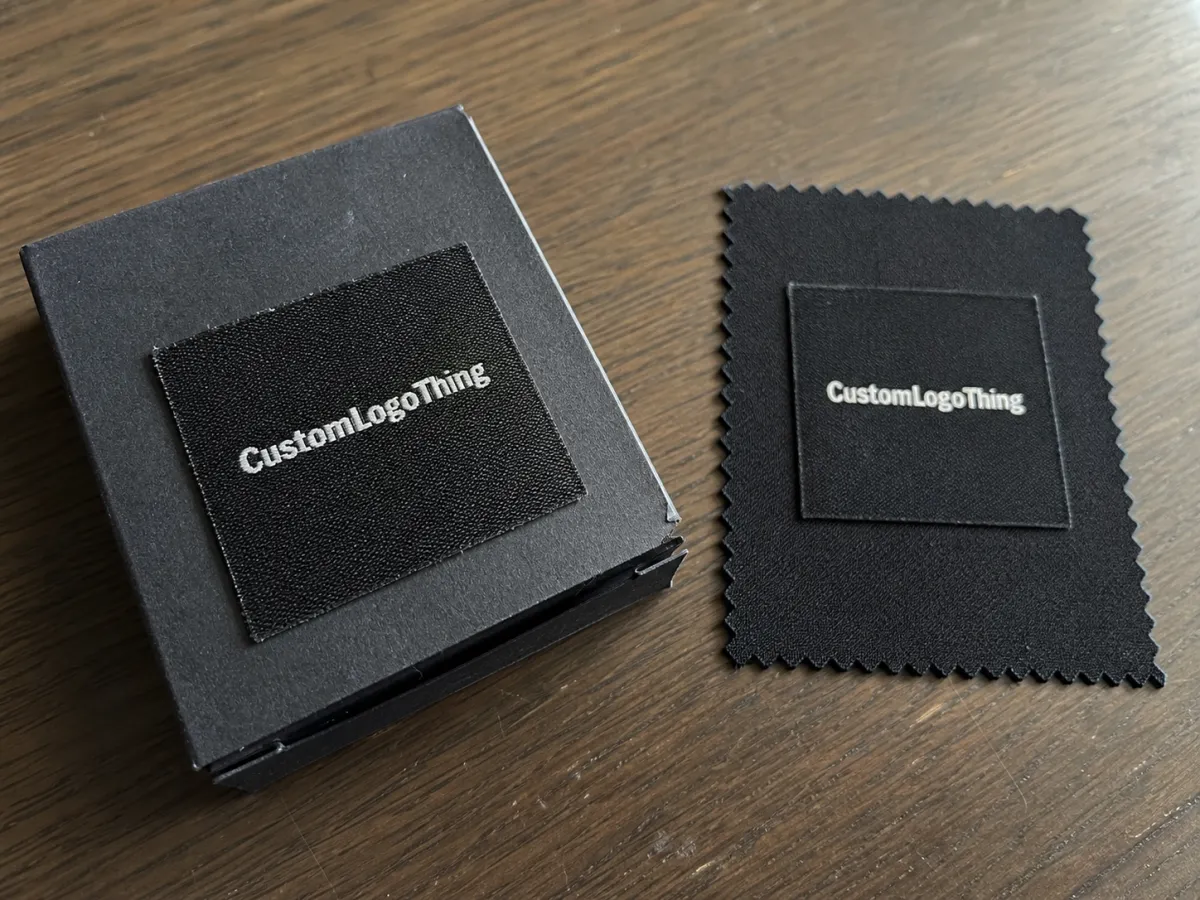
The cheapest patch is not always the least expensive finished box. In a subscription model, consistency often beats a marginal savings on the factory price because the item moves through a repeatable process. A patch that arrives flat, correctly bundled, cleanly trimmed, and color-matched to the approved sample can save time before it ever reaches the subscriber.
Consider a monthly insert packed with a folded garment, tissue, and a printed card. If the patch is loose-packed, the surface must survive carton movement without snagging. If it is sealed inside a garment sleeve, the size and edge finish need to sit cleanly under film. If it is sewn onto an item before shipping, the backing and border must behave under the machine and during wear.
Small failures spread quickly. A curled adhesive patch may need hand-flattening. A poorly trimmed embroidered edge may need inspection. A shade shift may require a buyer to decide whether the difference is acceptable before the warehouse can release the job.
"The cheapest patch is not the cheapest finished box if it creates rework, delays, or replacements."
Good patch pricing should be compared against the full handling path: application method, packaging format, quantity tier, receiving process, and reorder cadence. A stable spec protects the brand visually, but it also protects labor. That is why many recurring programs approve one production standard and reorder against it instead of treating each month as a fresh custom project.
A useful buyer exercise is to compare two versions of the same order. One patch is a few cents cheaper but arrives bulk-packed with inconsistent trimming. The other costs slightly more but lands in labeled inner bags, matches the sample, and needs less sorting. On a 10,000-piece run, a difference of three cents is $300. If the cheaper version adds two hours of warehouse labor, delays an outbound wave, or creates even a small replacement batch, the savings can disappear.
Woven, embroidered, PVC, or leather: which build fits the box
Material choice changes the cost, the look, and the failure points. Woven patches are usually the safest choice for small text, thin lines, compact logos, and flat insert presentation. The threads are woven into the design rather than built up with heavier embroidery, so the finished mark can hold sharper detail at a modest size.
Embroidered patches have more texture and a familiar apparel feel. They work well on caps, jackets, workwear-style pieces, and classic merch kits. The tradeoff is detail resolution. Tiny lettering that looks crisp on a screen can soften once it becomes thread, especially under one inch in height or in narrow strokes.
PVC and rubber-style patches sit in a different lane. They offer raised detail, weather resistance, and a more dimensional surface. They are often useful for outdoor kits, tactical-inspired products, luggage accessories, or premium member drops. The constraint is tooling. Molded PVC typically requires a mold or tooling setup, so the first run carries more front-loaded cost than a simple woven patch.
Leather-style patches, including faux leather and embossed materials, bring a heritage or premium signal. They can look strong on denim, outerwear, hats, and higher-value subscription tiers. They are less forgiving with very intricate artwork and may require more careful confirmation of deboss depth, edge color, and heat tolerance if they will be applied to garments.
| Patch type | Typical cost per piece at 5,000 pcs | Best use | Main tradeoff |
|---|---|---|---|
| Woven | $0.22-$0.48 | Small text, sharp logos, flat insert presentation | Less texture than embroidery |
| Embroidered | $0.20-$0.42 | Jackets, caps, classic apparel branding | Fine detail can soften at smaller sizes |
| PVC / rubber | $0.35-$0.85 | Durable, premium, weather-resistant kits | Requires tooling and mold setup |
| Leather-style | $0.40-$1.10 | Premium clubs, heritage styling, heavier garments | Less flexible on very intricate artwork |
These ranges are planning ranges, not fixed prices. Size, color count, backing, edge finish, quantity, and packing instructions can move the number quickly. A two-inch woven patch with heat-seal backing and simple bundling will price differently from a four-inch contour-cut PVC patch packed by SKU and labeled for multiple subscription tiers.
The best sample is not always the best production choice. A thick embroidered patch may look excellent in a buyer meeting but create bulk in a slim mailer. A PVC patch may feel premium but be too heavy for a low-cost insert program. A woven patch may not have the texture a fashion brand wants, but it may protect readability and reduce variation across reorders.
The actual pack-out path should settle the debate. If the patch is sewn onto garments, check border quality, backing behavior, wash expectations, and needle performance. If it ships loose, check scuff resistance, loose fibers, odor, and whether the piece lies flat after transport. If it is attached to a backer card, confirm the adhesive or fastening method before production, not at the warehouse.
Size, backing, stitch density, and finish specs that change the quote
Size is the obvious cost lever, but buyers sometimes underestimate how sensitive patch pricing can be to small dimensional changes. A half-inch increase may add more thread, longer run time, different cutting, larger backing material, and more carton space. On a one-time event order, that might be tolerable. On a recurring program, it compounds.
Backing choice is just as important. Sew-on backing is simple, durable, and often economical at the patch-production stage. The cost may shift later if a garment decorator or fulfillment team has to apply each piece. Heat-seal backing can speed application on compatible fabrics, though it needs the right temperature, pressure, dwell time, and fabric testing. Hook-and-loop backing adds cost but supports removability. Adhesive backing is useful for temporary placement or card mounting, but it should not be treated as a substitute for permanent garment attachment unless the use case is truly short-term.
Stitch density changes both appearance and production time. Dense embroidery creates coverage and texture, but it can make a patch stiff. Lower-density fills may reduce cost and improve flexibility, though they can show ground fabric if pushed too far. Border style also matters. Merrowed borders give a raised traditional edge and work best on simpler shapes. Laser-cut and satin borders can support more complex outlines but may require tighter quality control around fraying, scorching, or uneven cuts.
Color adds another layer. A simple two-color logo is easier to quote, sample, and repeat than a detailed mark with gradients, tight registration, or six thread colors that must hit a narrow brand standard. Pantone references help, but thread, PVC, leather-style materials, and print inks do not all reproduce color the same way. The approval sample should be treated as the practical standard.
A clean spec sheet usually includes:
- Finished size in inches or millimeters
- Patch type, backing, and application method
- Border style or edge finish
- Color count and Pantone references where applicable
- Artwork file format, preferably vector for logos
- Pack-out format, bundle size, and carton-labeling needs
- Monthly or quarterly reorder forecast
That level of detail reduces quote drift. It also prevents a common problem: attractive artwork that is not yet production information. A supplier can admire the design and still need to know whether the patch is sewn on, heat-applied, packed loose, paired with a card, or sorted by subscription tier.
Ask early whether the build needs digitizing, a mold, a die, or a custom cut file. Those are different charges. Woven and embroidered patches may carry setup or digitizing fees. PVC usually adds tooling. Leather-style patches may involve die or embossing setup. The fee itself is not necessarily a problem; the surprise is the problem.
Logo patches unit cost, MOQ, and quote levers for recurring brands
MOQ is where patch economics become visible. Setup charges spread across more pieces, so a 5,000-piece run can look much better per unit than a 1,000-piece run using the same art. This is why logo Patches Unit Cost for subscription brands should be reviewed across volume tiers, not only at the first-order quantity.
The biggest price levers are usually size, shape complexity, material, backing, edge treatment, number of colors, packaging, sorting, and deadline pressure. A simple round woven patch packed in 500-piece inner bags is easy to quote. A contour-cut PVC patch that must be bagged in pairs, labeled by box tier, and split across four ship dates is a different order.
Recurring brands should ask for tiered pricing before the first purchase order is placed. Price breaks at 1,000, 2,500, 5,000, and 10,000 pieces can reveal whether a larger initial run is worth carrying as inventory. The answer depends on cash flow, storage, design stability, and subscription churn. Buying more only helps if the patch will still be used.
A good quote separates the moving parts instead of hiding everything inside one number. Ask for:
- Unit price by quantity tier
- Setup, digitizing, die, or tooling fees
- Pre-production sample cost and sample timing
- Bulk packing, polybagging, labeling, or kitting fees
- Estimated carton count, carton dimensions, and freight cost
- Rush charges, if the deadline requires them
This split helps procurement and operations compare quotes fairly. One supplier may bury setup in the unit price. Another may list it separately. One may include bulk packing but charge extra for inner-bag counts. Another may quote a very low patch price and leave freight vague until late in the process.
For subscription teams, the first order should also establish the reorder logic. Will the approved sample remain on file? How long is tooling retained? How much lead time is needed for a repeat run? Can the supplier hold the same thread, material, or PVC color reference? If the answer is uncertain, the attractive first-run price may not protect the next shipment.
Proofing, sampling, and turnaround milestones from art file to packed carton
Proofing is cost control. It catches the expensive questions before production begins: Is the logo readable at this size? Does the border look right? Is the backing suitable for the garment or insert? Does the color match the brand closely enough under normal viewing conditions?
The usual sequence is artwork review, production setup, digital proof, sample approval, production, quality control, packing, and shipment. A digital proof can confirm dimensions, placement, shape, and general color intent. It cannot fully show thread texture, PVC depth, leather grain, edge feel, or stiffness. For those details, a physical sample is the safer approval tool.
Not every order needs the same level of sampling. A repeat woven patch with no changes may only need confirmation against the approved standard. A new PVC patch with molded detail should usually have a physical sample, especially if the logo has fine lines or raised layers. A color-critical apparel badge should be checked under realistic lighting and against the actual garment or packaging when possible.
Typical timing varies by supplier and season, but early budgeting should allow time for proofing and approval, not just production. A simple woven or embroidered order may move faster than a molded PVC order because tooling adds steps. Freight can also be the quiet schedule risk. Air shipping may protect a launch date but change the landed cost. Ocean or consolidated freight may reduce cost but require earlier ordering and more disciplined forecasting.
Quality-control checks should be concrete. Measure finished size. Compare color against the approved sample. Check edge consistency, backing adhesion, thread trimming, mold definition, odor, staining, and carton labeling. For heat-seal patches, test application on the actual fabric or a close equivalent. For loose inserts, shake-test or rub-test a sample against the packaging materials if scuffing is a concern.
Transit planning matters more than it appears. Resources from ISTA are useful for thinking through package handling, vibration, compression, and parcel-network risk. A patch order does not always need formal transit testing, but fragile presentation, paper cards, adhesive mounting, and premium kits deserve more scrutiny than a basic bulk shipment.
If the patch includes a backer card or paper-based insert, sourcing claims should be verified before print approval. A certified fiber claim from FSC can support the packaging story only if the chain-of-custody requirements are actually met. Treat certification as documentation, not decoration.
Warehouse instructions should be included before production closes. If 10,000 patches need to arrive in 1,000-piece bundles by month, by SKU, or by box tier, say so on the quote request and the purchase order. Otherwise, the supplier may ship a clean bulk carton and leave the fulfillment team with the sorting labor.
For examples of how proofing and pack-out decisions affect recurring programs, review the packing and fulfillment case studies. The pattern is consistent: the earlier the operational details are named, the fewer surprises appear at receiving.
What subscription brands need from a patch supplier before reorder season
Reorder season is the stress test. The second and third run should match the original approval in size, color, edge quality, backing, and packing format. If the first shipment looks right and the next one drifts, the brand now has a visible inconsistency in front of subscribers.
A capable supplier keeps the production standard stable and flags changes before they become problems. Material substitutions, thread availability, PVC color variation, tooling wear, changed lead times, and packing revisions should be communicated early. Buyers do not need noise. They need accurate information while there is still time to act.
Spec retention is a major practical advantage. The supplier should be able to reference the approved artwork, dimensions, sample, backing, finish, packaging instructions, and prior order history. Reordering should not feel like rebuilding the project from memory.
Fulfillment teams also need predictable inbound packaging. Cartons should be labeled clearly. Inner bags should match the requested counts. SKUs should not be mixed unless the warehouse expects them to be mixed. If a patch is part of a premium tier, seasonal upgrade, or apparel-size variant, the receiving plan must be reflected in the packing plan.
Before a reorder cycle starts, confirm:
- Approved artwork, size, and revision date
- Confirmed material, backing, border, and finish
- Color standard based on sample, Pantone, or retained reference
- Repeat-run lead time and holiday or peak-season limits
- Carton labels, inner-pack counts, and SKU separation
- Sample approval process for any change
- Primary reorder contact and escalation path
This is not administrative clutter. It is how a subscription brand keeps patch cost predictable after the first run. A supplier set up for one-off merch may deliver a strong first order and still struggle with repeat controls. A supplier set up for recurring work treats the approved standard as the asset.
If you are comparing vendors, ask how repeat runs are documented. Ask whether tooling is retained, how long setup files stay active, and what happens if a material changes. The answers reveal more than polished sales language. For a closer look at recurring program details, browse more packaging case studies for recurring brands.
Ordering mistakes that inflate patch pricing and delay fulfillment
The first mistake is weak artwork. Low-resolution files, flattened logos, unclear color references, and marks with unreadable micro-type all slow the quote. Vector files are usually best for logos. If the only available file is a small PNG pulled from a website, expect cleanup time before production can begin.
Late spec changes are another budget leak. Changing size, backing, edge style, or material after the proof can reset pricing and approval timing. With molded PVC, a late change may affect tooling. With embroidery, it may require revised digitizing. With heat-seal backing, it may reopen application testing.
Too many variations can damage the economics of a run. Multiple sizes, colors, backings, and tier-specific bundles may be necessary, but each variation adds setup, sorting, labeling, and quality-control work. Combining everything under one purchase order does not automatically create efficiency if the supplier and warehouse must untangle the complexity later.
Another common miss is failing to explain the end use. A patch for heavy outerwear has different requirements than a patch packed loose as a collectible insert. A patch applied to a washable garment needs different testing than one mounted to a paper card. A patch traveling in a slim mailer has different scuff and bending risks than one protected inside a rigid kit.
Rush ordering is expensive in less obvious ways. The rush fee may be visible, but the real cost can show up as skipped sampling, expensive freight, limited material choices, or reduced time for incoming inspection. For recurring brands, the better fix is usually earlier forecasting rather than faster panic production.
The most useful brief includes order quantity, finished size, artwork file, material preference, backing, garment or insert use, pack-out method, monthly cadence, deadline, and any sorting rules. With those facts, a supplier can quote the order as it will actually be produced. Without them, the quote is partly guesswork.
Next steps for a clean quote and production-ready order
Start with the production basics: logo file, finished size, patch type, backing choice, target quantity, and expected reorder volume. If the patch goes into a subscription box, add the packing method, carton-labeling needs, bundle counts, and any SKU or tier separation. A clear brief shortens quoting and reduces revision rounds.
Ask for tiered pricing so the unit cost can be compared across realistic volumes. Then separate the one-time costs from the repeat costs. Setup, tooling, sampling, freight, and special packing do not behave the same way as the patch unit price, and bundling them together makes long-term planning harder.
Approve against a standard that can be repeated. Keep the physical sample, the digital proof, the spec sheet, and the packing instructions together. If the patch will be reordered for several months, the documentation is part of the cost control system.
Logo Patches Unit Cost for subscription brands becomes easier to manage once the order is built for repeat use rather than novelty. The goal is not only a better-looking patch. It is a patch that arrives on time, matches the approved standard, moves through the warehouse with minimal friction, and does the same thing again on the next run.
What drives unit pricing for logo patches in subscription-brand orders?
Size, material, backing, stitch or mold complexity, edge finish, color count, and order volume are usually the biggest drivers. Packing requirements, rush timing, freight, and multiple variations can raise the final landed cost even when the base unit price looks low.
Which patch type works best for monthly apparel inserts?
Woven patches work well for small text and detailed logos that need a flat, clean profile. Embroidered patches fit a classic apparel look with more texture. PVC and leather-style patches suit premium, durable, or heritage-inspired drops, but they usually need more careful sampling and setup planning.
How does MOQ affect the price of recurring patch orders?
Higher quantities usually reduce unit cost because setup, digitizing, tooling, and production preparation are spread across more pieces. Recurring brands should compare several quantity tiers and balance the lower unit price against inventory risk, design changes, and storage.
Should subscription brands request a physical patch sample?
A physical sample is recommended for new artwork, color-critical logos, special backings, PVC molds, leather-style finishes, and any patch that will be applied to a garment. Digital proofs are useful, but they cannot fully show texture, stiffness, edge quality, or real color behavior.
What should be included in a patch quote request?
Include the artwork file, finished size, patch type, backing, border style, quantity, reorder forecast, deadline, pack-out method, carton-labeling needs, and any sorting instructions. The more complete the brief, the more reliable the quote and production schedule will be.


