Two matte zipper bag quotes can look almost identical at the unit-price line. Then the real costs show up: plate charges, carton dimensions, inland freight, duties, storage, and spoilage. That is why a practical how Buy Matte Zipper bags landed cost guide matters for buyers who need packaging that looks premium on shelf but still lands at a cost finance can defend.
Matte Zipper Bags are used for premium dry goods, powders, snacks, supplements, pet treats, coffee accessories, cosmetic refills, and boutique retail products. The low-glare exterior gives branding a calmer, more controlled look than glossy packaging. The finish can feel satin, paper-like, or soft-touch depending on the film and coating, but the buying decision sits deeper than surface appearance.
Buyer callout: the cheapest pouch is not always the lowest-cost pouch. A bag that saves $0.03 at purchase but causes slow filling, seal failures, freight waste, or rejected retail cartons can become the expensive option before the first reorder.
Start with Real Shelf Math
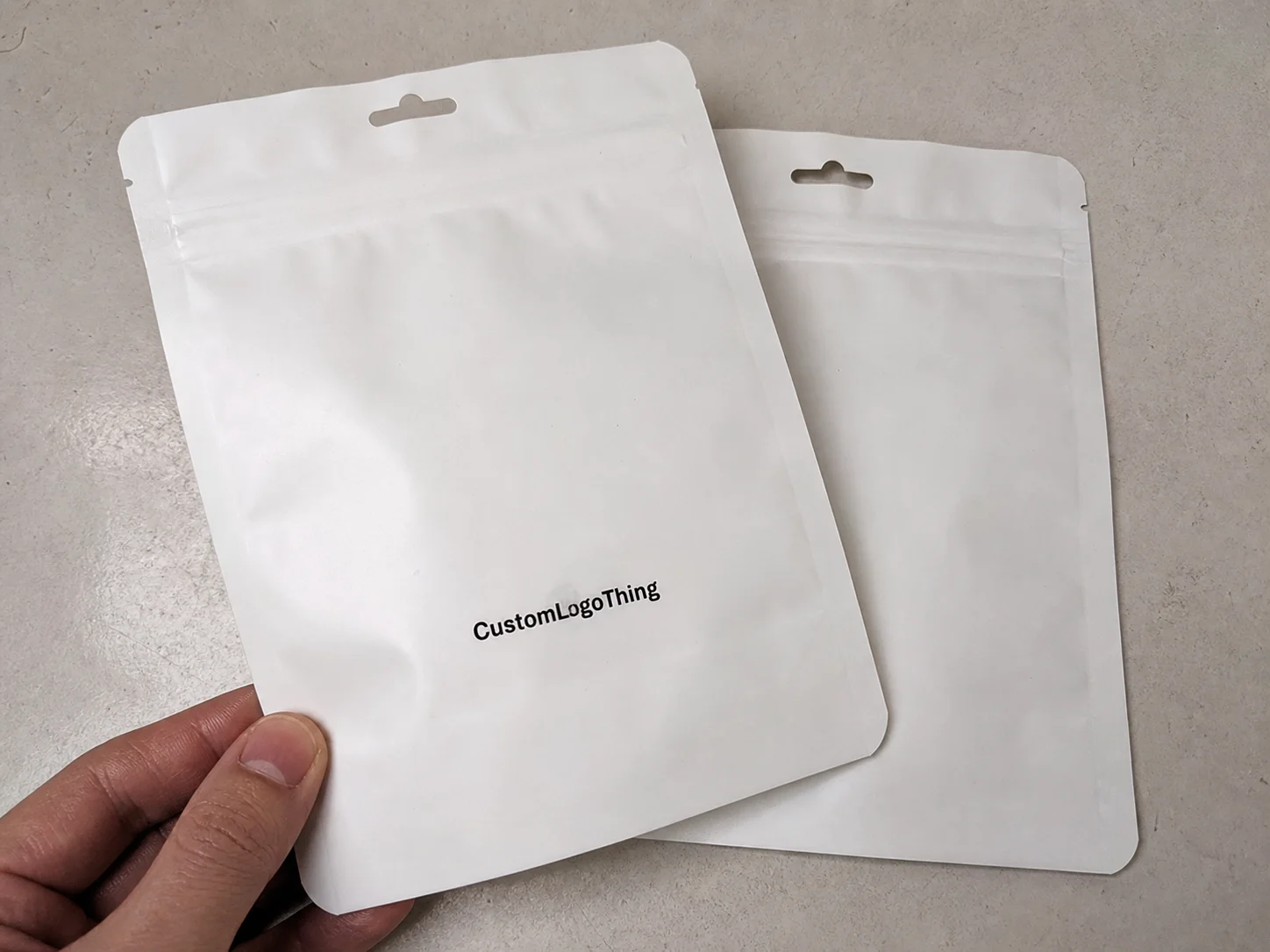
Good landed cost work starts with shelf math, not guesswork. If Quote A shows $0.22 per pouch and Quote B shows $0.24, many buyers lean toward Quote A. Fair. Nobody gets excited about paying more for the same-looking bag.
But the bags may not be the same. If Quote A includes $450 in tooling fees, larger export cartons, lower case efficiency, and a late production slot that forces air freight, the delivered cost per usable piece may end up higher than Quote B. That $0.02 “saving” disappears fast.
In packaging terms, landed cost means the total cost to get usable bags to your filling location. It includes production, setup charges, proofing, tooling, freight, customs, duties, brokerage, domestic delivery, storage impact, inspection, rework, and losses caused by over-specifying or under-specifying the material. It is not just the number printed beside “unit cost” on a quote sheet.
Matte Zipper Bags carry more variables than buyers expect. A 500-piece short run with digital print may have almost no tooling but a higher per-unit price. A 25,000-piece laminated run may have better bulk pricing, but it can require plates or cylinders, longer production time, more storage space, and a larger cash commitment. Neither option is automatically better.
The goal is simple: choose a bag structure, zipper style, print method, MOQ, and freight plan that protects the product and keeps the final delivered cost predictable. Production, finance, purchasing, and marketing need to compare the same package, not four different assumptions dressed up as one quote.
Matte Zipper Bag Details That Affect Buying Decisions
Matte zipper bags are flexible pouches or bags with a reclosable zipper and a matte exterior finish. They may be supplied as stand-up pouches, flat pouches, three-side-seal bags, side-gusseted bags, flat-bottom pouches, or custom-shaped retail bags. The right format depends on fill weight, product shape, retail display, and whether the pack needs to stand upright, hang from a peg, or ship flat in cartons.
The matte surface can be built several ways. Common options include matte BOPP, matte PET, matte varnish over printed film, soft-touch matte coatings, and matte laminated structures. Each has a different cost and durability profile. Soft-touch matte feels strong in hand, but it can scuff more easily than a standard matte film. Matte varnish can be cost-effective for certain print methods, but it may not give the same tactile feel as a true matte outer web.
Zippers change both performance and price. Standard press-to-close zippers work for many snacks, powders, and dry goods. Powder-resistant zippers help reduce clogging on flour-like products, protein powders, drink mixes, and fine supplement blends. Wide-track zippers can feel stronger on heavier fills. Child-resistant zipper systems may be required in regulated categories, and they usually add cost, testing expectations, and opening instructions.
Product fit drives the film structure. A dry granola snack may need moisture control and grease resistance. Coffee or aroma-heavy goods may need stronger oxygen and odor barrier. Pet treats can create puncture risk, especially with hard edges or irregular shapes. Cosmetic refills may need chemical compatibility checks. Cannabis-adjacent products may require child-resistant closures and warning panels, depending on the sales channel and local rules.
Here is what many quote requests get wrong: matte bags are not one universal SKU. Two pouches can look nearly identical on the outside while using different internal layers, sealant films, gauges, and barrier materials. One may be a light PET/PE structure for short shelf-life dry goods. Another may include metallized film or nylon for higher barrier or puncture resistance. Same look. Different job.
Before asking for pricing, gather the basics: fill weight, product density, shelf-life target, closure needs, artwork count, retail display method, and filling method. A hand-filled pouch has different practical concerns than a pouch running on automated filling equipment with heat-sealing jaws, date coding, and tight line speeds.
Specifications to Confirm Before You Request a Quote
A clean quote starts with a clean specification. At minimum, confirm bag style, finished dimensions, fill volume, film thickness, barrier structure, zipper type, hang hole or euro slot, tear notch, bottom gusset style, clear window needs, print coverage, and number of SKUs. If you already have a pouch you like, send photos and measurements. Better yet, send a filled sample if available.
Do not quote by weight alone. A 6 oz dense powder may fit comfortably in a compact stand-up pouch, while a 6 oz airy snack may need a taller bag with more headspace. Whole-bean products, irregular pet treats, and dehydrated pieces all behave differently during filling. Product density, not net weight alone, decides the real size.
Common laminated structures may combine PET, BOPP, PE, CPP, metallized film, or nylon. PET often helps with stiffness and print appearance. PE and CPP are common sealant layers. Metallized films can increase barrier. Nylon may improve puncture resistance in specific applications. The right structure depends on moisture, oxygen, aroma, grease, puncture, shelf-life, sealing temperature, and filling equipment.
Printing deserves its own decision. Digital printing is useful for lower quantities, seasonal artwork, test launches, and multiple SKUs because setup can be lighter and design changes are easier. Flexographic or gravure production can become more efficient at higher volumes, but tooling fees, plates, cylinders, press setup, and lamination waste must be spread over enough bags to make sense.
| Print Option | Best Fit | Typical Cost Behavior | Buyer Watchout |
|---|---|---|---|
| Digital print | Short runs, many SKUs, test launches | Higher unit cost, lower setup burden | Confirm color consistency and available film structures |
| Flexographic print | Medium to higher quantities | Better cost per piece as volume rises | Plate charges and color limits affect quote accuracy |
| Gravure print | Large repeat orders and premium graphics | Strong bulk pricing after tooling is absorbed | Cylinder costs and longer setup make short runs expensive |
Color control changes on matte surfaces. Dark colors can look softer. Metallic effects may lose shine under a matte coating. Fine typography needs enough contrast, especially on nutrition panels, supplement facts, warnings, and ingredient lists. Barcodes should be checked against actual print conditions because a beautiful matte pouch still fails at retail if the scanner cannot read the code.
Compliance belongs in the quote package. Buyers should confirm food-contact requirements, recycling claims, warning labels, lot coding space, barcode readability, and handling conditions such as cold storage, hot-fill exposure, or high-speed filling. For transit testing, standards from ISTA can be useful when cartons and filled retail packs need validation. If paper-based components or FSC claims are involved elsewhere in the retail system, confirm requirements through FSC guidance rather than assuming a logo can be used freely.
Tighter specifications produce cleaner pricing. A detailed spec sheet reduces assumptions, avoids padded contingency pricing, and helps each supplier quote the same bag instead of their own interpretation of a matte zipper pouch.
Pricing, MOQ, and Unit Cost Variables Buyers Should Compare
Pricing for matte zipper bags is built from layers: material structure, film thickness, zipper type, print method, number of colors, matte finish, tooling, waste factor, carton packing, and freight method. A useful buying comparison keeps those layers visible so the buyer can see what is actually driving the quote.
MOQ is usually tied to print method and production setup. Digital print may allow lower runs, sometimes practical for early launches or multiple flavors. Traditional printed laminations often need higher minimums because press setup, plates or cylinders, lamination loss, slitting, and converting waste must be spread across more pieces. A supplier may quote 1,000, 5,000, 10,000, or 25,000 pieces depending on size, structure, and artwork count.
The lowest unit cost can mislead. A pouch that is too thin may crease badly, fail drop handling, or feel cheap on shelf. A bag that is too small may slow filling because operators need to shake product into the corners. Oversized cartons can increase freight and warehouse handling. A high-barrier structure used for a product that only needs basic moisture protection ties up cash for performance the product does not need.
Ask for quote line items in writing. The basics include unit price, tooling charges, artwork or proofing charges, sample cost, MOQ, carton quantity, carton dimensions, gross weight, payment terms, shipping terms, estimated duty classification where applicable, production lead time, and quote validity period. If importing, the freight term matters because EXW, FOB, CIF, DDP, and delivered domestic pricing shift responsibility and risk.
| Cost Item | Why It Matters | Typical Buyer Question |
|---|---|---|
| Unit cost | Base production cost per bag before other charges | Does this include zipper, matte finish, and full print coverage? |
| Tooling fees | Plates, cylinders, dies, or setup materials | Are these one-time charges or charged again on reorders? |
| MOQ | Minimum production quantity per size or artwork | Can the quantity be split across SKUs? |
| Carton data | Affects freight, storage, receiving, and pallet counts | What are carton dimensions, gross weight, and case pack? |
| Freight and duties | Can change delivered cost by a wide margin | What shipping term and destination assumptions are included? |
To calculate landed cost, add product cost, setup charges, proofing, freight, import fees, duties, customs brokerage, domestic delivery, inspection, and storage impact. Then divide by the number of usable bags received. If 10,000 bags are ordered but 300 are damaged, rejected, or unusable because of fit problems, the denominator is 9,700, not 10,000.
Price ranges vary widely because size, structure, print method, zipper, and quantity do most of the work. Small digitally printed runs often carry a noticeably higher unit cost but protect cash and reduce inventory risk. Higher-volume custom laminated runs can bring the unit cost down, but setup and freight have to be absorbed across enough usable bags. That tradeoff is the whole point of landed cost analysis.
Practical cost-control moves help. Consolidate SKUs where possible. Standardize bag sizes across flavors. Avoid custom windows unless product visibility truly supports the sale. Match print method to order volume. Confirm carton efficiency before approving shipment. These choices can lower cost per piece without weakening the package.
Production Process and Timeline from Artwork to Delivery
The order flow for custom matte zipper bags usually follows a steady path: specification review, artwork preflight, dieline confirmation, material and print method selection, quote approval, deposit or payment setup, proofing, production scheduling, printing, lamination if required, curing, bag converting, quality checks, packing, and shipment. Skip one step and the risk usually moves downstream.
Artwork preflight is more than checking whether a logo looks sharp. Logos, barcodes, nutrition panels, legal text, bleed, spot colors, white ink layers, clear windows, and matte finish zones all need review before production begins. Late art changes can reset proofing, affect plate output, or delay a production slot.
Proofing can happen at different levels. A digital PDF proof confirms layout, spelling, size, panel placement, and general color intent. Physical samples or press proofs may be needed when finish, zipper feel, exact dimensions, or color matching are critical to launch. For premium retail packaging, I prefer buyers to approve at least a representative physical sample before committing to a large first run, although timing and budget do not always allow it.
Production steps matter because matte zipper bags are not simply printed and boxed. Printed film may be laminated to sealant layers, allowed to cure, slit into narrower rolls, then converted into finished bags. During converting, equipment forms bottom gussets, side seals, tear notches, hang holes, zippers, and openings under controlled heat and pressure. Seal temperature, dwell time, and pressure are not glamorous details, but they decide whether the bag closes, fills, and seals correctly.
Lead time depends on material availability, print method, order quantity, number of SKUs, proof approval speed, curing requirements, inspection needs, freight mode, and customs clearance if importing. A straightforward reorder may move much faster than a first order because the dieline, structure, and artwork have already been confirmed. First orders need more room for packaging tests, filled samples, and decision time.
Rush work can be possible in some cases. Buyers should be careful with it. Skipping samples, color checks, carton planning, or transit review can cost more than the time saved, especially if a launch depends on every pouch being usable when it arrives.
Quality Checks, Packaging Risk, and Supplier Fit
Quality is not only appearance. Matte zipper bags must look clean on shelf, but they also need consistent sealing, zipper alignment, pouch opening, film strength, barrier performance, print registration, and carton protection during transit. A satin finish and crisp logo mean little if the zipper track is hard to close or the bottom gusset fails during filling.
Common failure points include scuffed matte surfaces, weak side seals, zipper tracks that do not close smoothly, pinholes in barrier film, poor tear-notch placement, crooked gussets, blocked openings, unreadable barcodes, and inconsistent color across SKUs. Some problems show up right away. Others appear only after filling, case packing, palletizing, or retail handling.
Buyers can run practical checks without a laboratory. Measure finished dimensions against the approved specification. Test zipper open-close cycles by hand. Fill sample bags to the intended weight and perform a basic drop test. Scan retail barcodes. Inspect seal integrity after heat sealing. Review carton labels, count per carton, gross weight, and whether bags are packed to avoid crushing or surface abrasion.
- Dimension check: compare width, height, gusset, and opening against the approved dieline.
- Closure check: open and close the zipper multiple times, especially after product dust contacts the track.
- Seal check: test filled bags after the same heat-seal settings intended for production.
- Barcode check: scan printed codes on actual matte film, not only on a PDF proof.
- Carton check: confirm case pack, carton strength, and labeling before shipment release.
Supplier fit matters as much as quoted price. Ask whether the manufacturer understands your fill method, product weight, barrier needs, retail channel, artwork complexity, and shipping destination before the final quote is issued. If the supplier cannot explain why a film structure, zipper, or MOQ fits your use case, the quote may be incomplete.
A strong supplier translates buyer requirements into workable specifications, flags cost or production risks early, and balances brand presentation with packaging performance. Clear technical notes, proof approvals, carton details, and landed cost assumptions reduce the misunderstandings that usually surface too late, after the order is already moving.
Tie quality back to landed cost. Bags rejected for sealing, print, or sizing problems are not low-cost bags. They are inventory loss, labor waste, and launch delays hidden behind a cheap starting quote.
Next Steps to Buy Matte Zipper Bags with a Clean Landed Cost
Start with a pre-quote checklist. Gather product type, fill weight, target bag size or sample bag, shelf-life goal, barrier needs, zipper requirement, artwork files, number of SKUs, order quantity, destination address, and preferred delivery date. If the product will be machine-filled, include equipment notes, sealing method, and any speed or temperature requirements.
Send photos or samples if you have them. An existing bag, competitor pouch, or filled prototype helps confirm gusset style, zipper placement, material feel, and retail presentation better than dimensions alone. A quick photo of how the product sits inside the pouch can prevent a surprising amount of back-and-forth.
Ask for two or three structured options instead of one vague quote. For example, request a lower-MOQ digital print option, a higher-volume traditional print option, and a cost-optimized material structure if the product does not need maximum barrier. That gives purchasing a real comparison: cash outlay, lead time, cost per piece, SKU flexibility, and reorder path.
- Confirm the product and fill details.
- Choose the likely bag style and size.
- Identify barrier, zipper, window, and display needs.
- Submit print-ready artwork or ask for dieline support.
- Request unit price, MOQ, setup charges, carton data, and freight assumptions.
- Compare landed cost per usable bag, not only the quoted unit cost.
Request freight and carton data early. Carton dimensions, case pack, palletization, gross weight, and shipping terms are necessary for a real landed cost comparison. A pouch with strong bulk pricing can lose its advantage if cartons cube out poorly or require a freight mode that does not match the launch schedule.
Make the final decision by comparing usable quantity, lead time, risk level, packaging performance, reorder path, SKU flexibility, and cash tied up in inventory. The right matte zipper bag should protect the product, support the brand, fit the filling process, and arrive at a delivered cost that is clear before the invoice lands. Not after. That would be the expensive version of learning.
Use this landed cost guide as a starting point, then build the quote around the actual product, fill method, artwork, shipment plan, and quality expectations. A generic unit-price line is easy to send. A reliable pouch spec takes more work, and that work is usually cheaper than fixing bad packaging later.
FAQ
What should I include when using a matte zipper bags landed cost guide for a quote?
Include finished bag dimensions, fill weight, product type, film or barrier needs, zipper style, print quantity, number of SKUs, artwork status, destination address, and delivery deadline. Ask for unit price, tooling, proofing, carton pack, carton dimensions, freight estimate, and any import or handling assumptions so you can calculate delivered cost per usable bag.
How do I buy matte zipper bags without overpaying for material?
Match the film structure to the actual product risk, such as moisture, oxygen, aroma, grease, puncture, or shelf-life needs, rather than automatically choosing the heaviest or highest-barrier option. Share product samples or filling details so the supplier can recommend a structure that seals properly and protects the product without adding unnecessary layers.
What MOQ should I expect for custom matte zipper bags?
MOQ depends on print method, bag size, material structure, and SKU count. Lower quantities may be possible with digital printing, while traditional printed laminated bags usually need higher runs. For multiple flavors or designs, ask whether the order can be split across SKUs and whether that changes unit cost, setup cost, or production timing.
Why does landed cost matter more than the quoted unit cost for matte zipper bags?
The quoted unit cost may exclude tooling, proofing, freight, duties, customs brokerage, domestic delivery, warehousing, and losses from poor fit or quality problems. Landed cost shows what each usable bag actually costs after it reaches your facility and is ready for filling or retail packing.
How long does the process take to buy custom matte zipper bags?
Timing depends on artwork readiness, proof approvals, material availability, print method, order volume, curing time if laminated, converting schedule, inspection, and freight mode. First orders usually take longer than reorders because the dieline, color, structure, and filling performance still need to be confirmed.


