A matte pouch can look expensive in a proof and cheap in a warehouse carton. Buyers trying to get printed Matte Zipper Bags quality inspection standard right need to inspect more than artwork. They need proof that the material, structure, print, finish, zipper, seals, and packing match the order before shipment release.
That sounds basic. It often gets missed. A snack, supplement, coffee, pet treat, or cosmetics brand may approve a sharp matte stand-up pouch sample, then receive production bags with scuffed film, weak zipper tracks, barcode contrast issues, or color shifts that show only under retail lighting. The packaging did not fail in one dramatic way. It failed in eight small, annoying ways.
Those small failures matter. A pouch is not just a printed wrapper. It is a product-contact component, a shelf-facing sales tool, a barrier package, and sometimes a machine-fed part. Treat it casually and it will return the favor.
What the quality inspection standard actually covers
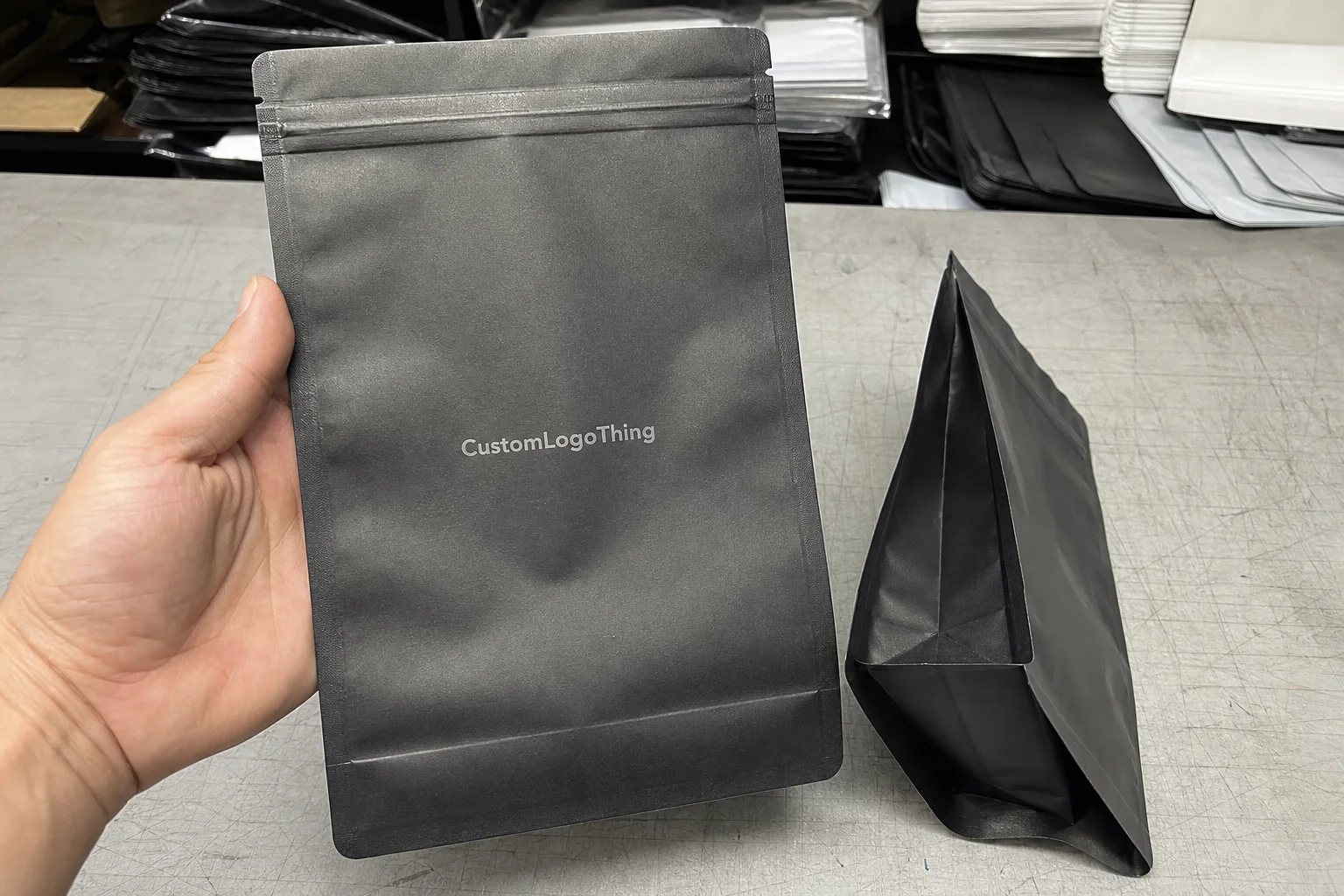
Matte zipper bag inspection is not one test. It is a layered quality control process covering incoming materials, print accuracy, lamination or coating finish, bag conversion, zipper performance, sealing strength, and final packed-carton checks.
If a purchase order only says “custom matte zipper bags,” the factory has too much room to decide what acceptable means. Some suppliers will still do solid QC. Others will inspect only obvious visual defects and carton counts. Guess which version usually appears after a tight price negotiation.
Matte finishes need special attention because they trade glare for texture. That helps on a retail shelf. It can be brutal during inspection. Matte surfaces show rub marks, fingerprints, uneven coating, ink density shifts, and compression scuffs more readily than glossy bags. A gloss pouch reflects light and can hide small abrasions. A matte pouch absorbs and scatters light, so a faint handling mark can look like a gray bruise across the front panel.
A workable inspection standard should cover four basics:
- Defined specifications: material structure, size, tolerances, print, finish, zipper type, seal widths, carton packing, and test methods.
- Defect classification: critical, major, and minor defects, preferably with photos showing acceptable, borderline, and rejected examples.
- Sampling rules: enough bags pulled from different cartons, production rolls, or shifts to avoid a false pass.
- Evidence: measurements, photos, barcode scans, zipper notes, seal checks, and a clear pass-fail decision.
For custom packaging, defects are not only visual. A pouch can look retail-ready and still fail because the side seal leaks, the zipper is misaligned by 3 mm, the puncture resistance is wrong for sharp granola clusters, or the finished width falls outside the tolerance needed for automated filling rails.
Buyer reality check: “Looks good” is not a quality standard. “Front panel color within approved sample range, side seal width 8 mm ±1 mm, zipper opens and recloses after 20 cycles, barcode scans on first pass” is a standard.
The best standards connect appearance with performance. A beautiful pouch that leaks is scrap. A strong pouch with muddy color and an unreadable barcode is also a problem, just a different kind.
How matte zipper bag inspection works from film to finished carton
The inspection chain starts before a single pouch is formed. Raw film or laminated rollstock is checked first. Printing is checked next. Zipper insertion and bag-making are verified during conversion. Final random inspection happens after packing, before the goods are released for shipment.
A Printed Matte Zipper bag may include an outer printable matte layer, ink, adhesive or extrusion layers, a barrier layer, an inner food-contact or product-contact layer, a zipper track, and heat-sealed edges. Common barrier options include metallized PET, aluminum foil, EVOH, nylon, or high-barrier PE, depending on shelf life and product needs. For food, supplements, and cosmetics, the inner layer matters as much as the shelf-facing artwork.
Incoming material checks usually cover film thickness, roll width, surface treatment, matte coating consistency, odor, haze, stiffness, and structure against the approved specification sheet. A common flexible pouch thickness range is roughly 90–160 microns. Coffee, frozen products, heavy powders, sharp contents, or large-format pet food bags may require more. Tolerance should be written down. “About 120 microns” is weak. “120 microns ±10% measured by calibrated micrometer” gives the inspector something real to check.
Print-stage inspection checks brand color, registration, barcode readability, ink adhesion, varnish or matte coating uniformity, text sharpness, and layout placement against the dieline. For flexographic or rotogravure printing, registration drift of even 0.5–1.0 mm can show on small icons, fine type, and bordered panels. Matte films can make color look softer than the same ink on gloss, so a Pantone reference alone may not be enough. A drawdown or approved production sample is safer.
During conversion, inspectors verify pouch dimensions, bottom gusset formation, side seal width, tear notch position, hang hole placement, rounded corners, zipper alignment, and top opening width. This is where a good-looking printed web becomes a usable bag or an expensive stack of almost-right pouches.
Performance checks move from “does it look right?” to “does it survive use?” That can include zipper open-close cycling, seal burst resistance, leak testing, drop testing, rub resistance, and compatibility with oily, powdery, aromatic, sharp, or moisture-sensitive products. Fine powders, for example, can foul zipper tracks. Oily snacks can challenge seal integrity if product contamination reaches the seal area during filling. Coffee may need degassing valve checks on top of standard pouch inspection.
Risk should drive frequency. A reorder of a proven dry snack pouch may need standard sampling. A new compostable film, metallic ink, heavy black matte background, or tight-registration cosmetic pouch should be checked more often because small process changes can create visible defects quickly. Organizations such as ISTA publish transport testing protocols that are useful when filled pouches must survive parcel networks or retail distribution.
Quality factors buyers should specify before production
Quality inspection starts before manufacturing. If the order only says “matte zipper bag,” the inspector has to interpret the finish, structure, tolerance, and failure limits. That is a bad setup. The cleanest way to get Printed Matte Zipper Bags quality inspection standard alignment is to define the bag as a controlled component, not decoration.
Your specification should include bag size and tolerance, material structure, total film thickness, matte finish type, zipper style, seal width, print method, number of colors, ink system, barcode grade target, gusset dimensions, tear notch placement, hang hole position, corner style, and packing method.
A better line item looks like this: “140 mm W x 210 mm H + 80 mm bottom gusset, tolerance ±2 mm; 120-micron matte PET/PE structure; resealable zipper; 8 mm side seals; tear notch above zipper; 1,000 bags per inner carton with protective liner.” Not poetic. Very useful.
Tolerances are not academic. A 2 mm size shift may be harmless for loose bath salts sold in boutique stores. The same shift can jam automated filling equipment or make a pouch sit crooked in a display tray. A tear notch that moves 4 mm may still open. It may also cut too close to the zipper and irritate every customer who tries to reseal the bag.
Defect classification should be plain:
- Critical defects: contamination, leaking seals, wrong food-contact material, unusable zipper, missing allergen panel, incorrect regulatory artwork, or any defect that creates safety or compliance risk.
- Major defects: weak seals, visible color mismatch, unreadable barcode, dimensions that affect filling, delamination, severe scratches, zipper misalignment, wrong hole position, or incorrect pouch count.
- Minor defects: small cosmetic marks, slight matte texture variation, tiny specks, or minor wrinkles within agreed limits.
Color control deserves its own line on the checklist. Screens lie. Backlit artwork does not behave like ink on matte film. Buyers should use Pantone references, printed proofs, drawdowns, or approved production samples instead of relying on a PDF viewed on three different monitors. The monitor will lose that argument every time.
For barcodes and QR codes, inspect contrast, quiet zone, size, edge sharpness, and scan success. Many brands remember barcode quality only after inventory fails at checkout or warehouse receiving. That is late. Painfully late.
A golden sample and defect board reduce arguments. The golden sample shows what “approved” means. The defect board shows what is acceptable, borderline, and rejected. Photos with scale references help line inspectors, buyers, and suppliers judge the same flaw the same way.
Material compliance also needs a place in the file. For food, supplements, pet products, and cosmetics, ask for the relevant food-contact or product-contact declarations, migration documentation where required, and confirmation that inks and adhesives fit the intended use. Do not assume “food grade” covers every structure, market, or product condition.
Process, timeline, and lead time for inspection approval
Inspection is not a last-minute event after bags are boxed. It belongs inside the production calendar from artwork approval to shipment release.
A practical timeline usually looks like this: specification confirmation, artwork preflight, digital or physical proof, material confirmation, pre-production sample if needed, inline inspection during printing and bag making, final random inspection, corrective action if defects exceed limits, then shipment approval.
Artwork preflight may take 1–2 business days when files are clean. It can stretch to a week if dielines, bleed, white ink layers, barcodes, nutrition panels, or compliance marks need correction. Physical samples add production time plus transit and review. For a custom printed flexible pouch, many buyers see production ranges around 12–25 business days after proof approval, depending on print method, material availability, order quantity, and whether plates or cylinders are needed.
Pre-shipment inspection has the most value before the balance payment, before goods leave the factory, and before cartons are loaded into a container or forwarded to a 3PL. Rework gets expensive once the bags move. Sorting 50,000 pouches at origin is annoying. Sorting them after they land, while a product launch waits, is worse.
Several bottlenecks slow matte zipper bag projects. Custom film structures may require rollstock lead time. Specialty matte coatings can need longer curing or tighter handling control. Plate or cylinder changes add setup. Complex zippers, spot colors, metallic inks, and late artwork edits can shift inspection windows. Automated filling projects add another layer because pouch opening width, stiffness, zipper location, and seal areas need equipment compatibility checks.
There is a trade-off between speed and evidence. Skipping sample review may save several days. It also removes the best chance to catch wrong matte texture, color drift, zipper feel, odor, or seal settings before mass production. For a reorder with a stable supplier, that gamble may be acceptable. For a first run, it is rarely smart.
Ask the supplier for inspection checkpoints in writing. Who checks incoming film? What measurements are recorded during bag making? Which AQL level applies to final inspection? Are photos shared before shipment? Can the buyer reject based on agreed major defects? A written process keeps the standard from turning into a debate after defects appear.
Cost, pricing, MOQ, and quote details tied to inspection level
Inspection does not sit outside pricing. More custom features, tighter tolerances, and lower defect allowances usually increase unit cost because they add setup control, sampling time, slower line speeds, or more material waste. That does not make stricter QC wasteful. It means buyers should know what they are paying for.
Quote drivers for printed matte zipper bags include material structure, film thickness, bag size, print coverage, color count, matte coating type, zipper type, gusset style, order quantity, packing requirements, and testing requirements. Small runs carry higher unit costs because setup, plate charges, machine calibration, and QC documentation are spread over fewer bags.
As a rough commercial range, simple custom matte zipper pouch orders may land around $0.18–$0.45 per unit at several thousand pieces. Larger bags, high-barrier materials, heavy ink coverage, specialty closures, compostable films, or strict documentation requirements can push pricing above that. Very large orders can reduce unit cost, but only if the specification is stable and production waste is controlled.
| Quote or inspection option | Typical impact | Buyer comment |
|---|---|---|
| Standard factory QC with AQL sampling | Often included in unit price | Good for proven designs, but ask for the sample size and defect definitions. |
| Pre-production physical sample | May add sample fees and several days | Recommended for new matte finishes, new suppliers, or automated filling. |
| Third-party pre-shipment inspection | Commonly a few hundred dollars per inspection day, depending on location and scope | Useful for larger orders, first runs, or high retail penalty risk. |
| Lab testing or compliance documentation | Varies by test type and material | Consider food-contact, heavy metals, migration, or transport testing if product risk requires it. |
| Reinspection after corrective action | Usually extra unless negotiated | Define who pays if defects exceed the agreed standard. |
False economy is common. Saving $0.03 per bag looks attractive on 20,000 units. That is $600. Weak seals can erase that in a single retailer chargeback, repacking shift, or product return batch. The more expensive number is not always the unit price. Often it is the cost of unusable inventory.
Ask suppliers to quote the same specification at two or three quantity breaks. The best savings may come from higher volume, simplified artwork, a standard zipper selection, or a slightly adjusted material structure rather than weaker inspection. Ask direct questions: What AQL level is included? Are photos and measurement reports provided? Is barcode verification included? What testing costs extra? Is rework included if defects exceed the agreed standard?
For broader packaging compliance and sustainability context, buyers can review resources from the U.S. EPA sustainable materials management program, especially if material reduction, recyclability, or waste claims are part of the packaging brief.
Step-by-step checklist for inspecting printed matte zipper bags
Use this workflow for supplier communication, pre-shipment review, or receiving inspection. It is practical by design. A buyer does not need a full laboratory to catch many common defects, but the checklist must be consistent.
- Confirm reference documents. Before opening cartons, gather the approved specification sheet, artwork proof, material structure, purchase order, barcode file, and golden sample. If the inspector has no reference, every judgment becomes subjective.
- Check cartons first. Review carton labels, count, packing condition, moisture damage, crushed corners, pallet stability, and whether bag bundles are protected from dust, compression, or abrasion. Matte films can scuff during transport if bundles rub inside loose cartons.
- Pull random samples from multiple cartons. Do not inspect only the top layer of one box. Defects often cluster by roll, operator shift, zipper batch, or machine setting. Sampling across cartons gives a better read on the production lot.
- Measure physical details. Check width, height, gusset depth, film thickness, zipper position, side seal width, tear notch location, hang hole placement, and print position against tolerances. Use a ruler, caliper, micrometer, and a simple measurement sheet.
- Inspect appearance under consistent lighting. Look for scratches, fisheyes, pinholes, uneven matte texture, ink smears, color variation, registration drift, ghosting, wrinkles, delamination, and foreign particles. Store lighting can reveal defects that office lighting hides.
- Test function. Open and close the zipper repeatedly, ideally 10–20 cycles for a quick field check. Fill samples with product or a similar load, squeeze for leaks, check seal strength, drop a filled sample from a realistic handling height, and scan every barcode type printed on the bag.
- Classify defects. Mark each issue as critical, major, or minor. Record quantities. Take photos with scale references. Separate failing samples instead of relying on memory or vague notes.
- Decide based on the agreed standard. Accept, reject, sort, rework, replace, or negotiate a concession using the written standard. Not vibes. Not panic. The agreed inspection criteria should control the decision.
For buyers using AQL sampling, a common approach is to set the tightest limits for critical defects, moderate limits for major defects, and more forgiving limits for minor cosmetic flaws. The exact level depends on product risk. A food-contact pouch and a promotional giveaway bag should not be treated the same.
Receiving inspection should also include lot traceability. Keep carton labels, production dates, batch numbers, and defect photos tied together. If a problem appears later during filling or retail distribution, that record helps isolate whether the issue came from one carton, one production lot, or the entire shipment.
Common mistakes that make matte pouch defects harder to catch
Many packaging failures are born in meetings, not on machines. A vague approval email can be more dangerous than a slightly worn sealing bar.
Mistake one: approving artwork on a backlit screen and expecting the same color on matte plastic. Substrate, ink opacity, white layers, coating, and surface texture all change visual results. A deep navy may look rich in a PDF and flat on matte film. A pale beige may lose contrast next to nutrition text.
Mistake two: inspecting only the front panel. Retail buyers care about the front, but failures often live elsewhere: back panels, side seals, bottom folds, zipper ends, gussets, and heavy ink coverage areas. A small delamination line near a gusset can grow after filling and distribution.
Mistake three: treating the zipper as cosmetic. A zipper that is hard to align, too loose, or contaminated with powder can ruin the consumer experience even if the print is perfect. For fine powder, the zipper profile and sealing area need extra attention because product dust can interfere with reclosure.
Mistake four: ignoring product interaction. Coffee releases aroma and gas. Protein powder finds its way into zipper tracks. Bath salts can be abrasive. Cannabis edibles, pet treats, oily snacks, granola, frozen items, and hardware all stress pouches differently. The bag should be inspected against real product conditions, not an imaginary dry fill.
Mistake five: changing details after sample approval. A buyer may approve a sample, then change film, size, zipper, ink coverage, or matte finish later. Even small changes can alter stiffness, seal temperature, pouch opening behavior, and appearance. Recheck after changes. Always.
Mistake six: using unclear language. “Nice matte finish” and “good zipper” are not inspection criteria. Replace them with measurable criteria and photo examples: no visible scuff longer than 10 mm on front panel, zipper aligned within ±2 mm, barcode scans within two attempts, no channel leak under manual squeeze test.
Mistake seven: waiting until warehouse delivery. Receiving inspection is still useful, especially for lot tracking and supplier feedback, but it gives fewer options. Replacement, sorting, air freight recovery, and launch delays can erase every cent saved by skipping pre-shipment checks.
Mistake eight: forgetting carton packing. Matte pouches can leave the bag-making line in good condition and arrive scuffed because bundles were packed too loosely, over-compressed, or left without liners. If the finish is premium, the packing method is part of quality control.
How to lock down your inspection standard before ordering
Start with the product, not the pouch. Gather fill weight, product form, shelf life, storage conditions, filling method, retail channel, distribution path, and compliance requirements. A 30 g cosmetic sample, a 500 g coffee pouch, and a 1 kg pet treat bag should not share the same inspection emphasis.
Create a one-page packaging control sheet. Include dimensions, material, finish, print references, zipper type, seal requirements, barcode requirements, carton packing, acceptable defect limits, and required inspection evidence. Keep it short enough that a supplier can actually use it on the production floor.
Send suppliers real product information, not just artwork. A bag for fine powder needs different zipper and seal attention than one for granola, hardware, or frozen items. If your product is oily, aromatic, sharp, heavy, dusty, or moisture-sensitive, say so before quoting. That detail can change material selection and test priorities.
Ask for a pre-production sample when using a new supplier, new structure, new matte finish, heavy ink coverage, unusual zipper, or automated filling equipment. Request inspection evidence before shipment: sample photos, a measurement table, functional test notes, barcode scans, carton photos, and a clear pass-fail summary.
Also define what happens if inspection fails before the order is placed. Options include rework, replacement, sorting, discount, remake schedule, or shared reinspection cost. The worst time to negotiate failure terms is after a container is ready and everyone is under pressure.
Before paying a deposit, put the get printed matte zipper bags quality inspection standard requirements into the quote, proof approval, and final shipment checklist. That one step turns quality from a hope into a controlled buying condition.
FAQs
What does a printed matte zipper bags quality inspection standard include?
It includes visual checks, dimension checks, print and color verification, matte finish review, zipper function testing, seal strength testing, barcode scanning, packing inspection, and defect classification. A useful standard defines critical, major, and minor defects so the supplier and buyer agree on what passes before production begins.
How do I get printed matte zipper bags quality inspection standard details from a supplier?
Ask for the supplier’s QC checklist, AQL level, sample size method, defect definitions, test photos, measurement report format, and corrective action process. Also request confirmation that your approved artwork, material structure, zipper type, and golden sample will be used as inspection references.
What defects are most common in matte zipper bags?
Common defects include scuffed matte film, uneven coating, color variation, registration shift, weak side seals, zipper misalignment, pinholes, wrinkles, delamination, and unreadable barcodes. Matte bags are especially sensitive to handling marks and inconsistent surface texture, so carton packing and abrasion control matter.
Does stricter inspection increase the cost of printed matte zipper bags?
It can increase cost if it requires extra testing, tighter tolerances, third-party inspection, more sampling, slower production, or higher material rejection. Still, stricter inspection can reduce total cost by preventing returns, repacking, retailer chargebacks, and unusable inventory.
When should I inspect printed matte zipper bags: before or after shipment?
Inspect before shipment whenever possible, especially for new suppliers, new artwork, new materials, automated filling projects, or large-volume orders. Receiving inspection after delivery is still useful, but it gives fewer remedies because rework, replacement, and freight recovery become slower and more expensive.


