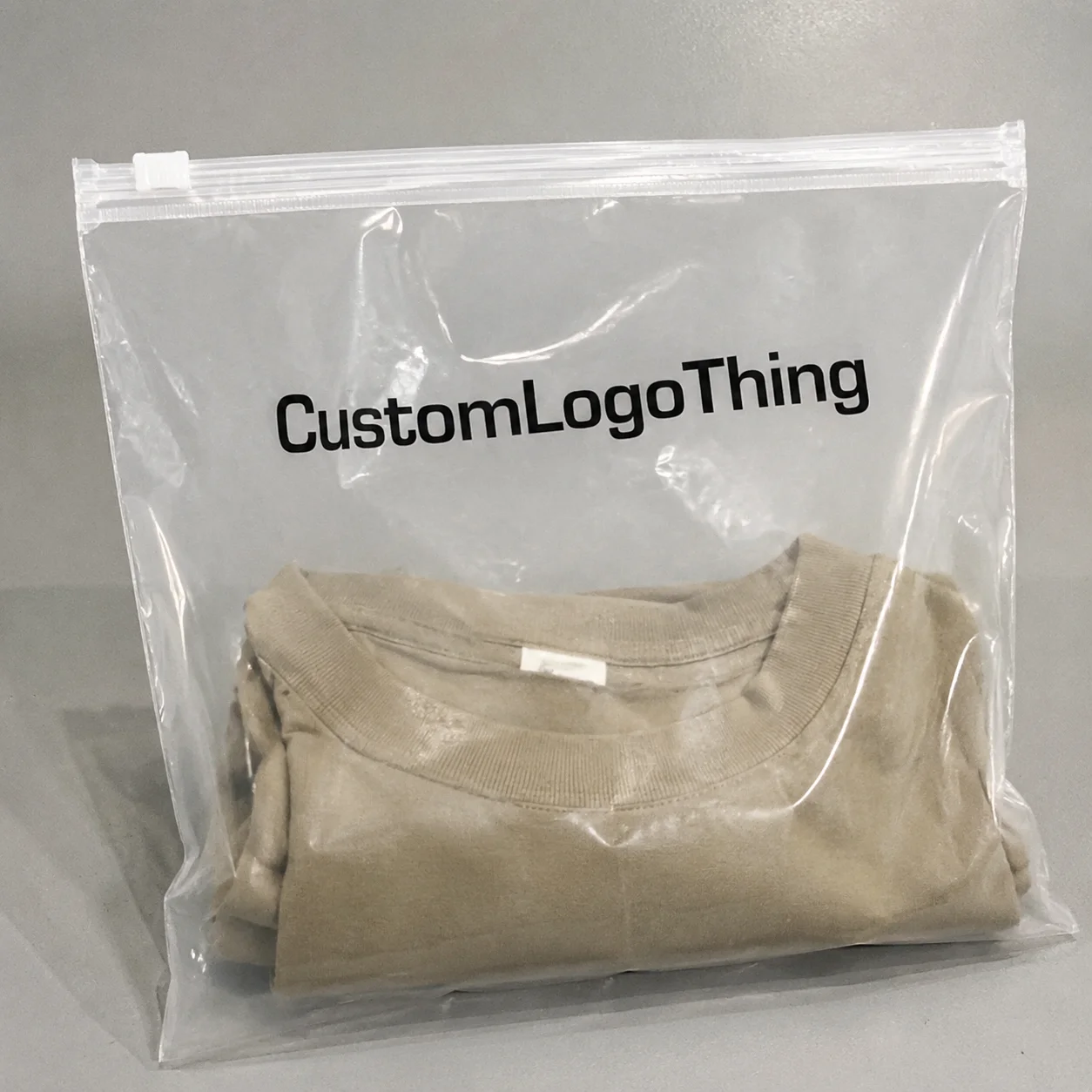
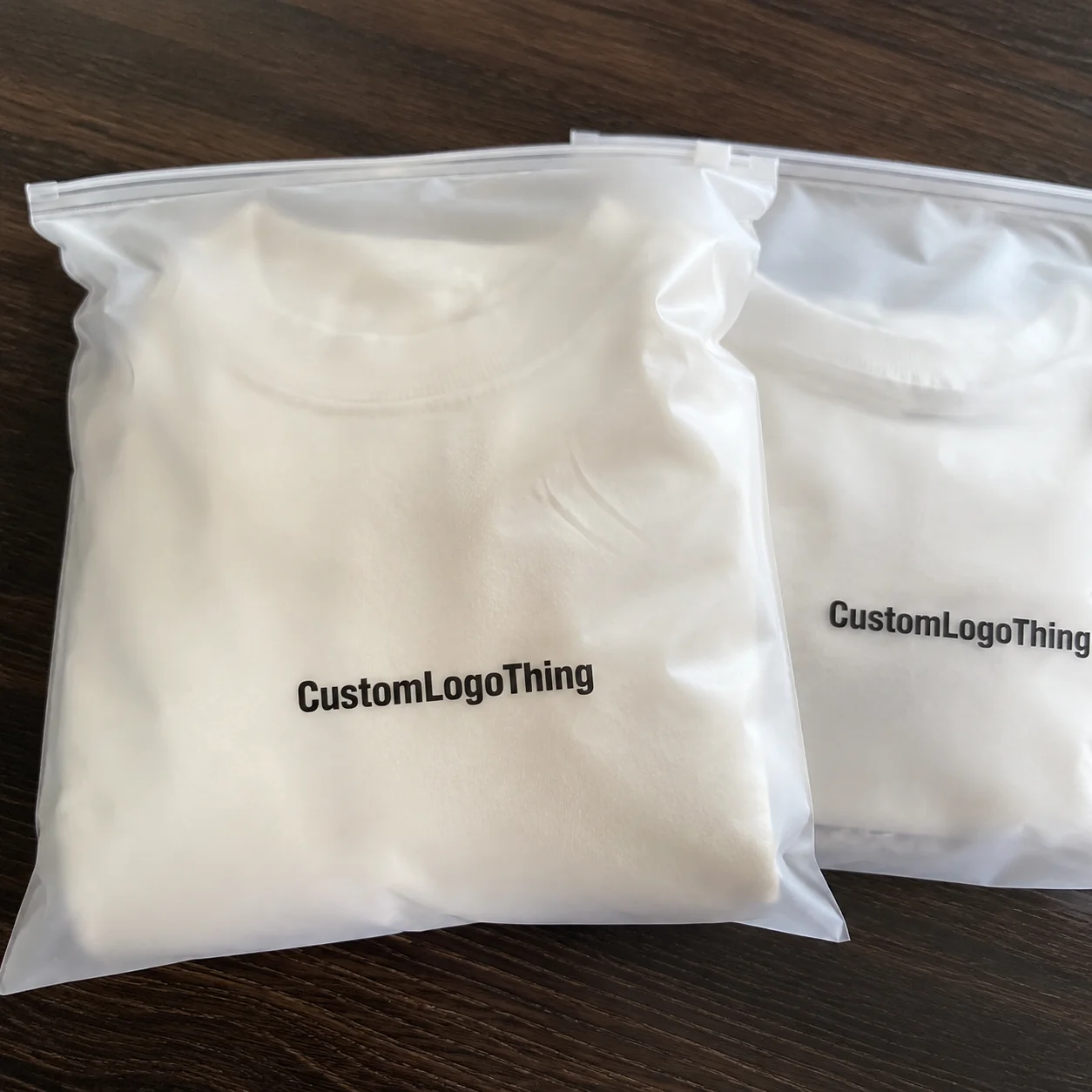
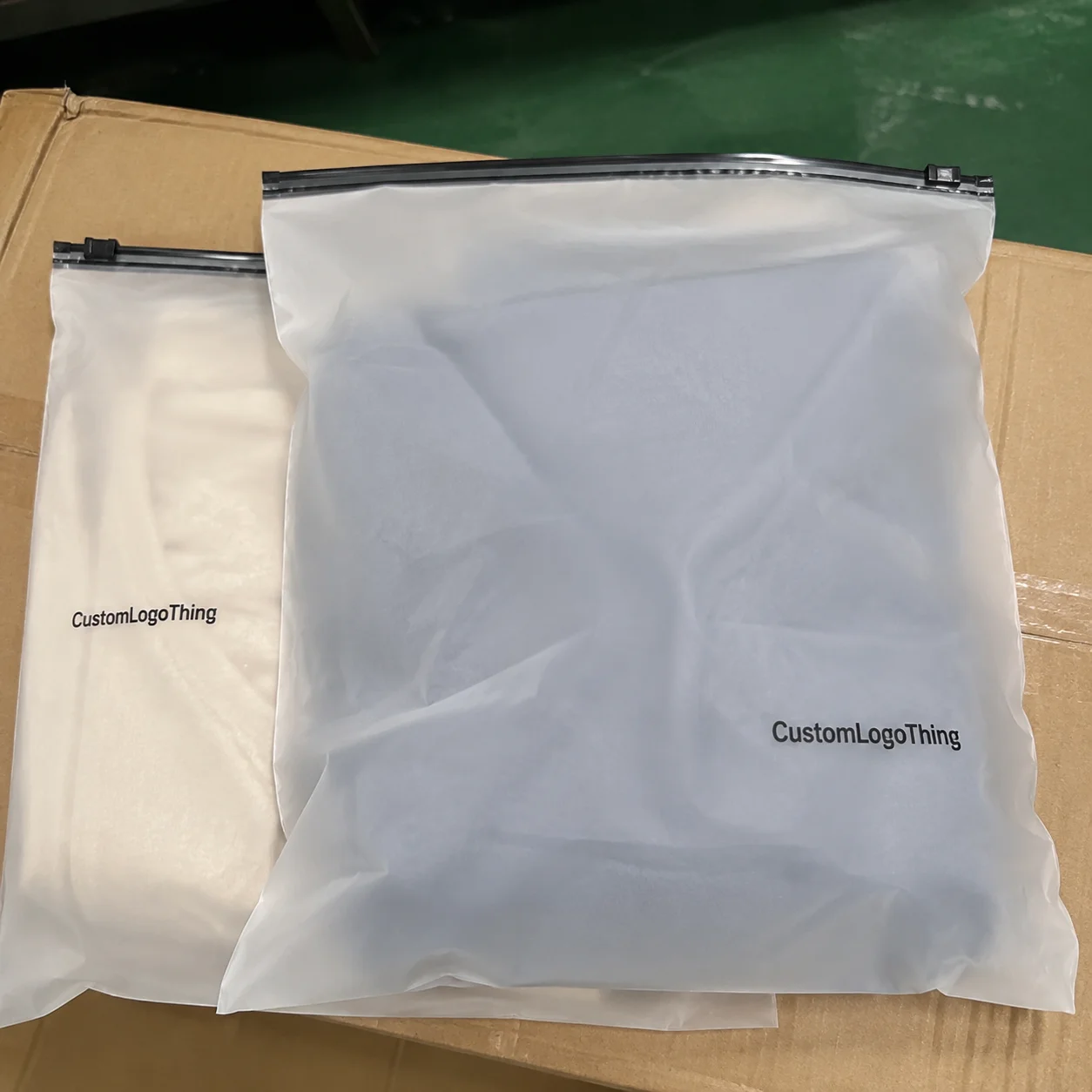
Two matte zipper bags can use the same film thickness, the same press-to-close zipper, and the same finished pouch size. One looks sharp and retail-ready. The other looks flat, muddy, and oddly cheap. Annoying, but common.
The difference usually starts before the quote. Buyers who understand how Buy Matte Zipper bags logo print specification decisions affect film, artwork, color, zipper placement, sealing, and production approval get cleaner results. Buyers who only ask for “a matte pouch with my logo” tend to get a pile of follow-up questions, revised proofs, and surprise costs.
Matte packaging has a softer hand feel than glossy plastic and cuts glare under retail LEDs, trade show lighting, and warehouse pick-pack stations. Good choice for many brands. But matte surfaces also reduce perceived contrast. A charcoal logo that looks perfect on a monitor can close up on film. Fine strokes, subtle gradients, low-contrast CMYK builds, and heavy dark panels all need extra attention.
For food startups, supplement sellers, coffee roasters, pet treat brands, retail product managers, and purchasing teams, a custom printed matte zipper bag quote needs more than artwork. It needs finished dimensions, material structure, print method, color references, matte finish type, zipper style, quantity, barrier requirements, filling method, compliance needs, and shipping location. Nail those details early and the bag has a much better chance of protecting the product, looking consistent, resealing properly, and moving through proofing without drama.
Start the Specification at Shelf Level
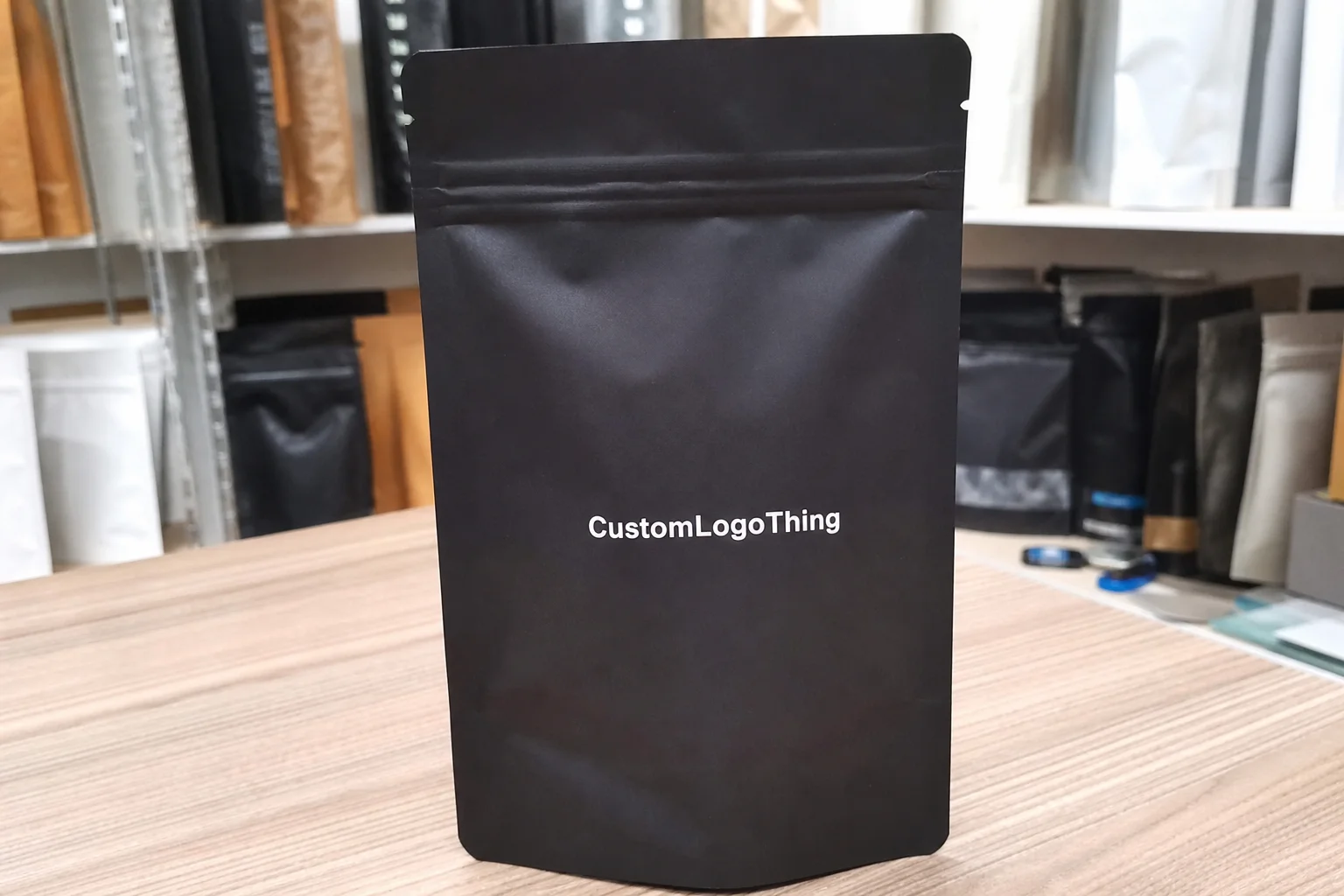
A matte zipper bag gets judged fast. A shopper sees the front panel, picks it up, feels the surface, checks the product information, and opens or reseals it if the package allows. If the bag wrinkles badly, the logo is hard to read, or the zipper feels weak, the product loses credibility before anyone reads the ingredient list.
That is why the specification should start with the finished retail experience, not the lowest pouch quote. First, decide how the bag will be used. Will it stand on a shelf, hang from a euro slot, sit inside a subscription box, ship inside a mailer, or move through a club-store distribution chain? Each route changes the structure.
A 5 oz snack pouch may need a stable bottom gusset and a clear window. A 1 lb coffee bag may need high aroma barrier, a degassing valve, a strong zipper, and enough headspace for filling and heat sealing. A supplement powder pouch needs room for directions, supplement facts, warnings, lot coding, and a zipper that still closes when fine powder gets near the track. Powder loves to misbehave. Plan for it.
Matte finish also changes brand presentation. White matte film with black type can feel clean and clinical. Kraft-look matte laminated film can feel natural, though it is often not paper and should not be marketed as paper unless the material data supports the claim. Black matte pouches can look premium, but they show rub marks more easily if the finish, varnish, carton packing, and handling method are not selected with scuff resistance in mind.
Practical callout: A good matte zipper bag specification is not decorative paperwork. It is the production map for film, zipper, print, converting, inspection, packing, and repeat orders.
Before pricing, define the product weight, fill volume, shelf-life target, storage conditions, display method, open-and-close frequency, launch quantity, and reorder plan. Those details keep the specification tied to actual production needs instead of vague design preference.
Choose the Matte Zipper Bag Structure Before Artwork
Artwork should fit the bag. It should not be forced to rescue the wrong bag format.
The main matte zipper bag styles include stand-up pouches, flat bottom bags, three-side-seal zipper bags, side gusset zipper bags, and lay-flat resealable pouches. Each one fills, displays, seals, and ships differently.
Stand-up pouches are common for snacks, powders, gummies, herbs, pet treats, hardware kits, beauty samples, and small refill packs. They use a bottom gusset and can range from small 3 inch by 5 inch sample bags to larger 10 inch by 14 inch formats. They are versatile and familiar, which is why everyone reaches for them first.
Flat bottom bags cost more, but they provide stronger shelf presence, squared panels, better cube efficiency, and a more premium look for coffee, granola, specialty foods, and higher-end dry goods. Three-side-seal zipper bags work well for smaller weights and flat products. Side gusset zipper bags may fit coffee, tea, dry goods, or larger fill volumes where front and side branding matter.
Common laminated film structures include PET/PE, matte BOPP/PE, metallized PET/PE, kraft-look laminated film, and higher-barrier combinations with EVOH, aluminum foil, or metallized layers. PET adds print stability and stiffness. PE supports heat sealing. Metallized PET improves oxygen, moisture, light, and aroma protection. Kraft-look laminated structures usually still rely on plastic sealant layers inside, even if the outside looks paper-like.
Matte effects can be built several ways: matte film, matte varnish, or matte lamination. Matte film often gives a consistent low-gloss surface. Matte varnish can be applied over printed areas and may allow selective contrast if part of the design stays glossy. Matte lamination can add a softer, more premium hand feel, but it can raise unit cost and should be checked for rub resistance, especially on dark colors.
Do not leave functional details until the final proof. Zipper placement affects fill height. Tear notches affect first opening. Hang holes need enough reinforcement around the top seal. Rounded corners improve handling for sample kits, personal care products, and retail packs that may be handled repeatedly. Clear windows help shoppers see product texture, but they reduce print area and may weaken the intended barrier if placed in the wrong material zone.
Logo Print Specifications That Prevent Costly Revisions
The cleanest way to manage how Buy Matte Zipper Bags logo print specification decisions is to send useful files before art review starts. Send vector logo files, dielines if available, Pantone or CMYK references, barcode files, nutrition or supplement panels, ingredient lists, warning statements, net weight, country-of-origin text, recycling marks, and required retail copy. A flattened JPEG pulled from a website is not a production logo. It is a headache with pixels.
Digital printing suits lower MOQs, seasonal graphics, product line testing, and faster setup because it does not require engraved cylinders or traditional plates. It can be a practical path for multiple SKUs or first runs, though unit cost may stay higher as volume grows.
Gravure printing is common for larger laminated runs where repeatable color, dense coverage, and long-run efficiency matter. Flexographic printing can work for simpler graphics, spot-color designs, and some rollstock or pouch programs. Offset printing is more common in cartons and labels than flexible pouches. If someone uses the word “offset” for a matte zipper bag, ask what press method is actually being quoted.
Matte zipper bags have real print limits. Fine lines below about 0.25 pt can disappear after printing and lamination. Reversed-out text under 6 pt may plug up, especially on dark backgrounds. Small legal copy may technically print, then fail in real lighting. That is not a win.
Barcodes need quiet zones, strong contrast, and testing at final printed size. Bleed often runs about 2 to 3 mm beyond the trim line. Safety margins should keep critical copy away from seals, zipper tracks, tear notches, gusset folds, rounded corners, and hang holes. Registration tolerance varies by press and material, but small shifts are normal. Do not place a hairline border exactly on a fold or seal edge unless you enjoy staring at slightly crooked lines forever.
Spot color and process color behave differently. A spot color can be targeted more directly, often with Pantone references. CMYK builds are made from four process inks and can shift across substrates, lamination, and finish. Matte film can soften contrast, so dark green, navy, brown, charcoal, and muted reds should be reviewed carefully. If exact brand color matters, ask whether a drawdown, printed sample, or production proof is available and what tolerance applies.
| Print Option | Best Fit | Typical Cost Pattern | Buyer Watchout |
|---|---|---|---|
| Digital printing | Short runs, test launches, multiple SKUs | Lower setup cost, higher unit cost at scale | Confirm color tolerance and ink coverage limits |
| Flexographic printing | Simple graphics, spot colors, repeat jobs | Plate cost upfront, better value as volume rises | Fine gradients and tiny type need review |
| Gravure printing | Large runs, dense color, premium laminated films | Higher cylinder setup, strong long-run consistency | MOQ and lead time are usually higher |
Logo placement deserves more attention than it usually gets. A front-panel logo is easiest to inspect and strongest for retail recognition. A gusset logo may distort after filling. A back-panel logo must compete with barcode, ingredients, directions, warnings, and regulatory copy. Printing across multiple panels can look polished, but it adds art setup work and more places for alignment issues to show.
Material, Barrier, and Compliance Details Buyers Should Confirm
The material should match the product, not just the mood board. Dry snacks need moisture control and seal integrity. Coffee needs aroma retention, oxygen protection, and often a degassing valve. Powders need puncture resistance, strong seals, and zipper tracks that can tolerate some product dust. Pet treats may need aroma barrier and grease resistance. Cosmetics, hardware, apparel accessories, and sample kits bring different concerns around abrasion, odor, product shape, and retail handling.
Barrier is simple in buyer language: what the package keeps out and what it holds in. Moisture barrier helps prevent clumping, staling, or texture loss. Oxygen barrier slows oxidation for products sensitive to flavor, color, fats, fragrance, or active ingredients. Aroma barrier protects coffee, spices, pet treats, scented products, and herbal goods from fading too quickly. Light blocking matters for ingredients affected by UV exposure. Puncture resistance matters for sharp-edged hardware, freeze-dried products, dehydrated items, and irregular pieces.
Specify film thickness clearly. Some quotes list total thickness in microns, such as 100 to 160 microns for many custom pouches. Others break down each layer, such as 12 micron PET plus 70 micron PE. Neither format is wrong, but the quote should be clear enough to compare.
Thicker film is not automatically better. If the bag is too stiff, it may fill poorly, wrinkle during converting, or resist proper zipper closure. If it is too thin, it may scuff, collapse on shelf, tear too easily, or fail during drop handling. The right structure balances stiffness, barrier, seal strength, feel, and cost.
Food-contact packaging should use materials suitable for the intended contact application. In the United States, buyers can review general food-contact expectations through the FDA food contact substances resource. Product labeling, ingredient claims, warning statements, nutrition or supplement facts, and compliance claims remain the brand owner’s responsibility. If child-resistant performance is required, specify it before quoting. A standard press-to-close zipper is not a certified child-resistant closure.
Sustainability requests need blunt, clear language. Recyclable PE structures may be possible for some products, but they may not deliver the same oxygen or aroma barrier as metallized or foil laminates. Post-Consumer Recycled Content may fit some non-food or outer-layer uses, depending on availability and regulatory requirements. Reduced ink coverage, right-sized pouches, right-weighted film, and verified claims are often more practical than chasing a vague “eco” label.
For forestry-related paper claims, buyers can review chain-of-custody basics through FSC. But kraft-look laminated plastic is not the same as FSC-certified paper. That distinction matters on packaging copy, retailer reviews, and consumer trust.
Pricing, MOQ, and Unit Cost Drivers for Matte Zipper Bags
Custom matte zipper bag pricing depends on size, film structure, thickness, print method, color count, ink coverage, matte finish, zipper type, gusset design, order quantity, shipping destination, and whether tooling, plates, or cylinders are required. A small digitally printed sample pouch will not price like a high-barrier flat bottom coffee bag with matte lamination, valve, zipper, and full-panel dark ink. Different animal.
As a practical range, smaller digitally Printed Matte Zipper Bags may land around $0.25 to $0.85 per unit at lower quantities, depending on size, structure, and coverage. Larger custom laminated runs can drop lower per unit as volume rises, but setup, plate or cylinder charges, film, cartons, freight, and duties can change the real landed cost. Fully custom gravure structures often require higher opening quantities, yet repeat orders may get better unit economics once setup costs are spread across more bags.
MOQ is not random. It comes from material roll width, press setup, lamination setup, zipper stock, converting efficiency, scrap allowance, and whether the buyer uses a stock size or fully custom dimensions. Digital printing can reduce startup friction for 500 to 2,500 pieces in some programs. Plate-based printing may make more sense around 5,000, 10,000, or higher piece counts, depending on bag size and material yield.
Freight can distort the math. Heavy cartons of empty pouches are not glamorous, but they still take space. A larger bag with more air volume per carton may cost more to ship than expected. If comparing suppliers, ask whether pricing is ex works, FOB, delivered, or landed. A cheap unit price that ignores freight is not a finished cost.
Before asking for a quote, collect finished width, finished height, bottom gusset, quantity tiers, product weight, product type, barrier need, artwork status, fill method, target delivery date, and destination ZIP code or country. If you do not know whether a 6 inch by 9 inch bag or a 7 inch by 10 inch bag will fit, send the product dimensions and target fill weight. A supplier can recommend a practical pouch format faster with product details than with design preference alone.
The cheapest unit price is often the expensive mistake in custom flexible packaging. A bag that scuffs in transit, fails a drop check, prints off-color, leaks at the seal, or needs artwork rework after approval can burn more money than the buyer saved. The better question is: what specification creates a sellable bag at a unit cost the margin can support?
Production Process and Timeline from Quote to Delivery
The buying sequence is usually straightforward: specification review, quote, artwork check, dieline confirmation, proofing, sample or pre-production approval if needed, material ordering, printing, lamination, curing, slitting, bag making, quality control, packing, and shipping. Simple stock-size digital jobs can move faster. Custom laminated matte runs with special film, plates, and higher quantities need more planning.
The fastest steps are often quoting and basic PDF proofing if the buyer has dimensions, vector art, and final copy ready. The slow points are predictable: incomplete artwork, missing barcode files, late nutrition panels, unclear dimensions, color disputes, special film sourcing, and proof approvals stuck in an internal review queue. One missing warning statement can stop a pouch order as effectively as a missing film roll.
Lead time depends on print method and material path. Digitally printed stock structures may be produced in a shorter cycle after proof approval. Custom laminated runs commonly need added time for plate or cylinder preparation, film procurement, printing, lamination curing, slitting, pouch converting, and QC. Curing time is not dead time. Laminated structures need proper bond development before converting and packing.
Proof types do different jobs. A digital PDF proof confirms layout, spelling, copy placement, barcode location, and dieline fit. It does not prove final matte texture or exact color. A color drawdown helps evaluate ink on the selected substrate, though it may not show full pouch converting. A physical printed sample can confirm hand feel and general appearance, but it may still differ slightly from full production. A production proof gives stronger confirmation, but it usually costs more and adds time.
Build review time into the schedule. Internal marketing approval, regulatory review, retailer approval, filling trials, freight transit, customs clearance, and warehouse receiving can each add days. If the packaging is tied to a launch, seasonal promotion, or retailer delivery window, give the schedule more room than the optimistic print date.
Quality Checks That Matter Before Approval
Approval should cover more than whether the logo looks correct. A sellable matte zipper bag also needs zipper alignment, seal strength, tear notch function, gusset formation, film scuff resistance, odor control, barcode scanability, and accurate carton counts. A pouch that looks beautiful but will not reseal cleanly is not production-ready.
Useful inspection points include finished width and height, gusset depth, print registration, color tolerance, laminate bond, zipper closure feel, top seal area, bottom gusset stability, tear notch opening, clear window placement, rub resistance, odor, carton labeling, and piece count. For shipping performance, buyers can also review distribution testing concepts from organizations such as ISTA, especially if filled pouches move through parcel networks, club-store distribution, or rough warehouse handling.
Review matte finishes under normal retail lighting, not only on a bright monitor or phone screen. Low-glare film changes perceived contrast. It can make a design feel softer and more premium, but it can also hide fine gray text or make dark builds look flatter than expected. If the brand uses small type, thin icons, metallic-looking effects, or dense black panels, proof as close to the final finish as the budget allows.
Product-fit testing is worth doing whenever possible. Fill the bag with the actual product weight. Close and open the zipper 10 to 20 times. Stand it on a shelf. Drop a filled sample from a practical handling height. Check whether powder contaminates the zipper, oily products stain the seal area, sharp products stress the corners, or aroma escapes too quickly.
Not every order needs a full lab study. Every serious launch should still put real product in a real pouch before the full run if timing and budget allow. Paper specs are useful. Filled samples tell the truth faster.
Action Steps for a Production-Ready Quote
Before requesting pricing, confirm the finished bag width, height, gusset, fill weight, product type, barrier needs, zipper style, matte finish preference, print coverage, quantity range, and delivery location. If the product is food, supplement, cosmetic, pet, or otherwise regulated, identify material and labeling requirements early. If the bag will be hand filled, semi-automatic filled, or used on a form-fill-seal line, say so in the first request.
Send vector artwork if available. If not, send the best logo file you have, brand color references, required text, barcode, rough layout, and examples of pouch styles you like. A packaging supplier can flag missing details early: unsafe text placement, low-resolution logos, barcode size problems, zipper conflicts, gusset distortion, or clear-window placement that fights the barrier requirement.
Ask for two or three quantity breaks. For example, compare 1,000, 2,500, and 5,000 pieces for digital printing, or 5,000, 10,000, and 25,000 pieces for plate-based production where appropriate. The best buy is not always the largest order. Inventory budget, storage space, product shelf life, SKU count, and reorder timing all matter.
State non-negotiables upfront. These may include food-contact material, recyclable structure preference, high-barrier film, metallized layer, clear window, hang hole, rounded corners, barcode performance, child-resistant closure, or a hard delivery date. Clear constraints make quoting faster and reduce revision loops.
Use how Buy Matte Zipper bags logo print specification as a working checklist, even if the phrase sounds like a search query wearing work boots. Define the bag. Confirm the material. Control the logo print details. Choose the finish. Set realistic quantity breaks. Then review proofing, testing, and delivery timing before approving production.
FAQ
What information do I need before asking how to buy matte zipper bags with logo print specifications?
Prepare finished bag dimensions, product weight, product type, order quantity, artwork files, print colors, matte finish preference, barrier needs, zipper style, filling method, and delivery location. If dimensions are not final, provide the product size and fill weight so the supplier can recommend a practical pouch format.
What is the MOQ for custom matte zipper bags with logo printing?
MOQ depends on print method, bag size, material structure, and whether the order uses a stock format or a fully custom laminated structure. Digital printing usually supports lower startup quantities, while plate-based or gravure printing often becomes more cost-effective at higher volumes because setup costs spread across more bags.
How does matte finish affect logo print quality on zipper bags?
Matte surfaces reduce glare and create a softer premium feel, but they can make fine type, low-contrast colors, dark ink coverage, and subtle gradients look less sharp than on glossy film. Use vector artwork, proper bleed, safe margins, confirmed CMYK or spot color references, and proof review under realistic lighting.
How long is the production timeline for matte zipper bags with logo print?
Timeline depends on artwork readiness, proof approval speed, material availability, print method, lamination requirements, order quantity, QC, and freight method. Allow extra time for custom films, physical samples, retailer approvals, filling trials, or any packaging tied to a fixed launch date.
What affects the unit cost when buying matte zipper bags with logo printing?
Major cost drivers include size, film thickness, barrier material, print colors, ink coverage, matte finish type, zipper style, order quantity, tooling, packing, and shipping. Ask for multiple quantity breaks to see where setup costs spread out and where the best production value begins.