OEM Cuffed Beanies Wholesale Pricing for winter apparel brands looks straightforward until decoration, packaging, and freight get folded into the same order. A quote that seems low on paper can turn into a margin leak once the cuff will not hold a clean patch, the yarn pills after a few wears, or the carton count makes shipping inefficient. For retail, promo, and private-label buyers, the safest move is to judge the landed cost, not the factory number alone.
The fastest-selling beanie is rarely the cheapest one. It is usually the one with a repeatable fit, a clean front panel, and enough structure to keep the logo straight after packing and unpacking. Buyers who want stronger sell-through tend to compare the build first, then the decoration method, then the freight path. That order keeps the numbers honest.
Why the cheapest beanie quote usually costs more
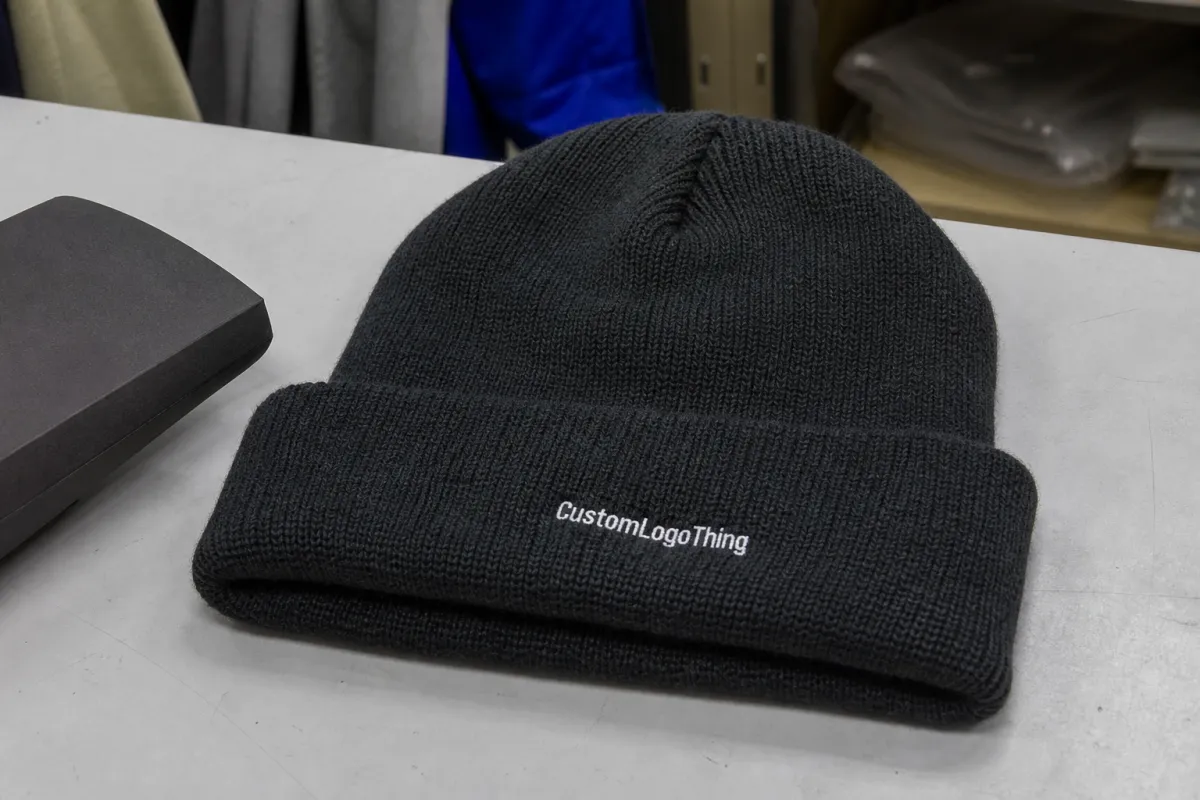
The lowest unit price often hides three problems: weak rib recovery, uneven dye lots, and a cuff that looks fine in a photo but collapses under embroidery. A buyer can shave a few cents off the quote and still lose more than that in returns, markdowns, or reorder headaches. Cheap headwear becomes expensive quickly when the second shipment no longer matches the first.
A winter beanie is not difficult to make, which is exactly why buyers get trapped. If the yarn is thin, the crown shape is sloppy, or the cuff wanders in width, the product still exists, but it does not feel retail-ready. For branded programs, especially chain-store or DTC assortments, consistency is the real value. A clean beanie that sells at full price beats a bargain piece that needs constant discounting.
“If the cuff cannot hold the logo cleanly, the price is already wrong.”
One practical example: a $1.05 factory quote can become $1.70 to $2.10 landed once embroidery, individual polybags, master cartons, inland freight, and ocean or air movement are added. If the same program comes in at $1.25 but includes stable yarn, better rib recovery, and fewer defects, it usually wins. Cheap is not cheap if the carton lands late or the hand feel pushes it out of premium shelves.
There is also a hidden cost in time. A low bid that needs repeated sample fixes often burns two or three extra weeks before bulk production starts. In a seasonal category, that delay can force air freight, which erases the original savings in one stroke.
Product details buyers should confirm before ordering
Before price talks get serious, lock the build. Ask for cuff height, crown shape, knit density, yarn blend, and whether the beanie is single-layer or double-layer. Those details tell you more about the final retail fit than the style photo ever will. A cuffed beanie with a 7-9 cm cuff behaves differently from one with a shallow fold, especially if the brand wants a centered logo or woven tab.
Material choice matters more than most buyers admit. Acrylic is the default for volume programs because it is cost-effective, color-stable, and easy to knit. Recycled yarn costs more, but it helps brands with sustainability targets and can support better shelf positioning. Wool-blend styles bring warmth and a more premium hand, though they can pill more or need tighter quality control. Mixed-fiber knits sit between those options and are common for brands that want softness without full wool pricing.
Decoration should be decided with the cuff, not after it. Embroidery needs a stable surface. Woven labels like flatter areas and crisp edges. Silicone patches need enough structure so the cuff does not buckle underneath. Private-label hang tags or insert cards need packing discipline, not just a nice design file. A good looking beanie can still fail if the front panel is too soft for the chosen decoration.
Useful standards help here. For carton vibration and drop expectations, the ISTA library is worth reviewing. If the packaging story includes recycled board or certified inserts, FSC certification is the cleanest shorthand buyers understand.
Specs that change fit, decoration, and sell-through
Fit is a spec, not a vibe. Ask for measurements laid flat, stretch recovery, rib width, cuff depth, and decoration zones. A common adult cuffed beanie may measure about 20-22 cm wide and 21-23 cm tall laid flat, but the exact number depends on the knit and how much slouch the brand wants. Finer gauges, such as 9-gauge knits, usually look cleaner; chunkier 5-gauge styles feel warmer and more seasonal. That choice affects price and shelf appeal.
Rib construction affects more than stretch. A tighter rib helps the cuff stay crisp under a woven patch or embroidery, while a looser rib can feel softer but may twist after repeated wear. The crown matters too. A beanie that is too shallow sits awkwardly on the head, and one that is too tall can bag out after packing. Small changes in pattern length are enough to shift the whole silhouette.
Quality checks should cover more than stitching. Buyers should ask for colorfastness, pilling resistance, stitch consistency, and label placement tolerance. If the beanie is for a chain store or a serious online launch, ask what defect standard the supplier uses. An AQL target such as 2.5 is common for many retail programs, though some buyers ask for tighter screening on logo placement. That is not overkill. It is basic brand protection.
Packaging matters more than casual buyers think. A beanie stuffed into a loose polybag may be fine for a local promo run, but wholesale buyers should confirm polybag count, carton size, and master pack quantity. If the piece needs scan-in at a warehouse, barcode readiness should be part of the order brief. If inserts or hang cards are printed, ask whether the paper stock is FSC-certified and whether the outer cartons are sized to avoid wasted freight volume.
- Dimensions: laid-flat width, total height, and cuff depth.
- Structure: single-layer or double-layer, rib width, crown shaping.
- Decoration zone: embroidery field, patch area, label position.
- Packing: polybag count, master carton count, barcode format.
- Testing: colorfastness, pilling, wash retention, carton integrity.
OEM cuffed beanies wholesale pricing and MOQ
For OEM Cuffed Beanies Wholesale Pricing for winter apparel brands, the real number depends on yarn, stitch density, decoration method, and how many colors or packaging steps are added. A simple stock-acrylic beanie with one embroidery location sits in one cost band. A recycled-yarn style with a woven label, custom hang tag, and retail polybag sits in another. Same product family. Very different invoice.
Here is a practical way to look at it.
| Style | Typical MOQ | Typical factory price at 1,000 pcs | Typical factory price at 5,000 pcs | Best use | Watchouts |
|---|---|---|---|---|---|
| Stock acrylic, single embroidery | 300-500 pcs | $1.05-$1.65 | $0.78-$1.15 | Fast seasonal drops, promo programs | Color limits, basic hand feel |
| Custom acrylic, woven label or patch | 500-1,000 pcs | $1.35-$2.20 | $1.00-$1.55 | Core retail, repeatable brand programs | Setup fees, longer sample cycle |
| Recycled yarn, premium finish | 800-1,500 pcs | $1.75-$2.90 | $1.30-$2.05 | Sustainability-led assortments | Shade matching, hand-feel variance |
| Wool-blend or specialty knit | 1,000-3,000 pcs | $2.40-$4.10 | $1.90-$3.20 | Premium retail, elevated gifting | Pilling control, warmer cost ceiling |
Those figures are factory-side, not landed. Add sample charges, packing upgrades, freight, and duty, and the real number shifts. A custom patch can add $0.20 to $0.60 per unit depending on size and finish. A retail hang tag might add only a few cents, while a folded insert card, barcode sticker, or custom mailer can move the total faster than the beanie itself. That is why the quote should list setup, decoration, packing, and delivery terms separately.
MOQ follows the same logic. Stock yarn and simple decoration can start lower because the mill does not need to dye fresh lots or reserve special knitting time. Custom colors, woven labels, silicone patches, or private-label packaging usually push the minimum up. If a supplier gives you a low MOQ but will not guarantee repeat dye lots, the second reorder can turn into a color-matching problem.
For brands balancing price and speed, the middle option usually wins. It gives enough margin for wholesale while still looking deliberate on a retail rack. Promo-grade beanies often feel too thin, while premium builds can price themselves out of volume unless the brand has strong sell-through or high ASPs.
A cheap beanie is fine until the second shipment does not match the first. Then the savings vanish.
Production steps, timeline, and lead time checkpoints
Good sourcing is mostly good sequencing. The process should run like this: brief, artwork confirmation, sample approval, bulk knitting, decoration, finishing, packing, final inspection, then shipment. If a supplier cannot explain that path in plain language, keep your hand on the brake. A clean process matters more than a polished quote PDF.
Lead time depends on the program. A stock-style beanie with simple decoration may move in about 12-18 business days after sample approval. A more custom program with special yarn, printed packaging, and label work can stretch to 20-30 business days. Add freight, and the calendar changes again. Winter apparel brands should plan earlier than they think, because late arrival stays late no matter how good the product looks.
The delays usually happen in the same places: slow sample feedback, missing logo files, color revision loops, and last-minute carton changes. A buyer who answers within 24-48 hours can often cut a week off the schedule. One who waits a week to approve a sample usually pays for that delay in launch pressure or air freight. That is how seasonal programs lose money.
If a shipment is going through a third-party warehouse or e-commerce fulfillment center, the packing spec should survive parcel handling. Cartons should be tested to realistic transit abuse, and master pack counts should reflect the actual route. Flat-pack efficiency looks small until freight is billed by volume, not optimism.
What a reliable OEM beanie supplier should prove
A good supplier does not just send a price. They show evidence. Ask for factory photos, QC flow, material sourcing, sample policy, and proof that repeat orders stay consistent. If a supplier cannot explain how they match previous shade lots or keep decoration placement within tolerance, the relationship will be noisy. Buyers do not need drama. They need order stability.
Communication style matters more than many sourcing teams admit. Clear replies, direct timelines, and honest pushback on bad specs usually beat vague promises. A strong OEM partner will tell you if a cuff is too narrow for a patch, if a yarn choice will pill, or if a packaging idea will inflate freight volume. That kind of bluntness protects margin. Sugarcoating does not.
For repeat replenishment, winter-apparel experience is worth paying for. The supplier should understand seasonal demand swings, retail calendar pressure, and the need for consistent branding across multiple production runs. The better ones also know where variation is acceptable and where it is not. A 3 mm shift in cuff depth might be fine. A logo drifting off-center is not.
One more filter: ask what happens if the sample is off. Do they remake it? Charge again? Push changes into bulk? That answer tells you more than the logo on the brochure. Reliable suppliers give you a defined correction path, not a shrug.
Next steps to request samples and lock the order
Before you Request a Quote, confirm four things: target quantity, decoration method, delivery date, and your acceptable price band. That keeps everyone honest. If the build is still undecided, ask for one fit sample and one production-style sample. Fit tells you about shape and cuff hold. Production-style sample tells you whether the logo, yarn, and packaging work together.
Then compare the offer on equal terms. Same yarn. Same cuff size. Same packing. Same delivery method. Otherwise, you are comparing fiction to fiction. For winter headwear, the better decision is usually the one with the most stable repeat order, not the loudest discount. A few cents saved upfront can disappear the moment the second run starts drifting.
The cleanest buying rule is simple: choose the supplier that gives you the best mix of sample accuracy, landed cost, and reorder confidence. That is the point where the product is not merely cheap; it is usable, brand-safe, and worth restocking.
What affects OEM cuffed beanies wholesale pricing the most?
Yarn type, stitch density, cuff construction, and decoration method usually move the price more than the beanie shape itself. Higher MOQ, fewer colors, and simpler packaging usually lower the unit cost. Freight method and sample revisions can change the landed cost quickly, so ask for a full breakdown before judging the quote.
What MOQ should winter apparel brands expect for custom cuffed beanies?
Simple stock-color programs often start at a lower MOQ than fully custom yarn-dyed orders. Custom colors, woven labels, or specialty patches usually require a higher minimum. Confirm MOQ by color and by decoration type, not just by style name, or the number will not mean much.
How long does production usually take for wholesale cuffed beanies?
Sample approval is the first gate, and slow feedback there adds the most delay. Bulk production timing depends on knit complexity, decoration, and packaging requirements. A clear artwork file and fast sample sign-off usually shorten lead time more than anything else.
Which decoration method works best on cuffed beanies?
Embroidery is the most common choice for a premium retail look and strong durability. Woven labels and patches work well when the brand wants more detail or a cleaner surface. The cuff must be wide and stable enough to hold the decoration without distortion.
How can buyers compare beanie quotes without getting fooled by unit price?
Compare the quote on the same specs: yarn, cuff size, decoration, packing, and delivery method. Ask whether the price includes setup, sampling, and carton packing before judging the number. Use landed cost, not just factory price, because shipping and delays can erase the savings.


