Performance Golf Caps wholesale supplier for corporate gifting buyers is a long phrase for a simple buying test: will the cap still feel worth wearing after the event ends? If it does, the brand keeps traveling. If it does not, the cap becomes inventory, and inventory rarely carries a message.
That is why a golf cap for a corporate program cannot be treated like a throwaway promo item. Tournament kits, client thank-yous, sales incentives, executive outings, and welcome packs all ask the same thing from different angles: low friction, good fit, solid branding, and a finish that survives heat, sweat, travel, and repeated handling. A cotton cap can look fine on a quote sheet and fall short once it meets a long afternoon outdoors. Performance caps usually hold shape better, dry faster, and keep their color longer.
For gifting buyers, the business case is practical. Better perceived value means fewer awkward reactions when the box opens. Better wearability means fewer gifts left on a desk or re-gifted by Friday. More wear also means more impressions, which is why headwear often outperforms bulkier branded items even when the unit price is modest.
"A cap that gets worn once has already done more work than a cap that looks expensive in a spreadsheet."
Performance golf caps wholesale supplier for corporate gifting buyers
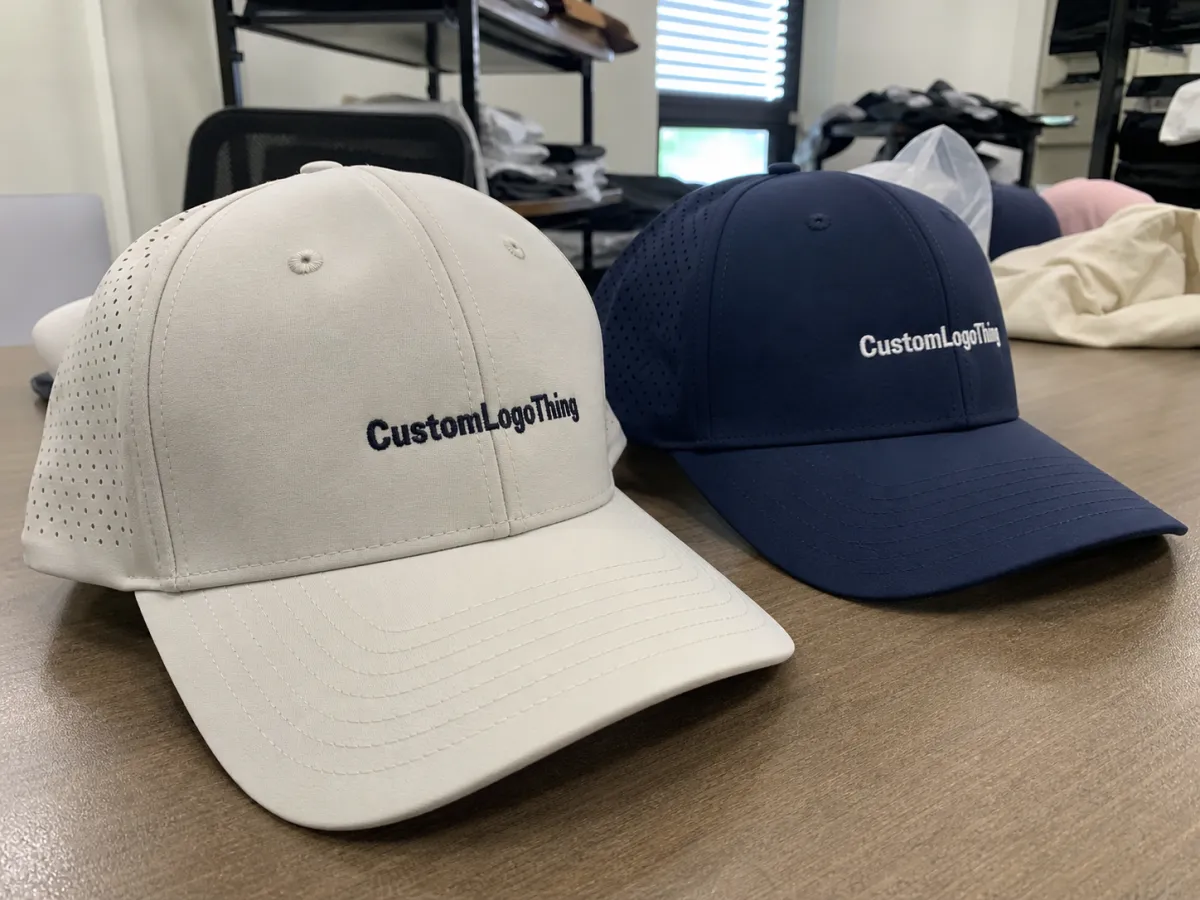
The buying job is larger than the product itself. A Performance Golf Caps wholesale supplier for corporate gifting buyers has to line up brand presentation, comfort, MOQ, decoration, and delivery timing without turning a straightforward order into a moving target. That is procurement work, not just merchandising.
Performance materials usually make more sense than standard cotton when the cap will be worn outside for real. Polyester performance blends are predictable, cost-efficient, and decorate cleanly. Recycled performance fabrics add a sustainability story, but the buyer still needs to check handfeel, shrink behavior, and dye consistency. Mesh-backed or perforated caps are useful in warm climates or active settings because breathability changes how long the cap stays wearable. The right build depends on the audience. A client golf day may need a structured, polished profile; a team incentive program can handle a lighter, sportier shape.
There is also a brand optics issue that buyers feel immediately, even if they do not say it that way. A cap that wears well tends to make the whole gift feel intentional. A cap that pinches, collapses, or prints poorly makes the rest of the package look rushed. The difference is not subtle when the item is worn in daylight instead of viewed in a mockup.
A useful way to think about the order is this: start with wearability, then decide how much branding the cap can carry without losing its premium look. Large logos can work for sports teams and internal events. For client gifting or executive use, smaller marks and cleaner placements usually age better. The goal is not to hide the brand. It is to make the cap look like something the recipient would choose on purpose.
Structure matters as much as fabric. A structured crown creates a cleaner front panel and gives embroidery a better base. Mid-profile caps are usually the safest corporate gifting choice because they fit a wider range of heads without looking too athletic or too casual. Pre-curved brims are easy to wear right away. Stretch-fit caps can feel more retail-like, but the buyer needs to be sure the sizing expectations are clear before approval.
Materials and finish details that make the cap feel premium
Fabric is where the cap starts to feel premium or ordinary. Three broad options show up most often in wholesale programs: polyester performance blends, recycled performance fabrics, and mesh-backed constructions. Each has a different tradeoff. Polyester is the most predictable on price and decoration. Recycled material helps procurement teams support sustainability claims, but recycled content does not guarantee a better handfeel. Mesh panels improve airflow, though they also change the way the cap reads visually; some brands prefer that technical look, others do not.
Some buyers ask for moisture-wicking or quick-dry performance. Those claims can be useful, but they should be treated as specifications, not marketing language. If a supplier says the fabric is treated for moisture management, ask what that means in practical terms. Is the finish woven into the material, or is it a surface treatment? Does it survive repeated wear and washing? If the cap will be used in a branded golf event, those details matter more than a broad label on a sell sheet. The same applies to UPF claims. If sun protection is part of the brief, confirm whether the rating is tested and documented.
Comfort details are where a cheap cap gives itself away. Sweatband quality, seam finishing, internal tape, and ventilation all affect how the cap feels after an hour in the sun. Buyers who sample multiple caps usually notice the inside before they notice the logo. That is not a small thing. It is the part the wearer touches every time the cap goes on.
Durability should be checked with the same care. Stitch density, colorfastness, and panel alignment tell you more than a polished product photo. A cap that arrives crushed and never recovers is not a premium gift, no matter how good the embroidery looked in approval. If the order will be boxed and shipped, transit handling should be considered early. Packaging teams often talk about drop and crush risk for a reason. The cap may be soft goods, but the carton still gets stacked, shifted, and compressed. For that reason, it can help to ask whether the supplier understands transit testing standards such as ISTA methods for shipment planning.
Packaging components deserve the same discipline. Recycled fabric sounds good, but the full package includes inserts, hang tags, polybags, tissue, and box materials. If the buyer wants a documented sustainability story, FSC-certified paper options help keep the paper side of the order aligned with that story. A premium impression usually comes from consistency across the whole pack-out, not a single recycled component used as decoration.
Decoration and branding choices that survive real use
Decoration changes how the cap feels immediately. Flat embroidery is the most reliable workhorse. It is durable, familiar, and easy to approve. 3D puff embroidery gives more dimension, but it works best with simple shapes and short text. Woven patches handle detail well and usually look cleaner than thick stitching when the logo has small elements. Silicone patches create a more technical, modern impression. Tonal print can keep the branding understated, which is useful for quieter corporate programs or tighter budgets.
For gifting buyers, smaller branding usually performs better than oversized artwork. A logo can look bold in a presentation deck and awkward on a real head. Front panel placement is standard, but a side placement or restrained tonal mark can feel more premium when the audience is executive or client-facing. Bright thread contrast is worth reviewing under real light, not just under office lighting. Direct sun exposes weak edges, poor registration, and color mismatch very quickly.
Color matching deserves more attention than most rush orders allow. Fabric, thread, and patch materials all reflect light differently. A navy cap with white embroidery can look sharp, while a tonal mark on textured fabric can disappear more than the brand team expected. If brand accuracy matters, ask for PMS references, physical swatches, or at least a sample photo taken outdoors. The goal is not perfect theory. It is legibility and consistency once the cap is worn.
Quality control for decoration should include a few practical checks: logo placement tolerance, stitch count, patch adhesion, color registration, and thread trimming. Those details sound minor until a run arrives with one slightly higher logo line across the whole order. On headwear, small offsets are visible because the front panel is curved and the eye reads symmetry quickly. A supplier who treats embroidery as decoration only, not as placement work, will miss that.
Packaging also changes the perception of the gift. If the cap is part of a welcome kit or sales reward, the unboxing matters. Insert cards, hang tags, polybags, tissue, and gift boxes all affect the final impression. A simple card with the event name or message often does more for presentation than a louder logo. Buyers sometimes increase the branding and forget the handling. The best gift packages feel deliberate, not crowded.
Common decoration choices by use case:
- Flat embroidery for standard corporate wear and repeat use.
- Woven patch for sharper detail and a polished surface.
- Silicone patch for a technical, contemporary look.
- 3D puff for simple logos that need more depth.
- Tonal print for subtle branding and lower decoration cost.
Pricing, MOQ, and unit cost tradeoffs
The right quote comparison starts with the full cost stack. Fabric, decoration, packaging, freight, and setup all live inside the final number. Comparing only the headline unit price is how buyers miss hidden costs later. A blank performance cap often lands around $3.25-$6.50 per unit, depending on material, structure, and quantity. Once decoration and gift-ready packaging are added, decorated pieces commonly fall around $5.50-$14.00. Premium patch work, specialty fabric, or custom packaging can push that higher. These are typical market ranges before freight, duties, taxes, and destination-specific charges.
MOQ varies by how custom the order is. Simple embroidery on stock colors can often start around 100-300 units. Once the order adds custom patches, special colorways, or packaged gifting components, the minimum usually rises into the 200-500 unit range. That is a production reality, not a supplier tactic. Every added component creates a sourcing and setup step.
Volume should lower unit cost, but only if the spec stays stable. Changing cap color, logo position, backing style, or packaging after the first quote can wipe out the savings. Buyers who keep the spec fixed usually get the best price curve. Buyers who revise artwork three times and swap the insert card after approval often pay for the extra admin whether they see it on paper or not.
Ask early about sample fees, mockup fees, and rush charges. A digital proof may be included, but a physical sample often costs extra and can add a week or more to the timeline. Rush jobs are possible in some cases, especially if the supplier already stocks the cap body, but speed usually comes with a higher price. That is especially true when packaging needs to be assembled by hand.
| Option | Typical MOQ | Common Add-On Per Cap | Best Use | Durability |
|---|---|---|---|---|
| Flat embroidery | 100-300 | $0.60-$1.80 | Standard corporate gifting | High |
| 3D puff embroidery | 100-250 | $1.00-$2.25 | Simple bold logos | High |
| Woven patch | 150-500 | $1.20-$3.25 | Premium detail and texture | High |
| Silicone patch | 200-500 | $1.50-$3.50 | Modern branded kits | Very high |
| Tonal print | 100-250 | $0.35-$0.90 | Subtle branding on tighter budgets | Medium |
That table is more useful than a sales pitch because it shows the tradeoff directly. If the cap is for a one-time event, embroidery may be enough. If it will sit inside a higher-end box or be part of a recurring reward program, a patch or silicone finish can justify the extra cost because the item looks more finished the moment it is opened.
Process, timeline, and lead time from quote to delivery
The best production flow is predictable. It starts with a brief, then a quote, then artwork review, then sample or digital proof approval, then production, inspection, and shipment. If a supplier cannot describe that sequence clearly, the order will probably get messy once changes begin. Delay usually hides in the same places: logo approval, color revisions, packaging edits, and quantity changes after the purchase order is already moving.
For standard orders, a realistic timeline is often 15-25 business days after final approval. Simpler jobs may finish closer to the shorter end. Custom packaging, uncommon colors, or more complex decoration can push production longer. Samples often take 5-10 days, depending on whether the cap body is already available and whether the decoration method is straightforward. Rush orders can happen, but only if stock, decoration capacity, and approval speed all line up. Speed always affects cost.
Shipping is part of the schedule, not an afterthought. Confirm the destination zip code, delivery window, and whether the order is shipping to one address or many. Multi-location gifting needs a pack-out list before production starts. If that list is still changing when the goods are ready, cartons get relabeled, shipments get delayed, and the cheapest part of the project starts consuming the most time.
For gift-box programs, freight planning should be treated as packaging planning. Carton size, insert placement, and ship-to method all influence damage risk and landed cost. A supplier that can talk through box count, pack configuration, and ship method without guessing is usually better prepared for real corporate orders than one that only talks about product photos.
Inspection also deserves a line in the timeline. A simple pre-shipment check can catch missing pieces, thread issues, off-center logos, and carton count errors before freight leaves the dock. That matters more in headwear than many teams expect, because the order may be judged by a buyer who sees only the first sample, not the hidden cartons.
What a strong supplier does for corporate gifting programs
A good supplier protects consistency across reorders. If the cap is used in quarterly events or across multiple gifting waves, the fit, fabric shade, and decoration placement should stay stable. That sounds basic, but repeat orders drift more often than buyers expect, especially when the spec lives in an old email thread or one teammate leaves mid-program.
This is where a Performance Golf Caps wholesale supplier for corporate gifting buyers proves its value. The work is not just quoting a cap. It is holding the spec steady, documenting what was approved, and making sure the delivered product matches the approved sample. Written specs matter more than polished language. So does a clear proof. So does a pre-shipment inspection that checks quantity and placement before freight is released.
Support also needs to fit the way gifting programs are actually run. Marketing teams may need insert cards. HR teams may need welcome-kit pack-outs. Procurement teams may need split shipments and invoice clarity. A supplier who understands those workflows saves time because the order does not need to be translated at every step. If the same cap will be reordered later, ask how the supplier stores artwork, decoration settings, and color references. Reorders should not require a fresh start every time.
Buyers comparing vendors should look for practical signals: clear sample photos, stable lead times, direct answers about MOQ, and a quote that separates product cost from packaging and freight. A vendor that explains the limits of the product is often more reliable than one that says yes to everything. If a certain logo is too detailed for embroidery, that should be said early. If a packaging idea will slow production by a week, that should be visible in the schedule. A clean yes is useful. A careful no is often more useful.
For orders that need repeatable wholesale buying and pack-out support, the Wholesale Programs page is the place to start because it reflects how these orders are usually managed in practice: by spec, by quantity, and by delivery plan.
The best suppliers reduce risk quietly. They do not oversell, they confirm details in writing, and they keep the cap close to the sample that was approved. That is the difference between a branded item that feels prepared and one that feels improvised.
Next steps to move from quote to approved order
If the goal is a clean quote, send the basics first: logo file, quantity, cap color, decoration method, delivery zip, and event date. That is enough for a supplier to price accurately instead of padding the number for unknowns. If the order is going to multiple addresses, include the ship-to list early.
Before the full run is approved, request a sample or a digital proof. That step catches the problems that are expensive later: wrong thread contrast, logo placement that sits too high, a crown shape that looks off on a real head, or packaging that feels too generic for the event. A day saved up front can become three days lost if the proof was skipped.
Before the PO goes out, confirm four things: MOQ, unit cost, packaging, and lead time. If any of them are vague, ask again. Vagueness is where budget overruns and schedule slips hide. If insert cards or boxed packaging are included, approve those assets in the same review cycle as the cap art so production does not stop midway through the order.
For teams choosing a Performance Golf Caps wholesale supplier for corporate gifting buyers, the most reliable path is straightforward: keep the spec tight, approve the proof, and reserve the production slot before the event date starts shrinking. That approach gives the order a better chance of arriving on time, looking consistent, and getting worn after the gift is opened.
What is the usual MOQ for performance golf caps wholesale corporate gifting orders?
Most custom runs start around 100 to 300 units, depending on cap style and decoration method. Simple embroidery often allows lower MOQs than fully custom patches or specialty packaging. For planning, ask for pricing at 100, 250, and 500 units so you can see where the real breakpoints are.
Can you match company colors on performance golf caps wholesale orders?
Yes, but color matching depends on the fabric, thread, and decoration method. Exact matches are easier on flat surfaces than on textured materials. Send PMS references and, if possible, a physical swatch. A small tolerance is normal because performance fabrics can reflect color differently in indoor light and daylight.
Which decoration method lasts best on corporate gifting golf caps?
Flat embroidery and woven patches usually hold up best for regular wear. 3D puff can also be durable, but it works best when the logo is simple and not packed with small details. Printed decoration can fit tighter budgets, but stitched options generally age better.
How long does production take after artwork approval?
Samples often take about 5 to 10 days, depending on the decoration method and the cap body selected. Bulk production commonly takes 15 to 25 days after final approval. Freight time is separate, so the final delivery date should include shipping, not just factory production.
Can performance golf caps wholesale orders be packaged for individual gifting?
Yes. Most programs can use polybags, hang tags, insert cards, or gift boxes. Individual packing should be confirmed before production because it changes cost, labor, and timeline. If the gifts are shipping to multiple addresses, request a pack-out plan early so cartons are labeled correctly.


