Plastic Bags for Subscription Orders: where small defects become big churn
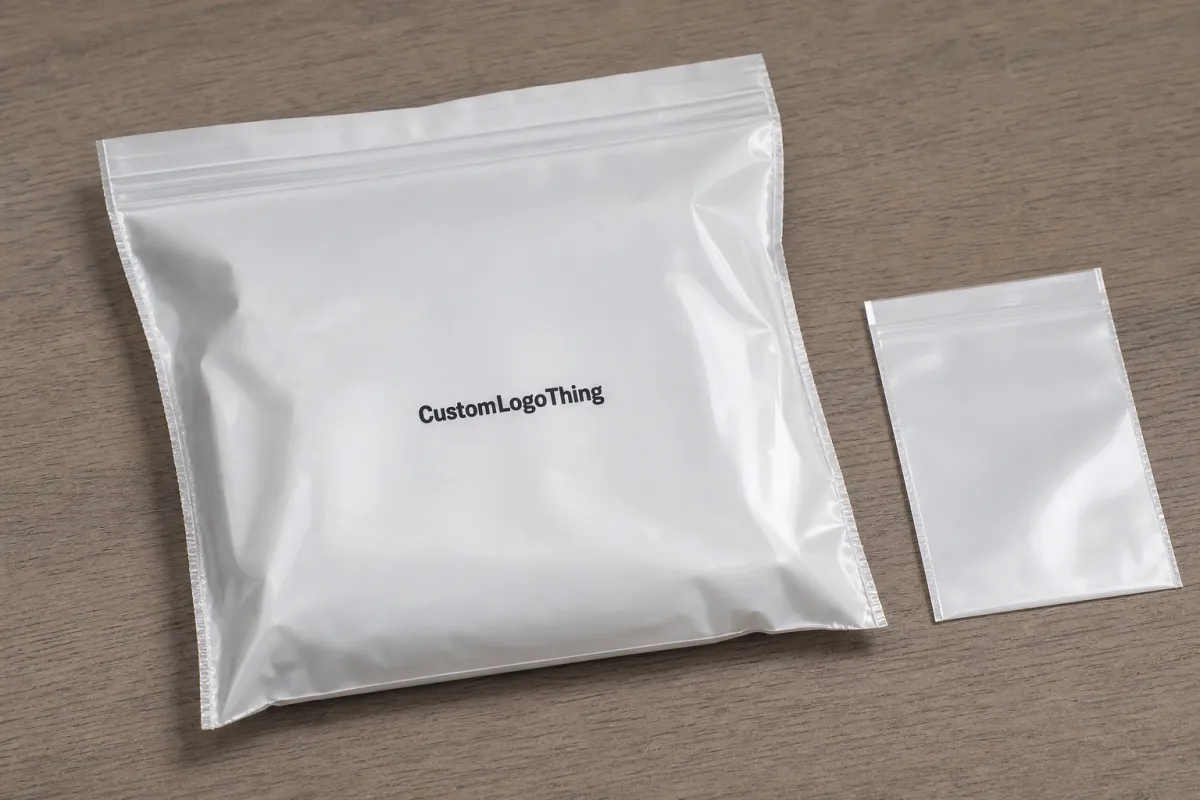
For recurring programs, plastic Bags for Subscription orders are not a throwaway supply item. They sit at the intersection of presentation, packing speed, and damage control. A bag that is a little undersized, too slippery to stack, or weak at the seal can create a steady trickle of rework every month. That is how a low-cost component starts eroding margin and operational confidence.
The economics are usually less forgiving than teams expect. Saving a cent or two per bag looks attractive on paper, but a small increase in pack-out friction can cost more in labor than the packaging saves. If operators have to pause, flatten, refold, or recheck every bundle, the hidden cost shows up quickly in throughput. Add replacement shipments and customer service time, and the “cheap” bag becomes the expensive choice.
Subscription packaging repeats, and repetition exposes weak specs. A one-off retail order can absorb a minor defect. A monthly program cannot. The bag has to work the same way on every cycle, across shifts, packers, and product mix changes. That makes size, film behavior, closure method, and print layout part of the product system, not just the outer wrap.
Practical rule: if the bag forces extra hand motion, extra seal checks, or repeated adjustments at the pack station, the program pays for that inefficiency every cycle.
The first question is rarely “What is the lowest-cost bag?” It is more useful to ask, “What keeps the line moving and the shipment arriving in the same condition every time?” In subscription work, those are not the same thing.
Choose the right bag format for subscription pack-outs
The right format depends on what the package has to do. Some orders need only a dust barrier and a tidy finish. Others need visibility so the packer can verify contents quickly. Others need a closure that holds under repeated handling or a presentation that supports the brand at unboxing. The format choice affects labor, transit stability, and how the finished pack feels in the hand.
Flat poly bags are still the workhorse for lightweight kits, folded apparel, inserts, and low-profile components. They are simple to source, quick to seal, and easy to stage in volume. Gusseted bags work better when the contents need depth, as in bundled kits or items with some thickness variation. Resealable zipper bags make sense for refillable or reusable contents, especially when the subscriber opens and re-closes the package more than once. Mailer-style bags add a more finished presentation and can reduce the need for secondary packaging in lower-risk programs.
Clarity is not automatically the best answer. Clear film helps operators confirm contents and count pieces, which is useful on lines with many SKUs. Opaque or tinted film can hide visual clutter, protect privacy, and give the shipment a cleaner look. Matte finishes are useful when glare is a problem or when the brand wants a softer, less glossy appearance. The practical question is not “Can the customer see everything?” It is “Can the packer see enough to work quickly without exposing more than the program needs to show?”
Closure choice has a direct effect on speed and consistency. Heat seal is tidy and secure, but it adds equipment and requires disciplined setup. Peel-and-seal can save time on mail-ready packs. Zippers are excellent for reusability, though they can slow the line if the mouth is narrow or the closure is stiff. Tamper-evident strips are common in health, beauty, and personal care kits because they reinforce trust, but they also add cost and change the packing motion.
Size should be based on the finished packed unit, not the product alone. Leave enough margin for inserts, labels, and closure area, but do not overcompensate. A bag that is too large shifts around in transit and looks loose on arrival. A bag that is too tight can stress the seal or push corners into weak spots. The best fit is the one that holds the contents without making the packer fight the package.
A useful check at this stage is a simple line simulation. If the bag needs two hands where one should do, or if it requires repeated flattening before sealing, the format is probably wrong for the program. Those small inefficiencies rarely disappear later.
Material, seal, and print specs that protect every shipment
Material selection starts with how the film behaves under pressure, not just how it looks on a sample sheet. LDPE is flexible and familiar, which makes it a common choice for general subscription use. LLDPE usually offers better puncture resistance and stretch control, which helps when the contents have sharper corners or when the bag is pulled tight around the pack. Blended films sit between those two, balancing clarity, toughness, and cost.
Gauge matters more than many buyers expect. A 1.5 mil bag can be perfectly adequate for soft goods or simple inserts, but bulkier or sharper items often need 2.0 mil, 2.5 mil, or more. Thickness alone does not solve everything. A film that is too stiff slows down packing, while one that is too soft stretches unevenly and invites damage. The right choice is usually the thinnest film that still survives handling, sealing, and transit without drifting out of spec.
Seal performance should be discussed plainly. Ask how the seal behaves under compression, whether corners split after stacking, and how consistent the result is from run to run. If the bag will be folded, stacked, or tossed into a secondary shipper, weak seals show up fast. That is especially true for dense kits, accessory packs, and anything with hard edges.
Print affects more than appearance. More coverage generally means more setup work, tighter color control, and higher unit cost. A one-color logo on clear film can feel clean and efficient. Full-coverage branding can stand out, but only when the artwork is disciplined and the production tolerances are realistic. If the design depends on exact color matching, ask how the supplier handles proof approval and what variance is normal for the chosen print method.
For a spec sheet, the useful fields are practical, not decorative:
- Finished dimensions, including opening width and closure allowance
- Bag style: flat, gusseted, zipper, peel-and-seal, or heat seal
- Film type and target gauge
- Color, transparency, finish, and print coverage
- Artwork version and any barcode, warning, or compliance copy
- Target pack weight and any sharp-edge concerns
- Storage or handling requirements, if the bags need special care
If the program carries sustainability language, the claim needs to match the actual structure and the recovery system that will handle it. A film can be technically recyclable in one context and functionally unrecoverable in another. Packaging teams should confirm the wording before the artwork is released, not after the bags are already in production. The EPA's recycling guidance is a good baseline for understanding why broad claims can fall apart once local collection systems differ; see EPA recycling guidance.
One practical point that often gets missed: printed films and recycled-content films can behave differently during sealing and folding. A buyer who is comparing samples should look at both appearance and handling. Sometimes a slightly less glossy film performs better on the line and keeps defects lower over time.
Pricing, MOQ, and what drives unit cost
Buyers often ask for a quick price, but unit cost only means something once the spec is known. Bag size, film thickness, print colors, closure type, and total quantity all affect the final number. A simple design at 2,500 pieces will usually cost more per unit than the same bag at 10,000 because the fixed setup work is spread across fewer bags.
Minimum Order Quantity, or MOQ, is not just a supplier preference. It reflects the economics of production. Setup, printing plates or screens, film sourcing, waste allowance, and inspection all create fixed cost. Smaller runs can be done, but the per-unit price usually rises to cover that work. That is why it helps to separate “can be made” from “can be made economically.”
| Bag option | Typical MOQ | Indicative unit cost at 5,000 pcs | Best fit | Main tradeoff |
|---|---|---|---|---|
| Plain flat poly bag | 1,000-3,000 | $0.05-$0.12 | Light apparel, inserts, sample kits | Lowest presentation value |
| Gusseted custom bag | 3,000-5,000 | $0.08-$0.18 | Bulkier bundles, refill packs, kits | More film use and setup sensitivity |
| Resealable zipper bag | 5,000+ | $0.12-$0.28 | Reusable subscription contents | Higher hardware and labor cost |
| Mailer-style printed bag | 5,000+ | $0.18-$0.40 | Brand-forward shipment presentation | Often higher freight and print cost |
Those numbers are directional rather than fixed. Resin pricing moves, freight changes, and artwork complexity can shift the range. Still, the table helps procurement teams stay grounded. A buyer should also ask for setup charges, proofing costs, plate or screen costs, sample charges, and rush fees as separate line items. Otherwise, the unit price may look attractive while the landed cost tells a different story.
For recurring programs, landed cost is the more honest metric. That includes the bag itself, inbound freight, and the labor needed to receive, stage, and pack it. A quote that is slightly higher can still win if it reduces line adjustments or repeat defects. That is one of the quieter truths in subscription packaging: the lowest quote is not always the lowest program cost.
It also helps to ask how pricing changes across quantity breaks. Some suppliers can absorb a larger run efficiently, while others have a steep drop only at a specific threshold. If a program is expected to grow, the team should understand where the real breakpoints sit before locking in a recurring order cadence.
Production process, proofing, and lead time
A clean production process usually starts with spec confirmation, then artwork review, then proof approval, then sample approval if needed, followed by production and shipment. That sounds straightforward, but the delay points are predictable: missing dimensions, unclear print files, color corrections, and slow approvals. If one of those slips, lead time stretches.
First orders almost always take longer than repeats. That is normal. A custom run may move in roughly 12-20 business days after proof approval, depending on print complexity and current capacity, while stock-style orders can move faster. Freight still sits outside that clock. Too many teams quote production lead time and forget transit time, then wonder why the inventory arrives after the next pack date.
The fastest way to shorten the timeline is to send complete information from day one. Final artwork, exact dimensions, expected monthly volume, closure preference, and any compliance language should be ready before the quote is finalized. If the bag is part of a recurring subscription program, share the reorder forecast too. Suppliers plan better when they know whether the account is a 3,000-piece pilot or a 30,000-piece monthly cadence.
Testing should not be treated as a formality. A practical test plan can include a line trial, seal check, and drop check. For transit-oriented programs, the logic is similar to the methods used by ISTA, where packaging is evaluated for real distribution stress rather than visual appearance alone. A bag that looks fine on a desk can behave very differently once it is stacked, compressed, and handled repeatedly.
Good suppliers also keep records. If artwork, dimensions, and approved samples are stored well, repeat orders move faster and error rates drop. That kind of process discipline is dull when everything is running smoothly, and valuable the moment a reorder is due next week.
One more practical point: ask how substitutions are handled. If a film grade becomes unavailable or a print window is missed, the answer should be specific. Vague promises are not useful when a monthly ship date is fixed.
Common order mistakes that raise damage rates and rework
The most common mistake is overfilling the bag. A pack that barely fits on the bench often turns into a seal failure in transit. The second mistake is choosing a closure that looks elegant but slows the line to a crawl. The third is assuming one size will work across multiple SKUs when the height, stiffness, and insert count are not actually the same.
Seal contamination causes trouble too. Dust, product residue, or a stray insert can weaken the bond, especially on heat-sealed programs. That is why a clean pack station and a simple visual check matter. Small controls prevent expensive returns later. If a monthly shipment goes out with even a modest defect rate, the brand pays for it in customer service, replacement freight, and damaged trust.
Color and print placement deserve attention as well. A design that looks balanced on a screen can drift once it is wrapped on a real bag. Art should be reviewed at full scale, not only as a proof image. If there are registration marks, barcodes, or compliance text, verify that the printed area does not interfere with the closure or get buried in a fold.
Repeat-order quality control should compare each lot against the approved master sample. Check dimensions, film feel, print placement, closure behavior, and pack-out fit. If one batch drifts, catch it before it reaches fulfillment. For higher-value subscription programs, keep a short approval archive with dated samples and spec notes so the team can compare the next run against the last approved one.
Storage also matters. Poly films can collect dust, moisture, and handling damage if they are left unprotected. Keep inventory in a clean, dry area away from direct heat and rough pallet edges. Bags do not spoil like food, but they can still degrade in usefulness if they are stored carelessly. That is especially true for printed bags and pressure-sensitive closures.
Three controls usually reduce rework more than people expect:
- Run a small line trial before full production
- Measure the finished pack, not just the loose product
- Confirm seal performance under real pack weight
Those checks are not expensive, but they catch the errors that turn into expensive monthly habits.
What to expect from a supplier built for recurring orders
For subscription packaging, supplier capability is as much about continuity as it is about price. A good partner should help with spec selection, keep approved artwork organized, and support reorder timing without making the buyer explain the same details every month. That reduces operational drag, which is easy to ignore until the team starts missing pack dates.
Continuity matters most when a pilot becomes a regular program. The first run may be small and forgiving. The next run may be four times larger, with tighter shipping windows and more SKU variation. At that point, saved specs and repeatable production become worth real money. A supplier that understands recurring orders can help avoid substitutions, mismatched shades, and “close enough” packaging decisions.
Account-level support should also include clear communication about lead time, quantity breaks, and revision handling. Those details sound administrative, but they affect cost directly. Fewer mistakes mean fewer reprints. Faster reorders mean less emergency freight. Better documentation means the packing team spends less time checking bags that should already be right.
A supplier built for recurring work should be able to answer the boring questions quickly: what is the reprint threshold, how long do proofs stay valid, what happens if the next order repeats a previous spec, and which items are held in archive for reorder use? The right answers save time later.
For buyers, the real test is simple. If the relationship reduces risk and keeps the line steady, it is doing its job. If every reorder feels like a fresh project, the supplier is adding complexity instead of removing it.
Next steps: build the spec sheet before you request quotes
Before asking for quotes, gather the finished dimensions, approximate pack weight, closure preference, print requirements, target quantity, and reorder schedule. That one step sharpens every conversation. It cuts down on vague pricing, reduces revision cycles, and gives suppliers a real target instead of a guess.
If the first run matters, ask for a sample kit or prototype. A physical sample tells you more than a mockup about fit, seal behavior, and visual presentation. It also helps the fulfillment team spot packing issues before the full run is approved. In subscription work, small test cycles are cheaper than correcting a flawed monthly rollout.
Set a reorder calendar before the account grows. Subscription volume can drift upward faster than expected, especially after a product launch or seasonal spike. If inventory arrives late, the packing line pays the penalty. A simple buffer, even one cycle of safety stock, can keep the program stable while keeping carrying cost under control.
For teams sourcing plastic bags for subscription orders, the winning approach is plain: write the spec clearly, price the landed cost, confirm the sample, and choose a supplier that can repeat the result month after month. That is how a basic bag becomes a dependable part of the subscription system, instead of a recurring problem hidden inside the pack line.
What size plastic bags work best for subscription orders?
Base the size on the finished packed dimensions, not the product alone, so inserts, labels, and closure space fit cleanly. A sample or prototype is the best way to confirm the bag does not wrinkle, balloon, or stress the seal during packing.
Can custom subscription bags be printed?
Yes. Common options include one-color logo printing, multi-color branding, and full-bleed graphics. The print method affects MOQ, setup Cost, and Lead Time, so artwork should be approved before production starts.
What MOQ should I expect for custom subscription bags?
MOQ depends on bag size, film structure, and print complexity, so there is no single universal number. Stock-style runs are usually lower; fully custom printed bags generally require higher quantities to keep unit cost stable.
How long does production usually take for recurring bag orders?
First orders usually take longer because proofing, sample approval, and setup add time before production begins. Repeat orders are faster when specs and artwork are already saved, but freight time still needs to be added separately.
Are recyclable or post-consumer options available for subscription bag programs?
Often yes, as long as the film structure, print requirements, and performance specs are compatible with the program. Check the exact material claim and the local recovery system before committing to a sustainability message.

