Skincare Cuffed Knit Beanies Digital Proof Checklist
Skincare cuffed knit beanies Digital Proof Checklist sounds niche, but the risk is common: small proofing mistakes become expensive once embroidery starts. A logo that shifts on the cuff, thread that disappears into dark yarn, or packout notes that change after approval can all create delays and rework.
That matters for skincare because these launches usually depend on a tight visual system. Neutral colors, clean labeling, and controlled texture all need to work together. If the beanie looks slightly off, the whole kit can feel less intentional than the brand planned.
Pretty mockups do not guarantee usable production files.
On cuffed knit beanies, the details that matter are practical: cuff height, knit stretch, embroidery size, thread contrast, and whether the logo still reads after folding and shipping. This guide focuses on the decisions buyers actually need to make: artwork accuracy, proof format, materials, cost, lead time, decoration, and inspection. If you want a broader view of production options, the Manufacturing Capabilities page is a useful reference.
Why the Checklist Matters
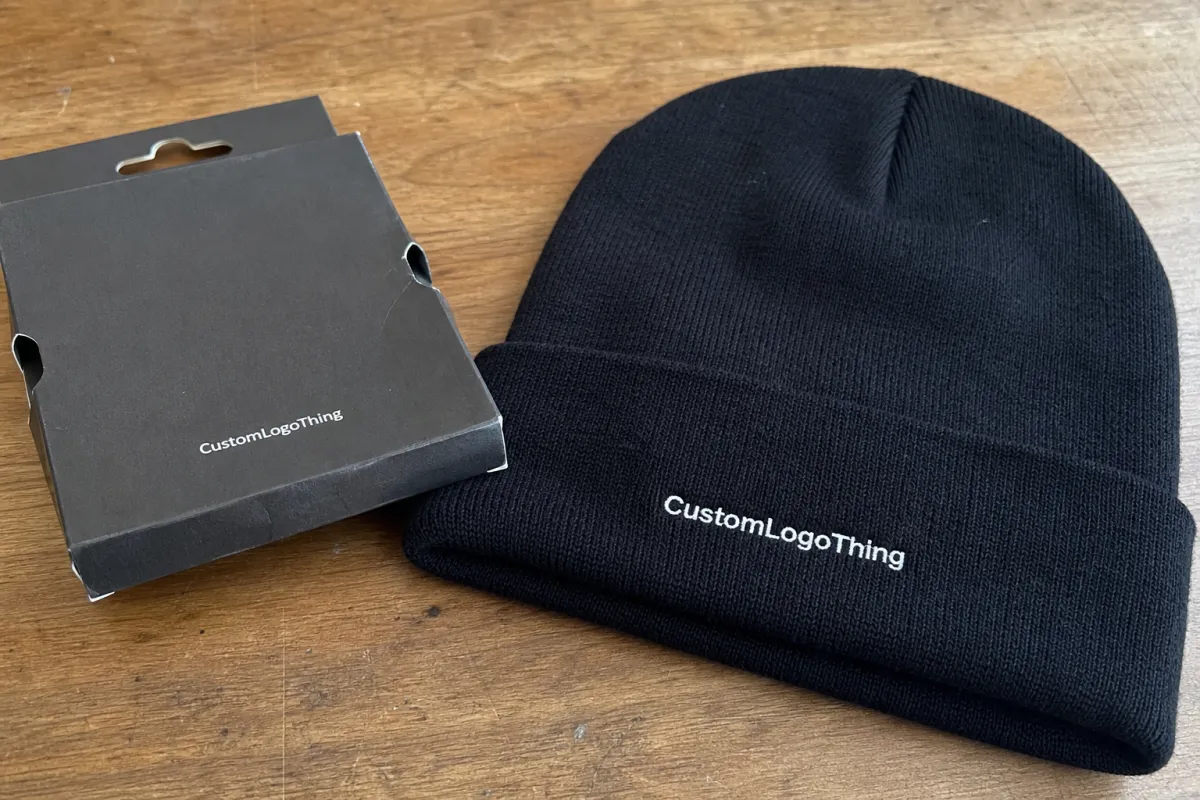
Cuffed Knit Beanies are simple products with complicated variables. The decoration area is curved, compressed, and affected by how the cuff sits in real use. A design that looks balanced on screen can feel crowded once it is worn. The checklist is there to confirm that the logo still looks intentional after folding, packing, shipping, and photographing.
Skincare brands notice small mistakes quickly because their kits rely on restraint. One off-center mark or weak color match can make a premium bundle look rushed. That is true whether the beanie is used in a gift box, a mailer, or a creator kit.
Material choice also affects the result. Acrylic is usually the easiest and most cost-stable base for embroidery. Wool blends can feel more premium but may vary more in hand and finish. Recycled yarns can fit sustainability goals, though the surface may be less uniform, which matters if the artwork includes small text or fine detail.
A good proof checklist forces those issues into the open before approval. It should confirm logo size, placement, cuff fold, thread color, and any label or packout detail that affects presentation. That is more useful than approving a polished render that does not reflect how the hat will actually be made.
It also protects margin and timeline. Unpicking embroidery can distort knit fabric, and replacing finished units is usually more expensive than correcting the proof. In knitwear, a careful review before approval is cheaper than a correction after production begins.
How Digital Proofing Works on Cuffed Knit Beanies
Digital proofing starts with a complete brief: artwork, decoration method, beanie color, quantity, and any packaging or insert requirements. Knitwear proofing is translation work, so the file has to survive contact with yarn, stretch, and the cuff fold.
A useful proof should show more than a front mockup. Ask for the logo dimensions, placement from the cuff edge, thread colors by reference code, and notes on seam position or fold direction. If the design is meant to sit above the cuff seam or centered on the fold, that should be visible on the proof.
For skincare sets, the best proof usually shows the mockup, the measurements, and the thread callouts together. If the beanie is part of a boxed kit, the proof should also show how it is folded or packed so the decoration still reads once assembled.
Several revision rounds are normal when the artwork is tight. Small icons, tiny type, and thin lines often need adjustment because knit texture hides detail faster than a screen does. A design that looks sharp in a file may still disappear on a coarse rib knit, so less artwork often performs better.
Vector files are still the safest starting point. AI, EPS, and PDF give the digitizer clean edges to work from. JPGs and PNGs can work as references, but they are weak foundations for stitch translation. If the supplier has to redraw the art, the risk of drift increases.
Ask whether the proof shows the actual knit color or a generic digital substitute. A heathered yarn, a deep charcoal, and a flat black do not behave the same way in embroidery or photography. If the rest of the skincare packaging uses soft beige, stone, or rose tones, that contrast needs to be checked before approval.
Pricing, MOQ, and Unit Cost Tradeoffs
Proof cost is usually not the biggest issue. Setup work moves the total more: artwork cleanup, stitch translation, color changes, labels, and packaging. A simple one-color logo on standard acrylic is straightforward. Add multiple thread colors, a woven label, and retail packaging, and the cost rises quickly.
MOQ changes unit economics. Smaller runs carry more overhead per piece because setup is spread across fewer units. That is why a 100-piece order can look expensive beside a 1,000-piece run even if the decoration itself is simple. Compare landed cost, not just unit price.
Typical ranges are useful for screening quotes:
| Option | What It Usually Includes | Typical Cost Range | Best For |
|---|---|---|---|
| Basic digital proof | Front mockup, standard placement, basic color callout | Free-$25 | Simple artwork and repeat orders |
| Annotated production proof | Measurements, thread notes, revised mockup, approval marks | $25-$50 | New launches and tighter branding requirements |
| Rush proof + production slot | Faster review, priority scheduling, compressed timeline | 10-25% surcharge | Influencer drops and short launch windows |
| Proof with custom packaging | Beanie mockup plus label, insert, or gift box notes | Varies by packout | Premium skincare kits and retail presentation |
The cheapest quote can leave out the slow or expensive parts. A supplier that saves a little on unit price may still cost more if the proof needs extra rounds, the stitch file needs cleanup, or packaging changes after approval. Look at the full picture: proof revisions, setup, unit cost, and rework risk.
If the kit includes paper components, recycled board, or sustainability claims, match those claims to the right documentation. The FSC guidance is a sensible reference point for paper-based packaging. It does not make the order greener by itself, but it helps keep claims accurate.
Digital Proof Turnaround, Production, and Shipping Timeline
Most first proofs come back within 24-72 hours if the brief is complete. Simple revisions usually add another 1-2 business days. If the change affects placement, stitch density, or packaging notes, expect more time because the proof has to be redrawn and checked again.
Production on standard runs often takes 2-4 weeks after final approval. That range assumes the materials are in stock and the order is not competing with a holiday rush or a larger retail program. Rush orders can sometimes ship in 7-10 days, but only when the artwork is straightforward and the factory has capacity.
Shipping usually starts after approval and production completion, so a late sign-off can move the whole schedule. If the beanies are part of a seasonal skincare set or creator kit, build in buffer time. Packaging assembly is often where schedules stretch first: a carton changes, an insert gets rewritten, or the fold style is revised, and the beanies end up waiting on the rest of the kit.
Pack testing matters too. Even though the beanie itself is soft, the carton system around it may not be. Ask how the goods are packed and whether the packout has been checked for handling and transit. ISTA test methods are a practical benchmark for programs that need to survive vibration, compression, and normal shipping abuse.
Once a proof is approved, the order should be frozen. Late color changes, revised quantities, or packaging swaps can break the schedule and force a new proof cycle. In practice, a few hours saved during review can cost days in production if version control is loose.
Common Proof Mistakes That Create Rework
The most frequent error is approving size without checking actual dimensions. A logo can look centered in a mockup and still be too wide for the cuff, too small to read, or too high for normal wear. Screens do not show how the beanie sits on a head; dimensions do.
Color language causes problems too. “Make it pop” is not a spec, and “darker blue” is not enough. Factories need Pantone references, fabric samples, or a clear visual note. If the beanie color and logo color are close, check contrast in the proof, not after the first sample.
Low-resolution artwork creates delays that could have been avoided. A render can hide fuzzy source files, but embroidery cannot. Small text breaks up, thin lines lose shape, and rounded marks can become uneven once translated into stitches. If the file is not vector-based, the digitizer may need to rebuild it.
Packaging details are easy to overlook because the hat image gets the most attention. But packout often decides whether the order feels premium or merely assembled. A polybag may need one fold direction, a gift box another, and a hangtag can collide with the cuff seam if the beanie is folded too tightly. If the proof ignores packaging, it is only half a proof.
Approving from memory causes avoidable mistakes. People remember the idea, not the last revision. The final approved version should be the only version that counts, and any change in artwork, color, label, or quantity should trigger a new proof.
Expert Checks for Cleaner Approvals and Fewer Revisions
Ask for annotated proofs, not just polished renders. Annotation turns the mockup into a production instruction. Embroidery width, placement from the cuff edge, thread references, label position, and packaging notes should be written on the proof so everyone is reviewing the same thing.
Three checks catch most bad approvals. First, confirm the logo is visible from normal viewing distance. Second, check whether the cuff fold or side seam cuts into the decoration area. Third, ask whether the knit gauge and cuff height still leave enough room for the logo once the hat is worn.
Material behavior deserves a second look. A smoother acrylic body is usually easier to embroider cleanly than a rougher yarn blend. A thicker rib knit can hold shape better, but it also changes the amount of usable space on the cuff. A loose knit can make fine detail disappear even when the proof looks fine.
One approval owner helps more than most teams admit. Marketing may want the logo larger, product may want the packaging cleaner, and leadership may want one more revision after the meeting. Consolidating comments into one set of notes keeps the proof moving and avoids unnecessary loops.
Keep the production record together: artwork file, revision number, quote, purchase order, approved proof, and ship date. Reorders are much easier when the approved version is easy to find, and disputes are easier to resolve when the paper trail is complete.
If you need a broader sense of what decoration methods or packaging styles fit the order, the Manufacturing Capabilities page is a practical reference. The wrong production path usually shows up first in the proof.
What to Do Before You Click Approve
Run one final pass before sign-off. Confirm the artwork version. Check the logo size. Verify placement. Review thread colors. Make sure the beanie color matches the spec. Confirm quantity, packaging, and ship date. If any of those items changed since the last round, the proof should change too.
- Check that the approved file number matches the latest revision.
- Confirm embroidery width and placement in real units, not screen estimates.
- Verify the cuff height and fold direction shown in the mockup.
- Review thread color against the beanie color and the rest of the skincare kit.
- Check packaging, inserts, labels, and any fold instructions.
- Save the approved proof with the quote and PO in the same record.
Ask for one more proof if the art changed, the color changed, the label changed, the quantity changed, or the ship date changed. That may feel slow, but it is still faster than correcting a production mistake after the order is in motion. In knit goods, clean revisions are cheap. Rework is not.
For skincare brands, the beanie is rarely the hero item. It supports the launch, which means it needs to match the rest of the kit without drawing attention to errors. A disciplined proof checklist protects margin, timeline, and visual consistency.
FAQ
What should a skincare cuffed knit beanies digital proof checklist include?
It should include the artwork version, logo dimensions, placement on the cuff, thread color references, beanie color, packaging notes, quantity, and ship date. If the order has labels or inserts, those should be shown on the proof as well.
How long does proof approval usually take for cuffed knit beanies?
Clean first proofs often arrive in 24-72 hours. Simple edits can add 1-2 business days. Larger changes, especially ones that affect stitch work or packout, take longer because the proof has to be redrawn and checked again.
What affects the price of a digital proof for knit beanies?
Artwork cleanup, stitch complexity, number of thread colors, label work, packaging mockups, MOQ, and rush timing all influence the price. The proof itself may be inexpensive, but setup and revision work can move the total quickly.
Can I approve a proof if the beanie color is close but not exact?
Only if the difference still fits your brand standard. Monitors are unreliable for exact color matching, especially with knit texture. If the shade affects the launch presentation, request a revised proof or a physical color reference before approval.
What files should I send with a proof request for skincare beanies?
Send vector art in AI, EPS, or PDF format when possible, along with exact dimensions, thread or Pantone references, placement notes, and any packaging instructions. If the beanie is part of a kit, include the rest of the presentation so the proof can reflect the full packout.