Vitamin embroidered baseball caps Bulk Order Planning looks straightforward on a spreadsheet and complicated on the factory floor. The logo that seems crisp in a mockup can lose clarity once it is stitched into a curved crown, and the cheapest blank cap can turn into the most expensive choice if it distorts the embroidery or slows the line. Buyers usually discover that the decoration spec, not the blank price, decides most of the final quote.
That matters for wellness brands, supplement launches, clinic promotions, subscription boxes, and retail bundles. A cap is doing more than covering a head; it is carrying a brand mark through shipping, storage, handling, and daily wear. If the embroidery is too dense, the cap too soft, or the pack-out too loose, the finished piece can look acceptable in a proof and disappointing in a carton. The planning has to account for both the artwork and the production limits.
Vitamin embroidered baseball caps bulk order planning starts with the logo, not the cap
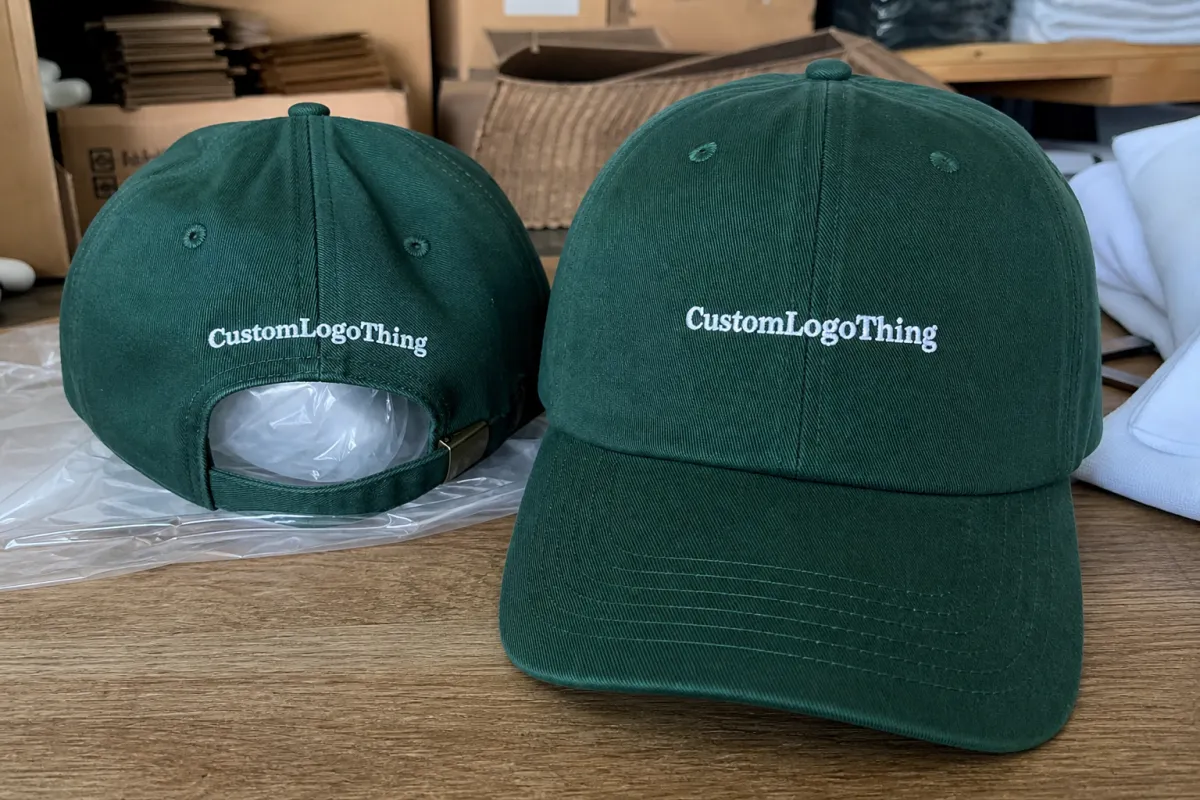
The first question is not whether the cap is structured or unstructured. It is whether the artwork can survive embroidery at the size you want. Thick lines, simple shapes, and strong letterforms usually convert cleanly. Thin fonts, sharp serifs, and crowded icons are where orders slow down. Embroidery is physical work, and it punishes art that depends on fine detail.
A front logo that looks perfect on a screen may need to be reduced, simplified, or moved slightly to fit the crown. That is normal. A clean 2.5-inch mark on a mid-profile cap can read better than a 3-inch design crammed onto a low-profile front panel. Stitch direction, thread density, and panel tension all affect the result. The digitized file is the real production file, not the design mockup.
Start with three decisions: quantity, delivery date, and intended use. A retail piece, a giveaway cap, and an employee uniform do not need the same finish. If the order is for a launch kit or a subscription insert, the cap usually has to be lighter, flatter, and cheaper to pack. If it is being sold at retail, structure and consistency matter more. Those differences should be visible in the quote, not buried in fine print.
The safest planning habit is to separate the blank cap from the decorated cap in your mind. A lower-cost blank can be a false economy if it needs extra handling or produces a weak stitch field. A slightly better crown with more stability often reduces rework, and rework is the cost buyers forget to price in.
Choose the right cap style, fit, and color for the job
Cap structure changes embroidery quality more than most buyers expect. Structured caps keep the front panel firm, which helps the needle form clean edges and consistent fill. Unstructured caps feel softer and more relaxed, but they can flex under the presser foot and distort larger logos. Low-profile caps sit closer to the head and often work best for smaller marks. Mid-profile caps give the embroidery more room to breathe.
Closure style matters for the end user and for the unit cost. Snapbacks are easy to size quickly and are common in broad distribution. Strapbacks and buckle closures often feel more refined and can fit better into premium brand programs. Hook-and-loop closures are practical for uniforms and giveaways, though they are not always the best choice for retail packaging because they can feel more utilitarian. The closure should match the use case, not just the target price.
Color should be treated as part of the merchandising plan. Neutral tones such as black, navy, stone, olive, and cream are still popular because they photograph cleanly and let the embroidery carry the message. Dark caps with tonal thread can look elevated, but they need enough contrast to stay readable under indoor lighting. If the logo has to be seen from across a room, contrast wins. If the goal is a softer premium look, tone-on-tone thread with a matte finish can work better.
For vitamin and supplement brands, the cap color usually needs to sit comfortably beside the package palette. A bright label on a bright cap can feel noisy. A muted cap with one strong embroidery color usually looks more controlled. That choice is not aesthetic in a vague sense; it affects how the item performs inside a bundle, on a shelf, and in photographs.
- Giveaways: keep the cap simple, the fit broad, and the decoration limited.
- Retail merch: favor structure, stitch clarity, and consistent color matching.
- Employee uniforms: prioritize repeatability and reorder stability.
- Bundle inserts: keep packaging light, compact, and easy to carton.
If the cap has to do several jobs at once, one of them usually suffers. A style that photographs well may not pack well. A style that packs well may not have the crown shape needed for embroidery. Buyers who plan around the actual end use tend to avoid the most obvious mistakes.
Embroidery specifications that control stitch quality and readability
Vitamin embroidered baseball caps Bulk Order Planning becomes much easier once the embroidery spec is concrete. The useful details are small but decisive: logo width, placement, thread colors, stitch count, backing, and the cap panel it is built for. If a quote does not identify those items, it is incomplete. It may be useful for budgeting, but it is not ready for production.
Most problems start with artwork that contains too much detail for the available space. Small text can disappear into the stitch field, especially on curved caps. Thin lines may break apart after digitizing. Fine gaps between letters can close up. The best embroidery files are not always the prettiest files; they are the ones that keep their shape once thread replaces ink.
A useful practical threshold is that front-panel logos on caps often perform best when kept compact rather than stretched wide. As the design expands, the curvature of the crown starts fighting the logo geometry. Dense logos can still be done, but they require more thread movement, more stabilizing backing, and more machine time. That is why a design with 8,000 stitches is not just “more detailed” than a 4,000-stitch design. It is a different production job.
Backing deserves more attention than it usually gets. A firmer backing helps stabilize thicker embroidery and sharper edges. A lighter backing can feel better on softer hats or smaller graphics, but it offers less support if the design is crowded. The right choice depends on the cap structure, the logo density, and the wearer’s comfort expectations. A hard backing on a thin unstructured cap can create an awkward feel; a soft backing on a dense logo can let the stitches pull.
Digitizing is where the design becomes manufacturable. That file determines the stitch path, the order of color changes, and the way the thread sits on the fabric. Approving a mockup without approving the digitized version is a common mistake. Buyers should confirm the actual stitch map, not only the artwork. If the supplier says the logo needs to be reduced 10 percent to fit the panel, that change needs written approval before production begins.
"The most expensive embroidery problems usually come from small decisions made too early."
That applies to thread as well. Brand colors should be matched with real thread references, not vague descriptions like “deep red” or “navy blue.” Those words can cover a wide range of shades, and a narrow color difference is easy to miss in a proof but obvious when 500 caps sit in a carton. If your program depends on exact brand alignment, ask for the thread chart or a photographed strike-off against the cap fabric.
For larger retail programs, packaging deserves the same discipline. Cartons, inner packs, and label placement affect how caps survive transit and how fast they can be received, counted, and distributed. Shipping test logic from groups such as the International Safe Transit Association can help buyers ask better questions about carton strength and handling. It is a better use of time than discovering crushed brims after delivery.
Artwork, sample proofs, and packaging approvals that avoid rework
Send the best source file you have. Vector artwork is preferable because it keeps edges sharp during digitizing, but a clean PDF or AI file can work if the logo is simple. Include exact spelling, spacing, color references, and any placement notes that matter. A proof should show the cap color, thread colors, logo size, and position together. A white-background logo alone is not enough if the final cap is black or olive.
Fabric color changes the way embroidery reads. White thread on a stone cap can look softer than expected. Black thread on a navy cap can almost disappear under certain light. Even a good mockup can hide that problem. A strong proof is one that makes the finished object feel inevitable rather than surprising.
Pre-production samples are useful, but not every order needs one. If the design is simple, the cap is standard, and the timeline is short, a detailed photo proof may be enough. If the order is large, the logo is dense, or the caps are being packed for retail, a physical sample is worth the added time. The right proofing method depends on the risk. There is no reason to spend a week approving a sample for a one-color logo that already exists in a standard layout, but there is also no reason to skip a sample on a complicated multi-color mark.
Packaging approvals should happen before bulk embroidery begins. That includes polybags, stickers, hang tags, barcodes, inserts, carton counts, and any language printed on the pack. If the caps require recycled paper components or FSC-certified inserts, ask for written confirmation at the quote stage. Broad sustainability claims are easy to print and hard to verify. Buyers should ask for specific documentation rather than assume the claim is supported.
The cleanest approval path is simple: confirm cap style, confirm cap color, confirm thread color, confirm embroidery position, confirm packaging, then release production. Changing any of those steps after approval is where delays and added cost begin. Most of the frustration around bulk cap orders is not technical. It is caused by decisions arriving out of sequence.
Pricing, MOQ, and unit cost breakpoints
Price is usually a combination of blank quality, stitch count, decoration complexity, packaging, and quantity. A simple one-color logo on a standard structured cap is far less expensive than a dense multi-color mark on a premium blank with custom inserts. That is not a markup problem; it is a labor and material problem. Each added detail slows the line or adds a handling step.
MOQ is rarely a fixed rule across suppliers. For straightforward embroidery on a stock cap, a minimum around 100 units is common in many programs. More complex artwork, multiple cap colors, or custom packaging can push the minimum higher. When the order splits across too many colorways, the setup cost no longer spreads as efficiently. A small run with four cap colors is often more expensive than a larger run with one color, even if the total quantity is similar.
For planning purposes, buyers usually see the unit cost fall quickly between low quantities and mid-size runs, then flatten as the order gets larger. The biggest savings often arrive by moving from 100 to 250 or 500 units. After that, the savings are still real, but they are less dramatic. The machine time, digitizing, and setup costs have already been spread out.
Typical decorated unit ranges for a straightforward logo often look like this:
| Quantity | Typical decorated unit | What usually changes |
|---|---|---|
| 100-249 | $6.50-$9.50 | Higher setup impact, less efficient production |
| 250-499 | $5.20-$7.80 | Setup cost spreads more evenly |
| 500-999 | $4.40-$6.40 | Common range for brand launches and promos |
| 1,000+ | $3.80-$5.60 | Lower unit cost, tighter spec control required |
Those ranges can shift with blank quality and packaging. A better cap blank may add $1.00 to $2.50 before decoration begins. Individual polybags, inserts, hang tags, barcode labels, and retail stickers all add cost as well. Buyers who need to protect margin usually get better results by fixing the cap style early and simplifying the embroidery before they start cutting packaging features. Removing one thread color often saves more than shaving a few cents from the blank.
It helps to quote three numbers: the minimum viable run, the target run, and the stretch run. That comparison shows where the price cliffs are. Many buyers are surprised to find that the middle number is the one they should have planned for from the start.
Production steps, timeline, and turnaround checkpoints
A clean cap order follows a predictable path: brief, artwork review, digitizing, proof approval, sample or photo approval if needed, bulk embroidery, quality check, packing, and shipping. The work is not glamorous, but each handoff matters. One missing approval can hold the entire batch. One vague instruction can force a redraw.
For timing, a realistic order often needs 2-4 business days for artwork review and digitizing before production starts. Bulk production commonly takes 10-20 business days after approval, depending on quantity, stitch density, and packaging needs. Large runs or dense logos can push beyond that. Rush service can shorten the timeline, but it does not erase the time needed to correct artwork or resolve color questions.
Most delays come from three causes: late sign-off, incomplete files, and changes after the proof has already been approved. If the logo size keeps changing, the order loses momentum. If the packaging decision arrives after embroidery starts, the pack-out can lag behind the production run. The safest approach is to keep each stage closed before moving to the next one.
A practical checkpoint list keeps everyone honest:
- Final logo file opened cleanly and reviewed at the right size.
- Cap style, color, and quantity confirmed in writing.
- Thread colors matched to brand references or approved swatches.
- Digitized proof approved before machine work begins.
- Packaging and shipping instructions confirmed before packing starts.
For freight-heavy orders, carton strength matters as much as stitch quality. A perfect cap can still disappoint if the brim gets crushed or the inner packs shift in transit. That is why shipping performance should be part of the planning conversation, not an afterthought. Good packaging saves time later because it reduces claims, replacements, and disposal headaches.
What to look for in a supplier before you place a repeat order
Repeat orders expose weak suppliers quickly. The first test is digitizing consistency. If the stitch file was sloppy the first time, it will probably be sloppy again. The second is thread consistency. If the thread match drifts from one run to the next, the caps stop looking like the same program. The third is blank consistency. If the cap body changes, the fit and structure can shift enough to affect the embroidery.
Ask for real production photos, not only polished mockups. A mockup can make almost anything look clean. A real photo shows panel tension, thread coverage, crown shape, and whether the logo sits flat or buckles at the edges. That tells you more about the supplier than a sales sheet ever will.
Repeatability matters most for wellness brands that reorder seasonal bundles or gift caps with subscription shipments. The second batch should not look like a different product. Ask whether the supplier can hold the same blank style, the same thread references, and the same placement specs across future runs. Perfect sameness is not always possible, but the answer should be specific, not evasive.
Quoting style is another clue. Clear quotes separate blank cost, embroidery cost, digitizing, packaging, and freight assumptions. Vague quotes bury those details until the last minute. That usually means the supplier is good at selling and less disciplined at scoping. Those are not the same skill set.
Good suppliers also answer operational questions without drama: what file format they need, how long digitizing takes, whether reorder files are retained, how changes are billed, and what happens if a carton count changes at the end. Those are boring questions. They are also the ones that save budget.
Next steps to lock the order and keep production moving
Send the request with the right inputs the first time. Include the logo file, exact wording, quantity by color, cap style, target delivery date, shipping destination, and packaging notes. If you have a reference photo, include that too. It helps the supplier see whether the order should read as retail, promotional, or something between the two.
Assign one person to approve artwork. One decision owner is usually faster than a committee, and bulk cap production rewards speed more than consensus. If three people need to sign off on a small logo move or a thread shade, the schedule can drift before production even starts. Orders move best when the approval path is short and the brief is final.
Add a small buffer if the caps are tied to a launch or a bundle. A 3-5 percent overrun is often enough to cover defects, samples, replacements, or late additions. That margin is not wasteful; it is the difference between a controlled launch and an emergency reorder. A tiny shortage can create a lot of friction once boxes are already allocated.
The simplest planning sequence is also the best one: confirm the spec, approve the proof, lock the packaging, release the run. That is the core of vitamin Embroidered Baseball Caps Bulk Order planning. The process works when the details are closed in the right order and the supplier knows exactly what has been approved.
What is the usual MOQ for vitamin embroidered baseball caps?
Many programs start around 100 units for a simple logo on a stock cap, but the real minimum depends on the cap style, stitch density, and packaging. A small one-color mark on a structured cap is easier to produce than a dense multi-color design on a soft unstructured crown. Mixed colorways can push the minimum higher because setup becomes less efficient.
How long does a bulk embroidered cap order usually take?
A straightforward order often needs 2-4 business days for artwork review and digitizing before bulk production begins. After approval, production commonly takes 10-20 business days, depending on quantity and embroidery complexity. Larger quantities, special packaging, and late changes can extend that window.
What embroidery details change the unit cost the most?
Stitch count, logo size, number of thread colors, and cap structure are the biggest drivers. Packaging choices also matter, especially if the order needs inserts, hang tags, barcodes, or individual bagging. A premium blank cap can add more to the final number than the embroidery itself.
Can I mix colors in one vitamin cap bulk order?
Yes, but mixed colors usually affect pricing and sometimes the MOQ. The best results come when the embroidery stays identical and only the blank cap color changes. If the budget is tight, keeping one cap style and one decoration spec is usually the most efficient choice.
What files do you need for an accurate quote?
Send a vector logo if possible, along with exact wording, preferred placement, thread colors, quantity by color, shipping destination, and the date you need the order delivered. A reference photo helps if you want a specific look. Complete information makes the quote faster and more reliable.