A brewery launch, seasonal retail drop, or staff kit can chew through budget quickly. Beer Cuffed Knit Beanies bulk order planning is one of the few merch decisions that can still look premium while staying practical at scale. The cuff creates a flat branding zone, the knit keeps the piece wearable through a long season, and one order can cover employees, customers, and event traffic without forcing three separate products. If you need a volume baseline, our Wholesale Programs page is a useful place to compare order tiers and decoration paths.
Why cuffed knit beanies outperform many winter promo items
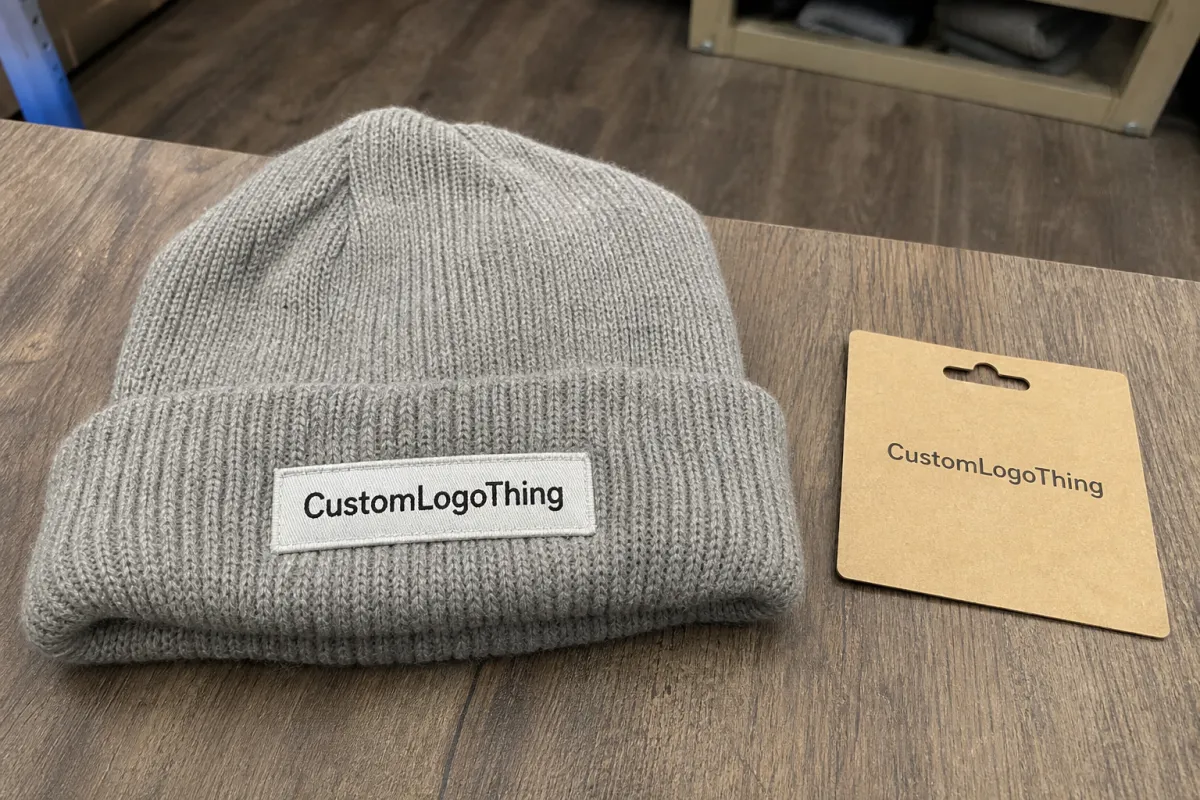
Start with the use case, not the hat. A winter-opening weekend, a holiday merch drop, a cold storage uniform piece, or a festival giveaway all need something people will actually wear after the first handoff. Cuffed Knit Beanies do that better than most seasonal promo items because they solve two problems at once: warmth and visible branding. The cuff behaves like a small billboard at eye level. A scarf can hide a logo in folds, and gloves turn branding into a whisper. A cuffed beanie puts the mark where people read it naturally.
That difference matters more than buyers usually expect. A winter accessory worn 15 or 20 times has a far better cost per impression than a one-night item. The math is not glamorous, but it is persuasive. A $4.00 beanie that lives in circulation all season tends to beat a $1.50 novelty item that disappears into a drawer. In bulk programs, usefulness often outranks novelty. Once a hat fits well and feels soft on the forehead, it gets kept. Once it feels scratchy, too shallow, or awkwardly branded, it gets left behind.
The cuff also gives the artwork a better chance to survive real-world wear. Logos placed high on the crown can distort when the knit stretches. A cuff sits on a firmer section of the hat and keeps embroidery or patch work more readable from a distance. That is one reason brewery merch often looks stronger with a restrained mark on the fold than with oversized decoration spread across the body of the beanie. The hat looks more like apparel and less like a giveaway.
There is a logistics angle as well. Cuffed styles are flexible enough for mixed programs: staff uniforms, retail shelf stock, member gifts, and promo bundles can all share the same base product if the decoration is clean and the color plan is disciplined. That kind of reuse saves time during spec approval and keeps inventory simpler later. It also makes reorders easier. When a style can move across several audiences, the initial planning has a larger payoff.
For branded winter items, the real decision is not whether to choose a beanie over something else. It is whether to build a piece that will still look credible after the event is over. Cuffed Knit Beanies usually pass that test. They feel familiar, but they can still look sharp when the cuff, yarn, and logo scale are handled with restraint.
Design details that influence fit, feel, and logo placement
The fabric choice sets the baseline. Acrylic remains the workhorse for bulk beanie orders because it balances cost, stretch, and color consistency. Most buyers are not looking for fashion-industry complexity; they want a material that holds shape, accepts decoration cleanly, and can be reordered without color surprises. Recycled polyester blends fit a sustainability brief without jumping into premium territory. Wool blends bring warmth and a richer handfeel, but they also change price and can make embroidery sit differently on the knit. For most brewery and promo programs, a strong acrylic or acrylic-blend yarn is the safest starting point.
Gauge and rib construction matter more than many first-time buyers realize. A tighter rib, often 1x1, tends to look cleaner and more retail-ready. A looser rib can feel softer and stretch more, which helps on staff orders or broad unisex sizing. The trade-off is visual crispness. A looser knit may make small logos look less defined, especially if the artwork is detailed. Cuffed beanies usually give about 2.25 to 3.5 inches of usable fold space, which is enough for a readable logo without forcing the crown to carry the branding. That fold is the real advantage. It keeps the placement stable and gives the decoration a flatter surface.
Fit is where bulk programs succeed or fail quietly. Unisex stretch works for most orders, but crown height still needs attention. A shorter crown reads more streetwear and can feel snugger. A taller crown offers more coverage and usually suits staff programs or outdoor events better. If the beanies are going to people standing in wind, working cold rooms, or loading cases, coverage should win over fashion. If they are retail merch, the silhouette matters more, because the hat has to look right hanging on a wall or shelf.
Decoration method changes both the visual tone and the production risk. Direct embroidery on the cuff is durable and easy to recognize, but fine details can fill in on knit. Woven patches are better when a logo has thin lines, small text, or multiple colors that need sharper edges. Woven labels and small sewn tags work for understated branding, especially if the product needs to feel more like apparel than promo. There is no universal best method. The right choice depends on how detailed the logo is, how far away it needs to be read, and how much time the artwork has to survive repeated wear.
Color choices deserve the same discipline. Solid yarns are easier to reorder and usually give the most reliable brand match. Heathered or marl yarns can add depth, but they complicate repeat color matching. Two-tone combinations can look strong on retail merchandise, though they may require more lead time if one yarn has to be sourced separately. If exact brand color matters, lock that decision before the art proof is finalized. Changing color after approval is one of the fastest ways to slow a schedule and inflate a quote.
Bulk specification checklist before you approve artwork
Good beer cuffed knit beanies Bulk Order Planning depends on a complete brief. Not a half-finished email. Not a screenshot with a logo dropped on top. A complete spec sheet gives the supplier everything needed to quote accurately and avoids the familiar pattern where a price looks fine at first and then changes once the real scope appears. Quantity, color split, logo file, decoration method, packaging, and ship-to details should be visible before artwork is approved. Every missing detail becomes a future assumption, and assumptions are expensive.
A practical brief usually includes:
- Quantity by color so each SKU is defined before production.
- Vector art files such as AI, EPS, or PDF for clean reproduction.
- Decoration location with measurements or a mockup reference.
- Thread, yarn, or patch colors if brand matching matters.
- Packaging instructions such as folding, polybagging, hangtags, or barcode labels.
- Delivery split if the order goes to more than one destination.
Proof review is where small issues get caught before they become visible failures. Fine lines that look sharp on screen can disappear in knit. Tiny lettering often closes up once it is stitched. A tagline that works on a jacket back may become unreadable on a cuff. That does not mean the concept is wrong. It means the placement has limits, and the design has to respect them. For launch-sensitive orders, a sample is worth considering if the artwork is delicate or if the beanies need to look retail-ready from the first shipment.
Packaging is another place where buyers underestimate impact. A plain folded hat and a retail-ready hat may use the same base product, but they do not behave the same in the packing room. Private labeling, carton marks, barcode stickers, and bundle assembly all add labor. Those details can change freight and handling charges as much as decoration does. If the order is headed into retail, ask whether the supplier can keep the fold consistent and label the carton contents clearly. If the beanies are part of a staff kit, ask whether each unit can be packed in a way that speeds distribution on arrival.
For larger programs, think one step beyond the hat itself. Employee counts may need to be split by department. Retail programs may need one SKU per color and size assumption. Promo bundles may require the beanies to land with other branded goods in a specific sequence. Small choices like those affect the calendar. The cleaner the brief, the fewer revisions later. That is especially true for knitwear, where a one-character change in a logo file can turn into an entirely new stitch run.
Pricing, MOQ, and quote variables that change the final unit cost
Pricing is usually the least transparent part of the process, which is why buyers should insist on a line-item quote. A proper quote separates the blank beanie, decoration, setup, sampling, packaging, and freight. Once those pieces are visible, comparison gets easier. A lower unit price can hide a higher shipping charge or a setup fee that only shows up after approval. A higher-looking quote may actually be the cheaper landed option if freight and packing are already included.
MOQ depends on construction and decoration. Stock cuffed beanies with simple embroidery can sometimes start around 50 to 100 pieces. Once the order moves into custom colors, specialty yarns, or more complex patches, the minimum often rises to 100 to 250 pieces or more. That is not arbitrary. Setup, sample prep, and labor have to be spread over the run, and the smaller the run, the more each unit absorbs. The same logic explains why a 75-piece order can feel disproportionately expensive next to a 300-piece order with the same art.
The biggest cost drivers are easy to predict once you know where the hours go. Stitch count matters. Patch complexity matters. Number of yarn colors matters. Rush timing matters. Split shipping matters. A one-color embroidered logo is almost always cheaper than a dense multicolor patch. A simple folded pack-out is cheaper than retail folding with insert cards. A single delivery location is cheaper than three. If you want to control cost without damaging the product, simplify the art first. Quantity helps too, but only if the extra pieces will actually be used or sold.
There are also hidden costs on the front end. Digitizing or stitch file preparation may be charged separately. Sample production can add a small fee, often in the rough range of $25 to $80 depending on complexity. Setup fees can sit anywhere from $35 to $120 or more. Those numbers move with the vendor and the artwork, but they are common enough that they should not surprise anyone. Buyers who only compare the unit price tend to miss the real total.
Here is a practical comparison for mid-volume orders. Exact pricing shifts with season, freight conditions, and art complexity, but these ranges are useful for planning.
| Decoration option | Typical unit cost at 500 pcs | Typical MOQ | Best use case | Watch-outs |
|---|---|---|---|---|
| Direct embroidery on cuff | $2.50-$5.20 | 50-100 | Simple logos, staff programs, fast retail drops | Small text can fill in on knit fabric |
| Woven patch application | $3.00-$6.00 | 100-250 | Fine detail, multi-color logos, premium merch | Patch size and sew-on time increase cost |
| Woven label or small sew-in tag | $2.20-$4.40 | 100+ | Subtle branding, understated retail presentation | Less visible from a distance |
A quote that names every cost is easier to defend internally and easier to compare across vendors. It also exposes whether the supplier is pricing freight into the unit, whether setup is waived at scale, and whether packaging is being charged as a separate service. That clarity saves time. It also reduces the odds of a surprise add-on showing up after approval, which is where many bulk orders start to feel more expensive than they were supposed to be.
Process, timeline, and production steps from proof to delivery
The production path is simple enough to map, but delays usually happen at the handoffs. Request, quote, proof, sample approval if needed, production, quality check, packing, shipment. The knitting itself is only one step. Artwork changes after proof approval, missing packaging instructions, and late freight decisions cause more schedule trouble than the actual manufacturing does. Once a proof has been signed off, every change tends to ripple through the order.
- Send the brief with quantity, color split, logo file, packaging details, and target delivery date.
- Review the quote as a line-item document rather than a single unit number.
- Check the proof for size, placement, spelling, and color assumptions.
- Request a sample if the artwork is fine-detail or the launch date is unforgiving.
- Approve production only after the spec is locked.
- Run quality checks on stitch count, trim, color match, and carton count.
- Book freight with enough buffer for transit and receiving delays.
Typical timing depends on how complex the order is. Stock beanies with embroidery often move in about 10 to 15 business days after proof approval. Custom-knit programs, patch-heavy orders, or colorways that require sourcing can stretch to 20 to 35 business days. That range is not a promise; it is a planning frame. Seasonal demand can compress capacity, and winter orders tend to pile up right when buyers are trying to move fast. A schedule that looks fine in a spreadsheet can still fail if freight and final delivery were not included from the beginning.
Transit deserves more respect than it usually gets. A finished beanie may be durable, but the carton it sits in still has to survive parcel handling, pallet pressure, and the receiving dock. For that reason, ISTA standards are a sensible reference point for buyers who want to think about drop risk and compression rather than only about decoration. They are not a knitwear standard, but they help frame how goods behave once they leave production. A clean hat can still arrive in poor shape if it was packed carelessly.
Buffer time is the most underrated line item in the calendar. A revision requested two days after proof approval can create a one-week slip. A one-week slip can turn into two if yarn sourcing is involved. Multiple destinations add more complexity. The fastest orders are the ones where the buyer already knows the answer to the obvious questions: how many, what color, which logo, how packed, where shipped, and by when.
Quality controls that keep repeat orders consistent
Repeat orders are where a supplier either proves process discipline or reveals weak habits. The most useful quality checks happen early. Yarn lot matching keeps color drift under control. Stitch density checks prevent the knit from looking thin or skewed. Cuff alignment keeps the logo centered and readable. Placement verification keeps the decoration from creeping too high or too low on the fold. None of those checks are complicated, but all of them are cheaper than replacing a batch that misses the mark.
Carton counts matter more than they seem. A well-packed order keeps colors from mixing, preserves the quantity by destination, and reduces confusion when the boxes hit a warehouse or event site. Split shipments need clear labeling on the carton and on the packing list. If a second run is planned later, the supplier should retain the exact specs, thread codes, patch dimensions, and approved art from the first order. That is what turns a reorder into a match instead of a guess. Without that record, small differences start to creep in.
The common failure points are predictable. Loose threads make the piece look unfinished. Distorted logos happen when the art is too detailed for the knit gauge. Color drift appears when one run uses a different yarn lot or dye bath. Labels can twist during finishing if they are not secured properly. These are small failures individually, but they add up. In branded apparel, a one-eighth-inch placement error can read as sloppy because the human eye is very good at spotting symmetry problems.
For orders with higher retail value, ask for written acceptance criteria. That can cover stitch quality, logo placement tolerance, trim standards, and carton count. If paper inserts, hangtags, or retail labels are part of the order, make sure their stock and sourcing are documented too. In some cases, FSC documentation for paper components helps with procurement review, especially when sustainability claims have to be defensible. That is not decorative. It is paperwork that saves time later.
Quality control is not a luxury step reserved for premium programs. It is the cheapest insurance in the order. One bad batch can trigger replacement freight, repacking labor, and a launch that no longer lines up with the calendar. For recurring seasonal merchandise, that risk is bigger than a slightly better sample or a more careful approval process. The more repeatable the QC standard, the easier the next order becomes.
Next steps to lock specs and request an accurate quote
By the time the order is ready to quote, the decision should be narrow. Total quantity, color mix, logo file, delivery date, and the intended use case are enough to get started. Retail, staff, and event orders often need different packaging and different timing, so the purpose should be defined before pricing begins. A hat meant for a retail wall may need a clean fold and label. A hat meant for a staff giveaway may need nothing more than a simple packed carton. The same product can follow very different rules depending on where it lands.
The fastest way to keep the order clean is to fix the decoration method and packaging format before approving the quote. Those two choices move the total more often than the base beanie price does. If the design uses thin lines or small type, ask for a woven patch instead of forcing embroidery to do work it cannot do. If the item needs to sit next to other branded goods, ask for a pack-out method that protects the shape and simplifies handoff. Rework after approval is where schedules unravel.
Ask for three things before the purchase order is issued: a sample if the design is complex, a tiered price sheet so volume breaks are visible, and a written production calendar with approval milestones. That combination keeps finance, marketing, and operations aligned without burying the buyer in back-and-forth. It also makes it easier to compare suppliers on the same basis rather than on a single unit number that hides too much.
If a specification is still undecided, the FAQ can answer the common production questions before the order moves forward. The bigger point is simple: keep the number of variables low. One logo method. One cuff treatment. One packing plan. One delivery window. Beer cuffed knit beanies Bulk Order Planning gets messy when too many details stay open for too long, and it gets manageable once the spec is written clearly enough to survive production.
Frequently Asked Questions
What is the usual MOQ for beer cuffed knit beanies bulk orders?
MOQ depends on the decoration method, yarn color, and whether the order uses stock blanks or custom knit construction. Simple embroidery on stock beanies can sometimes start around 50 to 100 pieces, while patch-heavy or custom-color programs often need 100 to 250 pieces or more. Smaller runs are possible, but the unit price usually rises as quantity drops because setup and labor have fewer units to absorb them.
How long does production usually take for cuffed knit beanie orders?
Most timelines include proofing, sample approval if needed, production, and shipping. Stock beanies with embroidery often land in the 10 to 15 business day range after proof approval, while custom-knit or more detailed orders can take 20 to 35 business days. Artwork changes after approval and seasonal demand are the biggest schedule risks.
Can I mix colors in one bulk beanie order?
Yes, but mixed colors can change pricing and sometimes push the MOQ higher. It is usually easier to keep one yarn family or one trim style across the order, then separate each color as its own SKU for packing. That helps reduce fulfillment errors and keeps reorders easier to match later.
What decoration method is best for beer cuffed knit beanies?
Embroidery on the cuff is the most common choice because it is durable and easy to see. Woven patches are a strong option when the logo has fine detail or multiple colors. If the design depends on tiny text, it may need simplification before it can sit cleanly on knit fabric.
How can I reduce the cost of a bulk knit beanie order?
Simplify the logo, limit color changes, and finalize artwork early. Consolidating shipping to fewer destinations usually helps too. If you are near a price break, compare the added units against actual use value rather than treating them as waste. In many cases, a slightly larger order lowers the landed cost enough to justify the extra inventory.