A beautiful wax melt pack can still arrive looking like it lost a bar fight. Scuffed film, curled headers, stretched hang holes, cartons bulging at the seams. The candle brands OPP Header Bags Carton Packing spec may sound like dull factory paperwork, but it decides whether the product hangs neatly at retail, survives warehouse handling, and can be packed at speed without constant rework.
OPP Header Bags are clear oriented polypropylene bags with a formed top section, usually made with a hang hole, adhesive flap, printed header panel, or a mix of those features. Candle brands use them for wax melts, tealight sets, sample tins, mini candles, wick trimmers, match packs, scent cards, and promotional bundles. Not heavy glass candles. A thin retail bag is not a corrugated shipper with spiritual support.
A carton packing spec defines what happens after the bags are produced: inner quantity, master carton quantity, carton dimensions, board grade, gross and net weight, stacking limits, labels, pallet rules, and courier or retailer requirements. If this part is wrong, the bag can be technically “within spec” and still arrive bent, rubbed, or useless for display.
Why Candle Packaging Fails Before Opening
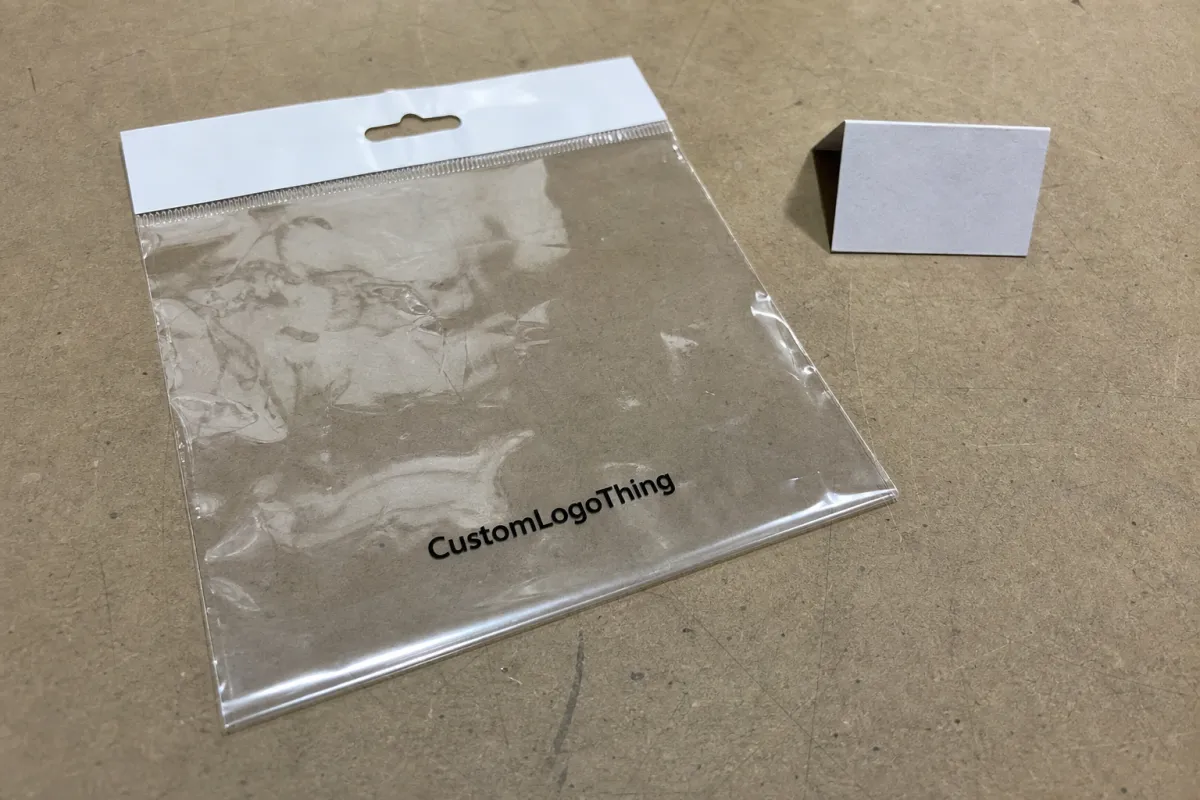
Packaging often fails before the customer touches it because the bag and carton specs were treated as leftovers. The scent gets approved. The wax color gets debated. The label, photography, and launch copy go through ten rounds. Then someone says, “Just put it in a clear bag with a logo.” That sentence has caused more ugly packaging than bad design taste ever could.
For candle products, the hidden issue is density. Wax is heavier than it looks. A compact pack of six tealights or a chunky wax melt bar can add weight quickly, especially when 300 or 500 packed units sit inside one carton. Thin film wrinkles. A narrow header bends. A carton packed too tightly deforms the hang holes. Retail pegs do not forgive that.
A useful spec answers practical questions before production starts:
- What is the exact usable inside width and height of the bag?
- How much allowance is needed for product thickness, label edges, backing cards, and packing tolerance?
- Is the header clear, printed, reinforced, or designed to imitate a card header?
- What film thickness gives enough stiffness without wasting cost?
- How many units go into an inner carton or master carton?
- What carton weight is acceptable for courier, warehouse, or retailer receiving?
- Which carton labels, SKU marks, or barcode positions are required before dispatch?
From a buyer’s point of view, the best spec is almost boring in its precision. “40 micron clear OPP, 90 mm usable width, 140 mm usable height, 30 mm printed header, euro slot, adhesive flap, 250 pieces per inner carton, 1,000 pieces per master carton” can be quoted and checked. “Nice clear bag for wax melts” is not a spec. It is a wish with a purchase order attached.
Practical rule: if the product will hang in retail, design the header and the carton packing together. A perfect bag crushed inside the wrong carton is still bad packaging.
What an OPP Header Bag Spec Actually Includes
An OPP header bag spec starts with measurements, and this is where buyers usually get burned. Total bag size is not the same as usable packing size. The total size may include sealed edges, the header zone, flap allowance, lip, and weld area. The inside packing area is the space your candle product can occupy without fighting the seal.
Core measurements usually include usable width, usable height, header height, flap allowance, lip size, seal position, side weld width, bottom seal, and hang hole placement. A bag might be listed as 100 mm x 180 mm, but if the header takes 35 mm and the flap takes 15 mm, your real product area is smaller. That matters if your wax melt clamshell is 95 mm wide and 145 mm tall with a raised label. Five millimeters is not “close enough” in packaging. Five millimeters can be the difference between smooth packing and employees wrestling plastic all afternoon.
Common OPP film thicknesses for candle-related products usually sit in these ranges:
- 30-40 microns: lightweight inserts, scent samples, flat promo cards, and very small accessory packs.
- 40-50 microns: most wax melts, tealight packs, small tins, match packs, and retail accessory kits.
- 50-60 microns: stiffer premium retail feel, heavier small products, or launches where the bag needs better shelf presence.
Header styles vary more than people expect. Options include a clear header, printed header, round hang hole, euro slot, reinforced header, adhesive seal, bottom seal, side weld construction, or a printed panel that visually replaces a paper header card. For peg displays, euro slots usually distribute weight better than small round holes. For light sample kits, a round hole may be fine. The right answer depends on product weight, display style, and how long the item will hang at retail.
Printing choices also affect the spec. A bag can carry a one-color logo, header-only print, full-surface print, warning copy, barcode, batch-code zone, scent sticker area, or retailer compliance marks. If every scent gets its own printed artwork, MOQ and leftover inventory risk climb quickly. For small or seasonal runs, a shared printed header with scent stickers is often the cleaner commercial choice.
High-clarity OPP looks clean because it shows the product color, wax texture, glitter, botanicals, molded shape, or insert card. It also shows dust, crooked labels, scuffed wax, and every tiny packaging sin. Clear film is honest. Sometimes annoyingly honest.
The sustainability side needs a sober read. OPP is lightweight and can reduce freight weight compared with rigid packaging. It is not the same material story as paperboard, FSC-certified paper, or compostable films. Retailer requirements vary, and some sustainability claims are tightly controlled. If a chain buyer or marketplace has packaging rules, check them before locking the candle Brands OPP Header Bags Carton packing spec. For paper-based alternatives or responsibly sourced header cards, review standards from the Forest Stewardship Council.
Carton Packing Specs That Protect Candle Products
Carton packing specs are the bridge between a good-looking retail bag and a shipment that survives warehouses, courier belts, and retail receiving. The bag protects presentation. The carton protects the bag. Skip either one and finished inventory becomes a damage test.
A standard carton packing spec should include pieces per inner bag, pieces per inner carton, pieces per master carton, carton size, carton board grade, gross weight, net weight, carton markings, and label placement. For export or courier shipments, ask for packed carton photos before final dispatch. A spreadsheet is useful. A photo of the actual packed carton is harder to misunderstand.
For candle products, keep master cartons within practical handling weights. Many brands aim for 10-18 kg gross weight, depending on product density, worker handling, courier rules, and retailer routing limits. Wax adds up fast. A carton that holds 1,000 empty OPP bags is not comparable to a carton holding 1,000 filled wax melt packs.
OPP header bags should be packed flat, aligned, and not over-compressed. Headers need to face the same direction. Hang holes should not be pressed hard against the carton wall. If printed OPP surfaces rub together during long transit, use paper interleaving, inner poly bags, chipboard layers, or smaller inner cartons. That adds cost. So does replacing damaged retail packaging after launch.
Carton dimensions affect freight cost. Oversized cartons waste volumetric weight, especially for air freight and courier shipments. Undersized cartons crease headers, bow side seals, and make the retail display look cheap before anyone smells the candle. A decent carton spec balances cube efficiency with protection.
Carton labeling may include SKU, scent, quantity, purchase order number, country of origin, carton number, barcode, and retailer-specific labels. Amazon FBA, department stores, boutique chains, subscription box programs, and third-party logistics warehouses can all have different carton requirements. If those labels arrive after packing, someone has to reopen cartons, sort stock, apply labels, and reseal everything. That is not a value-added activity. It is a tax on late information.
If the shipment needs more formal transit testing, review protocols from the International Safe Transit Association. ISTA tests are more common for finished product shippers than empty retail bags, but the same logic applies: compression, vibration, drops, and handling patterns matter.
Cost, MOQ, and Unit Cost Drivers for Custom Header Bags
Pricing depends less on the word “custom” and more on size, thickness, print coverage, order quantity, tooling, packing method, and shipping volume. A tiny clear OPP bag with one print color is a different animal from a full-coverage printed retail bag with a reinforced euro slot and careful inner carton packing.
Simple stock-size unprinted OPP header bags can be very low cost at volume. Custom printed OPP header bags cost more because film setup, printing plates, color control, cutting, sealing, and packing all require production time. The carton spec also affects freight. A thicker bag packed loosely may reduce damage but increase carton cube.
| Option | Typical Use | Common MOQ Range | Rough Unit Cost Range | Tradeoff |
|---|---|---|---|---|
| Stock clear OPP header bag | Samples, short runs, quick testing | 500-2,000 pieces | $0.03-$0.10 | Fast and cheap, but limited sizing and no branded print |
| Clear bag with applied label | Small scent lines, seasonal launches | 1,000-3,000 pieces | $0.06-$0.18 including label range | Flexible artwork, slower if labels are applied by hand |
| One-color printed header bag | Retail wax melts, tealights, accessories | 3,000-10,000 pieces | $0.08-$0.22 | Clean branding, lower cost than full print |
| Full custom printed OPP bag | Premium retail programs and larger launches | 5,000-20,000+ pieces | $0.15-$0.45+ | Strong shelf impact, higher setup cost and inventory commitment |
These ranges are directional, not magic numbers. Final pricing depends on finished size, film thickness, number of print colors, ink coverage, adhesive strip, hang hole type, counting method, carton packing, and shipping destination. A 60 micron full-print bag shipped by air will not price like a 35 micron clear bag shipped by ocean. Shocking, I know.
Setup costs can include plate fees, artwork adjustment, sample charges, dieline work, color matching, barcode placement checks, and testing. These are not scams. They are how printing presses avoid becoming expensive confetti machines. If the logo size, scent layout, or barcode changes after proof approval, expect cost and timeline movement.
Unit cost drivers are predictable. Wider bags use more film. Thicker film costs more. Full-color print costs more than one-color header print. Special hang holes, resealable adhesive strips, reinforced headers, and tight counting tolerances can all change pricing. Carton packing matters as well: inner cartons reduce rubbing and bending, but they add material and labor. Oversized cartons increase freight.
Compare quotes using the same spec sheet. Not “clear bag with logo.” That phrase is how buyers accidentally compare three different products and then wonder why one quote is half the price. Ask each supplier to quote the same dimensions, microns, print method, MOQ, carton quantity, carton dimensions, and shipping terms.
Also calculate landed cost. Include product price, tooling, sample freight, mass production shipping, import duties if applicable, warehouse receiving, and storage space. If you need examples of how custom packaging specs affect finished presentation, review our custom packaging case studies for practical project patterns.
Process and Timeline From Sample to Packed Cartons
A clean custom OPP header bag order moves through spec confirmation, artwork, sampling or proofing, production, carton packing, QC, and shipping. The process is not complicated, but it punishes vague inputs.
- Confirm product dimensions and packing orientation. Measure the actual product plus label, backing card, insert, or sleeve. Do not rely only on the product listing size. If the wax melt is 90 mm wide but the label edge lifts another 2 mm, include that.
- Create the dieline. The dieline should show bag width, usable height, header size, flap allowance, seal location, hang hole placement, barcode zone, warning text, and print area. A good dieline prevents expensive guessing.
- Review the artwork proof. Check logo position, scent names, legal copy, suffocation warning if needed, barcode area, batch-code space, and retail scan clearance. Barcodes should be tested before mass production, not after 10,000 bags are printed.
- Approve a sample or pre-production proof. For simple stock-style jobs, a digital proof or production photo may be enough. For retail launches, physical samples are safer because hand feel, stiffness, clarity, and header strength are hard to judge on screen.
- Move into mass production. Production may include film preparation, printing, curing or drying, cutting, side sealing, bottom sealing, punching hang holes, counting, and packing.
- Check carton packing and QC. QC should review size tolerance, print registration, seal strength, header alignment, quantity per carton, carton weight, label accuracy, and packed carton condition.
Basic stock-style orders can sometimes move in 5-10 business days if inventory exists and artwork is minimal. Custom printed runs commonly need 15-30 business days after proof approval, depending on material availability, print complexity, curing time, quantity, carton packing, and shipping method. Transit time comes after that. Air freight may take several days after dispatch; ocean freight can take several weeks.
The buyer controls part of the timeline. Approve artwork quickly. Send barcode files early. Confirm all scent names before plates or proofing. Do not change the scent lineup after production starts. Revolutionary concept.
For retail or subscription launches, build in one extra week for sample review and one extra week for carton label corrections. That buffer feels annoying until the alternative is repacking finished cartons at the last minute. If you want to see how timing and specs interact across custom branded products, browse the Custom Logo Things project examples.
Common Spec Mistakes Candle Brands Make
The first mistake is choosing bag size based only on width and height. Candle products often need depth allowance, even in a flat bag. Wax melts, small tins, molded shapes, sachets, bundles, and accessories create thickness. If the bag has no room for that thickness, the side seals pull inward and the header curls.
The second mistake is ignoring header height. A tiny header can look weak on a retail hook and may not leave enough room for branding, barcode, warning text, or a hang hole. An oversized header wastes material and can hide too much of the product. For many small candle products, header heights around 25-40 mm are common, but the right number depends on bag size and retail display.
The third mistake is placing the hang hole too close to the seal or print. A euro slot or round hole needs enough material around it to resist tearing. Keep logo details and barcode zones away from the punched area. Punching through a logo is a surprisingly popular way to make packaging look unplanned.
The fourth mistake is using thin film for premium candle products. Lightweight OPP is economical, and sometimes it is perfectly fine. But a flimsy 30 micron bag around a premium scent line can make the whole product feel like a clearance-bin experiment. If the candle brand positioning is premium, 40-60 microns usually feels more appropriate for retail header bags.
The fifth mistake is forgetting scent variation during artwork planning. If each scent gets unique printed bags, the MOQ often applies to each version. Ten scents at 5,000 pieces each means 50,000 bags. If that sounds painful, use a common printed bag plus scent labels or a blank sticker zone.
The sixth mistake is not testing carton packing with real quantities. A carton that looks perfect empty may bulge once filled with wax products. It may exceed courier weight limits. It may crush headers at the bottom. Test a packed carton, not just an empty box and a hopeful spreadsheet.
The seventh mistake is skipping retail compliance. Candle-related products may need warning copy, suffocation warnings for poly bags, barcode readability, country of origin marking, carton labels, or specific hang hole styles. Retailers can reject packaging over tiny details. Annoying? Yes. Preventable? Also yes.
The eighth mistake is approving color from a phone photo. Screen color is not print color. If brand color matters, request a printed proof, a Pantone-based target, or at least a controlled production sample. OPP film, white ink backing, print density, and lighting all affect the final look.
What to Prepare Before Requesting a Quote
Before asking for pricing, gather the basics. A good quote request should include product photos, exact product dimensions, target bag size if known, desired film thickness, header height, hang hole type, seal type, artwork files, order quantity, and delivery location. If you have retailer routing rules, send them early. Late requirements cost money.
Decide the packing method before quoting. Do you want loose bulk cartons, inner poly bags, inner cartons, retail-ready carton layout, mixed SKU cartons, or retailer-specific carton labels? Each method changes labor, materials, carton dimensions, and damage risk. A supplier cannot price accurately if carton packing is treated as an afterthought.
Order or test a similar size before committing to a large custom run. A 5 mm size mistake can make packing slow, ugly, or impossible. For wax products with thickness, test the actual product in the actual orientation. Add any backing card, instruction insert, warning card, or sticker before deciding the final bag size.
If the structure is still undecided, request three quote tiers:
- Economy: clear OPP header bag with an applied label.
- Mid-range: one-color printed header bag with standard hang hole.
- Premium: full custom printed OPP header bag with reinforced header and controlled carton packing.
Send AI or PDF logo files, barcode files, legal copy, product dimensions, target launch date, destination address, and any retailer routing guide. Ask for packed carton photos during production approval, especially for fragile headers, mixed SKUs, export shipments, or retail programs with strict receiving rules.
Getting the candle brands opp header bags carton packing spec right means fewer damaged bags, cleaner retail displays, faster packing, and a quote that actually matches the job. Pretty packaging is nice. Pretty packaging that survives shipping is better.
FAQs
What does candle brands OPP header bags carton packing spec mean?
It is the combined specification for the printed OPP retail bag and the way those bags are packed into cartons. A complete spec usually includes bag size, film thickness, header height, hang hole style, print details, pieces per carton, carton dimensions, carton weight, and shipping labels. For candle brands, it is especially useful for wax melts, tealights, small tins, sample sets, and accessories.
What OPP thickness should candle brands use for header bags?
For lightweight samples or inserts, 30-40 microns may be enough. For most wax melts, tealight packs, and retail accessories, 40-50 microns is a practical range. For a stiffer premium feel or heavier product, 50-60 microns is often better, though it increases unit cost and can affect carton cube.
How many OPP header bags should go in one export carton?
It depends on bag size, product weight, carton strength, and shipping method. Many brands aim for cartons that are easy to lift, often around 10-18 kg gross weight rather than simply maximizing quantity. The bags should fit without crushing headers, bending hang holes, or rubbing printed surfaces too aggressively.
How much do custom printed OPP header bags cost?
Cost depends on size, thickness, print colors, print coverage, MOQ, tooling, carton packing, and freight. A simple clear or lightly printed bag is cheaper than a full-color custom printed header bag. To compare quotes fairly, give every supplier the same bag dimensions, material thickness, print file, quantity, and carton packing requirements.
How long is the lead time for custom OPP header bags with carton packing?
The timeline usually includes artwork proofing, sampling or pre-production approval, mass production, QC, carton packing, and shipping. Simple stock-style orders can move faster, while custom printed production commonly takes several weeks depending on complexity and approval speed. Delays often happen when artwork changes, dimensions are incomplete, barcodes are untested, or carton labeling requirements arrive late.


