For toy buyers, the toy retailers OPP Header Bags carton packing spec is not administrative decoration. It is the difference between a clean, peg-ready shipment and a carton of good-looking bags that still misses the retailer’s receiving rules. A toy can fit nicely in the bag and still fail because the hang hole is off-center, the barcode sits too close to a curve, or the master carton lands above the weight limit for store handling.
The spec has to hold three things together: the retail presentation, the pack-out method, and the freight reality. A bag drawing alone will not do that. Buyers need the bag construction, the carton logic, and a packed sample that shows how the item behaves once it is sealed, counted, labeled, stacked, and handled.
What a Toy Retailers OPP Header Bags Carton Packing Spec Controls
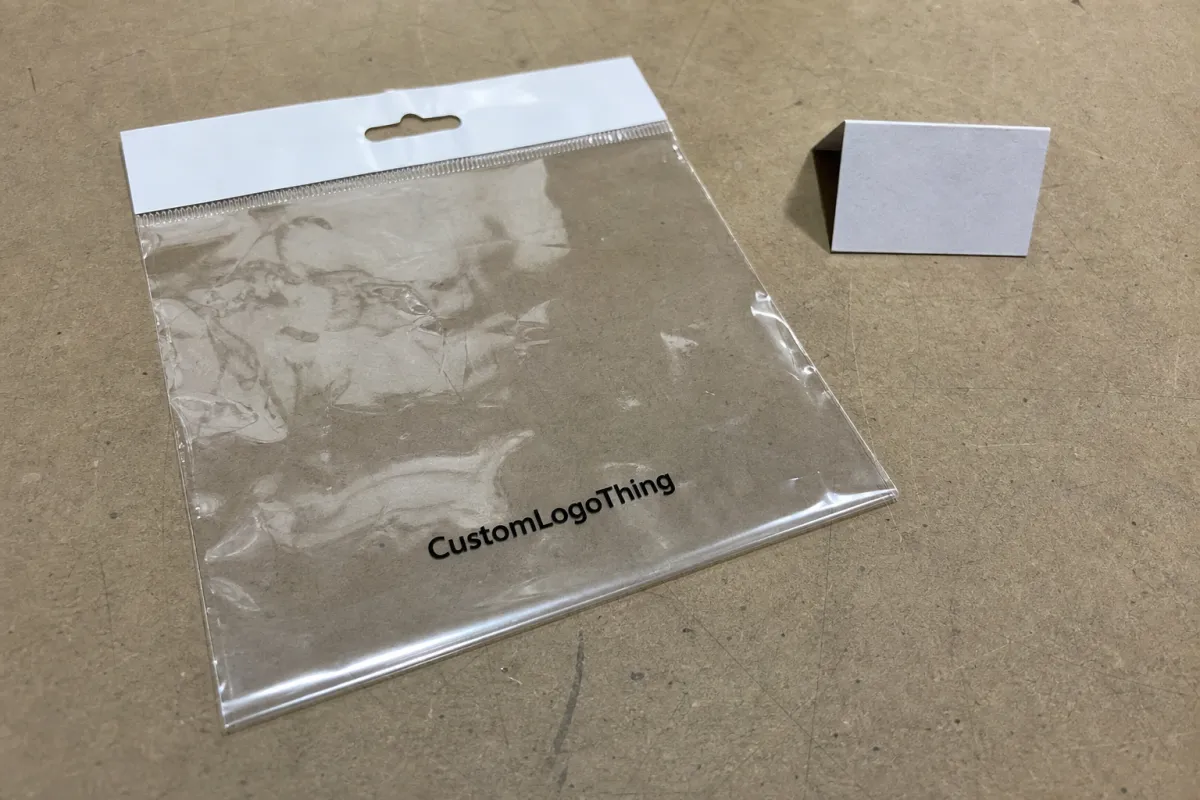
The phrase toy retailers OPP Header Bags carton packing spec covers the full set of rules behind a retail-ready toy pack: bag dimensions, film gauge, header style, hang hole, warning copy, barcode position, inner pack count, master carton count, carton size, and outer shipping marks. Once those details line up, the product can move from packing bench to receiving dock with fewer judgment calls.
OPP header bags are clear oriented polypropylene bags with a plain or printed header area at the top. They are common for small toys, collectible figures, craft kits, educational manipulatives, novelty items, accessory packs, and replacement parts. The attraction is straightforward. The product stays visible, the header gives the brand a face, and the pack remains much lighter than many rigid plastic formats.
The bag specification and the carton packing specification do different jobs. The bag spec governs dimensions, film thickness, seal type, print, copy, and retail display details. The carton spec governs how many pieces go into each inner pack, how many inner packs go into a master carton, how heavy the carton may be, and what labels or shipping marks belong on the outside. Blur those two documents together and production teams begin filling in blanks. That is where avoidable cost starts.
Retailers care because small inconsistencies create operational friction. A header that sits a few millimeters too high can disrupt peg alignment. A barcode printed over clear film with weak contrast can slow receiving. A carton that is slightly too heavy may violate a distribution-center rule even if the product itself is fine. The packaging may look acceptable in a photo and still be wrong for the retail route.
From a packaging buyer’s point of view, the best spec removes interpretation at the packing table. If the operator can count it, seal it, label it, and cartonize it without asking for a supervisor’s reading of the file, the spec is doing its job.
Treat the spec as a working document, not a one-time quote form. It sits between product design, purchasing, quality control, and logistics. If one of those teams uses a different assumption, the discrepancy usually appears late, when corrections are more expensive.
How OPP Header Bags Work for Peg-Hung Toy Packaging
OPP film has the crisp look buyers expect on small retail items. It offers high clarity, moderate stiffness, and a glossy finish that lets color and shape show through the pack. Compared with clamshells or blister formats, it often reduces weight and shipping bulk, especially for compact SKUs sold in volume.
A typical header bag has a clear pocket for the product, a top header band for branding or labeling, and a hang hole such as a round hole, euro slot, delta hole, or sombrero-style hole. Some packs use a permanent heat seal. Others use a resealable flap, a pressure-sensitive closure, or an inserted header card.
Each format has a cost and handling tradeoff. Heat seals are secure and efficient once the packing line is set. Header cards offer more graphic area but add insertion work and paperboard cost. Resealable options are useful when consumers need to store parts after opening, though they can slow packing and raise material cost.
Film thickness deserves more attention than it often gets. Light gauges can work well for flat, smooth, low-risk items. The same gauge may wrinkle badly around molded corners or puncture near sharp accessory edges. Heavier film improves puncture resistance and gives the header a firmer feel on the peg, but it raises material cost and can increase carton cube if the bag traps excess air.
Air is not free. In toy packaging, it becomes freight.
Common applications include blind-bag accessories, puzzle pieces, mini figures, STEM parts, craft components, promotional toys, and spare parts kits. For all of them, the bag does more than contain the item. It supports a display system. If the header curls, the hole tears, or the print crowds the seal, the pack can look tired before the toy itself has been touched.
The spec should always be tested with the real toy inside the real bag. A flat drawing hides trapped air, awkward geometry, and loose inserts that shift during sealing. A packed sample exposes those problems early.
For shipping and test discipline, packaging teams often use outside references. ISTA procedures can guide transit testing. FSC-certified paperboard may matter if the carton spec calls for responsible fiber sourcing. Neither reference replaces a practical pack trial, but both help anchor the specification in recognized practice instead of inherited habits.
Key Bag, Header, and Carton Details to Specify Up Front
The best quotes start with clean measurements. Buyers should state the usable inside width, usable inside height, header height, flap length if applicable, seal allowance, and whether the dimensions are flat or filled. For toys with molded parts, thickness matters as much as width and height. A thin-looking item can behave like a bulkier product once it pushes against film.
Product fit should be checked against the actual shape, not just the longest ruler measurement. Rounded parts, sharp corners, loose accessories, folded instructions, and small silica packets all change the packing equation. A bag that looks generous in a drawing can pinch the contents once the seal is made.
Header details need their own line items. Specify the hang hole type and position, any reinforcement around the hole, logo or artwork area, barcode quiet zone, warning copy, age grading, choking-hazard statement if required, and country-of-origin marking. If the retailer expects a peg-hung display, hole location is functional, not decorative. A hole too close to the top seal can weaken the header; a hole too low can make the pack lean forward on the peg.
Printing also needs precision. State the number of colors, spot or process print, print side, ink coverage, registration tolerance if provided, and whether the finish should be glossy, matte, frosted, or fully clear. Clear film can make low-contrast barcodes hard to scan. White knockouts, label panels, and quiet zones should be planned before artwork approval, not patched after the first scan failure.
Carton packing data should be just as specific: pieces per inner pack, inner carton count, master carton quantity, carton board strength, target gross weight, carton dimensions, and label requirements. If the cartons must be easy-open, shelf-ready, pallet-friendly, or restricted to a specific orientation, that belongs in the spec. Some retailers set maximum case weights that force smaller pack counts. Ignoring that limit can cost more than the bag.
A simple comparison helps buyers narrow the format before quoting:
| Option | Best For | Typical Cost Behavior | Tradeoff |
|---|---|---|---|
| Plain OPP bag with printed label | Lower volumes, many SKUs, frequent artwork changes | Lower setup cost; often practical for small runs | Extra labeling step and a less polished shelf finish |
| Custom printed header bag | Larger programs and stronger brand presentation | Higher setup cost; better unit economics at scale | More artwork control and usually higher minimums |
| Printed bag with inner carton pack | Retail routes with strict receiving and replenishment rules | Higher packing labor; cleaner case management | More carton cube if bag size and trapped air are not controlled |
The toy retailers OPP Header Bags Carton Packing spec works best when design, purchasing, production, and logistics are reading the same page. That sounds obvious. In live purchasing cycles, it is often the missing piece.
Process and Timeline from Spec Sheet to Approved Production
A reliable process starts with the toy, not the bag. Gather product dimensions, record irregular shapes, and decide whether the item will be packed flat, nested, stacked, or grouped with accessories. Then choose the bag style, confirm film thickness and header construction, build the artwork or label layout, and request a sample.
After the sample arrives, pack the actual toy. Then check the carton count. Only after that should the production spec be locked.
Physical samples matter because drawings hide real-world behavior. A toy with a curved body, a pointed edge, or a loose insert may need a different bag size than the design file suggests. Multipiece kits create another variable. If the parts shift after sealing, the visible area can change enough to affect barcode placement, warning copy, or the look of the header.
Artwork review should happen before tooling or print files are released. Check barcode readability, legal copy, bleed, safe zones, seal margins, and possible distortion near the top seal or side seam. If the print area runs too close to the hang hole, the display can look crowded, and the punching tool may chew into the design.
Pre-production sample approval is the main gate. Buyers should inspect clarity, header stiffness, hole placement, seal strength, printed color, carton count, outer label accuracy, and overall pack-out. A sample can look right in one hand and still fail in a packed carton. If the master carton is too heavy, bulges, crushes the headers, or creates poor pallet utilization, the spec is incomplete.
Lead time depends on material availability, print complexity, custom hole punching, order quantity, approval speed, and whether the buyer needs one sample round or several. A plain bag with a standard carton pack usually moves faster than a fully printed program with inner cartons, special shipping marks, and retailer-specific labels. Add time for transit, receiving windows, barcode review, and internal approvals. The calendar expands as soon as more people are required to sign off.
The cleanest projects usually begin with a detailed spec and one controlled sample round. Small changes in the bag can ripple into pack count, carton size, pallet pattern, and freight cost, so late revisions are rarely as small as they look.
Cost, MOQ, and Unit Cost Drivers Buyers Should Expect
Pricing for OPP header bags is driven by film thickness, bag size, header height, closure style, print coverage, number of colors, hang hole type, order quantity, packing method, and carton requirements. The bag is only part of the bill. Setup, artwork handling, carton labor, sample revisions, and inspection can matter just as much.
MOQ has a direct effect on unit cost. Smaller runs may be possible, but setup cost is spread across fewer units, pushing the piece price up. For a buyer comparing options, the better question is not “What is the cheapest bag?” It is “What is the best landed cost for this SKU across the full order cycle?”
Plain stock-style bags with a label are often practical for low volumes, seasonal assortments, or programs with many artwork changes. Fully printed header bags tend to look cleaner on shelf and can win on unit economics at higher quantities. There is no universal winner. The right choice depends on print coverage, minimums, approval complexity, and how often artwork will change.
Carton packing also affects cost. Inner cartons, retail-compliant labels, special board grades, low gross-weight limits, orientation rules, and hand-counting all add labor or material. If the retailer wants smaller cartons for manual replenishment or distribution-center handling, freight cube may rise. That tradeoff is real; it should be visible before the purchase order is placed.
Cost ranges vary by region, quantity, film, and print method, so exact numbers need supplier quoting. As a practical frame, buyers should expect custom printing and low-volume runs to carry setup pressure, while larger repeat orders typically reduce the unit burden. A heavy-gauge printed bag with a reinforced header, inner carton, and strict labeling rules will not price like a plain commodity poly bag.
Common cost drivers break down this way:
| Driver | What It Changes | Typical Buyer Impact |
|---|---|---|
| Film gauge | Material usage, stiffness, puncture resistance | Thicker film costs more but protects sharper items better |
| Print coverage | Ink, setup, registration, proofing effort | More coverage usually raises cost and approval time |
| Carton count | Case size, freight cube, handling weight | Higher counts can lower packing labor but increase carton weight |
| Labeling requirements | Outer case prep, barcode control, compliance checks | More label rules add time but reduce receiving errors |
Freight is the detail that gets missed. A slightly taller header, a wider-than-needed bag, or too much trapped air can expand carton cube enough to change the shipping rate. The packaging spec should be evaluated as a system, not as a bag quote sitting in isolation.
Common Spec Mistakes That Cause Toy Packaging Delays
The first mistake is measuring only length and width. Toy packaging often fails in the third dimension. A curved part, loose accessory, or folded paper insert can add enough bulk to force a larger bag, a heavier film gauge, or a different carton count.
Another common error is placing the hang hole too near the top seal or printed area. That can weaken the header, interfere with peg display, or cut into the barcode zone. A header that looks tidy in artwork can become awkward once the bag is filled and the hole is punched.
Vague carton-count instructions create their own trouble. If the spec does not state pieces per inner pack, pieces per master carton, carton dimensions, and maximum gross weight, the factory may choose the most convenient packing method. Convenience is not compliance.
Barcode and warning-copy issues show up frequently on clear film. Low contrast, poor quiet zones, missing age-grade text, or a warning hidden by a peg fixture can trigger receiving problems. Retailers do not care that the artwork looked fine on a monitor. They care whether it scans and whether the required information is visible.
Under-specifying film thickness is another costly miss. Thin film can puncture around molded corners, wrinkle at the header, or tear during cartonization. Overbuilding has its own penalty: higher cost, more stiffness than needed, and sometimes more carton cube. The right gauge follows the toy shape and retail handling risk, not habit.
Copying an old SKU’s carton spec is tempting. It is also risky. A different toy size, different bag geometry, different pallet pattern, or different retailer rule can make the old spec wrong even when the product category looks similar.
For standards and sourcing discipline, packaging teams often look to FSC for paper sourcing and to recognized transit-testing methods such as ISTA procedures. Those references do not replace a packed sample. They do, however, help keep the conversation grounded in accepted practice rather than guesswork.
Next Steps: Build a Retail-Ready Spec Before You Quote
Before contacting a supplier, gather the basics: product dimensions, filled depth, target bag size, film thickness preference, header height, hang hole type, closure style, print requirements, barcode files, warning copy, and retail routing notes. If the toy has molded shapes, sharp corners, or loose pieces, send a physical sample or a highly accurate measured drawing. That small step removes a surprising amount of back-and-forth.
Create a carton packing table for each SKU. Include bag size, pieces per inner pack, pieces per master carton, target carton dimensions, maximum carton weight, outer label requirements, and pallet or shipping notes. If the retailer has a receiving manual, fold the relevant rules into the same document so the factory is not comparing separate files with different revision dates.
Ask for a pre-production sample or packing mockup before full production. This is especially useful for peg-hung items, because a bag that hangs properly on a bench can behave differently once it is filled, sealed, and stacked with dozens of similar units. The sample stage is where most preventable mistakes show themselves.
When supplier quotes come back, compare more than the price line. Look at the assumptions, film callout, sample timing, carton details, quantity breaks, and whether the vendor flagged risks instead of quietly ignoring them. The strongest quote is often the one that explains the job clearly.
Used well, the toy retailers opp header bags carton packing spec keeps samples, quotes, production approval, and final inspection pointed at the same target. That is the kind of spec that protects margin, shortens argument cycles, and gets product onto the shelf without avoidable rework.
What should be included in a toy retailer OPP header bag packing spec?
Include bag dimensions, film thickness, header height, hang hole type, closure style, print details, barcode placement, warning copy, pieces per inner pack, master carton quantity, carton size, carton weight, and outer carton labeling requirements. If the toy has sharp corners, loose accessories, or instruction sheets, add a filled sample or detailed depth measurement so the bag is sized for real packing conditions.
How do I choose the right OPP film thickness for toy header bags?
Use lighter gauges for flat, smooth, low-weight items where clarity and cost matter most. Choose heavier film when the toy has molded edges, multiple components, higher perceived retail value, or needs a stiffer header for peg display. Final selection should be confirmed with a packed sample, not only a material chart.
What carton packing spec do toy retailers usually care about most?
Retailers usually focus on scannable carton labels, correct SKU counts, manageable carton weight, consistent carton dimensions, clear shipping marks, and packaging that arrives without crushed headers or distorted bags. Some also require inner packs, mixed-SKU restrictions, specific label placement, pallet rules, or maximum carton weights.
Does custom printing increase the cost of OPP header bags for toys?
Yes. Custom printing can increase cost because of artwork preparation, setup, ink coverage, registration control, proofing, and minimum run requirements. For low volumes or many SKUs, a plain clear bag with a printed label or insert card may be more economical. For larger programs, printed header bags often create a cleaner shelf presentation and better unit economics.
How long does it take to approve OPP header bags with carton packing specs?
Timing depends on sample needs, artwork readiness, print complexity, material availability, and how quickly packed samples are reviewed. A clear spec sheet can shorten the process because the manufacturer can quote, sample, and build the carton pack plan with fewer assumptions. Buyers should allow time for fit testing, barcode review, warning copy approval, and carton pack-out checks before full production.
Handled properly, the toy retailers opp header bags carton packing spec gives every team the same target: the right bag, the right count, the right carton, and a shipment that arrives ready for retail instead of ready for rework.


