Candle packaging sits in a tricky price band. Buyers want protection, a premium shelf look, and a unit cost that does not swallow margin. That tension is exactly why the Candle Brands Zipper Pouch Bags unit cost review matters. A zipper pouch can shield fragrance, resist scuffing better than a thin carton, and cost less than many rigid box builds once inserts and assembly are counted.
For packaging teams, zipper pouches show up in retail shelves, subscription kits, seasonal gift sets, candle care bundles, and small accessory packs. They store flat, ship efficiently, and are less likely to arrive with crushed corners or rubbed edges. That makes them worth comparing against rigid boxes, sleeves, and mailer-style solutions before committing to a format.
This review focuses on the practical side: what a pouch is made of, which specs push unit cost up, where MOQ starts to matter, and what kind of quality is realistic at each price point.
Why candle brands switch to zipper pouch bags
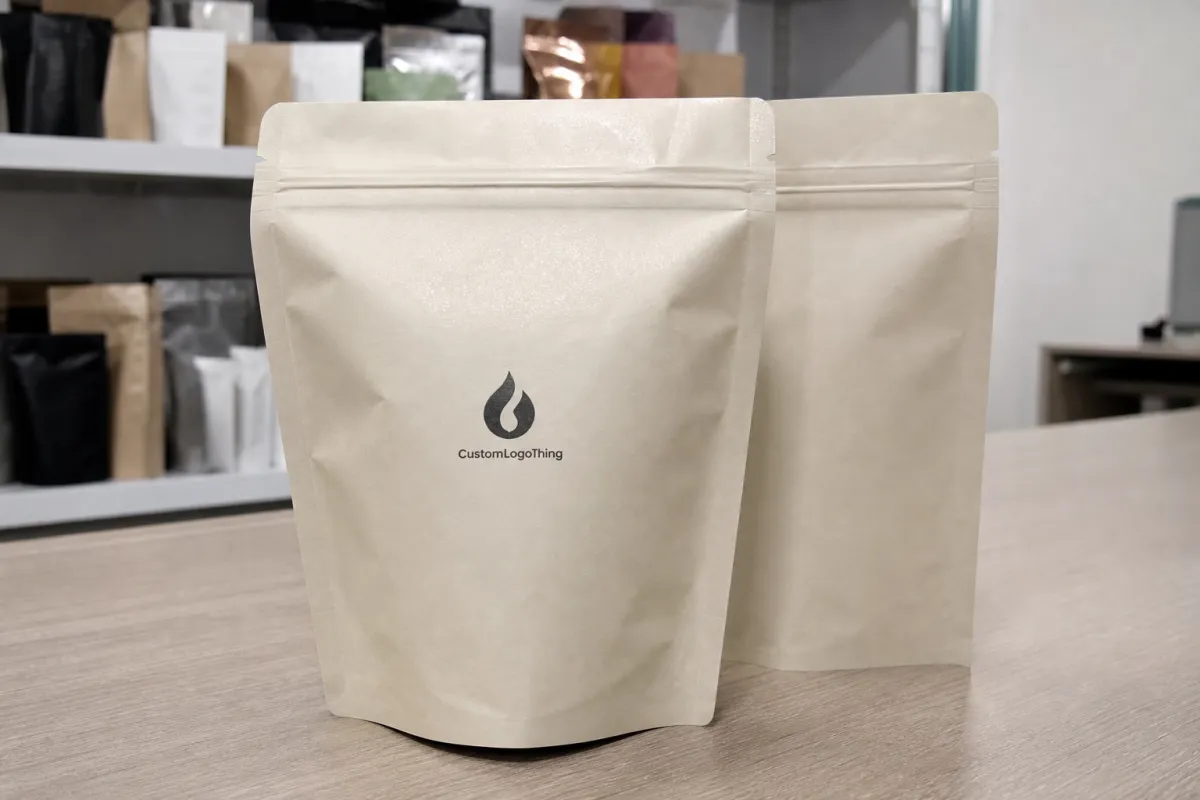
Candles are not forgiving products. Glass jars chip, tins dent, wax can pick up marks, and fragrance-heavy items need packaging that helps hold scent without turning into a dust magnet. A zipper pouch gives brands a protective outer layer without the added expense of a fully rigid presentation box.
There is also the shelf factor. A well-printed pouch can look strong in retail, especially for wax melts, travel candles, candle tools, and small gift sets. The format gives designers a broad print area and enough surface to communicate scent, collection theme, and brand identity without forcing everything into a tiny label.
Flexible packaging usually wins on storage and transport too. More units fit into a master carton, pallets waste less air, and freight weight stays lower than with many box-and-insert combinations. Those savings are not dramatic in isolation, but across a season they can change landed cost enough to matter.
For most candle brands, the argument for pouches comes down to a few concrete benefits:
- Lower per-unit packaging cost than many premium rigid options
- Better resistance to dust and superficial scuffing than basic sleeves
- Smaller storage footprint before filling and after production
- Cleaner retail presentation for gifts and accessory kits
- More efficient packing for sets and subscription shipments
That does not make zipper pouches universal. Large jar candles still need thoughtful inner protection. Very fragile glass still needs cushioning. If the pouch is only a decorative shell and the product is vulnerable in transit, then a secondary shipper or insert is still doing the heavy lifting.
If you are comparing packaging formats across projects, our Case Studies page helps because it shows how different structures behave in actual buying scenarios.
Custom zipper pouch formats and candle packaging details
Not every pouch style works equally well for candle products. Shape affects shelf presence, usable space, fill speed, and final price. The common formats are easy to separate once you look at the use case instead of the marketing language.
Flat pouches are generally the lowest-cost option. They suit wax melts, sample sets, candle cards, and small add-ons. Stand-up pouches add more retail presence and are better when the pack needs to look fuller on shelf. Gusseted pouches provide extra depth, which helps when the candle jar, bundle, or accessory mix has uneven dimensions. A zipper closure gives the pouch reuse value, which customers appreciate for fragrance-sensitive items.
Common material structures
Most custom candle pouches use laminated film structures such as PET/PE or MOPP/PE. The outer film handles print and appearance. The inner film supports sealing and product contact. For brands that care about scent retention, barrier performance matters more than visual finish alone.
Some practical tradeoffs show up quickly:
- Clear or windowed pouches show the product, though they usually give up some barrier strength and a bit of luxury feel.
- Matte finishes feel more refined and hide fingerprints better during handling.
- Gloss finishes create shelf pop and are often less expensive than specialty matte-soft-touch systems.
- Foil or metallic effects attract attention, but they raise print complexity and can increase MOQ pressure.
Branding choices change the experience in the hand as much as they change the visual. Full-color print is common for retail packaging. Spot UV adds contrast. Metallic ink can deliver shine without a full foil build. Soft-touch lamination adds a quiet premium feel, though it is never a free upgrade.
For smaller programs, label-ready blank pouches can be a sensible stepping stone. They do not have the same shelf polish as custom printed film, but they let brands test scents, test sales velocity, and avoid locking money into a design that may still change after launch.
“If the pouch is going beside candles on a shelf, it should do three jobs: protect, sell, and survive shipping. If it only does one, it is overpriced.”
Candle-specific details also matter. The material should resist dust, hold print without obvious abrasion marks, and avoid strong odor transfer that competes with the product. For wax melts or candle care kits, the pouch can also organize multiple components neatly enough that the customer does not open it to find a loose mix of parts.
Specs that change unit price fast
Most packaging cost surprises come from vague briefings. A buyer asks for “premium,” the supplier quotes a premium build, and then the budget starts shrinking. The specs below move unit cost faster than almost anything else.
The biggest cost drivers
- Size — larger pouches use more film, more print area, and more material.
- Film thickness — thicker structures improve feel and protection, but material cost rises.
- Print coverage — full bleed graphics cost more than one-color layouts or restrained branding.
- Finish — matte, soft-touch, spot UV, and metallic effects add cost quickly.
- Zipper style — standard press-to-close zippers are common; upgraded reseal systems cost more.
- Add-ons — tear notch, euro hole, clear window, hang hole, and custom shapes all affect pricing.
Size matters, but not always as much as buyers expect. A modest dimension change may be less expensive than a move to specialty film or a heavy decorative finish. The biggest jumps usually come from the combination of premium material, dense ink coverage, and multiple finishing steps.
For candle brands, the spec choice often depends on how the pouch will be used:
- Single candle: prioritize shelf appearance and light protection.
- Multi-pack: prioritize strength, depth, and reliable sealing.
- Accessory bundle: prioritize organization and the unboxing sequence.
- Gift set: prioritize premium graphics and tactile finish.
One mistake shows up often enough to be predictable: thicker film is treated as a quality shortcut. It is not. Yes, it can improve stiffness and scuff resistance. But if the pouch is only going inside another package, or if the product is light and non-fragile, extra thickness can become wasted spend.
Quality expectations should be tied to actual transport conditions. Retail display is one thing. E-commerce is another. If the pouch needs to survive parcel handling, ask for transport testing aligned with ISTA guidance. If the supplier makes sustainability claims, ask what they mean by them. “Recyclable” and “contains recycled content” are not interchangeable.
Candle brands zipper pouch bags unit cost review: pricing and MOQ
Now the part buyers usually want first: numbers. A serious candle Brands Zipper Pouch Bags Unit cost review has to account for order quantity because small runs and large runs live in different pricing environments. Setup charges, print preparation, and tooling are spread across more units as volume rises. The same pouch can look expensive at 1,000 pieces and reasonable at 10,000.
These market-style ranges are useful for planning, though final pricing will always move with size, structure, finish, artwork complexity, and shipping lane:
| Order level | Typical spec | Approx. unit cost | Buyer takeaway |
|---|---|---|---|
| Sample / prototype | Unprinted or simple printed sample | $0.40–$1.50 each | Useful for fit, feel, and color checks |
| Short run | Basic custom print, standard size | $0.18–$0.45 each | Good for launches and seasonal tests |
| Mid-volume | Full-color print, standard finish | $0.10–$0.28 each | Often the most balanced option for growing brands |
| Bulk | Streamlined spec, high quantity | $0.06–$0.18 each | Best for stable SKUs with repeat demand |
MOQ is where the budget story gets real. For custom-printed zipper pouches, a typical MOQ can sit anywhere from 2,000 to 10,000 pieces depending on structure, print method, and finishing. Simpler builds can sit lower. Highly customized builds can push higher. If a vendor offers a very low MOQ, check whether the size is standard, the print method is digital, or the finish has been simplified to keep the line moving.
There are also costs that tend to hide in the fine print:
- Artwork adjustments if files are not press-ready
- Tooling fees for plates or cylinders in certain print methods
- Setup charges for color matching and press preparation
- Freight if cartons are heavy or the route is long
- Rush fees when the schedule gets compressed
- Special finishing such as soft-touch, foil, or spot UV
To lower unit cost without weakening the package, start with the parts that move the most money. Standardize one pouch size across several scents if the product line allows it. Reduce print coverage where the design can support negative space. Reserve premium finishes for hero SKUs and keep entry-level products simpler.
The lowest quote is not always the lowest landed cost. If the pouch has weak sealing, poor color control, or a slow proofing process that creates rework, the hidden cost can erase the savings fast. Samples are cheaper than reprints.
Process, lead time, and production steps
Packaging orders go better when the buyer sends clear information and the supplier works from a controlled process. The general sequence is simple enough, but skipping one step tends to show up later as a quality issue or a timeline slip.
- Quote request
- Artwork review
- Material confirmation
- Proof approval
- Production
- Quality inspection
- Packing and shipping
Sampling usually moves faster than bulk production, but the timeline still depends on artwork readiness and film availability. In many cases, sample preparation takes about 5–10 business days. Bulk production often lands around 12–20 business days after proof approval. Complex print builds, custom finish combinations, or peak-season congestion can stretch that window.
Delays usually come from a few predictable places:
- Late artwork revisions
- Pantone matching disputes
- Changing the finish after proofing
- Adjusting pouch dimensions after approval
- Seasonal production congestion
Build buffer time if the pouch is tied to a launch, holiday gift set, or retail rollout. Packaging that arrives after the product launch is not supporting the product story; it is complicating it.
Faster turnaround is sometimes possible, but speed usually trades off against flexibility or cost. The spec may narrow. The price may rise. Both may happen at once.
For brands that care about disposal claims and customer education, material selection should also fit the broader sustainability message. The EPA recycling guidance is useful as a reference point, especially if your packaging description needs to be accurate rather than aspirational.
Why Custom Logo Things fits candle packaging buyers
Candle brands usually get the best results from suppliers that stay practical. That means clear specs, realistic cost guidance, and honest warnings when a requested upgrade does not actually help the product in use.
Custom Logo Things fits buyers who want custom printed packaging without being pushed into oversized specs or unnecessary upgrades. The value is straightforward: control over unit cost, more predictable lead times, and a pouch format that can match the product instead of fighting it.
From a buyer’s perspective, the useful strengths are:
- Custom printing for retail-ready presentation
- Material options to balance barrier, appearance, and cost
- Quality control that helps reduce rework and inconsistency
- Sample guidance so size and feel can be checked before bulk ordering
- Scalable ordering for startups, repeat SKUs, and larger programs
Most candle brands are not chasing the most elaborate pouch available. They want the right pouch for the product, the channel, and the margin target. That is a better brief.
A supplier that can explain tradeoffs clearly makes the purchase less risky. That matters because packaging mistakes rarely show up in the quote alone. They show up in sealing problems, color drift, damaged goods, or a package that looks good in renderings and underperforms on shelf.
Next steps to request a pouch quote that actually helps
If you want a useful quote, do not send a vague note like “need candle pouches, please advise.” That creates guesswork on both sides and usually leads to a second round of questions. A better quote request is specific from the start.
Prepare these details first:
- Pouch size or product dimensions
- Candle type: jar, tin, wax melt, set, or accessory bundle
- Material preference, if any
- Print colors and artwork files
- Finish preference: matte, gloss, soft-touch, foil, spot UV
- Quantity target and acceptable MOQ
- Delivery deadline
- Budget range if available
Send a reference image or a competitor example if you want the quote to match a specific shelf look. A minimal black pouch for a luxury line and a bright promo pouch for a holiday set are not close substitutes.
Ask for two pricing versions: standard spec and upgraded spec. That makes the tradeoff visible. A design that looks excellent on screen may only be practical if one finish is removed or the print coverage is simplified.
If the pouch will support a new scent launch or retail rollout, request samples before approving bulk. A sample can reveal zipper feel, seal strength, ink density, and shelf presence in a way a mockup never can.
Final step: compare unit cost, confirm MOQ, approve the proof, and lock the production schedule. That is the cleanest way to buy candle packaging without overpaying for the wrong details. For a live Candle Brands Zipper Pouch Bags unit cost review, that process matters more than squeezing a few cents out of a quote and ignoring the specification behind it.
FAQ
What affects candle brands zipper pouch bags unit cost the most?
Order quantity usually has the largest effect because setup costs are spread across more units as volume rises. Material choice, print coverage, finish, and zipper style also move the price quickly. Freight, rush service, and artwork revisions can affect the landed cost as well.
What MOQ should candle brands expect for custom zipper pouch bags?
MOQ depends on the print method, pouch size, and material structure. Simpler designs and standard sizes usually allow lower entry quantities. Premium finishes or highly customized specs often require a higher minimum order.
Are zipper pouch bags good for candle storage and retail display?
Yes, they work well for candles, wax melts, and candle accessory kits when the pouch size and barrier are chosen correctly. They help protect against dust, minor scuffs, and fragrance loss. They also create a cleaner retail presentation than plain shipping bags.
How long does custom pouch production usually take?
Sampling is typically faster than full production, but exact timing depends on artwork approval and material availability. Bulk production usually starts after proof sign-off and quality confirmation. Rush orders are possible in some cases, but they may reduce customization options or increase cost.
What information should I send for an accurate pouch quote?
Send the pouch size, candle dimensions, quantity, print colors, finish preference, and delivery deadline. Add artwork files or a rough design direction so the quote reflects actual production needs. Including a budget target helps the supplier suggest the best spec without overselling.


