For packaging teams comparing flexible formats, a Skincare Brands Zipper Pouch Bags unit cost review is rarely about the lowest quote on the page. It is about the full cost stack: unit price, freight, pack-out labor, damage exposure, and how many steps the package adds before a product reaches a shelf or a customer. A pouch that replaces a rigid carton can cut weight, shrink storage needs, and still look premium if the structure is chosen with the product in mind.
That is where many skincare buying decisions drift off course. Decoration gets judged first, economics second. A polished print sample can look excellent, but if it requires a second packaging step, a larger shipper, or extra handling at fulfillment, the real cost changes quickly. In practice, the better decision balances appearance with barrier performance, zipper reliability, and the number of pieces a warehouse can move each hour.
There is also a practical reason this format keeps showing up in skincare. Flexible pouches are easier to stock in multiple sizes, and they give brands more room to manage seasonal campaigns, refills, and limited runs without committing to bulky cartons or expensive insert systems. That flexibility only saves money, however, if the pouch is specified well from the start.
Why zipper pouch bags can lower skincare packaging cost without looking cheaper
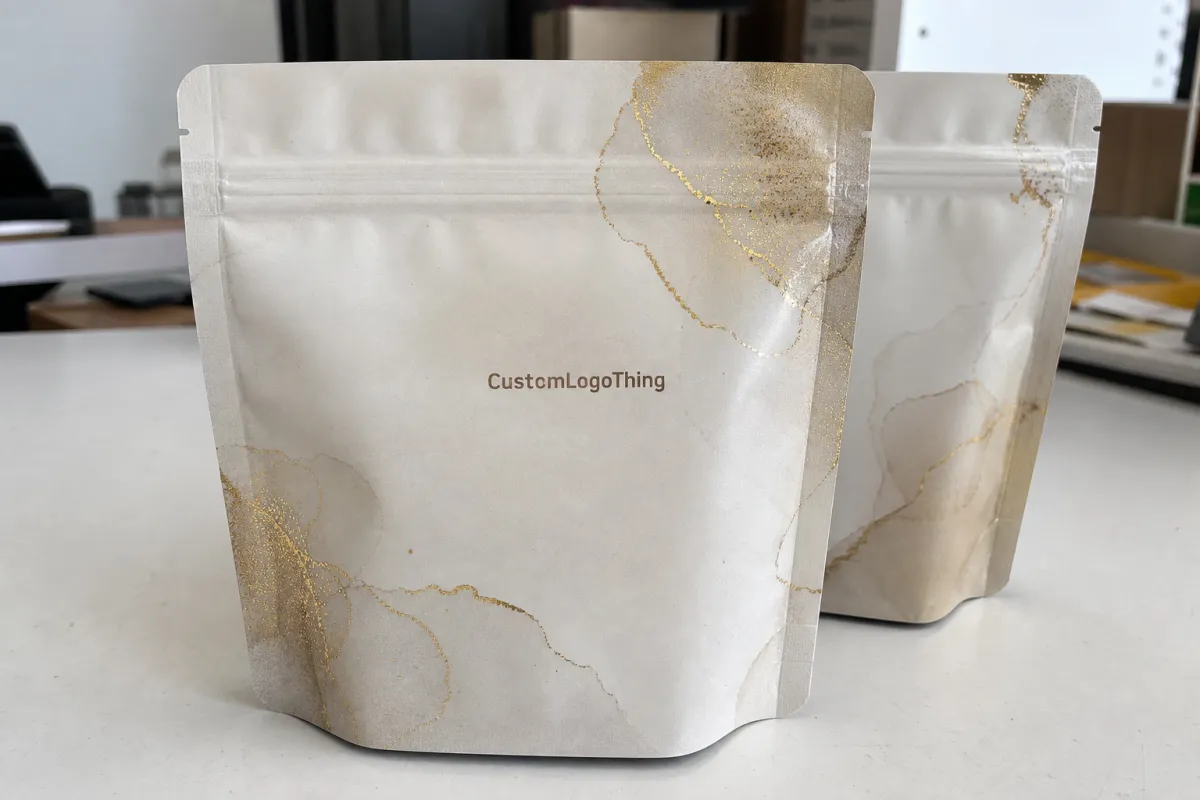
Flexible pouches can reduce cost in ways many brands do not capture on the first quote. A rigid carton usually means more material, more volume in shipping, and more labor to assemble or pack. A zipper pouch arrives flat, fills quickly, and ships more densely. That matters for serum refills, face mask kits, travel minis, and sample programs where the package must look retail-ready but still stay efficient in DTC fulfillment.
For a skincare brand, the trap is assuming design appeal and cost efficiency are opposites. They are not. A well-specified pouch can deliver strong shelf presence with matte lamination, sharp print, and a clean zipper line while still lowering cost per piece compared with a carton-plus-inner-pack format. If the pouch also reduces void fill and allows a smaller outer carton, freight often improves too. That matters in subscription boxes and bundle orders, where dimensional weight can punish bulky packaging.
A second advantage is production speed. Flat-format packaging tends to be faster to count, store, and move through a warehouse than rigid alternatives. If a brand is filling multiple SKUs from the same line, standardizing pouch size can reduce changeover friction and simplify inventory planning. The savings are not dramatic on one order; they add up across repeated runs.
From a buyer’s point of view, the right skincare Brands Zipper Pouch Bags Unit cost review starts with use case. A sheet mask pouch does not need the same barrier or closure strength as a powder cleanser refill. A travel-size kit may need a display-friendly finish, while a sample pack may prioritize speed and low MOQ. Different product lines, different economics.
There is also a damage angle. A pouch is not automatically stronger than a carton, but it is less brittle in transit. That lowers the risk of crushed edges and scuffed graphics. Fewer damages mean fewer write-offs and fewer reships. Those hidden savings are often larger than the difference between two base quotes.
Bottom line: buyers should evaluate barrier needs, seal quality, zipper performance, and display behavior before they judge the pouch by print quality alone.
Product details: pouch construction, zipper styles, and skincare use cases
Most skincare zipper pouches are built from laminated film structures such as PET/PE or PET/AL/PE, depending on protection requirements. A PET outer layer provides printability and stiffness. PE typically supports sealing. Add a barrier layer and you get better moisture, oxygen, or light resistance, which matters for formulas prone to oxidation or contamination.
Common surface finishes include matte, gloss, and soft-touch laminate. Matte often reads as more premium for skincare, while gloss can make color pop and improve visibility under retail lighting. Kraft-look films are popular for natural or botanical branding, but buyers should be careful: a paper-like appearance does not automatically mean paper-based construction. If the brand wants window visibility, a clear panel can help customers see product texture or fill level without opening the pack.
Zipper choice affects both user experience and cost. A standard press-to-close zipper is still the most common option. Child-resistant-style closures may be relevant for certain ingestible beauty products or categories with stricter regulatory expectations, though that depends on the formula and market. Tamper-evident features add another layer of trust, particularly for refill packs or travel products sold through DTC channels.
Some pouch features are small on paper and big in real use:
- Tear notches for clean opening
- Hang holes for peg display
- Rounded corners to reduce snagging
- Gusset styles for shelf standing and more stable fill shape
- Spouts for liquids, gels, or refills that pour rather than scoop
Match the structure to the product, not the mood board. Sheet masks usually need a flat pouch with strong seals and high-speed filling compatibility. Powder cleansers and bath salts need puncture resistance and a zipper that survives repeated opening. Sample sachets may be best served by simpler stock-style constructions. Refill packs can justify higher-barrier films because they often carry a larger fill weight and a more sensitive formula.
One pattern shows up repeatedly in skincare sourcing: premium brands spend extra on finish and print consistency, but they save money by standardizing pouch dimensions across multiple SKUs. One die line, multiple artworks. That can reduce setup friction, improve inventory control, and make reorders less risky.
For more examples of how brands compare formats, see the packaging decisions in our Case Studies.
Specifications that affect shelf life, compliance, and ordering confidence
The specs that change both performance and price are usually not the flashy ones. They are the thickness, barrier stack, seal width, and print method. Film thickness is often discussed in microns or mils. Thicker films can improve puncture resistance and give the pouch a more substantial hand feel, but they also raise material cost and can slow some converting lines. A brand trying to protect a delicate serum refill may justify the extra expense. A dry mask powder may not need it.
Barrier matters more than many buyers expect. If a skincare formula is sensitive to moisture, oxygen, or light, the pouch structure should reflect that. For oxygen-sensitive content, an aluminum layer or high-barrier film can be worth the added cost. For shelf-stable items with short exposure windows, a simpler laminate may be enough. The best skincare Brands Zipper Pouch Bags unit cost review weighs protection against over-specification. Paying for barrier performance you do not need is margin lost for no functional gain.
Print method also changes the economics. Digital printing is usually better for smaller runs and faster proofing. Flexographic printing often makes sense once volumes rise, especially if the artwork is stable. Rotogravure is more common for larger, repeatable programs where high image quality and lower long-run unit cost justify higher initial setup. Each method has a different tradeoff between tooling fees, setup charges, and cost per piece.
Before approving a quote, confirm the details that often trigger rework:
- Exact dimensions, including gusset depth
- Artwork bleed and safe zone
- Seal width and zipper placement
- Gloss or matte level
- Fill volume and tolerance
- Heat-seal compatibility with your filling line
- Any food-grade crossover requirements if the pack also holds ingestible beauty products
For shipping validation or transit testing, many brands reference ISTA testing standards and ASTM methods. That does not mean every pouch must go through a full lab program, but it does mean the package should be evaluated against realistic distribution stress, not only against a desk sample.
If you are making claims tied to recyclability or responsible material use, check current guidance from the EPA and verify any sustainability statement with your supplier. Packaging language gets audited more often than brands expect.
One useful buyer habit is asking for a construction breakdown in plain language, not just a material code. PET/PE may be enough for a short-life refill. PET/AL/PE may be more appropriate for light-sensitive actives. If the supplier cannot explain why a specific laminate was chosen, the quote is not yet ready for comparison.
Cost, unit pricing, and MOQ factors that move the quote
The fastest way to misread a quote is to compare only the base unit price. A proper skincare Brands Zipper Pouch Bags Unit cost review looks at the full structure of the order: film layers, print coverage, finish, zipper type, special features, freight, and any added prepress or tooling charges. One supplier may show a lower unit price but higher setup charges. Another may have a larger MOQ but better freight efficiency. The cheapest-looking quote can become the most expensive landed cost.
Typical pricing drivers include:
- Size of the pouch
- Material construction and barrier level
- Zipper format
- Print coverage and number of colors
- Finish such as matte, gloss, or soft-touch
- Special features like windows, spouts, or hang holes
What does that mean in practical terms? For a medium-size custom pouch, unit pricing might range from roughly $0.12 to $0.28 per unit at mid-volume quantities, depending on construction and decoration. Smaller runs can sit higher. Larger runs can come down materially. That range is not a quote. It is a realistic buyer reference point, and it changes with artwork, barrier requirements, and whether the supplier is quoting digital or conventional print.
MOQ is another hidden cost lever. A lower MOQ can be perfect for a new launch or a limited seasonal SKU, but it usually comes with a higher unit cost. Bigger runs often unlock bulk pricing, but only if the brand can use the inventory before design refreshes or formula changes make the packaging stale. For skincare, where packaging cycles can be frequent, overbuying is a real risk.
| Order profile | Typical use case | What usually happens to unit cost | Buyer tradeoff |
|---|---|---|---|
| Low MOQ, digital print | Launches, testing, niche SKUs | Higher cost per piece | Lower inventory risk, faster proofing |
| Mid-volume flexo run | Core line items | Moderate cost per piece | Better balance of price and flexibility |
| High-volume rotogravure run | Stable, repeatable SKUs | Lowest cost per piece after setup | Higher tooling fees and less design agility |
Ask for a landed-cost comparison, not a headline unit price. Freight, duties, inspection, and packaging insert costs can change the real total. A supplier quoting lower base pricing but charging more for packaging, pallets, or expedited lead time is not necessarily the better deal. That is especially true if you are comparing different regions or different shipping methods.
Also watch for artwork changes. Revisions can trigger new plates, new setup charges, or a rerun of samples. A brand that sends three versions of the design after proof approval can erase any savings from a low initial quote. Many teams underestimate this part more than the material itself, and the final invoice shows it.
Another place costs drift is in testing and sampling. A supplier may charge modestly for samples but recover margin in repeat proof cycles, color adjustments, or rush work. Ask upfront whether sample fees are credited against production and whether a revised proof triggers a new charge. Those details matter more than they first appear.
Process and lead time: from quote request to final delivery
Good pouch sourcing follows a predictable sequence: inquiry, spec confirmation, artwork review, sample approval, production, inspection, and shipment. The more complete the first inquiry, the faster the quote. If the supplier has to guess at fill size, zipper style, or finish, the schedule stretches immediately.
For a standard custom pouch program, lead time often falls around 12 to 15 business days after proof approval for straightforward jobs, but that can extend if the artwork is complex, the print method is specialty, or the order requires extra testing. Stock-style formats move faster. Fully custom printed pouches with multiple finishes, window cutouts, or spouts take longer. A rushed schedule can also bring air freight into the picture, which changes the economics in a hurry.
Delays usually come from the same few places:
- Dimensions were unclear or changed late
- Artwork files needed correction
- Color matching became a back-and-forth process
- Sample approval sat in an internal queue
- The fill line required a different seal tolerance than planned
The easiest way to reduce timeline risk is to lock specs before production starts and appoint one decision-maker for approvals. When three people are signing off on color, gloss, and zipper feel, projects drift. That is not a supplier problem. That is an internal process problem.
Documents that speed things up include:
- Dieline or size sketch
- Logo files in vector format
- Target fill weight
- Preferred zipper type
- Shipping destination
- Any compliance or testing requirement
If you need more insight into how packaging programs are managed across categories, our Case Studies page shows the kind of detail that helps teams avoid last-minute changes.
One practical point often missed in planning: approval time inside the brand can be longer than manufacturing time. A packaging line may be ready to run, but if the artwork proof sits waiting for sign-off, the calendar still slips. The fastest projects are usually the ones with one clear approver and a complete spec sheet.
What a reliable supplier should prove before you place the order
A reliable supplier should show evidence, not just promise speed. Ask for material data, print samples, QC checkpoints, and examples of repeatable production quality. If a supplier cannot explain the laminate stack or how they control seal strength, that is a warning sign. Strong sales language does not compensate for weak process control.
For skincare brands, consistency matters. A pouch that looks fine in one batch and drifts in the next batch can create retail problems and customer complaints. Seal width, cut accuracy, and color stability across runs all affect brand perception. If the zipper feels different between lots, consumers notice. They may not know why, but they notice.
“The best pouch supplier is the one that helps you avoid the second order of mistakes: reprints, rework, and returns.”
Service also matters. A supplier that answers technical questions quickly usually reduces errors later. If they can help a growing skincare brand choose between two pouch structures based on fill behavior and shipping conditions, that is real value. The goal is not to sell the most expensive package. The goal is to align aesthetics, performance, and price.
Before you approve an order, ask these questions:
- Can you provide a pre-production sample or digital proof?
- What is the expected zipper cycle performance?
- How do you verify seal integrity?
- What are the tolerances on width and height?
- Are there additional charges for plate making or tooling?
- How do you handle batch-to-batch color control?
That last point is not cosmetic nitpicking. In premium skincare, packaging is part of perceived product value. A dull finish, a misregistered logo, or a weak zipper can lower trust faster than a modest price increase ever could.
There is also a sourcing reality that gets overlooked: a supplier’s best sample is not enough. Ask how they maintain consistency on repeat orders. The quote should be backed by process controls, not just a good first run. If they cannot describe inspection checkpoints or acceptable tolerance ranges, the purchasing risk is still too high.
Next steps to quote the right pouch and avoid rework
To get a clean quote, gather the basics before you ask for samples: product type, fill size, target finish, artwork, and expected volume. If you know the product’s sensitivity to moisture, oxygen, or light, include that too. The more specific you are, the more accurate the pricing becomes.
Compare at least two pouch structures against the same protection requirement. If one supplier quotes a premium film and another quotes a lighter structure, the prices are not truly comparable. Ask both suppliers to quote to the same functional target. That is the only fair way to judge bulk pricing and true unit economics.
Request pricing at multiple quantities. A clear tiered quote shows where the cost bends and whether the MOQ matches your launch plan. It also reveals whether the supplier has real pricing discipline or just one static number. For many brands, the difference between 5,000 and 20,000 pieces can change the per-unit economics materially.
Before production, request a sample or digital proof and verify three things: zipper feel, color accuracy, and how the pouch stands or hangs on shelf. If the product ships direct to consumers, test how it fits into the outer carton too. Packaging rarely fails in the abstract. It fails in the real workflow.
Use a simple comparison sheet before final approval. List unit price, tooling or plate fees, lead time, freight method, sample cost, and any special finish charges. That keeps the decision grounded in landed cost rather than one attractive line item. It also makes later reorders easier because the key specs are already documented.
If you are ready to move from rough estimates to a skincare Brands Zipper Pouch Bags unit cost review, send your specs, target quantity, and preferred finish so the quote is built on actual packaging needs, not guesswork. That is how you reduce surprises, protect margin, and choose a pouch that performs beyond the render.
What affects skincare brands zipper pouch bags unit cost the most?
Size, material layers, zipper type, print coverage, and special finishes usually have the biggest impact on unit cost. Higher barrier films and premium matte or soft-touch finishes typically raise price more than simple stock-style constructions.
What is a typical MOQ for custom zipper pouch bags for skincare brands?
MOQ varies by print method and structure, but digital runs are often lower than flexographic or rotogravure orders. Brands launching a small SKU should ask for quantity tiers so they can compare entry-level MOQ against better unit pricing at higher volumes.
How long does production usually take after artwork approval?
Lead time depends on whether the pouch is stock, lightly customized, or fully printed with special finishes. A clear spec sheet and fast sample approval usually shorten the schedule more than any other factor.
Can zipper pouch bags work for liquid skincare products?
Yes, but the pouch needs the right seal strength, barrier level, and sometimes a spout or reinforced closure. Always confirm fill weight, viscosity, and leak-prevention requirements before approving the structure.
What should I request in a quote comparison for skincare pouch packaging?
Ask for unit price, MOQ, sample cost, mold or plate fees, production lead time, and estimated freight. Request the same specs from each supplier so you can compare true landed cost instead of just headline pricing.


