Candle Brands Zipper Pouch Bags bulk order memo decisions are often made after the rest of the launch plan is already locked in. That timing creates avoidable problems: a pouch that looks elegant in a rendering but scuffs easily on a retail shelf, a zipper that feels fine in samples but fails after repeated handling, or a size that looks compact on a dieline and turns bulky once freight, storage, and carton packing are factored in.
For candle brands, zipper pouches tend to show up in a few predictable jobs: wax melt packs, accessory kits, sampler bundles, gift sets, and promotional inserts. They are popular because flexible packaging can cost less than rigid cartons and usually takes up less space in storage and transit. That advantage disappears quickly if the pouch spec is chosen for appearance alone.
The practical buyer thinks about the pouch as a production item first. Fit, barrier performance, closure reliability, and order volume matter more than whether the surface finish looks luxurious in a mockup. That approach usually leads to cleaner pricing and fewer revision rounds.
Candle brands zipper pouch bags bulk order memo: packaging problems candle brands usually discover too late
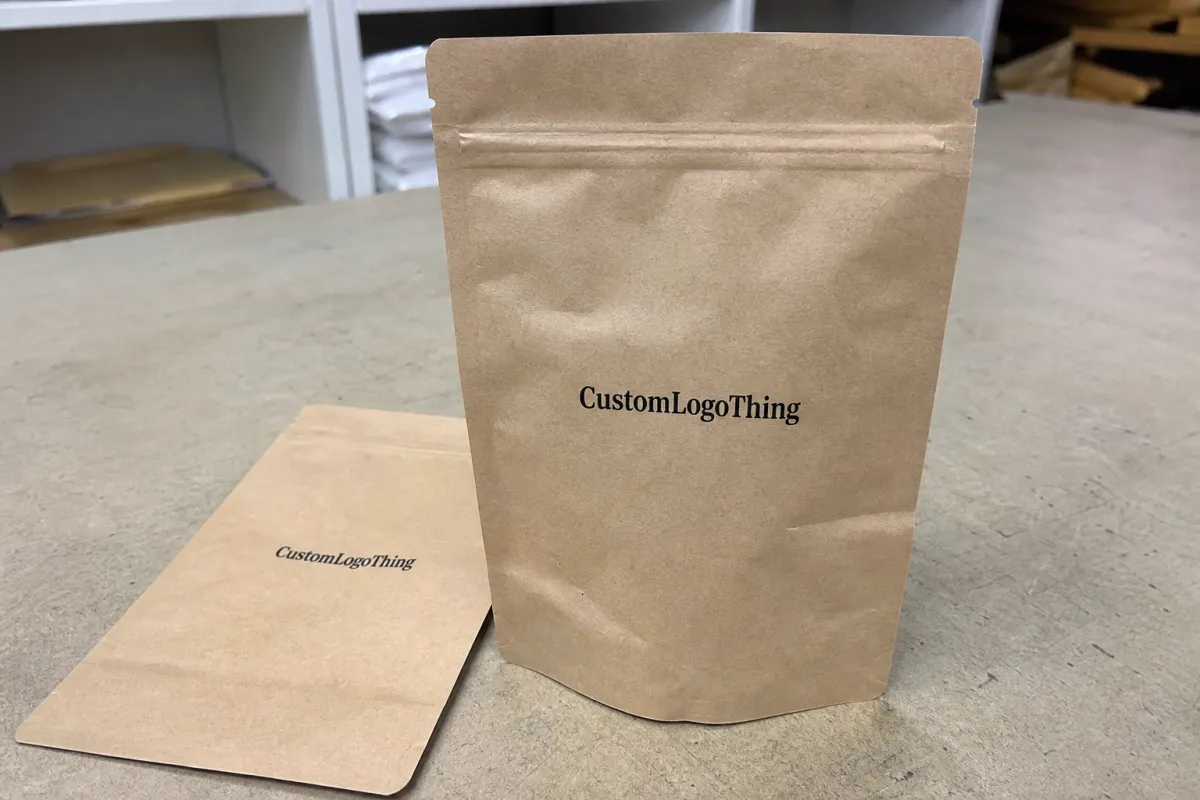
Most packaging problems do not show up in the design file. They show up in packing, shipping, or retail handling. A matte pouch may photograph well, then collect fingerprints or look dusty under bright store lights. A clear pouch may help shoppers see the product, then reveal lint, wax residue, or small inconsistencies that make the line feel discounted rather than premium. If the pouch carries scented components, odor migration becomes another issue once film performance is too light for the application.
Freight is another place where mistakes hide. Flexible packaging typically ships with less cube than folding cartons or rigid boxes, which is one reason brands favor it for repeat orders. For candle lines with multiple SKUs, using one or two pouch sizes across seasonal sets can reduce inbound freight cost and simplify inventory. The savings are real only if the dimensions are chosen carefully.
Before asking for quotes, a buyer should answer four basic questions:
- What is going inside: a single candle, a wax melt assortment, an accessory kit, or a bundled gift item?
- Will the pouch sit on a shelf, hang on a peg, or ship inside another carton?
- How much protection is needed against dust, odor loss, and handling wear?
- What order volume justifies custom print instead of a stock structure?
That is the real purpose of a Candle Brands Zipper Pouch Bags bulk order memo. It should answer operational questions first and visual questions second. If the brief starts with color trends and ends with dimensions, the quote process usually becomes noisy and inconsistent.
A pouch spec is only premium if it survives production, transit, shelf handling, and reordering without drifting out of tolerance. Pretty artwork does not compensate for poor dimensions or weak closures.
What to specify before requesting a candle pouch quote
A supplier cannot quote accurately without a clear use case. Start by stating whether the pouch is for a single candle, a twin-pack, a wax melt set, an accessory kit, or a promo insert. Those are different packaging problems. They affect pouch size, film gauge, zipper choice, and whether a stand-up pouch or flat pouch makes more sense.
Then provide exact dimensions. Width, height, gusset depth, and usable opening size all matter. If the product is irregular, include the widest point rather than only the label size or outer carton size. A quote based on “close enough” measurements often leads to oversizing, wasted material, or a pouch that looks visually awkward once filled.
Closure and presentation details belong in the first request as well. A zipper pouch can include a resealable zipper, tear notch, hang hole, clear window, or matte and gloss variation. If the pouch needs to display a barcode, warning copy, scent notes, or batch information, say so early. Print area is not just a design issue; it affects manufacturability and compliance space.
Artwork should be mentioned even if it is not final. A one-color logo on a neutral pouch is a very different cost profile from full-coverage print with spot gloss, metallic ink, or a frosted window. Buyers often discover this only after a quote arrives, which is why the brief should include what is known, even if the design still needs refinement.
If transit durability matters, standards-based references help keep expectations grounded. ISTA publishes test methods used to evaluate distribution performance, and that is useful for pouches shipping with heavier candle accessories or fragile inserts. For paperboard inserts, cartons, or mixed-material programs, FSC is the common reference point for certified paper sourcing.
Material and structural specifications that affect performance
Material choice is where many candle brands under-specify the order. For simple retail presentation, a basic PET/PE structure may be enough. For better scuff resistance and a stronger shelf appearance, a thicker multi-layer film often performs better. In many programs, 2.5 to 4 mil is a practical range, though the right thickness depends on product weight, zipper type, and whether the pouch will be reused by the customer.
The three specs that create the most complaints after delivery are seal strength, zipper quality, and film thickness. Weak seals can split during packing. A low-grade zipper can pop open after a few handling cycles. Thin film wrinkles too easily, and once that happens the pouch can look cheap even if the print is excellent. Buyers often focus on color matching and ignore these basics, which is exactly backward.
Flat pouches usually work best for accessory kits, refill items, and low-profile bundles. Stand-up pouches have stronger shelf presence and are easier to merchandise in retail. Neither is automatically superior. The right format depends on whether the product will be displayed upright, nested in a carton, or shipped as part of a broader gift set.
Finish should be selected for function first. Matte reduces glare. Gloss can deepen color and make graphics appear brighter. Soft-touch lamination feels premium, but it can raise cost and may show handling marks depending on the film and print method. Clear windows help shoppers see the product, though they can also expose dust or inconsistent fill levels. There is no universal best choice. There is only the option that fits the product and sales channel.
Before approving a larger run, ask for a sample that checks three things: fit, zipper cycle performance, and print clarity. One or two open-close cycles are not enough. The zipper should still feel secure after repeated use, especially if the pouch will be handled by retailers or customers more than once. In production terms, the difference between acceptable and repeatable is where margin is protected or lost.
For candle brands shipping fragrance-heavy accessories or mixed materials, odor control matters too. Barrier performance is not a marketing label; it is a construction choice. If the film is too permeable, scent can fade or migrate, and the pouch may no longer support the product the way it should.
Sizing, print area, and branding details that protect margins
Size affects much more than appearance. It changes material use, freight cube, shelf fit, and the amount of air trapped in the finished pack. A pouch that is 10 to 15 percent oversized may not sound expensive, but across thousands of units it can raise material cost, shipping cost, and warehouse space at the same time. This is why experienced buyers ask for dielines before design work begins.
Print coverage also affects cost and consistency. A one-color logo on a clean background usually costs less than full-coverage artwork with multiple text panels. For some candle brands, the margin advantage of a simpler layout outweighs the visual impact of a dense graphic. That is especially true in wholesale, where buyers want the packaging to be readable at a glance and easy to stack with other SKUs.
Barcode space, safety copy, fragrance notes, and product claims all need room. If those elements are forced into a pouch that is already small, the result looks crowded and the brand feels less controlled. Clean layouts often outperform busy graphics because the information can be read quickly, and the package looks intentional rather than overloaded.
Color accuracy deserves a sample when the launch is sensitive. If the logo sits near a zipper seam or window edge, small shifts in placement can make the pouch look off-center. Request a pre-production sample or a clearly marked proof if alignment matters. It is much cheaper to correct a 2 mm issue on a proof than to find it after a finished batch has been packed.
Branding details should also be reviewed with reordering in mind. A layout that is hard to register, too close to the edge, or too dependent on specialty finishes can be more expensive to repeat than to create once. The best pouch spec is the one that can be reordered with the same results, not the one that only works on the first run.
For buyers comparing packaging structures across product lines, our Case Studies page is useful because it shows how size, finish, and format affect unit economics and presentation. That is the real question behind the design brief: does the pouch support the product, or only decorate it?
Cost, pricing, and MOQ factors for bulk pouch orders
The main price drivers are predictable: material type, size, print count, closure style, and order volume. Higher MOQ usually lowers unit cost because setup gets spread across more bags. Special finishes, custom dimensions, and multi-color printing push pricing upward. Once more than one premium feature is added, the quote can move faster than buyers expect.
A practical comparison helps keep the budget honest. Sample cost is one line item. Unit cost at MOQ is another. Landed cost, including freight and any duties, is the figure that matters after the shipment is received. If a supplier cannot separate those figures, the quote is incomplete.
| Option | Typical Structure | Approx. Unit Cost at 5,000 | Best Use |
|---|---|---|---|
| Stock clear zipper pouch | Simple PET/PE, standard size, no print | $0.12-$0.22 | Internal kits, fast-moving accessory bundles |
| Custom printed flat pouch | 2.5-3.5 mil film, one to two print colors | $0.18-$0.32 | Wax melts, promo inserts, lightweight retail packs |
| Custom stand-up pouch | Thicker film, zipper, matte or gloss finish | $0.24-$0.42 | Retail display, bundled gift sets, premium presentation |
| Premium barrier pouch | Higher barrier laminate, window, specialty finish | $0.30-$0.55 | Fragrance-sensitive items, gift collections, higher perceived value |
Those figures are reference points, not fixed pricing. A small pouch with heavy print coverage can cost more than a larger pouch with a simple layout. Rush orders also cost more because production scheduling tightens and quality checks are compressed. For budgeting, it helps to request pricing at 1,000, 5,000, and 10,000 units so the breakpoints are visible.
A candle Brands Zipper Pouch Bags bulk order memo should include storage reality as well. If the price drops at 10,000 units but the brand can only store 3,000, the savings are theoretical. Cash flow, warehouse space, and reorder timing all affect the true cost of the decision. Cheap per unit is not automatically cheap in the operating model.
Inventory risk is also part of the pricing conversation. Seasonal candle lines often need packaging ahead of launch, which means an order that looks economical can still create pressure if it ties up too much capital too early. The right MOQ is the one the business can actually support.
Process, timeline, and production steps for bulk ordering
The standard workflow is straightforward: quote request, artwork review, sample approval, production, inspection, and shipment. The problems start when one of those steps is skipped or rushed. Missing dielines, late artwork revisions, and vague color references are common reasons timelines slip. The supplier is not always the bottleneck; often the brief is.
Lead time should be split into two windows. Sampling can take several business days depending on structure and print method. Full production usually takes longer, especially with custom print and specialty finishes. For planning purposes, many buyers should expect roughly 12 to 15 business days after proof approval for a standard run, then additional transit time. If the launch date is fixed, the schedule needs extra padding.
A milestone schedule helps because it forces decisions into the open. Ask for dates tied to proof approval, production start, inspection, and ship date. If those milestones are not clear, the project is likely to drift. That risk increases for seasonal candle collections, where missing the selling window can turn a good idea into dead inventory.
Bulk packaging should be ordered before the shelf goes empty, not after. Reorders look simple until the brand is waiting on artwork corrections, transit, or a late approval. During peak gifting periods, packaging inventory needs to move ahead of the product calendar, not chase it.
Inspection should not be treated as optional. At minimum, the order should be checked for print accuracy, zipper function, seal integrity, and count accuracy before shipment. If the pouch is going into retail or wholesale channels, transit testing under ISTA-aligned methods is a sensible benchmark for shipping risk. No test removes risk entirely, but it does make failure modes visible earlier.
For broader ordering terms and minimums, our Wholesale Programs page is a useful reference because it frames volume, repeatability, and reorder behavior the way buyers actually use them. That matters more than a one-off quote that only looks good on paper.
What makes a supplier reliable for repeat candle packaging orders
Repeat business depends on consistency, not surprise. Color repeatability, zipper function, and dimensional accuracy matter more than a single perfect sample. If the first batch looks excellent but the second batch shifts in tone or seal quality, the brand pays for it in complaints, rework, or lost trust with retail buyers.
Communication matters because packaging projects have too many moving parts to run on delay. A good supplier asks for clarification before production starts, not after the issue appears on the line. That usually means better proof discipline, cleaner approval records, and fewer reprints. The quote may not be the lowest, but the landed result is often better.
Quality control should include material verification, seal testing, zipper checks, and carton inspection before shipment. If the order is moving into retail or wholesale channels, transit testing is useful because packaging failure is often a distribution problem before it becomes a customer complaint. A pouch that passes visual review but fails under handling is not ready for a reorder program.
Reliable suppliers also help buyers balance appearance, protection, and cost instead of pushing the most expensive construction by default. That is usually a positive sign. The right partner asks whether the pouch is for display, shipping protection, or bundled merchandising, because those are different jobs and the construction should change accordingly.
A repeatable candle packaging program usually has one more trait: the same pouch spec can be reordered across seasonal collections without redesigning the whole system. That consistency lowers admin friction and helps the brand keep its shelf look intact. It also makes a candle Brands Zipper Pouch Bags bulk order memo far more useful because the spec becomes a repeatable standard, not a one-time guess.
Next steps to lock in the right pouch spec and order size
Start with a one-page memo that lists product dimensions, target quantity, closure type, finish preference, print requirements, and whether the pouch is for retail display, protection, or bundled gift packaging. The memo should be direct enough for a supplier to quote without chasing clarifications. Ambiguity is expensive, especially once artwork and scheduling are already in motion.
Request at least two volume tiers. One should reflect the quantity the brand can comfortably store and sell. The other should show the next pricing break so the savings can be measured against extra inventory. That comparison is especially useful for brands that reorder often but do not want to overcommit cash.
Approve a sample or proof before production. If the pouch has to match an existing candle line, this step is not optional. Fit, zipper behavior, and print placement are the failure points that most often create avoidable rework. The goal is not to test forever; it is to verify the first run properly.
Use reorder timing as a planning tool, not a reaction. If lead time is two to three weeks from proof approval plus transit, the next order should be moving while the current one still has inventory left. That is the difference between a controlled supply chain and a panic purchase. For buyers who want a quick reference on order questions, our FAQ page helps clarify the common decision points before a purchase order goes out.
The strongest candle brands zipper pouch bags bulk order memo is the one that treats the pouch as a working packaging component: sized correctly, printed sensibly, priced against real volume, and sourced with repeatability in mind. Get those pieces right and the pouch stops being a guess. It becomes part of the brand’s operating system.
What details should I include in a candle brands zipper pouch bags bulk order memo?
Include pouch dimensions, candle product type, closure style, finish preference, print requirements, and target quantity. Add whether the pouch is for retail display, protection, or bundled gift packaging so the supplier can quote the right structure.
What is the typical MOQ for custom zipper pouch bags for candle brands?
MOQ depends on size, material, and print complexity, but smaller runs usually cost more per unit than larger bulk orders. Ask for tiered pricing so you can compare entry-level quantities with better unit-cost breaks at higher volumes.
How do I reduce unit cost on custom candle zipper pouches?
Use standard sizes, limit print colors, and avoid expensive finishes unless they support a clear sales advantage. Ordering in higher volume usually lowers the unit cost because setup and material costs are spread across more bags.
How long does production usually take after artwork approval?
Lead time varies by order size and customization level, but production begins only after the proof or sample is approved. Build in extra time for sampling, revisions, and shipping if the order has a hard launch date.
Can I get a sample before placing a bulk order for candle zipper pouch bags?
Yes, and it is often the safest way to verify size, zipper performance, and print accuracy before mass production. A sample is especially useful when the pouch must match an existing candle line or retail packaging system.
For buyers finalizing a candle brands zipper pouch bags bulk order memo, the best move is usually the plainest one: define the use case, lock the dimensions, compare tiered pricing, and approve a sample before production starts.


