If you need clear zip lock Bags with Logo low moq, you are usually trying to solve three problems at once: keep the product visible, keep it resealable, and keep the order small enough that it does not trap cash in inventory. That is not unusual. It is normal packaging buying behavior, even if some suppliers act like every order should be 50,000 pieces.
Clear Zipper Bags are one of the easiest custom packaging formats to launch with. You do not need a full box, full-wrap print, or a warehouse full of inventory. You need the right film, the right zipper, and a logo that supports the product instead of hiding it.
The appeal is practical. Transparent packaging shows the item first. The logo builds recognition second. That works well for products that already have visual value: colorful snacks, cosmetics, accessories, craft goods, or sample kits. If the product is the main selling point, why cover it up with artwork nobody asked for?
Why clear zipper bags with branding work for small runs
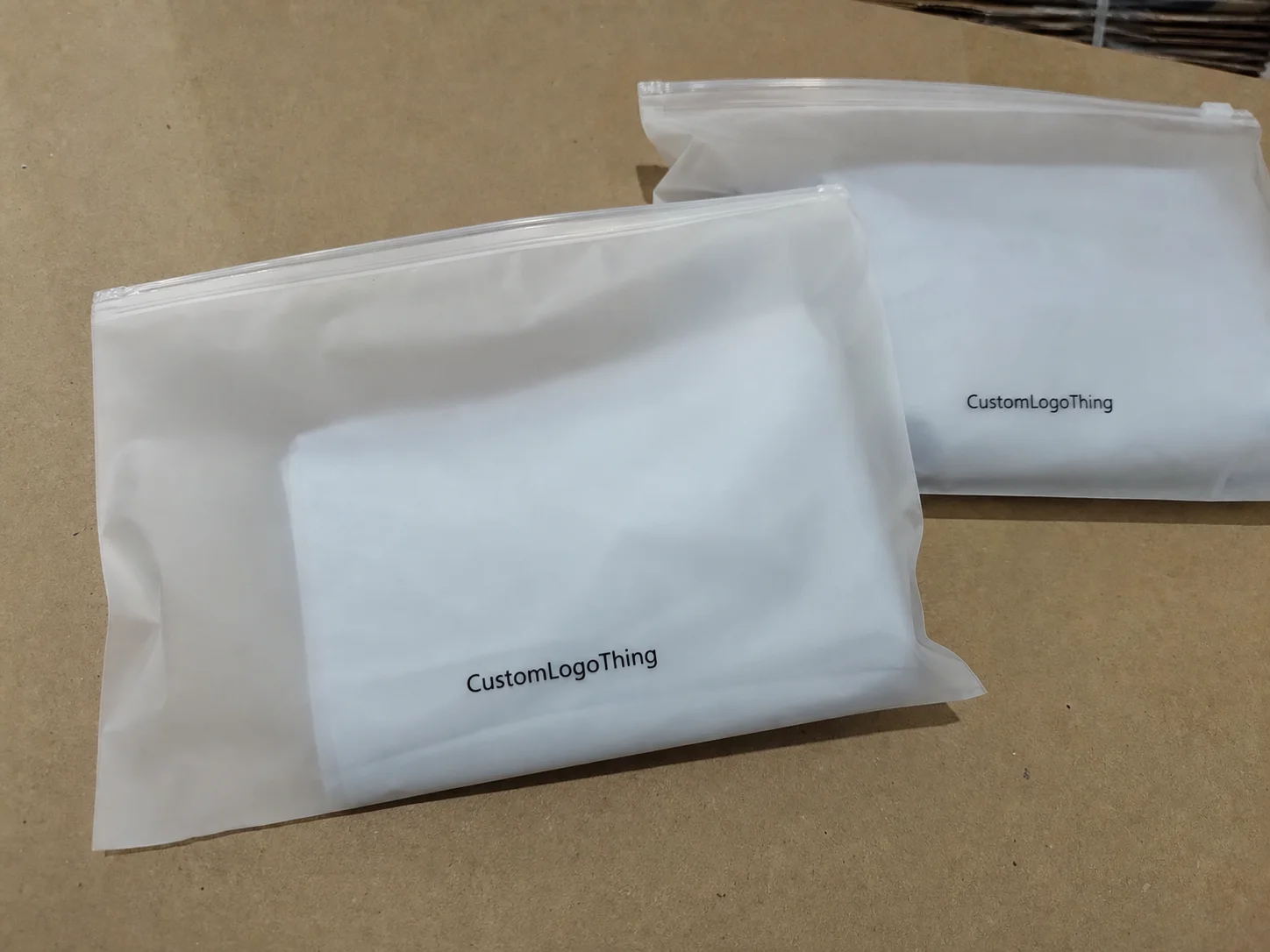
For small brands, transparent packaging does a lot of work without looking busy. Customers can see the item immediately. The branding stays present, but it does not fight the product for attention. That balance matters when you are testing a new SKU or shipping retail-ready samples.
Clear Zip Lock Bags With Logo low moq make sense when you want a professional-looking pack without committing to a large run. A startup testing three scents, a seasonal product, or a niche line does not need 20,000 bags sitting around. A run of 500, 1,000, or 3,000 pieces is often enough to validate demand, photograph the product, and start selling.
Transparent zipper bags are also easier to replenish than rigid retail packaging. You are not waiting on complicated dielines, folding cartons, or layered inserts. That matters when the launch date is close and the packaging is just one part of a bigger production schedule.
Common use cases include:
- Product samples and promo kits
- Apparel accessories and small retail parts
- Food items that need resealability
- Cosmetics, bath items, and travel-size sets
- Craft goods, beads, stickers, and merch inserts
- Subscription box add-ons
Low MOQ matters most when demand is still being tested. It also matters for seasonal products that do not justify bulk commitments, or for brands that need a first run quickly and can reorder later if sales behave. That last part is where a lot of buyers save themselves from dead stock.
There is a second benefit people overlook: easier iteration. If the first version needs a slightly different zipper, a thicker film, or a better logo position, a small run lets you fix it before ordering at scale. Cheap learning is still learning. Expensive learning is just annoying.
For brands comparing packaging formats, transparent zipper bags usually sit in a practical middle ground. They look cleaner than plain poly bags, cost less than rigid retail packaging, and are far less risky than jumping straight into large-volume custom boxes. For broader packaging context, the Packaging Machinery Manufacturers Institute has useful industry references on packaging standards and formats.
Product details: film, seal type, and print options that matter
The material choice is where buyers either control cost or create problems. Common clear films include PE, PP, and laminated structures. PE is flexible, soft, and widely used for zipper bags. PP tends to feel crisper and more rigid, with strong clarity. Laminated structures add stiffness or barrier performance, but they usually cost more and are not necessary for every retail application.
Zipper style matters too. A press-to-close zipper is the most common option and usually the most economical. A slider zipper adds convenience, especially for repeat use or heavier contents. Tamper-evident features make more sense for food or regulated products. Hang holes matter for retail displays. If the bag needs to sit on a peg hook, that needs to be decided before proof approval, not after somebody notices the missing hole in the packed sample.
Print method affects both the look and the price. One-color logos are usually the best starting point for clear zip lock Bags with Logo low moq. They keep setup manageable and usually preserve the clear, product-first appearance. Spot-color printing creates a stronger branded look, but every added color can increase setup work and extend lead time. Multi-color artwork can work, but it belongs on products that justify the cost or on larger runs where the math improves.
In practice, the tradeoff usually looks like this:
- One-color logo: lowest setup burden, fast proofing, strongest visibility of the product
- Two-color logo: stronger branding, moderate cost increase
- Full-coverage artwork: most visual impact, highest production complexity
Logo placement changes how the bag reads on shelf. A centered mark feels direct. Bottom placement keeps more of the product visible. Top header branding works well when the item itself is the star and the packaging only needs to frame it. Plain clear bags with a logo are not the same as fully custom-printed bags with dense artwork. Buyers should treat those as different products with different pricing, proofing, and lead times.
For packaging performance and environmental considerations, the EPA packaging guidance is a useful reference when teams are thinking about material choice, recovery, and waste reduction.
Specifications buyers should confirm before ordering
Before asking for a quote, lock in the basics. You need width, height, gusset, thickness, closure style, and print area. If those are vague, the quote will be vague too. Not mysterious. Just vague. And vague quotes turn into change orders once the artwork and sample get closer to reality.
Thickness is one of the easiest specs to underestimate. Too thin, and the bag feels flimsy or wrinkles badly. Too thick, and it gets stiff, costs more, and may be overkill for lightweight items. For many retail uses, clear zipper bags fall somewhere around 2 mil to 6 mil, depending on the product and presentation needs. Food or heavy-duty applications may need a different build entirely.
Size should be based on the packed product, not the product alone. A bag that matches the item dimensions on paper often performs badly in real life. Leave room for the zipper, top margin, and the way the contents settle once packed. If you are filling pouches, adding scoops, or packing folded textiles, test the packed form instead of measuring only the flat object.
Buyers should also confirm compliance details when they apply. Food-contact packaging may require material declarations. Retail items may need barcode space or hang holes. Some teams want write-on panels for batch notes or internal tracking. Others prefer frosted film rather than fully clear because fingerprints and small scuffs are less visible. That is not cosmetic fluff. It affects how the pack holds up in use.
One more thing that saves time: ask for the production tolerance. A bag specification is not a promise that every unit will measure like a lab sample. Good suppliers will tell you acceptable variance. That is normal. The real question is whether the tolerance still works for your filling line or hand-pack process.
Specs to confirm before requesting a quote
- Bag width and height
- Gusset depth, if any
- Film thickness
- Zipper style
- Print color count
- Print placement and size
- Food-contact or retail requirements
- Special features such as tear notches or hang holes
| Option | Best for | Typical impact on cost | Notes |
|---|---|---|---|
| Standard clear PE zipper bag | Samples, accessories, light retail | Lowest | Flexible, economical, easy to order at low MOQ |
| Clear PP zipper bag | Retail presentation, crisper look | Moderate | More rigid feel, stronger shelf appearance |
| Laminated clear bag | Better barrier or premium feel | Higher | Useful when product protection matters more than simplicity |
| Slider zipper with print | Repeat-use products | Higher | More convenient, but adds unit cost and packaging complexity |
Cost, pricing, and MOQ: what drives the unit cost
Let’s talk money. That is usually the part everyone is pretending not to focus on. The main drivers are size, film thickness, zipper style, print colors, order quantity, and packing method. Change any one of those and the cost per piece changes too. Sometimes a little. Sometimes enough to wreck a budget spreadsheet.
For clear zip lock Bags with Logo low moq, the unit cost is higher than standard bulk pricing because setup charges get spread across fewer pieces. That is the tradeoff. Small runs reduce inventory risk and cash tied up in stock, but they do not erase the economics of printing. Plates, screens, and proofing still cost money. Some projects also need tooling, depending on construction and print method.
Roughly speaking, a simple clear zipper bag with a one-color logo may land around $0.18-$0.45 per unit at low MOQ, depending on size, thickness, closure style, and how the bag is packed for shipment. Larger, thicker, or more complex formats can climb above that. Very small runs usually cost more per piece. There is no clean universal price that fits every spec, which is why experienced buyers ask for multiple tiers.
Here is a practical benchmark buyers can use:
| Order type | Example quantity | Indicative unit cost | What you get |
|---|---|---|---|
| Sample order | 50-100 pcs | Highest per piece | Proof of look, fit, and zipper feel |
| Low MOQ run | 500-1,000 pcs | Moderate | Useful for launch testing and small retail batches |
| Standard production run | 5,000+ pcs | Lowest per piece | Better bulk pricing and lower setup burden per bag |
Hidden costs are where budgets get blindsided. Watch for:
- Setup charges for print screens or plates
- Freight or air shipping for urgent orders
- Special packing requirements
- Testing or compliance documentation
- Reproofing if artwork changes after approval
If you want to keep pricing down without making the bag look cheap, use a standard size, limit print colors, and choose the simplest closure that still works for the customer. That usually beats trying to save a few cents by trimming so much that the bag stops feeling intentional.
For brands tracking recycled content or packaging waste claims, keep documentation clean. FSC certification matters for paper-based components, and you can verify standards at fsc.org if you are pairing the bag with inserts or outer cartons that need certification support.
Process and timeline: from artwork to delivered bags
The order flow should be straightforward. If it is not, somebody has added friction for no good reason.
- Send the quote request with size, quantity, logo file, and desired zipper style.
- Confirm bag specs and print placement.
- Review a digital proof.
- Approve a sample if one is needed.
- Move into production.
- Inspect, pack, and ship.
What slows things down? Missing dimensions. A logo file that is low resolution or not vector-based. Vague placement instructions. Endless back-and-forth about color matching when the original brand files were never prepared properly. If you want fast quoting on clear zip lock Bags With Logo low moq, send clean artwork and exact specs on day one.
Typical timing depends on complexity. Proofing can happen within 1-2 business days when the file is ready. Sampling may take several additional days. Production often runs in the 10-20 business day range after proof approval, though larger quantities or multi-color work can take longer. Shipping time is separate. Buyers forget that part constantly, then act surprised when the finished cartons are not already on the receiving dock.
Rush service may be possible, but there is always a tradeoff. You may pay more, accept fewer customization options, or skip physical sampling. That can be worth it for a launch deadline. It can also be a bad idea if the packaging is customer-facing and the print layout is still uncertain.
“A fast proof is useful. A correct proof is better.” That is the whole game with custom zipper bags.
To keep turnaround tight, prepare these items before requesting a quote:
- Exact bag size or product dimensions
- Estimated quantity
- Logo file in vector format if available
- Preferred print color count
- Food-contact or retail requirements
- Need for hang holes, tear notches, or barcode space
Why buy from a packaging supplier that handles low-MOQ custom work
Low-MOQ buyers need a supplier that treats small runs like real projects, not leftovers. That means accurate specs, predictable proofs, honest timelines, and no pressure to inflate the order just to make the job easier on production. If you are ordering a test run, you need someone who understands that the first run is about learning, not showing off a big order number.
Direct manufacturing or tightly managed sourcing matters because it gives you better control over price, clarification, and reorders. If you are trying to hit a target unit cost, every middle layer adds friction. That does not always mean lower quality, but it does mean you should ask how the quote is built and what is included in the price.
Quality control should cover material inspection, print consistency, seal strength, and dimensional checks. The most annoying packaging problem is not a dramatic failure. It is a small inconsistency that shows up across a run and creates packing headaches. The bags look fine in a photo and then behave differently on a filling table. That is why testing matters before the full order ships.
A supplier experienced with Low MOQ Custom work should also support the next order. Today it is 500 bags. Later it may be 5,000. The supplier should be able to keep the spec on file, reduce rework, and avoid rebuilding the project every time you reorder.
If you need a broader company reference before requesting a quote, start with the FAQ and then send a clean spec sheet. It saves time for everyone, which is rare and therefore pleasant.
Next steps to order clear zipper bags with your logo
If you are Ready to Order clear zip lock bags with logo low moq, send the bag size, estimated quantity, product type, logo file, and any closure or print preferences. The faster those details arrive, the faster the quote will be useful instead of decorative.
Ask for two options if you can. One should be the lowest-cost version that still works. The other should be the upgraded version with a better zipper, thicker film, or cleaner print presentation. That comparison usually makes the buying decision obvious within minutes.
Also confirm whether you need food-safe materials, retail hang holes, or barcode space before the final quote. These details are tiny until they are not. Then they become the reason a reorder has to be redone.
Review the proof carefully on screen and, if possible, against your actual product dimensions. Transparent packaging makes poor layout choices very visible. A logo that sits too high or too low is easy to spot once the bag is filled. There is nowhere to hide, which is kind of the point.
Approve the proof, lock the timeline, and place the first run small enough to test demand. That is the sensible way to Buy Custom Packaging. Start with the version that fits the product and budget, then reorder once sales tell you what to do next.
What is the minimum order for clear zip lock bags with logo low MOQ?
Low MOQ usually means a smaller entry order than standard custom packaging runs. Exact minimums depend on size, print complexity, and material choice. Ask for a sample-run minimum and a standard run minimum so you can compare unit cost.
Can I print a logo on clear zipper bags without covering the product?
Yes. That is the main advantage of transparent packaging. You can place the logo in a small area and keep the product visible. Simple one-color logos usually preserve visibility best.
How much do custom clear zip lock bags cost at low MOQ?
Cost depends on size, thickness, zipper style, and number of print colors. Small runs cost more per bag than larger runs because setup is spread across fewer units. You can usually reduce cost by simplifying artwork and choosing standard dimensions.
How long does production take after I approve the proof?
Timing depends on quantity, print method, and whether a physical sample is required. Proof approval is usually the fastest step when artwork is ready. Shipping time adds to total delivery, so confirm both production and transit schedules.
What files do you need to start a quote for custom clear zip lock bags?
Send your logo file, target bag size, estimated quantity, and preferred closure style. Add notes on print placement, food-contact needs, or retail features like hang holes. Clear instructions speed up quoting and reduce proof revisions.


