Cosmetics Brands OPP Header Bags Warning Label Guide
A clear OPP header bag can leave production looking glossy, sharp, and retail-ready, then create trouble the moment it reaches a peg hook because the warning copy is too small, the hang hole cuts into the barcode, or the header fold hides a caution line. That is why a practical Cosmetics Brands OPP Header Bags warning label guide belongs at the artwork stage, before plates, proofs, or cartons are approved.
For cosmetics brands, these bags often carry more responsibility than buyers first expect. They may hold lip balm samples, sheet mask sets, bath salts, travel-size lotions, soap minis, promotional sachets, or mixed trial kits, and each format can require readable product information, caution language, barcode placement, batch reference, country-of-origin language, or storage guidance. Attractive packaging helps sell the item; clear information helps keep it sellable through retailer review, distribution, and consumer handling.
Cosmetics Brands OPP Header Bags Warning Label Guide Basics
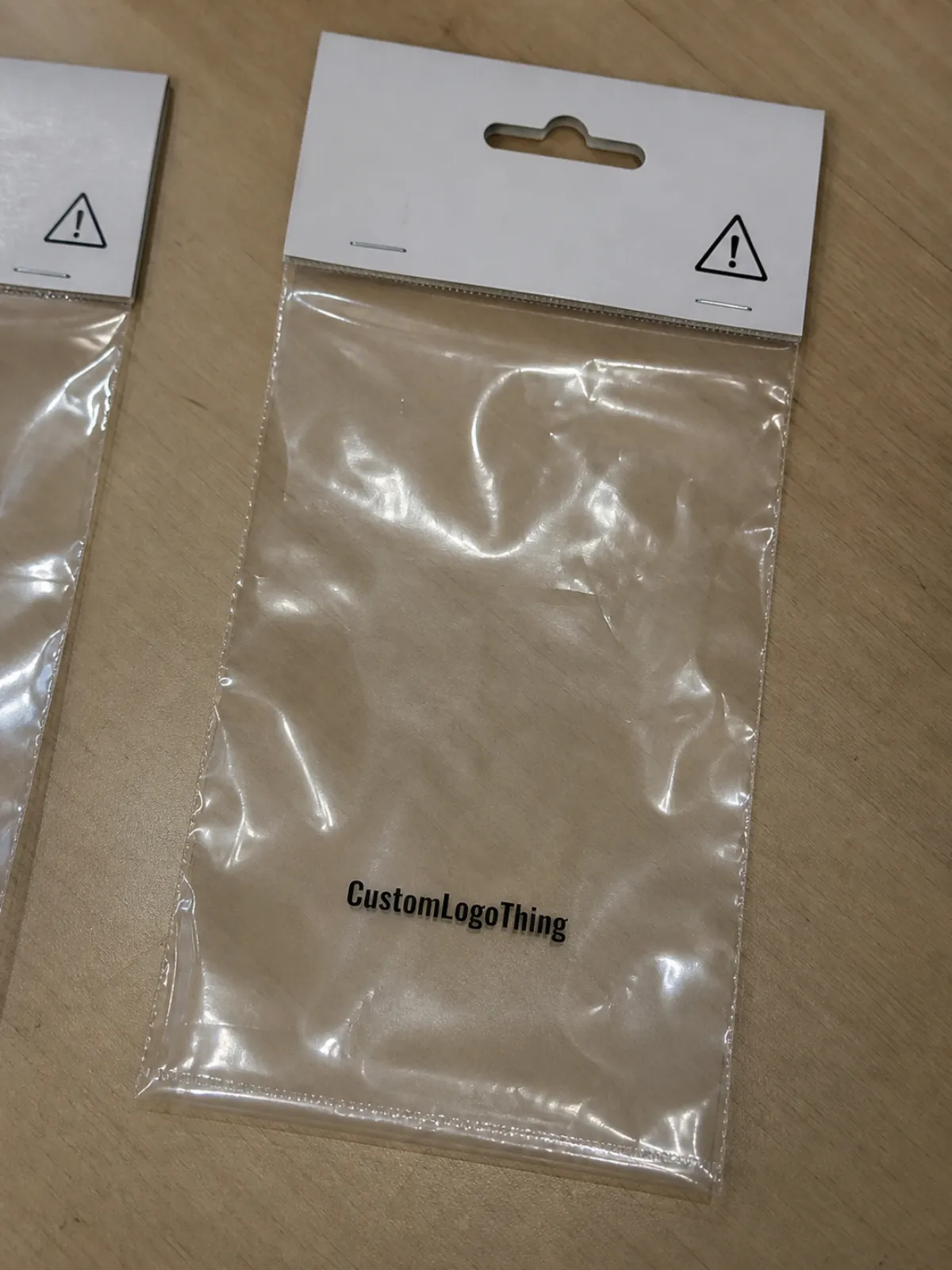
An OPP header bag is usually made from oriented polypropylene film with a folded or reinforced top header area. That header may be finished with a Euro slot, sombrero hole, round hang hole, adhesive seal, or heat-sealed top depending on the display plan. OPP is popular for cosmetic retail packaging because it is clear, crisp, relatively stiff for its gauge, and clean-looking on shelf.
Typical retail cosmetic header bags often use film in the 30–50 micron range. Lightweight sachets may sit comfortably in thinner film, while heavier product sets may need 60 micron material, wider seals, or a laminated construction if the contents have sharp edges, hard corners, or noticeable hanging weight.
The header changes the layout. A plain flat pouch gives you one general printable surface. A header bag creates a crowded top zone where branding, hang-hole clearance, sealing margin, fold allowance, barcode placement, and warning copy all compete for space. A 2-inch header may sound generous during planning, but after subtracting a 0.25-inch seal area, a 0.375-inch hang hole, required safe zones, and any brand mark, the useful label area can shrink quickly.
The common mistake is treating the warning label as decoration. It is not. It is a working compliance and communication panel, and although a shopper may only glance at it, a retailer, distributor, marketplace reviewer, or internal quality team may inspect it closely. That scrutiny increases when the item touches skin, contains fragrance, includes small accessories, or carries use restrictions.
A decorative retail bag can focus mainly on shine, color, and shelf appeal. A working cosmetics pack has to protect the product, support the display method, scan correctly if barcoded, and preserve required copy after converting. For many small and mid-size cosmetics lines, the printed header bag becomes the outer retail package, so it has to carry information that might otherwise be printed on a carton, insert card, or pressure-sensitive label.
A useful guide should connect print layout, material choice, MOQ, pricing, production timing, approval flow, and the final quality check. None of those decisions stands alone. A taller header may improve readability but increase film use. A white ink backup may improve contrast but add a print station. A smaller MOQ may protect cash flow but raise the per-unit price. Packaging is a set of practical trade-offs, and the warning label has to survive all of them.
How the Warning Label Has to Work on the Pack
The warning label must stay readable after the bag is folded, sealed, punched, filled, hung, handled, and viewed under store lighting. In production terms, that means the copy cannot sit too close to a heat seal, adhesive strip, tear line, hanger slot, crimped edge, or gusset transition. A printed file may look centered on a flat dieline, while the finished bag pulls upward once it is loaded and hanging from a metal peg.
Cosmetics warning copy varies by product type and sales channel, so buyers should confirm requirements with their regulatory team, retailer, or compliance consultant before submitting final artwork. Common elements include product name, use directions, caution statements, ingredient reference, storage notes, lot or batch fields, distributor information, country-of-origin language, barcode, and small-part or external-use warnings if applicable. Some products need language such as “avoid contact with eyes,” “for external use only,” “keep out of reach of children,” or temperature guidance if the formula is heat sensitive.
Readable type is not only a font-size issue. It also depends on contrast, spacing, finish, print gain, and the background behind the film. On glossy clear OPP, fine black type can disappear against a dark product inside the bag, while white type can vanish against a pale sachet or insert card. For small warning blocks, a controlled contrast panel is usually safer: black text on a white flood, dark ink on a light opaque header, or a dedicated label zone that does not rely on the color of the product behind it.
Production callout: If warning copy is critical, do not place it inside a busy floral pattern, metallic effect, translucent tint, or logo repeat. Leave a clean text zone with at least 1/8 inch of safe space around the copy whenever the bag size allows it.
Barcodes need the same discipline. A UPC or EAN symbol usually needs a quiet zone on both sides and enough contrast to scan consistently. GS1 guidance is useful for barcode sizing and placement, and many retailers will reject packs that scan poorly even if the printed artwork looks attractive. If the barcode sits in the header, keep it away from the hang hole and away from curved, folded, or stressed film areas.
The design can still look premium. It needs hierarchy, not clutter. Put the brand mark where the shopper sees it first, then assign a stable zone for warning text and technical information. Glossy film, soft color palettes, and clean typography can work well together, but the compliance copy cannot be treated as leftover text squeezed in during the last artwork revision.
Artwork, Materials, and Print Variables That Change the Result
Material selection affects both the feel of the bag and the performance of the label. Clear OPP gives a bright, glassy view of the product, which is useful for sample kits and colorful cosmetics. Opaque OPP or printed white panels improve readability and can hide minor fill variation. Some buyers use a clear body with a printed header; others choose full-surface custom print for stronger brand blocking on shelf.
Film thickness should match the filled pack, not only the artwork budget. A 30 micron OPP bag can be fine for flat sachets or lightweight samples. A 40–50 micron bag usually feels more substantial for retail display. Heavier bath items, small jars, or multi-piece sets may need stronger film, wider seals, or a reinforced header so the hole does not stretch under hanging weight. For a hanging pack, a slight material upgrade is often cheaper than dealing with torn headers, repacking, or a retailer complaint.
Print method changes the quote and the finished appearance. Flexographic printing is common for OPP bags and handles spot colors, line art, and repeat production well. Digital printing may suit shorter runs or variable designs, though available substrates, white ink options, and finish choices depend on the supplier’s equipment. Gravure can produce excellent detail for high-volume work, but cylinder costs and setup usually make it less friendly for small cosmetic launches.
Ink coverage matters more than many buyers expect. A one-color black warning label on a clear bag is inexpensive, but it may not be readable over the product. Adding white ink behind the text, printing an opaque header panel, or using a second color for hierarchy can improve function. More colors mean more setup, tighter registration control, and usually more cost. Metallic inks, spot varnish, matte effects, or soft-touch laminated header cards can look beautiful, but every finish should be checked against the warning label’s legibility.
Artwork files should be built on the correct dieline. The designer needs the final bag width, bag height, header depth, seal area, hole size, hole location, fold line, bleed, and safe zone. A common safe zone is 1/8 inch from trim and functional edges, though some converters request more depending on equipment tolerance. Bleed is often 1/8 inch as well, but confirm the number instead of assuming it from a previous pouch project.
- Dieline: Use the supplier’s actual header bag template, not a generic rectangle.
- Bleed: Extend background art past trim so no white slivers appear after cutting.
- Safe zone: Keep warning text, barcode, and required copy away from seals, folds, and holes.
- Barcode: Check quiet zones, contrast, and final printed size before approval.
- Proof: Review at true size, not only zoomed in on a large monitor.
If supporting stickers, batch labels, or hang tags are part of the packaging system, align the warning language with Custom Labels & Tags so the printed bag and secondary label do not contradict each other. Consistency prevents avoidable review loops, especially when marketing copy, ingredient references, and caution statements are being edited by different people.
Cost, Pricing, and MOQ Factors That Shape the Quote
The quote for printed OPP Header Bags is shaped by bag size, material gauge, print method, color count, header structure, label complexity, finishing, and order quantity. Standard-size clear bags with a simple printed header price very differently from a fully custom size with opaque white backup, two-sided print, specialty adhesive, and a reinforced hang slot. The warning label may look like “just text,” but if it requires an opaque panel, barcode control, or extra proofing, it can change both setup and production handling.
For planning, a small custom run around 5,000 pieces might fall somewhere in the broad range of $0.18–$0.42 per unit depending on size, gauge, print coverage, and setup. A larger run around 25,000 pieces may drop closer to $0.08–$0.22 per unit for simpler constructions. Very small test runs can cost more per piece because plates, press setup, proofing, and converting time have to be spread across fewer bags. These are planning ranges, not guaranteed pricing, since resin cost, print method, freight, labor, and current capacity all affect the final number.
MOQ needs a plain explanation. A converter has to prepare material, print stations, plates or digital files, inks, inspection criteria, and converting equipment whether the order is 2,500 pieces or 50,000 pieces. Once the press is running, additional units become more efficient. That is why the jump from 5,000 to 10,000 pieces may reduce the unit cost more than buyers expect, while the jump from 50,000 to 60,000 pieces may be less dramatic.
| Option | Typical Use | Estimated Unit Range | Buyer Watchpoint |
|---|---|---|---|
| Standard clear OPP header bag with one-color print | Sample sachets, flat cosmetics, light promo kits | $0.08–$0.22 at higher quantities | Warning text may need a white panel for contrast |
| Custom-size printed header bag | Retail hanging sets or unusual product dimensions | $0.15–$0.35 depending on tooling and gauge | Confirm header depth and hang-hole clearance early |
| Full-surface multi-color OPP bag | Premium branded cosmetic kits | $0.20–$0.50+ depending on coverage | Busy artwork can reduce warning label readability |
| Heavier-gauge or reinforced header construction | Bath items, multi-piece sets, small jars | Varies widely by weight and size | Test hanging strength before production approval |
Hidden quote variables are common. Window areas, upgraded hang holes, resealable adhesive, anti-static treatment, inner pack-out requirements, printed lot fields, barcode verification, and separate retail cartons can all add cost. Even shipment packing matters. Bundles of 100, inner polybags of 500, or cartons marked by SKU create different labor steps.
A better quote comparison asks what is included. Does the price include setup? Are digital proofs included? Is one artwork revision covered? What is the overrun or underrun tolerance, often plus or minus 5% to 10% on custom flexible packaging? Are shipping cartons, palletization, and freight included, or quoted later? Base unit price is only one part of the landed cost.
For brands comparing product families, reviewing examples in Case Studies can help teams think through repeat ordering, SKU organization, and shelf presentation. The practical rule is simple: quote the real pack, not the idealized graphic. A real quote needs the filled dimensions, display method, warning label position, barcode requirement, quantity, and shipping plan.
Process and Lead Time From Proof to Shipment
A clean custom header bag project usually follows a predictable path: specification confirmation, artwork review, proof approval, material sourcing, printing, converting, finishing, inspection, and packing for shipment. The order should not move to press until the bag size, film gauge, header layout, hang-hole position, warning copy, barcode, and quantity are locked. One missing detail can stall the batch.
Typical lead time after final proof approval may run about 12–20 business days for many custom printed OPP header bag orders. Special materials, high-volume runs, complicated color matching, or heavy production queues can extend that timeline. Sampling can add several days to a couple of weeks depending on whether the sample is a digital mockup, flat proof, production sample, or pre-production prototype. Freight time is separate, and it can change the launch calendar more than people like to admit.
Timing usually stretches first in artwork. A missing caution line, barcode moved too late, revised distributor address, or updated ingredient statement can push the file back into prepress. If plates have already been made, changes may add cost as well as time. A late compliance correction is one of the most expensive ways to update a simple bag.
Approval flow matters as much as equipment speed. A file handoff with one decision-maker can move quickly. A file that has to pass through marketing, regulatory, sales, a retailer portal, and a distributor may sit for days between comments. If the warning label has market-specific language, build that review time into the schedule before asking for a ship date.
Production inspection should include print registration, film clarity, seal strength, header alignment, hang-hole position, count accuracy, and carton labeling. For transport, general packaging performance can be reviewed against standards such as ISTA procedures; ISTA provides widely used test protocols for packaged-product distribution. For paper components such as insert cards or header cards, FSC-certified materials may matter to some retailers or sustainability programs, and FSC is the recognized resource for that certification system.
Reorders are easier when the first order is documented well. Keep the dieline, approved proof, Pantone or CMYK targets, film gauge, adhesive spec, carton count, and warning label notes in one place. Repeat cosmetics lines often run into seasonal peaks, gift set launches, and retailer shelf resets, so an early reorder can avoid rush charges or material substitutions.
Common Mistakes That Create Rework or Compliance Trouble
The most common mistake is placing warning copy where the bag structure will damage it. Text too close to the top seal can blur or distort. Text too close to the hang hole can be punched out. Text printed across a fold may look crooked or break visually when the header bends under weight. The file may be technically approved, but the finished pack becomes hard to read.
Another mistake is approving artwork only on screen. A PDF viewed at 200% can make 5-point text look comfortable. Printed at true size on glossy film, that same copy may become a squint test. Before approving a cosmetics brands OPP Header Bags Warning Label guide layout, print the proof at 100% scale, trim it, fold it along the header line, and hold it next to the real product if possible. It is a low-tech check, but it catches expensive problems.
Under-specifying the bag is also common. A lightweight bag may be fine on a table but weak on a peg. If the product is a bath bomb sample, mini jar, scrub packet set, or multi-piece travel kit, the hang area carries more stress than a flat sachet. Ask for a recommended film gauge and header reinforcement based on actual filled weight, not just bag dimensions.
Market mix-ups create another risk. One retailer may require a different barcode format. One region may require different ingredient presentation. One promotional set may need extra caution language because it includes an accessory. If the same bag is intended for multiple channels, confirm whether one universal warning panel is acceptable or whether separate SKUs are safer.
There is also the temptation to hide compliance copy because the design team wants a cleaner front. That is backward. Clean design is not the absence of information; it is the controlled placement of information. A well-designed cosmetics header bag can make required copy feel intentional, not like a sticker added after a retail buyer raised a concern.
- Do not place required text inside the hole-punch zone.
- Do not assume clear film provides enough contrast.
- Do not resize barcodes casually to fit the space.
- Do not approve final art without checking the filled bag format.
- Do not mix channel-specific warning copy without a revision log.
Final Order Checks
Before releasing the order, gather the practical details in one clean package. Confirm the finished bag width and height, header depth, film thickness, hang-hole style, seal type, product weight, target quantity, artwork file, warning copy, barcode requirement, and shipping destination. Also define the use case: sample distribution, retail hanging, subscription-box insert, event giveaway, or promotional bundle. Each one can push the specification in a different direction.
Ask for a proof that shows the final text scale and placement on the actual header bag format, not just a logo file placed over a rectangle. The proof should show the hang hole, seal margins, fold line, bleed, safe zone, barcode, and warning label together. If the bag is clear, review how the label reads over the real product or over a representative insert color.
For repeat orders, lock in reorder notes. Save the approved dieline, print colors, material gauge, carton pack count, tolerance, and compliance copy version. A note such as “Warning panel approved with 7-point black type over white ink backup; keep 0.125-inch clearance from Euro slot” can save a surprising amount of back-and-forth six months later.
The strongest packaging orders are not released on appearance alone. They are built around the product, the shelf, the printer, and the compliance copy at the same time. Treat warning-label planning as part of the specification from the first proof, and your OPP header bags have a much better chance of arriving shelf-ready, scannable, readable, and aligned with the brand presentation you actually wanted.
FAQs
What should a cosmetics brands OPP header bags warning label guide include?
A good guide should cover label placement, readable font size, contrast, product details, barcode planning, lot or batch reference, and any required caution or storage language. It should also explain how the header fold, hang hole, seal area, and safe zones affect what can be printed without risking unreadable copy.
How do I keep the warning label readable on a clear OPP header bag?
Use strong contrast, keep the text away from the top seal and hang hole, and leave enough space around the warning block. If the product behind the film is dark, colorful, or reflective, consider a white ink backup or opaque panel. Always check a true-size proof so glare, transparency, and folding do not hide the copy.
What affects pricing for printed OPP header bags with warning copy?
Size, material thickness, MOQ, print method, number of colors, ink coverage, custom tooling, hang-hole style, adhesive type, and finishing all affect price. Extra artwork setup, barcode changes, compliance revisions, and special packing requirements can also change the final quote, so compare total landed cost rather than only the base unit rate.
How long does production usually take for custom header bags?
Production timing depends on proof approval, artwork readiness, material availability, order quantity, and the current production queue. Many custom printed OPP header bag orders fall around 12–20 business days after final approval, but sampling, special materials, freight, and late artwork corrections can extend that schedule.
What is the most common mistake on cosmetics warning labels for header bags?
The most common issue is placing text too close to the seal, header fold, or hang hole. That can create unreadable copy, clipped warnings, barcode problems, or rework before the order can ship. A true-size proof and a clear safe zone are the easiest ways to prevent that mistake.


