Chocolate Brand Shopping Bags Unit Cost: Buyer's Guide
Chocolate Brand Shopping Bags unit cost looks straightforward until the first quote lands in your inbox and the line items start separating into paper, handles, print, finishing, packing, and freight. Two bags can look almost identical in a mockup, then end up miles apart in cost once the paper weight changes, the handle is upgraded, or the print moves from one color to full coverage. I have seen that happen more than once, and it usually catches teams off guard because the visual difference on screen is so small.
For chocolate brands, that price gap matters more than it might for a general retail bag. The bag is not only a carrier. It has to protect a gift box, hold weight without sagging, present well at the counter, and still feel like it belongs with the product inside. If the bag feels thin, prints poorly, or arrives with a finish that fights the brand instead of supporting it, the unit cost may have been lower on paper but the real cost shows up elsewhere. That is the part buyers tend to remember after the first rollout.
In other words, chocolate Brand Shopping Bags unit cost is never just the printed bag price. It is the total landed cost after setup, samples, factory packing, transit, and any last-minute changes are counted in. If you compare only the headline number, you are not seeing the real picture. A better approach is to price the exact bag spec that fits the product, the sales channel, and the margin target, then compare each cost component side by side. That way the discussion stays grounded in actual use instead of wishful thinking.
Chocolate brands also tend to be a little more demanding about presentation, and that is fair. A bag for boxed truffles, seasonal assortments, or corporate gifting has to carry the visual identity of the brand as much as it carries the product. If the bottom bows, the handle feels weak, or the print registration drifts, the customer notices quickly. The result is not just a packaging issue. It is a perception issue, and those are harder to recover from once the sale is done.
Chocolate Brand Shopping Bags Unit Cost: Why It Changes Fast
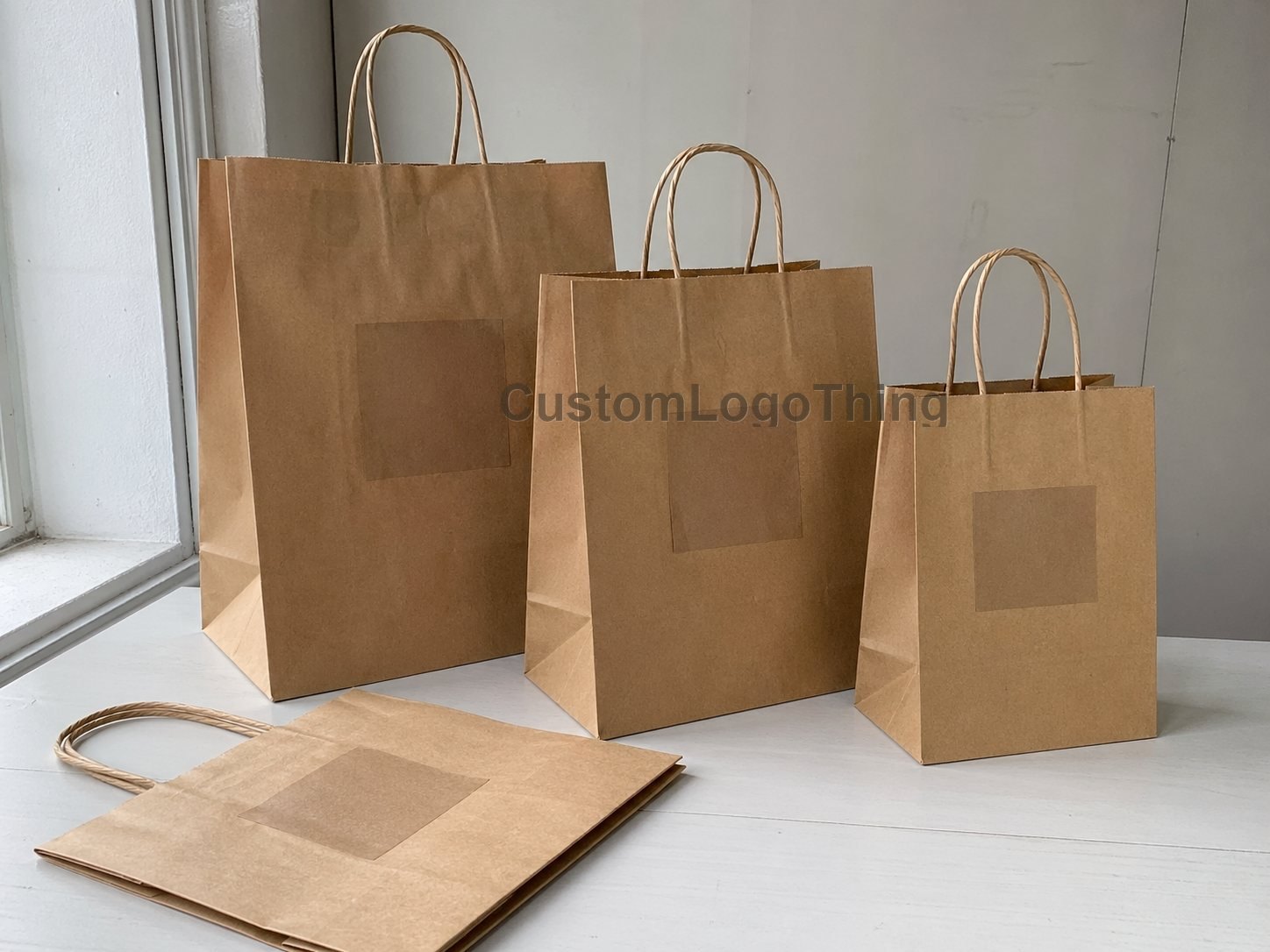
Chocolate brand shopping bags unit cost moves more than many buyers expect because the spec stack is deeper than it first appears. A plain kraft bag with twisted paper handles and one-color print can sit in one price band, while a laminated gift bag with rope handles, foil stamping, and a reinforced base can land in an entirely different one, even if the dimensions are nearly the same. That difference surprises a lot of first-time buyers because the mockup does not really show the hidden work behind the bag.
Paper grade, handle style, print coverage, quantity, and finishing all affect price in different ways. Change one of those factors and the quote may still stay in a manageable range. Change three at once and chocolate brand shopping bags unit cost can climb fast. The cleaner the brief, the cleaner the quote. Vague requests produce vague pricing, and vague pricing is where people end up chasing revisions instead of making decisions.
Chocolate brands also tend to care more about shopping bags than many other product categories do because the bag is part of the purchase moment. It sits at the counter, gets carried out of the store, and often gets handed to someone else as a gift. That means the bag has to work as packaging and as brand communication. It should be sturdy enough for the product, polished enough for the shelf, and restrained enough not to waste money on decoration that does not improve the sale. That balance is not always easy to hit, but it is where the value is.
The hidden cost trap is usually pretty plain once someone points it out. Buyers compare the bag price, then forget setup fees, freight, inserts, color matching, and packing. That is how chocolate brand shopping bags unit cost gets distorted. A low quote can become the more expensive choice once shipping from the factory, small-order surcharges, or special finishing get added in. Chasing the cheapest line item alone does not buy a good bag. It buys a surprise invoice. And honestly, nobody needs more of those.
A cheap bag that fails at checkout is not cheap. It becomes a refund, a reprint, and a brand problem with paper handles.
From a packaging buyer's point of view, the real goal is not the lowest sticker price. It is the lowest total landed cost for the bag spec that truly fits the brand and the product. That is the real meaning of chocolate brand shopping bags unit cost. Everything else is just noise around the decision.
- Paper grade changes stiffness, print quality, and carry strength.
- Handle style changes both the look and the assembly cost.
- Print coverage changes ink use, setup time, and color control.
- Finishing changes the premium feel and the bill at the same time.
- Quantity decides how much setup cost gets spread across each bag.
Keep those five levers in view and chocolate brand shopping bags unit cost becomes manageable instead of mysterious. That is the difference between a controlled packaging program and a budget that keeps drifting upward for reasons nobody can quite explain.
Chocolate Brand Shopping Bags Unit Cost: Product Details That Matter
Chocolate brand shopping bags unit cost depends heavily on the kind of bag you actually need. A grocery-style carry bag is not the same thing as a boutique gift bag, and chocolate brands usually live somewhere between the two. The bag has to survive real retail use while still looking polished enough to protect brand perception at the counter. That combination influences price more than many buyers realize when they start asking for quotes.
The most common bag types are fairly easy to sort:
- Paper shopping bags for everyday retail, usually with twisted or flat paper handles.
- Kraft retail bags for a natural look and a tighter budget.
- Luxury gift bags for premium chocolate boxes, seasonal bundles, and boutique gifting.
- Laminated bags for stronger visual impact, sharper print clarity, and a more polished presentation.
Handle choice matters almost as much as the paper itself when you are thinking about chocolate brand shopping bags unit cost. Twisted paper handles are usually the most cost-efficient. Flat paper handles can sit in a similar range, though they tend to feel a little less elevated in the hand. Rope handles, ribbon handles, and reinforced die-cut handles all increase cost because the bag needs more material and more labor. If the bag is meant to feel like a gift, that premium may be worth paying. If the bag moves through high-volume retail all day, it may be more than the program really needs.
Print choice is the next major driver. A one-color logo on kraft is usually the cleanest way to keep chocolate brand shopping bags unit cost under control. Add multiple colors, full-bleed artwork, or metallic effects and the price starts to rise. Hot stamping looks sharp. Embossing adds tactile depth. Spot UV gives a glossy contrast that can feel modern when used with restraint. Each finish can improve the presentation, but it should support the brand story rather than consume margin for the sake of decoration. Too much ornament can start to feel a little try-hard, which is not what a chocolate brand usually wants.
Size changes the bill too. A small bag for a single chocolate bar set is not priced the same way as a large boutique bag for an assortment box and gift tissue. Wider gussets, taller panels, and stronger bottoms all add material. If the bag needs to carry jars, wrapped bars, or a mix of rigid boxes, the structure has to be upgraded. That often means a thicker bottom board, heavier paper, or both. Chocolate brand shopping bags unit cost rises with each of those upgrades, and the increase makes sense only if the bag is actually carrying the weight in use.
The right question is not “What is the cheapest bag?” It is “What size, structure, and finish match the product without wasting margin?” That is a much cleaner way to think about chocolate brand shopping bags unit cost because it keeps the conversation tied to use case instead of vanity.
Chocolate bags are often tied to gifting behavior as well. The bag is not only packaging. It is part of the experience people carry out the door and hand to someone else later. A good bag lifts customer perception before the product is even opened. A weak bag can make a premium chocolate line feel ordinary, and that is a hard mistake to recover from after the sale. In my experience, buyers remember that mismatch for a long time.
Chocolate Brand Shopping Bags Unit Cost: Specs, Materials, and Finishes
Chocolate brand shopping bags unit cost lives and dies on the spec sheet. If you are not sure where to begin, start with structure and work outward. Paper weight, board reinforcement, coating, and finish all affect cost, but not in the same way. Some choices protect the bag and improve performance. Others are mostly visual. That is where buyers can save real money without making the packaging feel stripped down.
Paper weight and structure
Lighter retail bags can work well for smaller chocolate items, especially single bars, simple gift sets, or light confectionery. Heavier paper suits bags that need to hold stacked boxes, jars, or multiple items. In many custom programs, chocolate brands use paper in the 180gsm to 250gsm range for standard retail bags, then move up when the carry load or premium feel demands it. Too light and the bag sags or wrinkles. Too heavy without a real need and chocolate brand shopping bags unit cost climbs for no gain.
Reinforced bottoms and gussets matter too. A bag with a weak base can flatten under weight and make a premium chocolate assortment look awkward at the counter. A stronger bottom board, cleaner folding, and better side-wall support often cost less than reworking the whole design after launch. The strongest spec is not always the prettiest one on screen. It is the one that holds up when the customer actually carries it out the door.
Material choice
Recycled kraft, coated paper, and premium art paper each bring a different cost profile. Kraft gives a natural, earthy feel and often keeps chocolate brand shopping bags unit cost lower. Coated paper gives cleaner print and more accurate color. Premium art paper can support richer graphics and a more polished finish, though it usually adds cost. If the brand story leans artisan, natural, or organic, kraft can feel exactly right. If the packaging needs a more upscale tone, coated or laminated stock may be the better fit.
FSC-certified paper can be a smart choice when the brand wants to support responsible sourcing without complicating the design. If chain-of-custody matters to your team, check the material trail and ask for documentation. The FSC standard is a real reference point here, not just a logo placed on the artwork panel.
Finishes that move the price
Finishing is where chocolate brand shopping bags unit cost often takes a turn. Matte lamination usually adds a soft, controlled look. Gloss lamination can make colors pop but can also read less refined if the design feels busy. Soft-touch coatings feel excellent in hand, though they add cost and may not be necessary for every chocolate line. Foil stamping, embossing, debossing, and window patches can create a more memorable unboxing moment, yet each one adds setup time and production complexity.
The finish should match the retail role of the bag. A seasonal holiday bag for premium gift boxes can justify foil and embossing. A year-round carry bag for everyday purchases usually cannot. Add premium finishing to a high-volume program and chocolate brand shopping bags unit cost can rise much faster than the sales team planned for. That is one of those places where a nice-looking concept can quietly become a budget headache.
A practical rule works well here: lock the structure first, then add only the finishes that support margin or brand recognition. Not everything needs to sparkle. A clean logo, good paper, and a solid handle often do the job with more restraint and less waste, which is usually the better kind of premium.
For quality control and transit durability, it helps to think beyond appearance. If the bags are moving through cartons and distribution, ask how they are packed and whether the build can handle compression or rough handling. The packaging industry does not leave transport resilience to guesswork. Standards from groups like ISTA are useful references when you want a better basis for testing instead of relying on how the sample looks on a desk.
Chocolate brand shopping bags unit cost is not only about the bag. It is about how much performance you are buying for the money. Experienced buyers trim the spec without trimming the brand, and that is where the real savings live.
Cost, Pricing, and MOQ for Chocolate Brand Shopping Bags
Chocolate brand shopping bags unit cost usually falls as quantity rises, though not in a neat straight line. Setup cost is real. Printing plates, color calibration, handle assembly, die-cut tooling, and finishing all need to be spread across the order. A larger run spreads that cost more efficiently. Small orders carry more overhead per bag, and that is simple math rather than a pricing trick.
For planning purposes, chocolate brand shopping bags unit cost often lands in tiers like this:
| Bag Spec | Typical MOQ | Typical Unit Cost | Best For | Notes |
|---|---|---|---|---|
| Basic kraft bag, one-color print, twisted paper handles | 1,000-3,000 pcs | $0.18-$0.35 | Everyday retail, simple brand identity | Strong value if the design stays simple |
| Printed retail bag, stronger paper, upgraded handle, matte finish | 1,000-2,000 pcs | $0.42-$0.85 | Mid-range chocolate gift bags | Good balance of presentation and budget |
| Luxury laminated gift bag, rope handle, foil or embossing | 500-1,000 pcs | $0.95-$2.50 | Seasonal launches, premium boxes, high-end gifting | Most expensive, but also the most branded |
Those numbers are not universal, and they should not be treated like a promise. They are planning ranges that help frame the discussion. Chocolate brand shopping bags unit cost changes with bag size, print area, finishing, handle choice, and delivery destination. Freight may be a small piece or a large one depending on order size and shipping mode. If you are comparing quotes from different suppliers, compare the same spec, the same carton count, and the same destination. Otherwise, you are not comparing the same product.
It helps to break pricing into actual components:
- Material - paper, board, lamination, and handle materials.
- Printing - number of colors, coverage, and registration complexity.
- Finishing - coating, foil, embossing, die cutting, and assembly.
- Sampling - prototype, mockup, or press proof costs.
- Packaging - carton packing, palletizing, and protection for transit.
- Freight - air, sea, or domestic shipping to the final delivery point.
MOQ is the other number that shapes negotiations. Chocolate brand shopping bags unit cost often looks better at higher volumes, yet the MOQ can climb if the design becomes too complex. Multiple sizes, multiple finishes, special paper colors, or custom handle builds can all raise the minimum. That is why some brands split the program into a main retail bag and a premium seasonal bag. One spec handles day-to-day sales. The other handles launches and gift-heavy periods. That split is often the saner choice, even if it feels a little less tidy on the sourcing side.
If you want a quote that is actually useful, send a complete spec sheet. Include bag size, paper type, handle style, print colors, finish, target quantity, and delivery location. Add artwork if you have it. If not, at least send the logo and brand colors. The clearer the brief, the cleaner the chocolate brand shopping bags unit cost. Guessing gets expensive fast. Precision usually does not.
Many teams also ask whether they should request three options. Yes, they should. A budget spec, a mid-range spec, and a premium spec make it much easier to judge value. The team stops arguing about abstract quality and starts comparing unit cost against use case. That is how you hold both margin and presentation in the same hand.
Production Process and Timeline for Chocolate Shopping Bags
Chocolate brand shopping bags unit cost is only half the story. Timing matters too, because a tight schedule can force rush freight or smaller order quantities, and both of those push the bill upward. The production path is not complicated, but it does have steps buyers need to respect if they want a clean result and fewer surprises.
The usual flow looks like this:
- Brief and spec review - confirm size, material, handle, print, finish, and quantity.
- Artwork check - verify logo files, color values, and layout fit.
- Sampling or mockup - review structure and visual presentation before full production.
- Approval - sign off on the sample, proof, or digital layout.
- Printing and finishing - produce the bags, add handles, and apply final treatments.
- Packing and shipping - pack cartons, protect corners, and dispatch to the delivery point.
Most delays happen before the press even starts. Missing dielines, low-resolution logos, color changes after proofing, and late spec swaps all move the schedule. Chocolate brand shopping bags unit cost does not stay stable when the project keeps changing. Every revision can cost time, and time often costs money. That is especially true for seasonal chocolate programs, where launch dates are fixed long before the bags are ready and there is not much room to improvise.
Simple bags with ready artwork can move fairly quickly once the sample is approved. More complex bags with foil, embossing, special handles, or custom inserts take longer because each finishing step adds setup and inspection. Rush orders can happen, but they usually narrow the choices. You may lose a finish option, pay more for freight, or accept tighter color tolerance. Faster is possible, but faster is rarely free.
If your team wants to protect the schedule, prepare the following early:
- Final logo files in vector format.
- Brand color references, ideally with Pantone targets if needed.
- Exact bag dimensions and product fit requirements.
- Handle preference and required carry strength.
- Carton or pallet plan for receiving and distribution.
It also helps to think about handling beyond the factory gate. If the bags will travel through a distribution network, ask how cartons are stacked and whether the packaging can tolerate ordinary transit stress. The bag itself is one thing. The way it survives shipping is another. That is where testing standards matter. The details on ISTA are useful if your team wants a better basis for transport checks rather than a guess based only on appearance.
Chocolate brand shopping bags unit cost also improves when the process is disciplined. Clean artwork, fast approval, and a stable spec usually beat last-minute design changes every time. That is not glamorous, but it is how packaging stays on schedule and out of trouble.
Why Choose Us for Chocolate Brand Shopping Bags
Chocolate brand shopping bags unit cost is easier to control when the packaging partner thinks like a buyer, not just a printer. That means clear specs, straightforward pricing, and fewer rounds of revision. It also means recommending the bag build that fits the job instead of stacking on upgrades because they look attractive in a quote. Simple idea. Not always simple in practice.
At Custom Logo Things, the focus is on practical packaging choices that protect margin and support brand identity. If the goal is a clean retail bag with steady brand consistency, the spec should keep chocolate brand shopping bags unit cost in a sensible range. If the launch calls for a seasonal premium look, the build can move in that direction too. The point is to match the packaging to the business, not the other way around.
What matters most in a chocolate bag program is not abstract “quality.” It is whether the bag performs in the real world. Does the handle hold? Does the bottom stay square? Does the print look sharp against the chosen paper? Does the finish support customer perception at the counter? Those are the questions that decide whether the final result works. A bag can look fine in a PDF and still fail in retail, and buyers know that pain from experience.
Good packaging work usually saves money by removing nonsense, not by stripping out everything that looks premium.
That is why many brands ask for side-by-side options. One budget build. One balanced build. One premium build. It is a clean way to compare chocolate brand shopping bags unit cost against presentation and use case. It also keeps the conversation honest. No one has to pretend that a luxury lamination package should cost the same as a kraft retail bag.
We also work well with different buyer profiles:
- Boutique chocolate brands that need a polished look without massive volume.
- Seasonal launch teams that need a tighter schedule and a clear approval path.
- Wholesale gift programs that care about stable reorders and brand consistency.
- Retail chains that need predictable specs across multiple locations.
If you want to see the kind of packaging programs where control, presentation, and price had to work together, review our Case Studies. Real specs tell the story better than slogans do, and that usually helps buyers make a cleaner decision.
In practical terms, chocolate brand shopping bags unit cost should be treated as a packaging decision, a brand decision, and a margin decision at the same time. If one of those pieces gets ignored, the final result turns messy. We prefer not to be messy.
Next Steps to Quote and Order Chocolate Brand Shopping Bags
If you want a useful quote, start with a complete brief. Chocolate brand shopping bags unit cost becomes much clearer when the bag size, quantity, material, handle, print, and finish are all defined before pricing begins. A vague request usually produces a vague number. Then everyone spends time debating what the quote was meant to cover. That kind of back-and-forth burns time for no good reason.
Use this checklist before sending an inquiry:
- Bag dimensions - width, gusset, and height.
- Order quantity - your target volume and any reorder expectation.
- Material preference - kraft, coated paper, art paper, or laminated build.
- Handle type - twisted paper, flat paper, rope, ribbon, or die-cut.
- Print details - colors, coverage, logo placement, and finish.
- Delivery destination - warehouse, store, or fulfillment center.
Ask for at least three quote options if the project leaves room for choices. The most useful comparison is usually a budget build, a balanced build, and a premium build. That makes chocolate brand shopping bags unit cost easier to read because the team can see exactly what each upgrade buys. If the premium version adds value in shelf impact or gifting appeal, you will know it. If it does not, you can skip it without second-guessing the decision.
Request a sample or mockup if the bag will be tied to a launch, holiday campaign, or retail rollout. That is especially smart when color accuracy, coating feel, or handle strength matter. A sample costs less than a blind production mistake, and it can save the brand from a bad first impression. For chocolate, first impressions are not a side issue. They are the point.
Before you approve the quote, confirm the delivery window. If the bags are tied to a product release, a trade event, or a seasonal sales spike, timing has to be real, not hopeful. Chocolate brand shopping bags unit cost can look fine until rushed freight gets added. Then the number changes. The “cheap” option suddenly becomes the expensive one, which is a familiar and frustrating pattern for packaging teams.
Send the specs, compare landed unit cost, and choose the version that protects your margin without making the brand feel stripped down. That is the smart move. It also keeps reorders easier to manage when the program scales.
FAQ
What affects chocolate brand shopping bags unit cost the most?
Order quantity is usually the biggest lever because setup cost spreads out as volume increases. After that, paper grade, handle style, print coverage, and finishing move the price quickly. Shipping, sampling, and carton packing can also shift the landed total more than buyers expect, so chocolate brand shopping bags unit cost should always be reviewed with freight included.
How can I lower chocolate shopping bag cost without making it look cheap?
Start with a cleaner print layout and a standard handle, then Choose the Right paper weight for the product. One or two brand colors are often enough if the logo is strong. The fastest way to keep chocolate brand shopping bags unit cost under control is to remove unnecessary finishes while keeping the structure solid and the branding clear.
What MOQ should I expect for custom chocolate shopping bags?
MOQ depends on size, material, and finish, but custom printed bags usually need a production minimum. Simple kraft builds often allow lower entry quantities than luxury laminated bags. If you want multiple sizes or multiple finishes, expect the MOQ to rise or the chocolate brand shopping bags unit cost to increase.
How long does production usually take for branded shopping bags?
Timeline depends on whether artwork is ready, samples are approved, and the finish is standard or premium. Simple builds move faster than bags with foil, embossing, or custom inserts. Rush orders are possible in some cases, but they usually narrow material and finish options, which can affect chocolate brand shopping bags unit cost.
What information do I need to get an accurate quote?
Provide size, quantity, material, handle type, print colors, finish, and delivery destination. Share print-ready artwork if you have it, or at least the logo and brand colors. The more exact the brief, the less guesswork in chocolate brand shopping bags unit cost, and the easier it is to compare quotes without second-guessing the specs.


