Chocolate Cuffed Knit Beanies Material Sample Guide to Order
Chocolate looks straightforward on screen, but a knit sample often tells a different story. The same brown can read warmer, flatter, softer, or more structured once yarn tension, rib depth, and finishing are real instead of rendered. That is why a chocolate Cuffed Knit Beanies material sample guide matters: it helps buyers judge the actual product, not the mockup.
For custom knitwear, the sample is where the real decision happens. It shows whether the color matches the brand palette, whether the cuff holds its shape, and whether the beanie still looks clean after handling. Small misses in a sample become expensive when repeated across a full run.
Why Samples Beat Spec Sheets for Chocolate Beanies
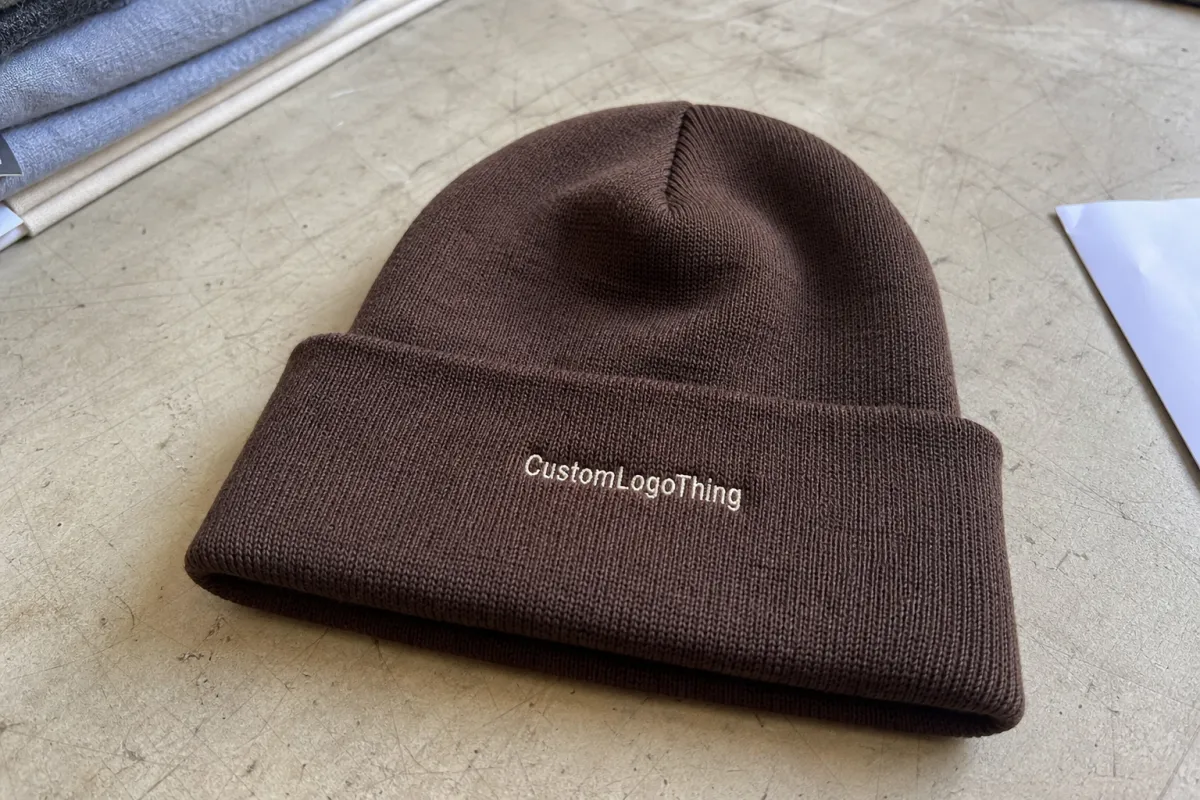
A spec sheet can list yarn blend, gauge, size, and decoration method. It cannot show how the beanie feels after the cuff is folded twice or how the chocolate shade changes under daylight versus warm indoor light. The sample is the first reliable check on the actual product.
The biggest variable is usually color depth. Chocolate is sensitive to fiber sheen, dye absorption, and stitch density. A sample that looks acceptable in a file may feel too light, too muddy, or too flat in hand. Texture can shift too: a knit that appears plush in a photo may feel dry, loose, or coarse when worn.
There is also a risk that buyers sometimes underestimate. If the sample is off, the bulk run will repeat that problem. A 2 mm cuff-height difference can change the silhouette. A weak recovery point can make the beanie bag out after wear. Even a small color shift becomes obvious once cartons are stacked or retail units are displayed together.
A sample is not a formality. It is the cheapest chance to catch a problem before it becomes a production problem.
That is especially true for branded knitwear. The logo can be perfect and the product can still miss the mark if the base fabric feels cheap or the brown tone looks wrong. The best approvals happen when buyers compare the sample against a real color reference, test it under different light, and handle it long enough to judge recovery and shape retention.
How Knit Construction Shapes the Final Look
Two beanies made from the same yarn can still wear very differently. That usually comes down to construction. Rib density, stitch gauge, cuff depth, and crown shaping affect warmth, stretch, and how the beanie sits on the head. A tighter rib knit usually feels more secure and polished. A looser knit can feel softer and more relaxed, but it may lose structure faster.
Acrylic is the most common baseline because it keeps color consistent and pricing predictable. It also tends to hold dark shades well, which helps with chocolate browns. Wool blends feel warmer and more premium, but they can bring itchiness, shrink risk, or uneven dye results if the blend is not controlled carefully. Recycled fibers can work well too, especially for sustainability-led programs, but they need close review for pilling, softness, and color consistency across lots.
Decoration changes with construction as well. A cuffed rib knit may support embroidery better than a smoother surface, but an open knit can cause small logos to disappear. Woven labels, patches, and direct embroidery all behave differently on a thick cuff. A wide cuff can hide a side seam cleanly; a thin cuff may expose it. The same artwork can look sharp on one sample and awkward on another simply because the structure is different.
If the beanies will be packed for retail, the full presentation matters. A knit that looks rich in a stack can still seem limp if the fabric is too soft. Simple packaging choices such as corrugated cardboard cartons, recycled inserts, or biodegradable packaging sleeves can help the product present cleanly without driving cost too high.
Material Specs That Matter Most
If a sample is close but not quite right, check the core details in this order: fiber blend, yarn weight, stitch gauge, finish, and wash treatment. Those five factors explain most of the feel, fit, and cost differences buyers need to understand.
Fiber blend affects handfeel, warmth, and wash behavior. Yarn weight changes bulk and density, which directly affects how structured the beanie looks. Stitch gauge controls how tight the fabric appears and how much stretch it has before recovery weakens. Finish changes softness and surface sheen. Wash treatment can soften the hand or reduce shrinkage, but only if the factory applies it consistently.
A simple review order helps keep the decision practical:
- Handfeel: Does it feel crisp, soft, or slightly dry after a short wear test?
- Color depth: Does the brown stay rich under daylight and warm indoor light?
- Pilling risk: Does the surface fuzz after light rubbing, especially at the cuff?
- Recovery: Does the rib spring back after stretching, or stay loose?
- Shape retention: Does the crown keep its profile once placed on a head form?
If the sample misses two or more of those checks, treat it as a revision request rather than an approval. Buyers often want to accept a close sample to save time, but that usually creates more cost later. A beanie that is slightly too soft, slightly too short, and slightly too pale is not close enough; it is three separate issues.
For buyers who want more formal testing language, transport and packaging references can help set expectations. The ISTA protocols are useful when the beanies will ship in retail or e-commerce cartons and need to survive compression and vibration. If packaging claims matter, the FSC framework is the clearest reference for responsibly sourced paper components.
Cost, MOQ, and Unit Pricing to Budget For
The lowest quote on paper is not always the best buy. Knitwear pricing changes with yarn quality, stitch complexity, logo method, packaging, and the number of sample rounds. For a chocolate cuffed knit beanie, a basic acrylic build with a simple woven label may land around $2.10-$3.25 per unit at higher volumes, while a wool blend or more complex decoration can move into the $3.50-$6.50 range. Smaller runs usually cost more because setup is spread across fewer units.
MOQ is the lever that lowers unit cost, but only if the inventory will move. A buyer who orders 500 units just to hit a better price can create dead stock if the color is seasonal or the logo is too specific. The lower unit price only helps when the product can actually be sold, used, or reordered without markdown pressure.
| Option | Typical Traits | Indicative Unit Cost | Best Fit |
|---|---|---|---|
| Basic acrylic rib knit | Stable color, consistent stretch, clean cuff shape | $2.10-$3.25 | Promotions, large team orders, budget-conscious programs |
| Acrylic/wool blend | Warmer handfeel, richer texture, slightly more premium finish | $3.25-$5.25 | Retail resale, winter collections, elevated gifting |
| Recycled fiber knit | Sustainability story, needs closer pilling and color checks | $3.50-$6.50 | Eco-led brands, corporate programs, campaign launches |
| Premium knit with custom packaging | Higher decoration control, retail-ready presentation, more setup | $4.50-$8.00 | Retail shelves, gift sets, branded merchandising |
Ask each supplier to separate sample fees, setup charges, decoration add-ons, and landed unit cost. The landed number matters most because it includes freight, cartonizing, and packaging. If the beanies will ship in corrugated cardboard cartons with kraft paper void fill or biodegradable packaging sleeves, get those charges written down too. A clean quote is specific; a vague one can hide several hundred dollars in extra cost.
Process and Lead Time From Sample to Bulk Run
The cleanest projects follow a simple rhythm: brief, prototype, revision, final approval, then bulk production. Delays usually happen at the handoff points when the brief is incomplete, the color reference is vague, or feedback comes back as a scattered list of comments.
Timing depends on what the factory already has on hand. If the yarn is stocked and the knitting spec is straightforward, first samples often take 7-14 business days. If the factory has to source yarn, adjust the stitch program, or refine the chocolate tone, that can extend to 2-3 weeks. Revisions are often faster, usually 5-10 business days, unless a new trim, label, or wash treatment is added.
Bulk production starts after final sign-off. A standard run may take 20-35 business days, though complex builds or peak-season capacity can stretch that longer. If the order includes custom packaging, printed insert cards, or FSC certified retail sleeves, add time for proofing those parts. Small components can become the pacing item.
There are three approvals that help keep the project controlled:
- Fit: length, cuff height, crown shape, and stretch.
- Color: daylight, indoor light, and photo reference alignment.
- Packaging: labels, cartons, inserts, and shipping method.
Keeping those reviews separate reduces mistakes. If fit and color are approved together, a buyer can miss a subtle problem because one good trait distracts from another weak one. A split approval process is slower on paper but usually faster overall because it avoids rework.
Step-by-Step Review Checklist for Buyers
The fastest way to evaluate a sample is to test it under different light and after real handling. Chocolate tones are especially sensitive to environment. A deep brown knit can look saturated in daylight, then flatter and more muted under warm bulbs. The point is not to find a perfect color in every setting; it is to know how the color behaves before the bulk run begins.
Use this order:
- Check the color in three lights - daylight, office light, and warm indoor light.
- Measure the sample - body length, cuff depth, opening width, and crown shape.
- Stretch and recover it - pull the cuff, release it, and watch how quickly it returns.
- Wear it for several minutes - note itchiness, pressure points, and how the cuff sits.
- Inspect the decoration - logo placement, thread tension, seam visibility, and label alignment.
- Document the result - photos, notes, and one revision list before feedback goes out.
Measurement matters because small variations can affect fit more than buyers expect. A 1 cm change in body length may seem harmless on paper, yet it can change how the beanie covers the ears. A cuff that is too loose can expose stitching; one that is too tight can make the piece look compressed. Neither is ideal.
Take one photo on a flat surface and one on a head form. Flat photos show knit structure and trim details. Head-form photos show silhouette. Together, they reveal more than a single hero shot. If packaging is part of the approval, add one image of the folded beanie in the actual carton or sleeve so you can judge presentation before shipment.
If the product is going into retail or DTC fulfillment, check the secondary packaging too. A clean kraft paper wrap, recycled insert, or simple biodegradable packaging sleeve can improve unboxing without adding much waste. Make sure the carton size is efficient; oversize corrugated cardboard shipping boxes increase freight cost and lower pallet density.
Common Mistakes That Create Expensive Reorders
The most common mistake is approving from photos alone. That is especially risky with dark chocolate knits because screens compress shadow and deepen contrast in ways that are not reliable. The sample may look richer online than it does in hand, or flatter than it really is. Either way, the visual cue is incomplete.
Another common miss is ignoring wash behavior. Pilling, softening, and size drift often show up after the first care cycle. A sample that feels fine on day one can still fail after washing if the yarn blend is weak or the finish is too aggressive. For workwear, resale, or outdoor use, that matters.
Packaging mistakes can be costly too. Buyers often focus on the knit and forget that labels, patches, hang tags, and carton spec influence the final number. Moving from generic cartons to FSC certified printed packaging can improve brand perception, but it also changes cost and lead time. The same is true when adding recycled materials or a custom belly band. Those choices should be reviewed with the beanie, not after it.
One more trap is treating “close enough” as approval. If the sample is slightly wrong in color and slightly wrong in fit, the bulk run will not correct itself. It will become a scaled-up version of the same problem. That is how reorder budgets disappear.
It is usually cheaper to request the correction before production starts, even when that feels slower in the moment.
Expert Next Steps Before You Place the Order
Lock the approved sample, the color standard, and the tolerance sheet into one shared reference. Do not spread the decision across email threads, PDF comments, and phone notes. One file should define what “approved” means. If the order includes packaging, add carton count, sleeve spec, label placement, and any recycled materials or FSC certified components.
Before production begins, ask for a pre-production check. That usually means confirmation of yarn match, stitch program, trim placement, and carton quantity. If the order is time sensitive, request shipment photos from the packed cartons before the goods leave the factory. A few images can catch a wrong label orientation or carton-count mismatch without delaying the whole shipment.
If the program may be reordered later, archive the sample properly. Keep it with the approved spec, color swatch, and packaging reference so the next run starts from the same baseline. That is the practical value of a disciplined chocolate cuffed knit Beanies Material Sample guide: it turns one approval into a repeatable production standard.
Done well, the sample process reduces surprises, protects margin, and keeps the final product looking deliberate instead of merely acceptable.
What should I look for in a chocolate cuffed knit beanie sample?
Check true color under daylight and indoor light, then test stretch, recovery, and cuff shape after wear. Compare the sample measurements against the approved spec sheet so the fit is not guessed from appearance alone.
Which material blend works best for cuffed knit beanies?
Acrylic is usually the most consistent and budget-friendly option. Wool blends add warmth but need comfort and care testing, while recycled fibers can work well if pilling, softness, and color depth are verified first.
How does MOQ affect custom beanie pricing?
Higher MOQ usually lowers the unit cost because setup costs are spread over more pieces. Decoration, labeling, and packaging can raise the price even when the knit itself is simple, so request tiered quotes to see the true cost at different volumes.
How long does the sample and approval process usually take?
The timeline depends on yarn availability, stitch complexity, and whether color corrections are needed. Expect at least one revision if the first sample is close but not fully on target, and remember that bulk lead time starts only after final sign-off.
What should I send with a beanie sample request?
Send measurements, logo artwork, Pantone or color references, and any trim details. Include quantity, target delivery date, intended season or use case, plus packaging notes and any must-have tolerances so the first sample lands closer to production reality.


