If you are sourcing branded headwear for a tech team, field technicians, warehouse staff, or a trade show crew, an electronics embroidered Beanies Material Sample guide is not a side note. It is the step that tells you whether the idea survives contact with real fabric. A beanie can look polished in a mockup and still fail in production: the knit may stretch too far, the cuff may twist, the embroidery may sink into the surface, or the color may shift once the light changes.
A material sample gives you something a rendering never can: a physical read on hand-feel, knit density, color accuracy, and logo behavior. That matters in electronics-related programs because the beanie often serves two jobs at once. It has to look precise in photos and hold up through long shifts, temperature swings, and repeated wear. If it only performs one of those jobs, the order is weaker than it needs to be.
The practical value is simple. The sample is where you find out whether the fabric, thread, and decoration method are working together or fighting each other. On a 2,000-piece run, that difference is expensive. A small sample fee is usually cheaper than redoing a full production lot that looks fine on a screen and disappointing in person.
Practical rule: approve the fabric first, the logo second, and the bulk order last. If those three pieces do not agree, the finished beanie is not ready.
Electronics Embroidered Beanies Material Sample Guide: What a Swatch Reveals
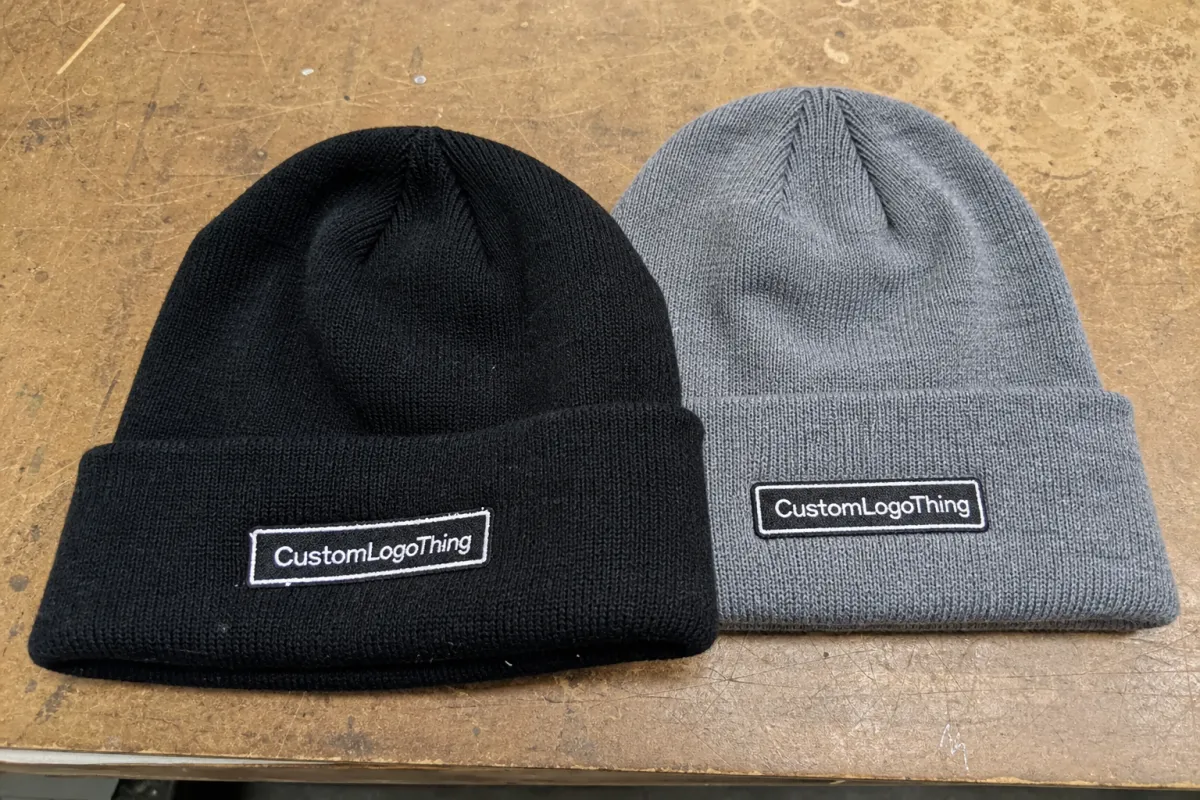
A flat image tells you almost nothing about a knit. A swatch tells you how the fabric responds before it becomes a product. That is the real purpose of an electronics Embroidered Beanies Material Sample guide: to reveal the things buyers usually cannot judge from a spec sheet alone. Fiber blend, knit structure, surface texture, stretch recovery, and cuff stability all show up immediately once you hold the material.
That physical read matters because embroidered beanies are unforgiving in small ways. A loose knit can swallow detail. A slick finish can let the thread skate. A soft fabric can feel good on the desk but lose shape after a few wears. Buyers often discover those issues only after bulk production starts, which is exactly when a sample would have been most valuable.
There is also a branding issue hiding inside the fabric choice. A stable knit makes the logo look intentional. A fuzzy, uneven surface can make even clean embroidery look rushed. For electronics teams, where the brand often needs to feel technical, reliable, and disciplined, that visual difference is not minor. Employees notice it. Customers do too.
The sample also helps you judge real-world color behavior. A charcoal knit can read as black under office light and as blue-gray under daylight. Thread sheen changes the appearance again. If the beanies will appear in internal photos, event coverage, or customer-facing material, that inconsistency can create a brand mismatch that nobody wants to explain after the fact.
The hidden cost of skipping samples is not the sample fee. It is the correction cycle. If the fabric is too loose, the embroidery may sink. If the knit is too dense, the logo may look compressed. If the beanie bags out after stretching, the whole run looks less controlled. On a small order, that is annoying. On a larger program, it becomes a budget problem.
How the Sampling Workflow Works From Request to Approval
The workflow is usually straightforward, but the sequence matters more than people expect. It starts with a short brief: intended audience, logo size, cuff preference, color target, and use case. Then the supplier proposes a knit and fiber blend. After that comes a blank swatch or a decorated strike-off, followed by review, revision if needed, and final approval. Each stage removes a different layer of risk.
Blank material samples and decorated samples do different jobs. A blank sample tells you how the knit feels, how it stretches, and whether the color is close to what you asked for. It does not tell you whether the logo will sit cleanly. A decorated sample answers the logo questions, but only if you review it against the same use conditions the finished product will face.
That means more than just looking at it on a desk. Check it under daylight, under LED office light, and, if relevant, under camera flash. A beanie that looks smooth in one setting can look coarse in another. Thread sheen can read premium in a studio and shiny in a warehouse. Sampling only works if the sample is judged in the environments that matter.
Most suppliers will translate your spec into a sample by matching knit type, fiber blend, cuff height, thread colors, and logo placement. If the artwork includes tight lettering or small details, the sample should show those details at actual size. Enlarged proofs hide problems. Real stitch scale exposes them. That distinction matters more for technical brands than for casual merch because the branding usually needs to feel deliberate, not decorative.
Good sampling also keeps review decisions separate. First: does the material meet the comfort and durability target? Second: does the embroidery sit properly on that material? Third: is the combination worth scaling? That order prevents teams from approving a pretty sample that will fail in production.
Key Material Factors That Change Fit, Feel, and Stitch Quality
Material choice affects more than comfort. It changes stitch behavior, shape retention, and the way the finished beanie reads on the head. Acrylic is common because it is soft, warm, and generally stable under embroidery. Cotton can feel natural and breathable, but it may stretch differently and lose structure sooner. Recycled polyester blends make sense when sustainability is part of the brief, although the knit still has to support crisp stitch detail. In many cases, blended knits offer the best balance between hand-feel and structure.
Knit gauge is just as important as fiber content. A tighter knit gives the thread a more even base, which helps small logos and thin lettering stay legible. A looser knit can look relaxed and comfortable, but it is less forgiving once the needle starts pulling through the surface. That is why two beanies with the same fiber content can behave very differently under embroidery.
Fabric weight affects drape and warmth. Too light, and the beanie can collapse or feel underbuilt. Too heavy, and it starts to feel bulky, hot, or slow to dry. Cuff depth matters as well because it controls how much visual space you have for the logo and whether the decoration still looks centered after the beanie has been worn and adjusted a few times.
Then there is thread sink, which is one of the most common surprises for first-time buyers. On a softer or looser knit, the stitches can settle into the fabric and lose edge definition. Backing choice, stitch density, underlay, and thread type all influence the final read. If the design has fine lines or small type, ask whether the fabric can carry that detail without puckering. Not every knit can do that well, and pretending otherwise usually costs time later.
Comfort deserves its own check. People will not wear a beanie that itches, pills quickly, or feels overly warm after 20 minutes. Static cling is another quiet issue, especially in dry environments. If the product is meant for service staff or field technicians, wearability matters more than a perfect first impression on the table. A beanie that gets used often protects the brand better than a beanie that only looks good once.
Some buyers also overlook how the material interacts with identity. A clean, dense knit signals care and consistency. A fuzzy, distorted, or uneven surface can make the whole program feel rushed, even if the logo itself is technically accurate. That is one reason samples should be evaluated as a system, not as separate parts.
Sampling Process and Timeline: What to Expect Before Bulk Production
Sampling usually moves in stages. After the initial inquiry, the supplier confirms the spec and quotes the sample. Blank swatches are faster because they skip digitizing and embroidery setup. Decorated samples take longer because the logo has to be digitized, stitched, checked, and sometimes revised. If the beanie requires a special yarn or a custom color match, the timeline stretches again.
As a rough planning range, a blank swatch often takes about 3-5 business days before shipping. A decorated sample commonly lands in the 7-12 business day range, sometimes longer if the artwork is intricate or the supplier needs a second pass. International transit can add another few days. If the sample has to move through multiple internal reviewers, the calendar expands even faster.
That is normal. What slows projects down is usually not the manufacturer, but the number of decisions sitting in the queue. Marketing wants to confirm visual tone. Procurement wants to verify cost. Operations wants to make sure the beanie is comfortable enough for daily use. Those comments rarely arrive at the same time, so it helps to build a review buffer into the schedule instead of assuming an instant sign-off.
Practical buyers ask for the sample timeline in milestones, not vague promises. When will the swatch be ready? When will the decorated strike-off ship? When is the revision window? Which step depends on approval from the client side? A milestone-based schedule makes the bottleneck visible. A loose promise only hides it.
Packaging can also affect timing. If the sample is packed with protective inserts, paper wrap, or a more sustainable mailer, that may add a small amount of prep time. It is worth the delay if the order will later need the same standard. If you care about those details, you should capture them early rather than try to retrofit them at bulk stage.
For buyers who track distribution durability, ISTA testing methods are a useful reference point for how packaging and handling affect product condition: ISTA. That matters more than many teams realize when samples are moving between departments or shipping across regions.
Cost, Pricing, MOQ, and Unit Cost: How to Read the Quote
A useful quote shows its logic. Ask for line items rather than a single number. A sample quote usually includes the sample fee, digitizing or setup fee, embroidery cost, packaging, shipping, and any rush charges. Bulk pricing then adds the unit cost, and that is where minimum order quantity starts to matter. A low sample price can still lead to an expensive order if the production setup is hard to scale.
Typical sample pricing often falls in a broad range: blank swatches might be $15-$40, while decorated samples can run $40-$120 or more depending on the complexity of the artwork, the number of colors, and the number of revisions. Some vendors credit the sample cost back if the bulk order proceeds, but not all do. Ask before you assume. The same goes for digitizing. Sometimes it is included. Sometimes it is a separate charge.
MOQ changes the math quickly. The smaller the run, the more setup cost gets spread across each piece. That is why 100 beanies usually cost more per unit than 1,000, even if the sample itself looks inexpensive. Buyers often focus on the sample fee and miss the real cost driver, which is the overhead attached to a short production run.
| Option | Typical Use | Typical Cost Signal | What It Tells You |
|---|---|---|---|
| Blank material sample | Fabric, knit, color, and hand-feel review | Lower fee, sometimes credited later | How the beanie feels, stretches, and rebounds |
| Decorated sample | Logo size, placement, and stitch quality | Higher fee because of setup and stitching | How branding behaves on the knit surface |
| Pre-production sample | Final approval before bulk run | Highest review burden, often fully charged | Whether the exact spec is ready to scale |
Ask three direct questions: Is the sample fee credited back? Is artwork setup included? What triggers a second quote? Those answers help you compare vendors fairly. They also keep the budget from drifting once revisions start. A low quote that hides setup costs is not really low. It is just incomplete.
If packaging is part of the evaluation, ask what materials are being used and why. FSC certified paper, corrugated cardboard mailers, biodegradable packaging, recycled materials, and post-consumer waste content all mean different things in practice. The point is not to stack buzzwords. The point is to know whether the packaging matches the brand standard and survives shipping without making the garment look careless on arrival.
For paper-based packaging claims, the FSC site is a useful reference when verifying certification language and material claims.
Step-by-Step Guide to Reviewing a Material Sample Like a Buyer
Review the sample the way you would review the finished piece. Start with the fabric. Is it soft enough for all-day wear? Does it rebound after a light stretch? Does the cuff lie flat or twist slightly to one side? Then move to the logo. Is it centered? Is the scale proportionate? Does the embroidery stay readable without tunneling into the knit?
Lighting matters more than most teams admit. Knit texture can disappear in daylight and become obvious under overhead LEDs. Thread sheen can look premium in a controlled room and a bit loud on camera. If the beanie will appear in internal photos, trade show shots, or training materials, test those conditions now. A sample only reduces risk if the environment is close to real use.
A short wear test catches more than a visual inspection. Ten minutes is enough to identify scratchiness. An hour reveals heat buildup, pressure points, and whether the cuff loosens at the edge. If the beanies are for warehouse staff, field technicians, or event crews, comfort is not a bonus feature. It is a performance requirement.
Use measurable feedback. "Move the logo up 6 mm" is useful. "Make it pop more" is not. If the issue can be measured, the supplier can fix it without guessing. Photograph the sample, annotate the image, and keep it beside the spec sheet. That simple record helps later when production questions come up and everyone needs the same reference point.
- Check stretch recovery after a short pull test.
- Confirm logo placement against the cuff edge and center line.
- Review color under daylight and indoor light.
- Inspect stitch density for gaps, puckering, or thread sink.
- Compare the sample against the written spec, not memory.
It also helps to look for secondary issues that only show up once the sample is handled for a while. Does the yarn shed? Does the cuff relax too quickly? Does the seam leave a pressure ridge? These are small defects on paper and big annoyances in use. One or two can be tolerated. Several of them point to a material that is not suited to the job.
Common Mistakes That Slow Down Approval and Raise Costs
The first mistake is approving from photos alone. Screen color, compression, and lens distortion can hide the exact problems you need to catch. A beanie that looks charcoal on a phone may read almost black in person. A logo that appears crisp in a screenshot may blur once it sits on textured knit. That gap is where many first orders go wrong.
The second mistake is vague feedback. Buyers often ask for the beanie to feel softer or the logo to look stronger, but that gives the supplier too much room to interpret. Better feedback is measurable: raise the cuff by 1 cm, reduce stitch density by 10%, shift the logo left by 3 mm, or change the thread finish. Concrete edits keep the revision loop short and the invoice cleaner.
Skipping wash or stretch checks is another expensive shortcut. If the material relaxes too much after use, or if the embroidery shifts after cleaning, the issue will show up after delivery instead of before approval. On a uniform program, that is a painful time to discover a flaw. A sample should answer the question before the order is repeated hundreds of times.
Approval bottlenecks can be just as damaging as bad material. Too many reviewers and no clear owner can stall a sample for days. Marketing wants to weigh in. Procurement wants to compare quotes. Operations wants to test comfort. Leadership wants one more look. If no one owns the final call, the sample sits. Assigning one decision maker is faster than waiting for a consensus that never really arrives.
Packaging is another place where orders get vague. If the beanies will ship with other kit, say so. If presentation matters, define it. If sustainability claims matter, write them down. A supplier cannot infer your standard from a logo file. The more specific the brief, the less likely it is that you will pay for a second round later.
Expert Tips and Next Steps to Lock the Final Spec
The cleanest approvals usually come from a spec that reads like a checklist. Include the target fabric, approved knit, logo placement, embroidery thread colors, cuff height, size tolerance, and packaging note on one page. Then name the decision owner. That removes a surprising amount of friction because everyone is reviewing the same target.
Ordering one extra sample helps more than many buyers expect. Keep one for photo review, one for fit review, and one as a reference when production questions come up later. If a supplier is serious about quality control, they should welcome that. It protects both sides when the bulk run starts and someone asks why the cuff was approved a certain way.
Only request revisions when the issue is measurable and important. A 2 mm logo shift matters. A vague request to "make it more premium" usually adds time without improving the garment. Once the fabric, embroidery, and size are approved, freeze the spec. The more it moves after approval, the more likely it is to miss the production window or force another round of sampling.
Packaging should follow the same discipline. If the sample arrives in recycled materials or FSC certified paper packaging and that standard matters to your program, record it in the spec. If you need biodegradable packaging, say that clearly. If you want corrugated protection for transit, define the requirement before the bulk order starts. These are small details on paper and expensive to retroactively change.
The strongest result is not a sample that simply looks acceptable. It is a sample that feels right, wears well, and survives production without surprises. Use the electronics embroidered Beanies Material Sample guide as the baseline, document the approved sample, and carry those decisions forward into the bulk order instead of re-litigating them later.
What should I check in an electronics embroidered beanies material sample?
Check hand-feel, stretch recovery, seam finish, and whether the embroidered logo stays crisp on the knit surface. Review the sample under daylight and indoor light so color, texture, and thread sheen are judged accurately.
How many material samples should I request for an embroidered beanie order?
Request at least one blank material sample and one decorated sample if the logo placement or thread appearance matters to approval. Add a backup sample when multiple teams need sign-off or when the order will be used for uniforms, events, or resale.
Which fabric blend works best for electronics team beanies with embroidery?
Acrylic and acrylic-blend knits often balance softness, shape retention, and stable embroidery results. If sustainability is a priority, ask for recycled polyester blends and confirm that the knit still holds stitch detail well.
How long does material sample turnaround usually take?
Blank swatches are often faster than decorated samples because they skip digitizing and embroidery setup. Custom colors, revisions, and shipping can extend turnaround, so build in review time before the final production date.
What affects the quote for beanie material samples and bulk orders?
Fabric choice, decoration setup, sample quantity, packaging, and shipping all influence the quote. MOQ matters too, because smaller runs usually increase unit cost even when the sample itself is inexpensive.