A tea cuffed knit beanies Unit Cost Review should start with landed cost, not a single sticker price. The cuff changes the economics in small but meaningful ways: it creates cleaner decoration space, improves perceived value, and gives the hat a more finished look on shelf or in a merch box. That can justify a slightly higher per-piece price if the beanie sells better, returns fewer defects, or clears approval faster.
Buyers often stop at the blank quote and miss the real drivers. Yarn content, gauge, cuff depth, logo size, and packing format move pricing more than the silhouette itself. A cuffed knit beanie can do three jobs at once: keep warmth in, carry a brand mark, and still land at a cost that works for retail, promotion, or team use. The product looks simple. The quote rarely is.
Two orders that look similar on paper can land very differently in practice. One may use stock acrylic yarn, a single-color embroidery, and polybag packing. Another may switch to a wool blend, add a woven patch, and require retail inserts. The second order can cost 25% to 40% more without changing the basic shape of the hat. That is why a useful review separates product specs from the supplier's headline number.
Why Cuffed Knit Beanies Change the Cost Conversation
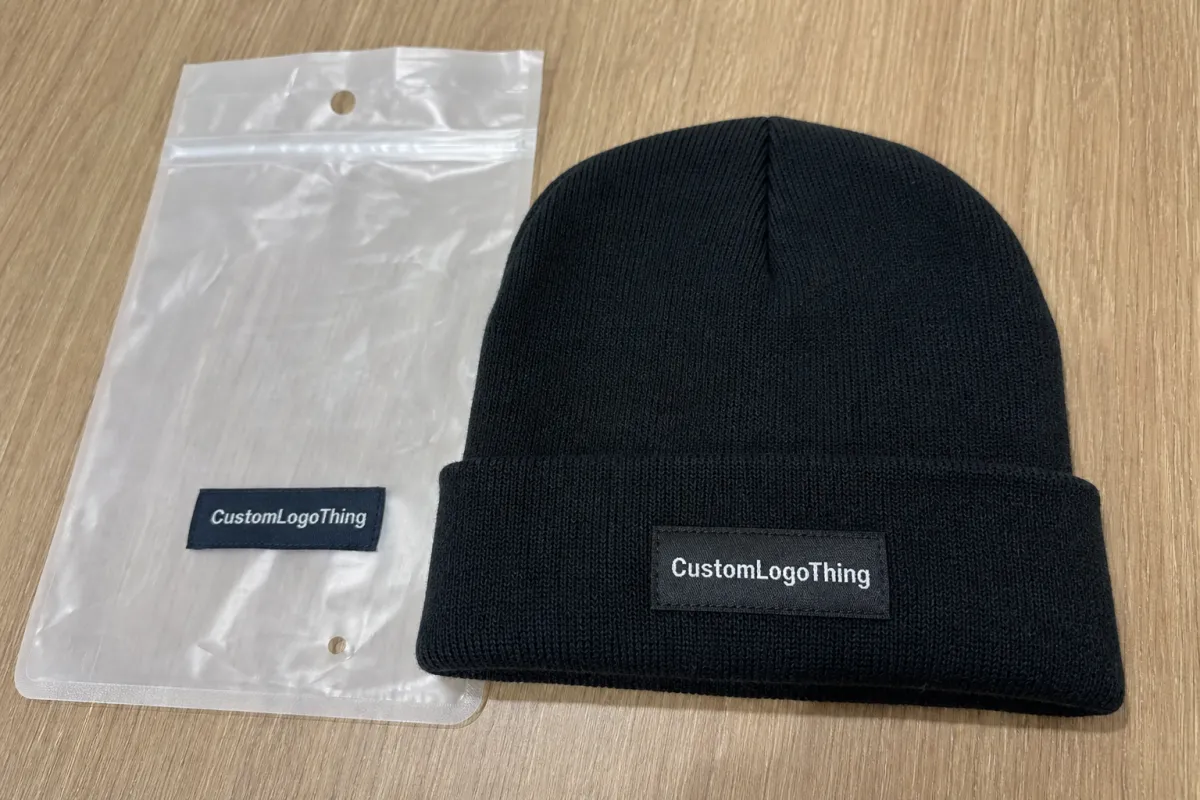
Cuffed Knit Beanies are one of those items that appear interchangeable until procurement starts comparing production notes. The cuff gives buyers a larger branding zone than a low-profile or slouch knit, which changes how the decoration behaves. Embroidery sits flatter. Woven patches have less risk of looking cramped. Side labels can be placed with more control. Even small changes in the cuff profile can alter the visual balance enough that one version feels premium and another feels rushed.
That extra structure is not free, but it often pays back. A cuffed beanie can present like a higher-value item without moving far from a basic knit build. In bulk, that difference matters. A blank hat at $2.10 and a decorated version at $2.75 may seem like a cost increase, yet the finished product can justify a better retail price, fewer proof revisions, and fewer rejects tied to poor logo placement. Unit cost only tells part of the story. Sell-through and production risk matter just as much.
There is also a practical reason experienced buyers favor cuffs: they reduce the odds of decoration distortion. When a logo sits directly on a crown with more stretch, the embroidery can pull or warp after the first wear. The cuff gives the design a more stable base. That does not eliminate QC issues, but it lowers one common failure point. In seasonal apparel, any reduction in avoidable loss protects margin.
To compare options cleanly, ask for these variables on every quote: yarn weight, stitch density, cuff height, and the exact decoration area in millimeters. Those four details explain more of the price spread than broad product names ever will.
Core Product Details Buyers Should Confirm
Start with fiber content. Acrylic remains the most common base because it is cost-effective, easy to knit, and usually holds shape well enough for broad promotional use. Polyester blends may dry faster and can resist pilling better in some constructions. Wool blends feel warmer and often read as a more premium item, but they usually raise the per-piece cost. Recycled yarns are requested more often now, though they can add a premium because the supply chain, certification trail, and lot control are more involved.
The base build should be documented before a sample is approved. Confirm the cuff fold, relaxed circumference, and the stretch recovery after the hat has been worn and released. A cuffed profile sounds straightforward, yet a 1.5-inch cuff and a 2.5-inch cuff do not behave the same once a logo is added. The decoration zone shifts. The front panel shape shifts. Even the way the hat sits on a head can change enough to matter in retail photography or team uniforming.
Decoration method matters just as much as the yarn. Embroidery is still the default for many branded beanies because it is durable and reads well from a short distance. Woven patches offer a sharper surface and handle fine detail better. Faux leather labels are often chosen for fashion-driven lines. Woven side tabs or interior labels add brand detail without stealing space from the front panel. Each choice carries a different mix of setup, labor, and approval time.
Color planning should happen early. Stock colors are usually cheaper and faster than custom-dyed yarn lots. If the brand can work within black, navy, charcoal, heather gray, or similar standard shades, pricing usually stays cleaner and lead time is easier to hold. Custom color matching can be done, but it may require minimums that are higher than the buyer expected. Even a small shade adjustment can force a new yarn lot or a longer sampling cycle.
"A low quote is not always the best quote. If the decoration method, cuff depth, or packaging spec changes later, the cheapest line item can become the most expensive run."
Packaging deserves the same level of attention as the garment itself. A single polybag is inexpensive. A printed header card, retail carton, or insert card changes both material cost and labor. If the end use is shelf-ready retail, that packaging needs to be in the quote from the start. Freight terms matter too. A quote that looks lean on paper can become expensive once case packs, carton marks, and final delivery charges are added.
For buyers who need traceable packaging or transport-ready cartons, third-party standards can help frame the discussion. Transit-test expectations from ISTA are useful for shipment planning, while paper inserts or retail sleeves may call for FSC-certified material. Those references do not set beanie pricing by themselves, but they influence how the order is packed and what the supplier can promise.
Construction Specs That Affect Fit and Decoration
Fit begins with measurements, not assumptions. Ask for crown depth, cuff width, relaxed circumference, and estimated stretch range for adult and youth sizes if both are being quoted. A standard adult cuffed beanie often lands around 8.5 to 9.5 inches in crown depth with a 2 to 3 inch cuff fold, but the exact target matters less than repeatability. The approved sample should look deliberate on the head, not stretched thin or collapsing at the crown.
Knit gauge affects both comfort and pricing. A tighter gauge usually gives a cleaner surface and helps embroidery sit better, but it can take longer to produce and may use more yarn. A looser knit can reduce knitting time and sometimes lower cost, yet the fabric may look less refined. Buyers serving retail programs should think hard before treating those two constructions as equivalent. The cleaner fabric is often the one that stays in circulation longer.
Logo placement deserves more attention than it usually gets. Cuff depth determines how much front-panel area is available. Seam position affects symmetry. Embroidery size affects readability. A design that looks perfect in a digital mockup can crowd the cuff seam once the actual knitting lands. That is why sample approval should include the exact logo width, stitch count, and placement distance from the bottom edge of the cuff. A one-centimeter shift is small on paper and visible in hand.
Thread choice also matters. Standard polyester embroidery thread is durable and economical. Higher-sheen thread can look sharper but may show pull more easily. When artwork is thin or letterforms are narrow, thread weight becomes a real issue. Fine lines are where many beanie logos fail, not because the art is bad, but because the knit surface gives the stitch nowhere to sit. A broader lockup is usually safer.
A practical sample checklist helps prevent disputes later:
- Confirm yarn type, fiber blend, and color code.
- Measure cuff depth, crown depth, and relaxed circumference on the sample.
- Check embroidery size, thread color, and edge clean-up under normal light.
- Record hand feel, stretch recovery, and seam alignment before sign-off.
- Photograph the front, side, and folded cuff so the approval record is clear.
That record matters more than many buyers expect. If the production batch arrives and the cuff sits half an inch lower than the approved sample, the file shows whether the deviation is tolerable. If it is not, the buyer has a clean basis for correction instead of a vague complaint.
There is another reason to hold samples carefully: knit wear can change with washing, shipping climate, and compression in cartons. A hat that looks perfect right out of the box may behave differently after folding and unpacking. Good buyers account for that by checking both the fresh sample and the packed sample, not just the display version.
Tea Cuffed Knit Beanie Unit Cost and MOQ
This is the part buyers usually want first. The useful answer is not one number. It is a range tied to quantity, decoration, yarn choice, and packing. The same tea cuffed knit beanie can land very differently depending on whether the order is 200 pieces or 5,000 pieces, whether the art is embroidered or patched, and whether the shipment includes retail-ready packaging.
| Order Tier | Typical Build | Unit Cost Range | MOQ Signal | Notes |
|---|---|---|---|---|
| Small run | Acrylic cuffed beanie, single-color embroidery | $3.10-$4.80 | 100-300 pcs | Higher setup charges, fewer material choices, quicker proofing |
| Mid volume | Acrylic or blend, embroidered or patch logo | $2.25-$3.75 | 300-1,000 pcs | Better bulk pricing, more cuff and label options |
| High volume | Standard yarn, simplified decoration, basic packing | $1.85-$2.95 | 1,000+ pcs | Lower cost per piece, stronger control over freight and packaging |
Those ranges are directional. Yarn type, stitch density, logo complexity, and whether the order is blank or custom-branded can move the price fast. Setup fees can appear for new labels, special patches, or artwork changes. A buyer comparing two quotes should ask a simple question: does the number include sampling, artwork prep, and packing? If one supplier folds those costs into the base and another lists them separately, the comparison is distorted.
MOQ is just as important. Decorated orders almost always carry a higher minimum than blank stock beanies, especially if the supplier is changing yarn color or adding custom labels. Some factories will accept a lower MOQ, but they often offset it with a higher unit price or fewer decoration options. That is not a red flag by itself. Small runs simply have less room to absorb setup work.
Packaging can shift the economics more than buyers expect. A plain polybag is cheap. A printed card, custom belly band, or folded insert adds material cost and labor. Across a large order, the delta adds up. The same holds for freight. A quote can look attractive until cartonization, dimensional weight, and delivery terms are included. Landed cost wins the argument every time.
For that reason, a fair comparison needs the same inputs: yarn, gauge, cuff width, logo method, packaging, carton count, and shipping terms. A lower number that omits setup charges is not a lower number. It is just incomplete.
Production Steps, Lead Time, and Shipment Planning
Beanie production usually follows a predictable path, even if the calendar shifts. First comes artwork intake and spec confirmation. Then the supplier develops a sample or digital proof. After approval, bulk knitting begins, followed by decoration, inspection, packing, and shipment booking. Each step can move the schedule a little, and the full lead time is only as fast as the slowest approval.
For many bulk orders, lead time after sample approval often sits around 12 to 20 business days. Decoration complexity and queue position can stretch that. A basic embroidered run with stock yarn is faster than a beanie with multi-color knitting, patch application, and retail packaging. If a supplier is waiting on yarn shade approval or a label sign-off, the schedule can slip before production even starts.
Most delays come from three places: artwork revisions, color approval, and shipping changes. Artwork changes are obvious. A logo that keeps shifting forces a new proof cycle. Color approval becomes difficult when the buyer wants an exact Pantone match that the yarn line cannot reach without custom dye work. Shipping changes are the quiet problem because they often happen late, after cartons are already being prepared.
Seasonal planning needs more discipline than it usually gets. A winter promotion that depends on hats should be ordered early enough to protect the launch window, not just the factory window. Retail buyers, event agencies, and corporate merch teams all make the same mistake: they allow enough time for knitting and forget to reserve time for freight. That is how a good price misses the season.
Shipment planning should also account for carton strength and case count. Even a lightweight beanie order can be damaged if cartons are underbuilt or overpacked. Clean carton marks, consistent case counts, and stable packing dimensions reduce receiving friction. For a product with a low unit weight, the packaging can become a bigger source of claims than the beanies themselves.
Consistency Checks That Reduce Reorder Risk
Repeat orders are where process discipline pays off. Color consistency, stitch uniformity, logo placement, and size tolerance all need to match the first run closely enough that a buyer can reorder without relearning the product. A slight shade drift may be acceptable in casual promotions. It becomes a problem in branded retail, teamwear, or multi-location campaigns where every carton needs to look the same.
Yarn lot variation is the most common source of shade mismatch. Even when the supplier uses the same color code, different production lots can carry small differences in tone or finish. That matters more with dark shades and heathered yarns, where the eye picks up a subtle shift quickly. The fix is simple: keep the approved sample, keep photos, and keep the exact yarn reference on file. A clear spec sheet is cheap insurance.
Logo drift is another frequent issue. If the first order used a 2.25-inch embroidery lockup and the second order quietly shifts to 2.5 inches, the beanie may still be technically acceptable, but the brand appearance changes. That is why a buyer should archive approved artwork, placement diagrams, and a front-on photo of the sample. The more exact the record, the less room there is for disagreement later.
Inspection should not be treated as a box-checking exercise. Buyers should look at embroidery density, loose threads, seam alignment, color matching, and folded dimensions. A beanie can pass a quick visual check and still fail a closer look if the cuff is uneven or the logo sits too close to the seam. Small issues multiply quickly in a large carton count.
"Prevention is usually cheaper than correction. A stronger spec sheet and a few approval photos can save the cost of remaking an entire batch."
That comparison is not theoretical. Replacing a bad run means paying again for labor, yarn, decoration, packing, and often freight. A stricter approval process may add a day or two up front, but it usually costs far less than a remake or a markdown. Buyers who reorder the same beanie across several seasons should treat documentation as part of the product, not an admin task.
If a supplier can provide lot tracking, inspection notes, and packing photos, that is a useful signal. It does not guarantee perfection, but it makes correction possible when something shifts. In the beanie category, predictability is a margin tool.
Next Steps to Request a Firm Quote
To Get a Quote That can actually be used, send the supplier a tight brief. Include quantity, target delivery date, decoration method, color count, packing style, and the full shipping address. If samples are required before mass production, say so. If the order needs split shipments or retail-ready cartons, include that too. A quote is only as useful as the information behind it.
Ask for the pricing to be broken out clearly: unit cost, setup charges, sample cost, and freight. That separation makes it easier to compare suppliers and spot where one quote is being padded or simplified. It also helps identify where a spec change could create savings. For example, moving from a multi-color embroidered logo to a single-color patch may reduce decoration time and lower total cost.
Buyers should also request a digital proof or sample photo before approval. If the supplier cannot show cuff height, logo placement, and yarn color in a way that matches the brief, the order is not ready. A few extra minutes here are cheap compared with a warehouse full of hats that miss the mark.
If the order is tied to a launch window, build a cushion into the schedule. Freight bookings shift. Customs can slow down. Artwork approvals can drag. A practical plan leaves room for one unexpected delay without forcing a rush fee or a last-minute compromise on the spec.
The cleanest takeaway from a tea cuffed knit beanies Unit Cost Review is simple: the best purchase is rarely the lowest quote on paper. It is the one that matches the approved sample, arrives on time, and still works after freight, setup, packaging, and reorders are accounted for.
What drives tea cuffed knit beanie unit cost the most?
Quantity, yarn choice, and decoration method usually have the biggest effect on unit price. Packaging and shipping can move the landed cost just as much as the knit itself, especially on smaller orders.
What MOQ is typical for cuffed knit beanies with logo embroidery?
MOQ varies by supplier, but decorated orders usually start higher than blank stock beanies. Custom colors, special labels, or multi-location embroidery can push the minimum upward.
How long is the lead time after sample approval?
Lead time depends on order size, decoration complexity, and factory queue position. Buyers should also allow time for proofing, packing, and freight booking before the ship date.
Can I compare blank and decorated tea cuffed knit beanies fairly?
Yes, but the quote must match on yarn, gauge, cuff size, packaging, and delivery terms. A fair comparison isolates decoration and setup charges instead of mixing them into one number.
What should I send to get an accurate quote?
Send quantity, target ship date, logo file, preferred decoration, and any color or packaging requirements. Include the delivery address and whether you need samples, rush production, or split shipments.

