Chocolate Embroidered Beanies Material Sample Guide
Chocolate Embroidered Beanies can look simple in a mockup and very different in hand. The brown tone may shift warmer or darker under different light, the knit may hold embroidery better or worse than expected, and the finished fit can feel either premium or flimsy once worn. A material sample shows those differences before bulk production starts.
For buyers, the sample stage is where the main production risks surface early: color accuracy, stitch quality, fabric weight, comfort, and price changes tied to spec changes. A good sample review helps you decide whether the beanie is ready for scale, needs revision, or should be reworked before any larger order is placed.
Chocolate embroidered beanies material sample guide: what a material sample reveals before production
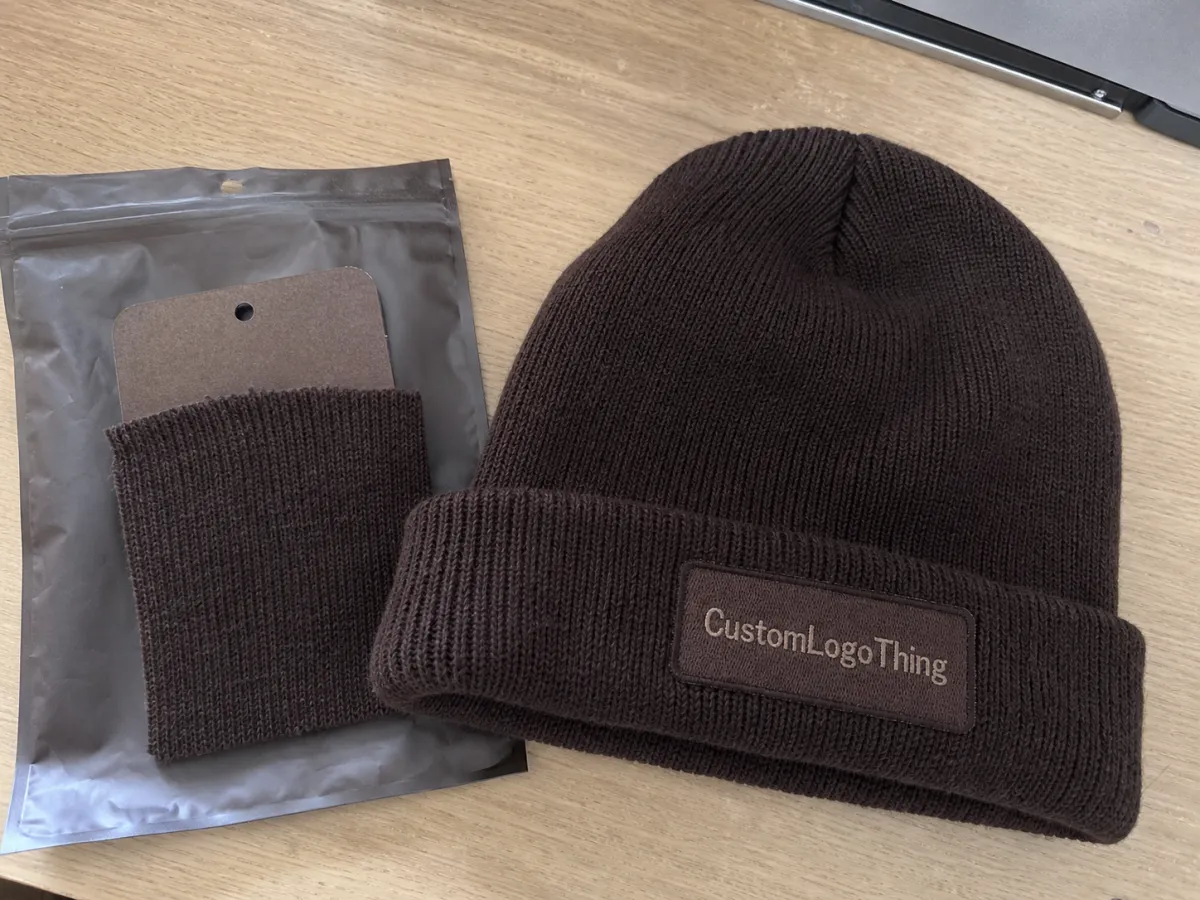
A useful sample answers questions a rendering cannot. First is color. Chocolate is not one fixed shade; it can lean milk chocolate, espresso, reddish brown, or muted gray-brown depending on yarn, knit structure, and lighting. A screen image will not tell you how the final beanie reads in daylight or retail lighting.
Second is construction. Acrylic, wool blends, recycled polyester, and mixed yarns all behave differently. Acrylic is usually the most cost-stable and predictable. Wool blends often feel warmer and more premium, but they can raise price and care requirements. Recycled polyester can support sustainability claims, though the texture may differ from classic knitwear.
Third is decoration. Embroidery that looks clean on paper can lose definition on chocolate fabric because contrast is lower. Small lettering, thin strokes, and tight detail are the first things to disappear on knit surfaces. A sample shows whether the logo size, thread choice, and placement still read clearly once stitched.
The sample also shows wearability. The beanie should stretch, recover, and sit comfortably without rough seams or a collapsing crown. If the product looks good flat but feels wrong on the head, the sample has done its job by preventing a costly bulk mistake.
A sample should prove three things: the color is close enough, the embroidery is readable, and the beanie feels wearable.
At minimum, review these points before approval:
- Handfeel: soft, dry, brushed, or slightly coarse
- Recovery: whether the rib and crown rebound after stretching
- Embroidery: clean edges, flat backing, minimal puckering, no loose threads
- Color: the chocolate tone under daylight and indoor light
- Wear: cuff pressure, seam comfort, and overall fit
If the supplier only offers photos, ask whether the order value justifies a physical sample. A phone image cannot show pilling, backing firmness, or how the knit flexes across the forehead.
How the sampling process and timeline work from swatch to approval
The sampling process starts with complete input. The factory needs vector artwork, target logo size, placement, beanie style, and the intended yarn or knit structure. If any of those are unclear, the first sample becomes a guess instead of a controlled test.
Material choice comes next. Buyers usually confirm yarn content, gauge, cuff style, and whether the beanie is single-layer or double-layer. A 5-gauge or 7-gauge knit generally gives embroidery more support. Lighter knits may feel softer, but they offer less stability for the logo. If the beanie includes a lining, that should be decided early because it affects cost, warmth, and comfort.
Typical timing varies by workload and material availability, but these ranges are common:
- Swatch or yarn match: 2-5 business days
- First proto sample: 5-8 business days after artwork and materials are confirmed
- Revision sample: 3-7 additional business days if changes are needed
- Final sign-off to bulk start: usually 1-3 business days after approval
Most delays come from a few predictable places: missing artwork, unclear color targets, and slow internal approvals. A sample can be ready while the person who needs to sign off is unavailable, which turns a simple review into a week of waiting.
Packaging matters too. A beanie packed in kraft paper inside corrugated cardboard usually arrives in better shape than one shipped loosely in a thin mailer. If your program needs FSC-certified cartons, recycled materials, or post-consumer waste content, specify that early so the sample reflects the final packout.
Fabric weight, stitch density, and color match factors
Fabric weight changes the product more than many buyers expect. Denser knits feel warmer and more structured, and they often support embroidery better. Lighter knits can drape more softly, but they may let the logo sink into the texture and look less defined.
Stitch density matters just as much. Too little density can make the logo look thin or unfinished. Too much can cause puckering or stiffness, especially around tight curves and small text. On chocolate fabric, low contrast can hide these problems at first glance, so inspect the sample from more than one angle.
Thread choice also affects the final read. Polyester thread is usually the safer option for durability and color consistency. Rayon can have a softer sheen, but that shine behaves differently on dark brown knit than it does on lighter fabrics. What looks refined in a sample room may read brighter or flatter in daylight.
Backing and stabilizer deserve attention too. Extra backing can keep the embroidery from tunneling into the knit, but too much can make the inside scratchy. If the beanie sits directly against skin, inspect the reverse side and feel the backing, not just the front of the logo.
Color matching is rarely a screen-to-product exercise. Yarn blend, dye lot, and finishing all shift the final shade. If the goal is a specific chocolate tone, use a physical reference under consistent light. Screens are useful for direction, not final approval.
Comfort checks should be part of the review. Stretch the cuff, let it rebound, and try the beanie on different head sizes if possible. A product can look clean on a table and still fail after 20 minutes of wear if the seam line feels rough or the crown shape collapses.
That is why buyers should avoid focusing only on logo placement. Branding is visible, but the material is what the customer actually wears. If the knit feels scratchy or the fit is weak, good embroidery alone will not save the product.
Cost, pricing, MOQ, and quote variables to check
Sample pricing should be read by sample type, not just by total cost. A swatch, a proto sample, and a fully finished pre-production sample do not serve the same purpose and should not be judged as if they do.
| Sample type | Typical price | Typical timing | Best use |
|---|---|---|---|
| Fabric or yarn swatch | $5-$20 | 2-5 business days | Color and handfeel screening |
| Proto sample with embroidery | $25-$60 | 5-8 business days | Early fit and logo review |
| Fully finished pre-production sample | $60-$120 | 7-12 business days | Final approval before bulk run |
MOQ changes the economics quickly. A quote at 100 pieces may look very different from a quote at 500 or 1,000. Per-unit cost usually drops with volume, but only if the spec stays stable. If the yarn, embroidery count, or finishing method changes, the savings can disappear.
Quote variables often hide in plain sight. Decoration count, thread colors, revisions, labels, shipping, and packaging requirements can all change the total. A branded sleeve, retail insert, or special folding method may add cost, but those details can also affect how the product is judged on arrival.
Ask what would trigger a higher bulk price later. If the sample is quoted with one thread color and the final order needs three, production cost may rise. If the sample uses a standard cuff and the bulk order wants a longer fold, yarn usage and labor time can change. The useful question is not only what the sample costs, but what is included, what is excluded, and what changes the final production price.
Some teams request biodegradable or recycled packaging at the sample stage. That can fit the brand story, but protection still matters more than appearance. A damaged sample gives the wrong signal and can lead to a false negative on an otherwise good beanie.
Step-by-step: requesting, reviewing, and approving samples
A controlled process is faster than a casual one once the order gets larger. The goal is to remove uncertainty before bulk production starts, because every vague approval creates a later correction.
- Send complete specs. Include artwork, target size, logo placement, thread colors, beanie style, and packaging needs.
- Confirm the file. Make sure the logo is vector-based and scaled correctly for the embroidery field.
- Approve the base material. Lock in yarn content, gauge, and the chocolate tone before sampling starts.
- Define the sample type. Clarify whether the supplier is sending a swatch, proto, or finished pre-production sample.
- Review the physical piece. Check color, placement, stitch quality, fit, and comfort in that order.
- Document changes. Record what must change and what is already approved.
- Confirm final sign-off. State clearly that the approved sample is the production reference.
Review works best when the checks happen in sequence. Start under daylight if possible, then inspect the embroidery placement, then look at stitch density and edge quality, then try the beanie on. Stretch it, let it rebound, and turn it inside out to feel the backing. That sequence separates surface appeal from real construction quality.
Side-by-side comparison helps more than memory. Place the sample next to a brand-approved swatch, an existing beanie, or another known reference. Under fluorescent light, judgment can drift faster than expected, and a physical comparison keeps the review grounded.
Practical rule: one approval owner, one reference file, one final spec sheet. More than that usually slows the project down.
Once the sample is approved, ask for a production-ready spec sheet. It should record fabric type, stitch count, logo dimensions, thread colors, measurements, labeling, and packaging instructions. That record gives the bulk run a clear target instead of leaving the factory to interpret the sample on its own.
Confirm shipping expectations at the same time. If the final goods will ship folded, tagged, bagged, or boxed in a specific way, write that down before production starts. If the buyer wants recycled materials or post-consumer waste content in the carton, it should be specified before the order is packed.
Common mistakes buyers make with beanie samples
The first mistake is approving from photos alone. Camera settings can make chocolate yarn look warmer, flatter, or darker than it really is. Texture disappears, thread sheen shifts, and the knit can seem smoother than it feels in hand.
The second mistake is treating embroidery as the whole product. The logo matters, but the base fabric carries the customer experience. A clean mark on an itchy or shapeless beanie still produces a weak result.
The third mistake is assuming the sample and the bulk run will match without a written spec. Dye lot, stitch tension, finishing, and production batch can all vary. That does not always mean the factory made a mistake; often it means the buyer left too much room for interpretation.
The fourth mistake is changing the artwork after approval. A small shift in logo size or thread color can send the sample back into setup and move the timeline. That delay usually shows up in shipping, not just in sampling.
Another common error is accepting “close enough” because the sample is otherwise attractive. That may be fine for a personal purchase, but it is not a strong standard for a branded order that must hold up at retail, at events, or in employee kits.
- Do not approve by image alone
- Do not ignore handfeel and seam comfort
- Do not assume the bulk run will match without a written spec
- Do not change the design after final approval unless the schedule can absorb it
Expert tips for cleaner approvals and faster turnaround
Send one reference file, one color standard, and one decision-maker. That setup removes a surprising amount of friction. Multiple versions of feedback create a moving target, and suppliers spend time reconciling notes instead of making product.
Ask how the sample will be packed before it ships. If the bulk order will be folded, tagged, bagged, or boxed a certain way, the sample should reflect that as closely as possible. Presentation affects crease lines, shape retention, and the buyer’s sense of quality.
Check the beanie under more than one light source. Daylight, office white light, and warm retail light do not tell the same story. Chocolate yarn can pick up red, green, or gray undertones depending on the environment, which is why brown is useful but tricky as a brand color.
Ask for a small revision only if the problem is real. Over-correcting a sample can introduce new problems. A strong revision note is specific: deepen the brown by one step, reduce logo width by 3 mm, lower stitch density in the crown, or shorten the cuff by 1 cm. Vague notes tend to produce vague results.
Confirm the final quote after sample approval rather than before. Once the spec is locked, the supplier can price the actual item instead of an estimate. That usually gives cleaner numbers and fewer surprises when the order moves into production.
Use a compact checklist during review:
- Measurements: crown depth, cuff height, relaxed width
- Decoration: logo size, stitch count, thread colors
- Materials: yarn content, gauge, lining if used
- Packaging: carton type, tissue, inserts, labeling
- Decision: approve, revise once, or hold
Once those points are settled, the project stops being a pile of opinions and starts behaving like a manufacturing order. That is the real value of a chocolate Embroidered Beanies Material Sample guide: it turns a loose visual idea into a spec that can survive production.
If the sample looks close but still feels incomplete, do not rush the sign-off. A strong prototype should survive close inspection, repeated wear tests, and a basic packaging check before it becomes the production reference.
What should a chocolate embroidered beanies sample include?
It should show the final fabric, embroidery placement, thread colors, and stitch density. If fit and comfort matter, ask for a fully finished sample instead of a flat swatch. If packaging affects the final presentation, request the sample in the intended shipment format as well.
How long does a beanie sampling process usually take?
Simple swatches move quickly, while fully finished samples take longer because embroidery and finishing must be set up. A revision round usually adds several business days, especially if yarn sourcing or artwork changes are involved. The fastest projects start with complete specs and one approval path.
Why does the color look different on the sample than online?
Screens, lighting, and camera settings can make chocolate tones look warmer or darker than they really are. Fabric texture and thread sheen also change how the color reflects in person. Compare the sample against a physical reference or Pantone standard when possible.
What affects the sample price most?
Embroidery complexity, fabric type, and whether the piece is fully finished all influence cost. Rush timing and extra revisions often move the quote more than the base sample itself. Shipping and special packaging can also change the final amount.
What should I do if the sample is close but not perfect?
Document exactly what is off, such as color depth, stitch height, placement, or fit. Request one revision with specific corrections rather than broad comments. Do not approve bulk production until the sample matches the agreed spec closely enough for scale.


