Chocolate Frosted Zipper Bags bulk order planning is where careful buyers stop paying for avoidable mistakes. Most budget overruns do not come from the pouch itself. They come from mismatched dimensions, vague print instructions, zipper choices that do not fit the use case, and freight assumptions that never matched reality. A bag can look inexpensive on a quote sheet and still cost more than expected once setup, reproofs, and shipping are added.
For snacks, confectionery, sample packs, and retail display, the job is not to pick the prettiest pouch and hope for the best. It is to match the structure, finish, and closure to the product’s weight, shelf life, and handling pattern. Frosted material usually gives a softer, premium look than crystal-clear film, while still allowing enough product visibility to reassure the buyer. That balance is part presentation, part practicality.
The buyers who control cost best are usually the ones who decide early what the pouch must do. Will it be opened and closed repeatedly? Will it hang on a peg? Does it need to stand upright on a shelf? Is the fill light and dry, or dense and abrasive? Each answer changes the bag spec, and each spec changes the quote. The price difference between “close enough” and “correct” can be surprisingly large.
Why bulk planning lowers total packaging cost
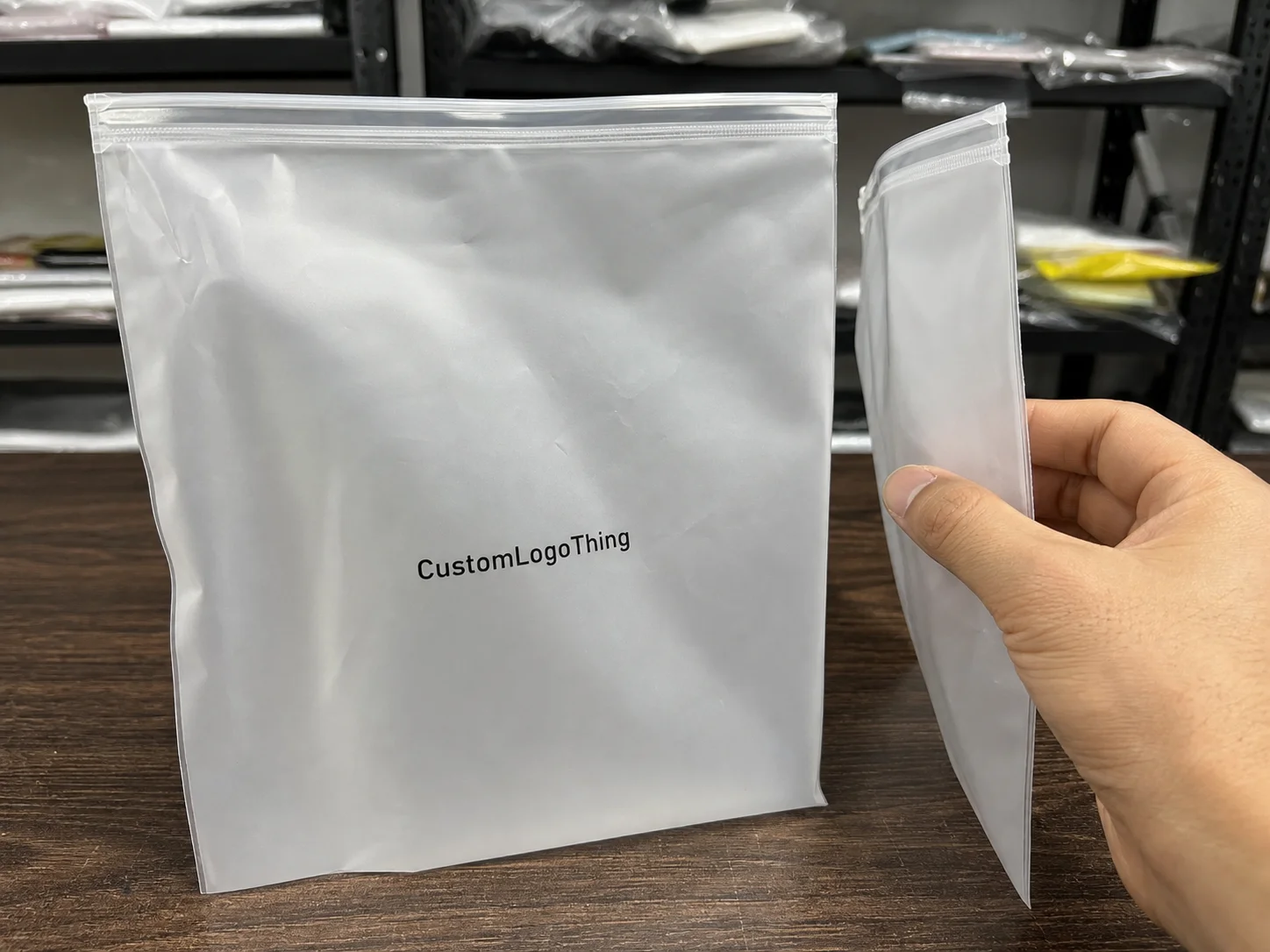
Bulk pricing only works in your favor if the spec is stable. If the size changes after sampling, the artwork shifts after proofing, or the closure style gets upgraded late in the process, the savings start to disappear. Production teams price custom pouches around setup, materials, print coverage, and quantity. Change one of those variables and the math changes with it.
That is why chocolate Frosted Zipper Bags Bulk Order planning should begin with the product, not the design software. The product determines the bag volume, and the volume determines how much film is required, how the zipper behaves, and whether the pouch will look neat or crowded. A pouch that fits a chocolate bar neatly may feel too rigid for a mixed snack blend. A bag that handles lightweight candy well may flex too much for dense clusters or coated pieces.
There is also a quiet cost in poor planning: rework. If the closure feels weak, the print is too small, or the dimensions are off by just enough to make filling awkward, the order may still be usable, but it is no longer efficient. The supplier will have spent time correcting the job, and that cost tends to reappear somewhere in the final price or in the next order. Packaging procurement rewards precision more than enthusiasm.
“A low unit price means little if the pouch fails on fit, print quality, or reseal performance. One mistake can erase the savings from a whole batch.”
For buyers managing recurring packaging programs, stable specs matter more than last-minute upgrades. A modest, repeatable design with predictable material use is usually easier to buy, easier to replenish, and easier to forecast. That is especially true when the pouch is part of a broader product line that may need the same format across several flavors or SKUs.
Finish, structure, and closure options that change performance
The frosted finish is popular because it softens the appearance of the pouch without making the contents disappear. It looks cleaner than a basic clear bag in many retail settings, especially when the artwork is simple and the product itself provides the visual texture. For snack and confectionery items, that can be a useful middle ground between display and restraint.
Closure choice matters more than many first-time buyers expect. A standard press-to-close zipper is usually the most economical option and works well for general food and retail use. It is familiar, easy for customers to understand, and suitable for products that will not be opened dozens of times. If repeated resealing is part of the customer experience, a stronger zipper profile may be worth the added cost.
Film thickness affects both feel and function. Thinner film can lower the price, but it may not hold shape well when the fill is heavy or uneven. Thicker film generally improves stiffness, helps the pouch stand better, and reduces the risk of distortion around the seal. It can also handle sharper or denser contents more comfortably. That matters for granola clusters, hard candy, coated snacks, and other fills that press against the film during packing or shipping.
Structure options should be selected for use, not for appearance alone. A stand-up gusset improves shelf presence and helps the pouch present more cleanly in retail settings. Hang holes make sense for peg displays. Tear notches improve first-open convenience, though they add a small amount of production complexity. Rounded corners can make the package look more refined, but they are a finishing detail, not a substitute for the right dimensions.
- Standard press-to-close zipper: economical, familiar, suited to routine reseal use
- Thicker film gauge: better stiffness and durability for heavier fills
- Stand-up gusset: better shelf display and carton stability
- Hang hole + tear notch: useful for retail merchandising and first-open convenience
One point gets missed often: a bag that looks premium when empty may behave very differently when filled. The weight of the product changes the drape of the film, the stress on the zipper, and the way the pouch sits inside a shipping carton. Packaging is not judged in the mockup. It is judged in transit, on shelf, and in the customer’s hand.
| Option | Typical use | Cost impact | Buyer takeaway |
|---|---|---|---|
| Standard press-to-close zipper | General snack and candy use | Lowest | Best for routine reseal use and cost control |
| Thicker film gauge | Heavier or sharper fills | Moderate increase | Improves stiffness and helps the pouch hold shape |
| Stand-up gusset | Retail shelf display | Moderate to higher | Improves presentation and packing behavior |
| Hang hole + tear notch | Peg displays and convenience retail | Small increase | Useful when merchandising and first-open experience matter |
Specifications buyers should lock before requesting quotes
Accurate quoting starts with exact dimensions. Width, height, gusset depth, film thickness, closure type, and usable fill area should all be specified before the first price request goes out. “About this size” slows everything down. It also creates comparison problems later, because one supplier may quote a different film or zipper standard than another.
Start with the fill profile. A pouch for flat confectionery is not the same as a pouch for loose snacks, mixed candy, or dense baked pieces. The bag must not only contain the product; it must pack cleanly, seal reliably, and hold a shape that looks intentional. For chocolate Frosted Zipper Bags bulk order planning, the internal volume is as important as the outer dimensions.
Material choice usually falls into three practical categories. Economy film works for basic presentation and lower-cost runs. Thicker barrier film improves protection and structure. A print-friendly frosted surface supports branding where a softer visual effect is the goal. The right choice depends on how much protection the product needs and how much shelf presence the packaging must deliver.
Print detail deserves special attention. Simple logo placement is easier to reproduce and usually more cost-efficient. Full-coverage artwork can look strong, but frosted surfaces do not always render fine detail as cleanly as buyers expect. Tiny type, thin lines, and low-contrast colors can blur or lose punch. If the artwork relies on precision, request a proof and inspect it carefully before approval. That review is cheaper than a misprinted run.
Useful information to provide with the request:
- Artwork in editable vector format or high-resolution print-ready file
- Exact dieline or confirmed dimensions
- Pantone or other brand color references, if color matching matters
- Surface finish expectations, including matte, frosted, or soft-touch effects
- Closure style and any extras such as hang holes or tear notches
Also clarify the end use. A pouch designed for countertop display is not automatically the best choice for peg merchandising or shipping-only fulfillment. Retail display, e-commerce packing, and promotional sampling place different demands on the same-looking pouch. That is why the quote should reflect the actual use case rather than an idealized version of it.
Pricing, MOQ, and budget realities
Pricing is shaped by a handful of variables: size, film gauge, print coverage, zipper type, and quantity. Those are the main levers. If any of them changes, the unit price moves. More customization generally means more setup and tighter quality control, which is why fully custom pouches cost more than stock-style runs with light branding.
MOQ depends on the production method and the level of customization. A simple pouch with limited print may allow a lower minimum than a fully custom structure with several colors, specialty finish, or additional features. Higher volumes usually reduce the cost per unit, but the break point is not universal. Suppliers price around their own setup costs, material sourcing, and machine time, so the same order can land in different tiers depending on how it is built.
Practical price ranges help buyers think clearly, but they are only ranges. For smaller custom runs, unit costs often fall around $0.22 to $0.45. Mid-size bulk orders may sit around $0.14 to $0.28. Larger runs can move into the $0.09 to $0.19 range when the setup cost is spread across enough units. A heavier film, more print coverage, or a specialty zipper can push those numbers upward.
| Order profile | Typical unit cost range | What drives the price | Best fit |
|---|---|---|---|
| Small custom run | $0.22-$0.45 | Setup, artwork prep, lower volume | Launches, pilot orders, limited retail tests |
| Mid-size bulk order | $0.14-$0.28 | Quantity, print coverage, film gauge | Established SKUs and recurring replenishment |
| Larger bulk run | $0.09-$0.19 | Volume spread across setup and production | Stable demand and multi-month inventory planning |
Quote comparisons need discipline. Two suppliers can appear far apart in price while actually quoting different bag dimensions, different film thickness, or different print coverage. That is not a fair comparison. Ask whether setup fees, plate costs, or artwork preparation charges are included. On smaller runs, those costs can be a meaningful share of the total. On larger runs, they matter less per unit but still affect the final spend.
It also helps to separate the bag price from the landed cost. Freight, import timing, and carton packing efficiency all change what the order truly costs. A pouch with a slightly lower unit price may still lose if it ships inefficiently or forces you into a larger carton count. Buyers who only chase the lowest line-item price often discover the real budget only after the cartons arrive.
Production flow, timelines, and lead-time risks
The production sequence is straightforward: request a quote, confirm specifications, approve artwork, run production, inspect quality, pack cartons, and ship. The bottlenecks usually show up before the machines do. Proof revisions, unclear measurements, and late changes are common reasons a schedule slips.
Most custom pouch jobs need a realistic buffer. A simple order may move quickly, while fully printed pouches with specialty finishes or structure changes generally take longer. For many custom runs, a practical window is around 12 to 15 business days after proof approval, though larger or more complex jobs can take more time. Shipping time is separate and should never be mixed into production time. That distinction matters when a launch date is fixed.
Three issues create the most delay:
- Artwork corrections after the first proof
- Color adjustments for brand matching
- Transit delays or missed freight bookings
Quality issues are easier to catch early than late. A good supplier will flag problems such as unreadable text, inconsistent line weights, or a zipper spec that does not match the pouch width. Buyers should expect a proofing process, not just a yes-or-no quote. That process is not wasted time. It is the part that prevents the most expensive mistakes.
If the packaging supports a retail launch, trade event, or seasonal promotion, add margin to the schedule. Calendar planning often assumes every step finishes neatly on time. Production rarely behaves that way. A few extra days in the plan can be the difference between a clean launch and a scramble.
For products that must survive rough shipping, standards and testing protocols matter more. Third-party transit testing can help when cartons are exposed to drops, vibration, or compression during distribution. Not every pouch needs formal testing, but the risk level should be understood before the order is released. That is especially true if the packaging has to arrive retail-ready rather than just intact.
How to compare suppliers on quality and compliance
Price should never be the only deciding factor. A lower quote is meaningless if the zipper fails, the print looks inconsistent, or the pouch dimensions vary enough to complicate packing. The real question is whether the supplier can deliver repeatable quality across the full order and across the next replenishment run.
Request samples whenever possible. Then inspect them under practical conditions. Open and close the zipper multiple times. Check the seal line. Look at print edges under normal light, not just under ideal studio lighting. Fill the pouch with the actual product if you can. A sample that looks fine empty can behave differently once loaded.
Compliance questions depend on the end use. For food-related packaging, buyers may need a statement about material suitability or a declaration aligned with the product contact requirements. If sustainability claims are part of the brief, verify them directly rather than relying on a marketing summary. Documentation should match the actual material, not the sales language around it. That discipline prevents avoidable disputes later.
Support quality is another practical marker. A responsive supplier catches dimensional errors early, explains print limitations clearly, and answers questions without dragging the process out. That may sound ordinary, but ordinary is valuable in packaging procurement. Orders become difficult when communication is vague or slow.
Consistency matters as much as quality. For repeat orders, the best suppliers are the ones who can keep the same film feel, zipper performance, and print result from one run to the next. Variations of a few millimeters or a slightly different finish can create problems for automated packing, shelf presentation, or customer perception. Packaging buyers remember those issues because they are expensive to ignore.
Practical ordering steps for a clean first run
A clean order starts with a complete brief. Exact dimensions, fill weight, artwork files, print colors, zipper style, finish, target quantity, and delivery location should all be in the first request. That reduces guesswork and shortens the revision cycle. The more complete the information, the closer the quote will be to the final cost.
If the product is still evolving, ask for a sample or a proof before committing to a full run. That step is cheap compared with correcting a large batch. One revision before production is normal. Multiple revisions after approval are where time and money start to drain.
Before the order is released, confirm the destination and delivery timing. Freight is part of the total plan, not an afterthought. A production schedule that looks comfortable can still miss the required date if shipping is booked too late or to the wrong destination.
A simple sequence usually works best:
- Choose the pouch spec and closure type
- Confirm MOQ, pricing tiers, and any setup fees
- Approve the artwork proof and final dimensions
- Schedule production and quality checks
- Release shipment with the correct destination and timing
That is the practical shape of chocolate frosted zipper Bags Bulk Order planning. It is not a flashy process. It is a controlled one. The buyers who do well are the ones who treat the bag as a technical purchase, not a decorative one.
Before production starts, review the final spec sheet line by line. If the dimensions, finish, zipper, or print details changed during quoting, make sure those changes were captured in writing. Small differences are easy to miss and expensive to fix after approval. Packaging only looks simple once the hard decisions have already been made.
FAQ
What affects chocolate frosted zipper bags bulk order pricing the most?
Bag size, film thickness, print coverage, zipper style, and order quantity have the biggest effect on unit cost. Setup fees and artwork preparation can matter more on smaller runs, especially when the design is detailed.
What MOQ should I expect for custom frosted zipper bags?
MOQ depends on the production method, the bag size, and whether the pouch is stock-style or fully custom. Simple designs usually allow lower minimums than highly customized runs, but each supplier sets its own threshold.
How long is the lead time for a bulk zipper bag order?
Lead time depends on proof approval speed, customization level, and production load. Many custom runs take around 12 to 15 business days after proof approval, with shipping time added separately.
Can I change the size or artwork after the proof is approved?
Changes after approval are possible, but they often create delays and may trigger extra setup costs. Finalize the spec as early as possible to reduce rework.
What should I send to get an accurate quote for chocolate frosted zipper bags bulk order planning?
Send exact dimensions, fill weight, artwork files, print colors, finish preference, closure style, quantity, and delivery details. A complete spec sheet is the fastest way to get a reliable quote.


