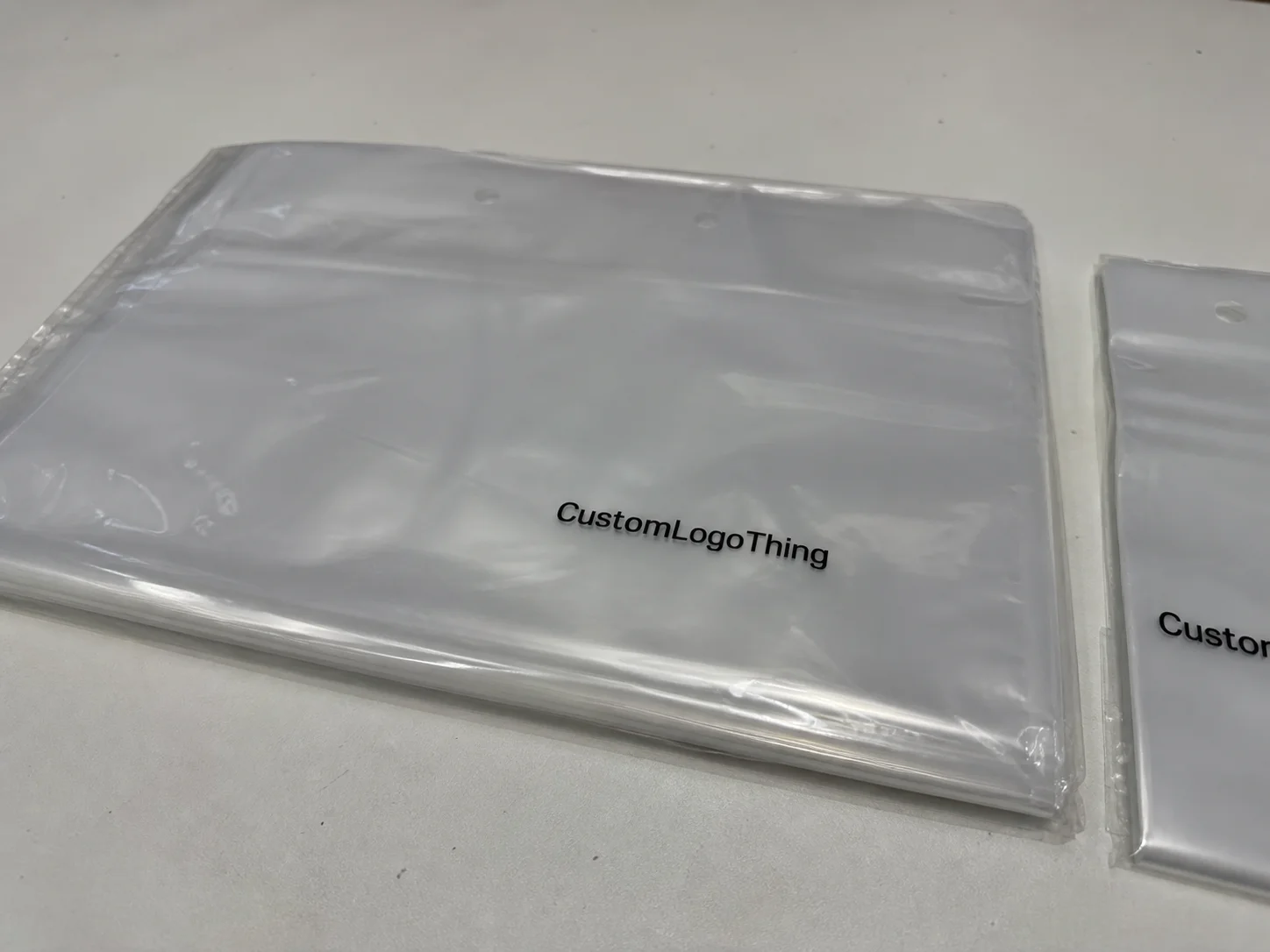
Frosted plastic does something useful on a shelf. It can make a $12 product feel closer to a $20 product before anyone reads the label. A private label Frosted Zipper Bags supplier is not just selling a pouch. The supplier is turning brand, protection, compliance, packing speed, and freight reality into one small piece of packaging that has to survive production, filling, shipping, storage, and customer handling.
That may sound dramatic for a resealable bag. It is not.
The finish hides small scuffs. It softens color. It gives the hand a quieter, more premium cue than glossy clear plastic, often without a huge material jump. For a packaging buyer, that is the opportunity. It is also the trap.
The cheapest frosted zipper bag can become expensive fast if it clouds the logo, splits during fulfillment, traps too much air, or lands two days after a launch. Packaging failures do not stay inside purchasing. They show up as late kitting, repacking labor, damaged goods, retailer complaints, and customer photos nobody wants to see.
What Frosted Zipper Bags Signal on a Shelf
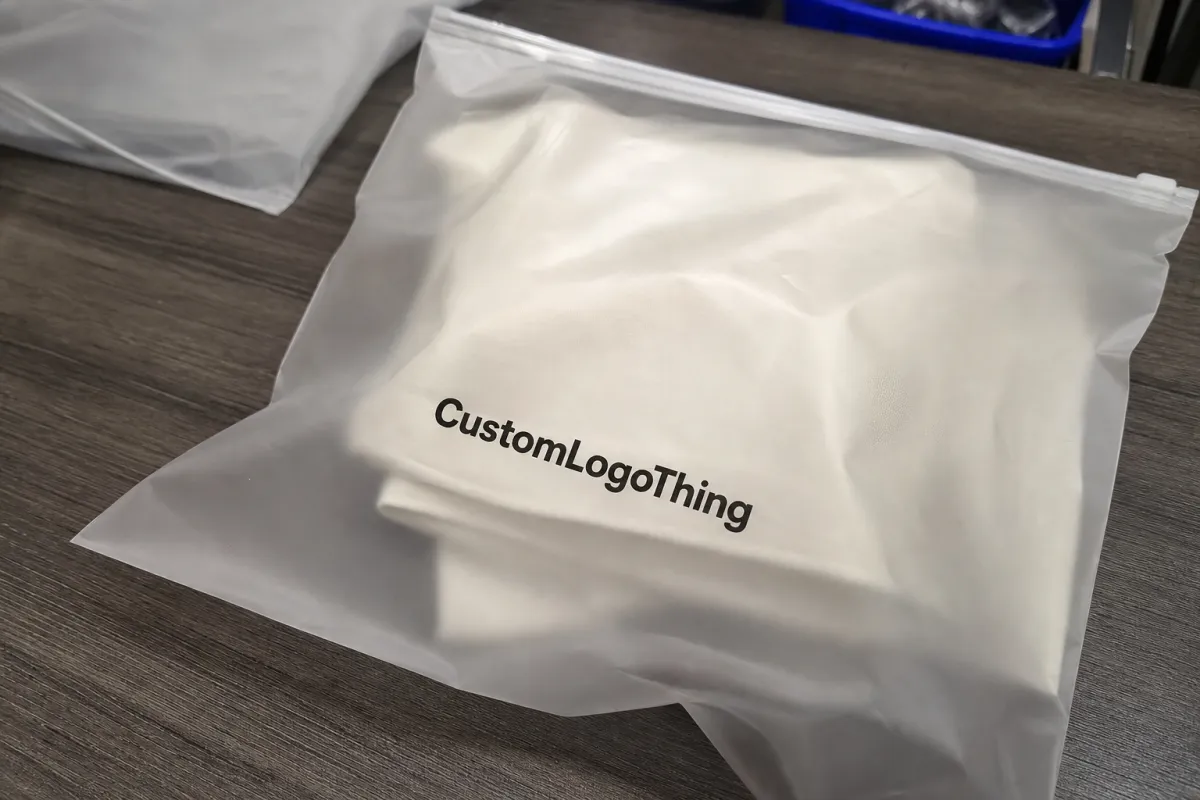
Frosted Zipper Bags sit in a useful middle zone. They are less transparent than Clear Zipper Bags, less rigid than matte stand-up pouches, and usually lighter than reusable garment bags with sliders, reinforced handles, or hanger openings. That middle zone is why apparel brands, cosmetics sellers, accessories companies, craft suppliers, electronics parts vendors, promotional kit buyers, and some regulated-product brands use them.
The basic job is simple: protect the item, keep the presentation clean, and allow the customer or packing team to open and close the bag without destroying it. The details are where buyers get into trouble.
A frosted zipper bag is usually a flat or lightly gusseted polyethylene bag with a press-to-close or slider zipper. A clear zipper bag performs the same functional job but shows the product more directly. A matte stand-up pouch is usually a laminated structure with more body, often used for food, supplements, refills, or liquids. A reusable garment bag may use thicker PEVA, non-woven fabric, or heavier plastic with snaps, handles, or a travel-style closure.
Packaging buyer reality: if three suppliers quote three different formats, the lowest price is not a better deal. It is a different product.
Frosting also changes the merchandising equation. A semi-private view can work well for lingerie, premium apparel, accessories, beauty tools, electronics components, and kit packaging where the buyer should see enough to identify the contents without staring at every fold, seam, cord, or warehouse handling mark.
Private label work usually includes one or more branding steps: direct printing, labels, hang tags, barcode labels, size stickers, or carton identification. Some suppliers print directly on the film. Others decorate stock bags with labels, which can be the smarter choice for pilots, low MOQ runs, seasonal artwork, or products with frequent SKU changes. Options like Custom Labels & Tags also help when the bag needs to carry barcodes, warnings, batch information, or retail-facing product details without committing every detail to printed film.
How Manufacturing and Branding Works
The production path is not mysterious, but every step affects price and risk. A supplier starts with resin selection, then uses extruded film or sourced rollstock. The film is made or selected with a frosted, matte, or translucent finish. After that come cutting, zipper application, heat sealing, punching or venting if required, printing, inspection, carton packing, and shipment.
LDPE is common because it feels soft, flexible, and forgiving. HDPE has a crisper hand and a slightly noisier feel. PE blends can balance clarity, strength, softness, and cost. If recyclability matters, ask whether the bag body and zipper are compatible mono-material polyethylene. The U.S. EPA’s sustainable materials guidance at epa.gov/smm is a useful reminder that recycling claims depend on collection access and actual processing systems, not just resin type printed on a spec sheet.
Decoration brings its own trade-offs. Screen printing works well for bold one- or two-color logos, especially on moderate runs. Flexographic printing fits larger repeat orders because plates and setup costs spread across more units. Digital printing can help with smaller runs or more complex artwork, although not every supplier can run it cleanly on frosted PE. Labels are practical for launches, barcode-heavy packaging, and short runs, especially when paired with Custom Labels & Tags.
Frosted film is not a neutral background. Colors often look 5% to 20% more muted than they do on glossy white paper or clear film, depending on opacity, ink laydown, and lighting. Fine type can lose sharpness. White ink underbases may be needed when brand colors must stay bright. Tiny legal copy that looks fine on a PDF can become a gray smudge on a 2.5 mil translucent bag. Very premium. Very unreadable.
Functional options should be discussed early, not bolted on after the quote. Press-to-close zippers are cost-efficient and familiar. Slider zippers improve usability but add cost, thickness, and often MOQ. Hang holes help retail display. Suffocation warnings may be required for larger bags. Vent holes reduce trapped air during packing. Tear notches, gussets, and reinforced lips can solve real handling problems, but each feature changes setup time, scrap rate, and reorder complexity.
Key Specs to Confirm Before Comparing Suppliers
Good quoting starts before the supplier sees your logo. Prepare the bag width, height, lip size, thickness in mil or microns, zipper type, material, finish level, print colors, logo position, carton quantity, and packing method. Add the product weight, product dimensions, and whether the bag will be hand-filled, machine-packed, or used by a fulfillment center.
Thickness is not a vanity metric. A 2 mil frosted bag may work for a flat T-shirt, sticker pack, soft textile accessory, or light document set. A 3 mil bag is often safer for cosmetics tools, bundled hardware, chargers, small electronics parts, or items that will be opened and closed repeatedly. Heavier products, sharp corners, or dense kits may need 4 mil film, corner protection, a gusset, or a different structure entirely.
Fit testing matters more than nominal dimensions. A product that measures 8 inches wide may not fit comfortably inside an 8.5 inch bag once the zipper channel, product thickness, trapped air, and top lip are considered. If workers have to force every unit into the bag, the true cost includes slower packing, higher reject rates, and irritated fulfillment staff. Nobody puts that in the quote, but it shows up on the floor.
Opacity deserves its own line in the brief. Frosted does not mean opaque. A white product may disappear behind the film in a clean way. A dark product may show strongly. A metallic object may flash through under retail lighting. Buyers selling sensitive, luxury, medical-adjacent, or regulated items should request photos with the real item inside, not just an empty sample held against a tidy background.
Compliance cannot be left until final proof. Large plastic bags may need suffocation warnings. Recycling marks should be used only when accurate. Country-of-origin expectations depend on the product, selling channel, and market. Child-resistant packaging is a separate performance requirement, not a decorative option. If the barcode must scan through the bag, test it through the frosted film before approving production.
| Spec Area | Typical Choice | Buyer Risk if Vague |
|---|---|---|
| Thickness | 2 mil for light apparel; 3 mil or more for repeated handling | Splits, poor hand feel, or inflated cost |
| Zipper | Press-to-close for economy; slider for easier opening | Wrong user experience or missed MOQ |
| 1-color screen print, flexo, digital, or label | Muted logo, blurry type, or slow approval | |
| Finish | Light frost, medium frost, or higher-opacity matte | Product too visible or logo too dull |
I like a comparison sheet with two columns: must-have specs and negotiable preferences. Without that split, teams compare five different bags as if they are equivalent. They are not.
Pricing, MOQ, and Unit Cost Trade-Offs
Unit cost is shaped by film thickness, bag size, print method, number of colors, order quantity, zipper style, tooling, freight, and whether the supplier stocks the base bag or custom-produces it. A stock 6 x 9 inch bag with a one-color logo is solving a different problem than custom film, custom dimensions, four-color print, and retail carton packing.
MOQ is not only a sales policy. Printing plates, machine setup, rollstock waste, ink matching, and trial bags create fixed costs. Someone pays for that. On small runs, those costs are spread across fewer units, so the unit price climbs.
Typical quote structures fall into three buckets. Stock frosted bag plus printed logo is usually the fastest and lowest-risk option. Semi-custom size with a standard zipper gives better fit but may add setup time. Fully custom film, size, print, zipper, and packing configuration gives the most control, along with the highest commitment.
| Option | Best For | Common Cost Pattern | Typical Watchout |
|---|---|---|---|
| Stock bag with logo | Launches, tests, simple apparel, promo kits | Often lower setup cost; unit cost may be higher on small runs | Limited size, thickness, and finish choices |
| Semi-custom bag | Brands needing better product fit | Moderate setup; better value at repeat quantities | Longer proofing and possible size tooling |
| Fully custom bag | Retail programs, stable SKUs, premium presentation | Higher upfront cost; stronger per-unit efficiency at scale | Higher MOQ and more details to control |
For rough planning, small custom-decorated frosted zipper bags can land around $0.12 to $0.35 per unit at moderate quantities. Larger, thicker, or heavily printed bags can move past $0.50 per unit. That range depends heavily on size, print coverage, freight, and quantity. A quote for 5,000 pieces may look painful; the same specification at 20,000 pieces can look more reasonable because setup is spread out.
Do not compare only the factory unit price. Landed cost includes freight, duties, storage, defect allowance, replacement timing, and any expediting needed if bags arrive late. A higher MOQ can be smart if demand is predictable, artwork is stable, and cartons can be stored without crushing or moisture damage. If demand is uncertain, smaller stock-based runs protect cash.
Ask for two or three quantity breaks. The real choice is often not cheap versus expensive. It is cash flow versus per-unit efficiency.
Process and Timeline From Artwork to Delivery
A typical order moves through inquiry, specification review, artwork check, quote, sample or proof approval, deposit, production scheduling, manufacturing, quality inspection, packing, shipping, and delivery. That chain can be short for a stock bag with a simple logo. It can stretch quickly for custom film, specialty zippers, new tooling, imported materials, or revised artwork.
For many logo-printed frosted zipper bag orders, proofing and production may take 12 to 20 business days after artwork approval, before transit. More complex projects can run 30 to 45 days or longer. Shipping then adds its own spread: local courier, ground freight, air freight, ocean freight, or fulfillment center routing all behave differently.
Proof types are not interchangeable. A digital mockup confirms placement and scale. A pre-production sample confirms construction, zipper feel, opacity, and print behavior. A production sample verifies the final run before bulk release. For a retail launch, the pre-production sample is usually worth the delay.
The buyer controls more schedule risk than many teams admit. Clean vector artwork, Pantone references, confirmed dimensions, accurate ship-to addresses, and fast approvals reduce back-and-forth. A blurry PNG logo and a note saying “make it premium” do the opposite.
The hidden delay in private label packaging is often decision latency. Marketing cares about finish and logo color. Operations cares about packing speed and carton count. Compliance cares about warnings and claims. Purchasing cares about unit price and payment terms. All four groups are right. If they review the bag one after another, a one-week proof can turn into a three-week debate.
Build a buffer if the bags support retail sets, influencer mailers, subscription boxes, seasonal drops, or fulfillment center intake appointments. Packaging that arrives early sits quietly. Packaging that arrives late stops everything.
Common Mistakes With Frosted Resealable Bags
The most common mistake is approving a beautiful flat mockup without testing the filled bag. A logo may look centered on an empty PDF but sit too low once the product is inside. A frosted finish may look elegant in studio light and too cloudy under warehouse LEDs. A zipper may feel fine once and annoying after ten openings.
Sizing errors come next. Buyers forget zipper loss, product thickness, the need for a top lip, or label placement. Then the product technically fits only if someone forces it. Add six seconds to every pack-out, multiply that by 10,000 units, and the “cheap” bag just consumed more than 16 labor hours.
Artwork mistakes are predictable. Low-resolution logos. Hairline fonts. Gradients that break up on frosted film. Brand colors chosen on a bright screen instead of checked on plastic. If the supplier asks for vector files, Pantone colors, and minimum line weights, that is a good sign, not a delay tactic.
Over-specifying can be just as costly as under-specifying. A slider zipper, heavy film, gusset, custom die, four-color print, and individual carton sorting may sound premium, but not every product needs that burden. On the other side, “high quality frosted bag” is too vague for accurate pricing. It means everything, which means it means nothing.
Compliance oversights are less glamorous and more dangerous. Missing suffocation warnings can create channel issues. Inaccurate recycling claims can damage trust. Packaging that obscures required product information can create relabeling work. ASTM test methods and ISTA transport protocols are useful reference points for packaging performance thinking; ISTA resources are available at ista.org.
Supplier-vetting mistakes round out the list: choosing by price alone, skipping samples, ignoring slow communication, and failing to confirm who owns plates, dies, or artwork files. A private label frosted zipper bags supplier that cannot document the approved spec may struggle to repeat it six months later.
How to Vet a Reliable Custom Bag Partner
Ask for real production photos, not only polished catalog images. Frosted plastic changes under warehouse light, daylight, phone cameras, and retail lighting. A bag that looks softly opaque in one photo can look almost clear in another.
Request samples close to your intended size and thickness. Generic samples prove the supplier can make a bag. They do not prove the supplier can make your bag. If you need a 3 mil 10 x 13 inch frosted zipper bag for a folded hoodie, a 2 mil jewelry-size sample tells you very little about packing behavior.
Communication is a quality signal. A strong supplier asks about product weight, packing method, print tolerance, reorder plans, barcode visibility, compliance, and carton requirements. A weak supplier rushes to quote before understanding the use case. Fast replies are nice. Accurate questions are better.
Clarify defect standards before production starts. Discuss acceptable print registration variance, sealing strength, zipper performance, color tolerance, odor, carton damage, and replacement procedures. Not every cosmetic flaw deserves a full remake, and not every defect is acceptable. Put the threshold in writing.
Reorder consistency matters if the bag becomes part of your brand system. Ask whether film grade, zipper type, ink formula, finish level, and carton packing are documented. If a reorder arrives glossier, thinner, or tighter than the first run, customers may not know why it feels cheaper, but they will feel it.
Use a simple sample score matrix. Rate appearance, fit, seal, print clarity, odor, opening force, opacity, carton packing, communication, and quoted landed cost on a 1 to 5 scale. Packaging still has an emotional component. Data keeps that emotion from running the whole decision.
Build a Quote Brief Suppliers Can Actually Price
The fastest way to get useful pricing is to send a brief that removes guesswork. Include product dimensions, product weight, desired bag size, target thickness, material preference, finish level, zipper type, print colors, logo files, order quantity, ship-to location, deadline, and any compliance requirements. If you already know carton limits for a fulfillment center, include those too.
Photos help. A physical product sample helps more. Packaging suppliers can diagnose fit, bulk, abrasion risk, and opacity needs faster when they see the actual item. For products with sharp edges, oily finishes, dark colors, or delicate surfaces, that step can prevent a poor material choice.
Ask for three quote tiers: a budget stock option, a balanced semi-custom option, and a premium fully custom option. That structure helps internal teams compare cost, speed, and brand impact consciously. It also exposes whether the supplier is thinking through the project or just pushing one format.
Before paying a bulk deposit, request a sample approval step, a written spec sheet, and a confirmed production timeline. If labels are part of the packaging plan, coordinate bag dimensions with Custom Labels & Tags so the label does not fight the zipper, hang hole, or barcode area.
The smartest way to choose a private label frosted zipper bags supplier is to turn a vague packaging idea into measurable specs, then compare suppliers on proof, process, landed cost, and repeatability. Prepare the quote brief, shortlist two to four suppliers, score their samples, and choose the partner that protects both the product and the launch calendar.
FAQ
What should I ask a private label frosted zipper bags supplier before ordering?
Ask about material, thickness, zipper type, print method, MOQ, lead time, sample availability, defect policy, carton packing, landed freight cost, and whether the quoted bag is stock, semi-custom, or fully custom. Request real production samples or photos in similar sizes so you can judge opacity, print clarity, zipper feel, and packing quality before committing to bulk production.
How much do custom frosted zipper bags usually cost?
Cost depends on size, thickness, quantity, print colors, zipper style, tooling, and freight. Small or moderate logo-printed runs may fall around $0.12 to $0.35 per unit, while larger, thicker, or more complex custom bags can cost more. For a fair comparison, request quantity breaks and calculate landed cost, not only the factory unit price.
What is the typical MOQ for private label frosted zipper bags?
MOQ can be low for stock bags with a simple printed logo, sometimes starting in the low thousands. Custom sizes, custom film, multi-color printing, or specialty zippers usually require higher minimums because setup, plates, rollstock waste, and machine time have to be absorbed. If launch volume is uncertain, ask for a stock-size option first and move to a fully custom run after demand is proven.
How long does production take for frosted zipper bags with a logo?
The timeline usually includes artwork review, proofing, sampling if needed, production, inspection, and shipping. A straightforward logo-printed stock bag may move faster, while custom features and proof revisions extend the schedule. Buyers can reduce delays by providing vector artwork, confirmed dimensions, Pantone colors, ship-to details, and quick proof approvals.
Are frosted zipper bags recyclable or eco-friendly?
Some frosted zipper bags can be made from recyclable polyethylene, especially when the bag body and zipper are compatible mono-materials. Recyclability still depends on local collection rules and the actual recycling stream. Avoid vague eco claims; ask the supplier for material documentation and use accurate recycling language on the package.