Custom Logo Things
Choose Trucker Caps Material Options for Outdoor Promotions
Picking trucker caps material options for Outdoor Brand Promotions looks straightforward on a screen and gets much more complicated once the caps are in sun, wind, dust, and sweat. A cap can look sharp in a mockup and still feel too hot, too flimsy, or too stiff after a few hours outside, so the fabric choice deserves as much attention as the logo artwork.
Why the wrong cap material can sink an outdoor giveaway
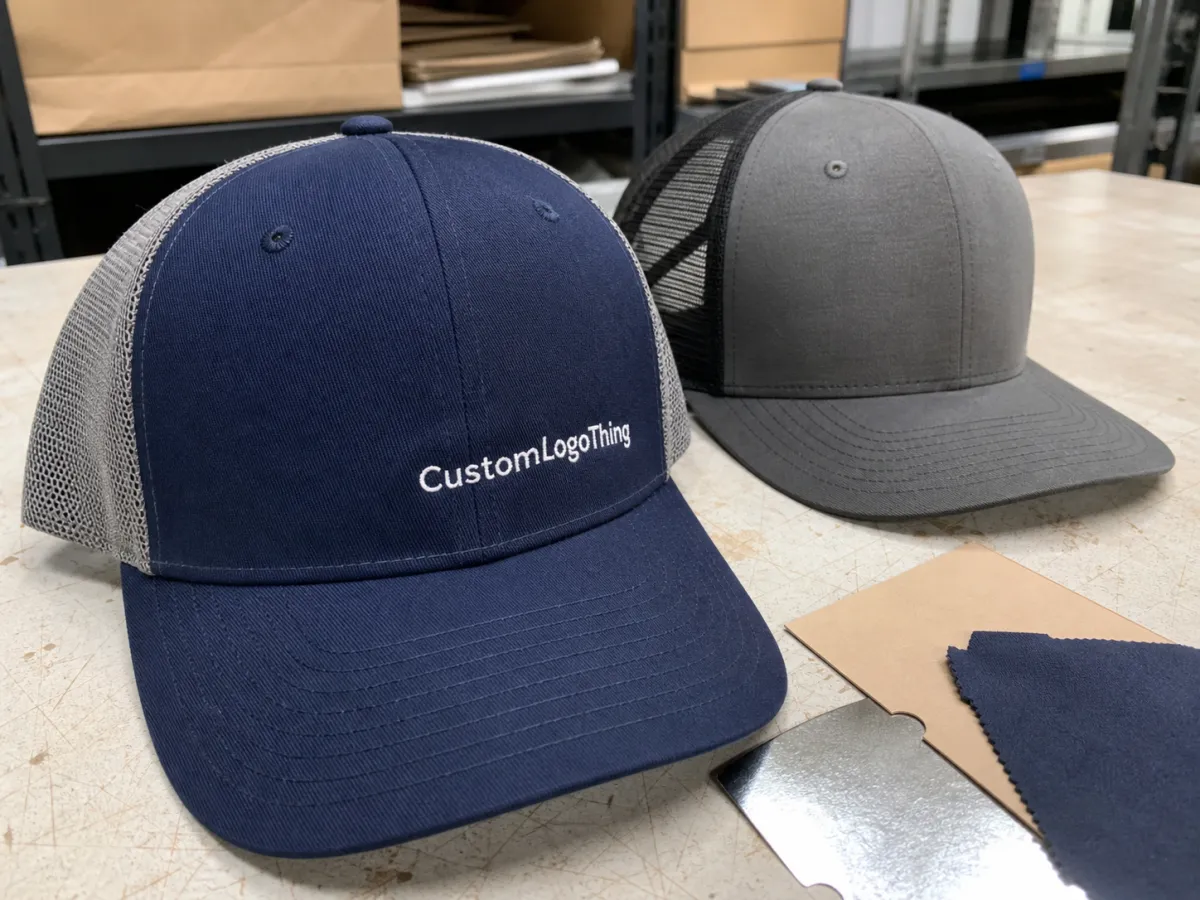
Outdoor giveaways are unforgiving. If the cap feels scratchy, traps heat, or collapses after a few wears, people stop wearing it, and the brand loses the repeat impressions that make apparel worth buying in the first place. That is why trucker caps material options for outdoor brand promotions matter so much: the material choice decides whether the cap becomes a field-ready accessory or a forgotten freebie.
From a buyer’s point of view, this is really a performance decision. The front panel has to hold shape, the mesh has to breathe, and the sweatband has to stay comfortable when the day gets long. If one of those parts misses the mark, the whole cap feels weaker. A stiff front with a rough sweatband can frustrate wearers just as quickly as a soft crown that will not support embroidery cleanly.
There is also a perception issue. A cap that works well in sunlight, on job sites, at festivals, or at team events quietly tells people the brand thought through the details. A cap that feels cheap tells the opposite story. That matters more than many buyers expect, because apparel is one of the few promo items people actually wear in public for hours at a time.
“A giveaway only earns its keep if someone wants to wear it twice. If it is hot, floppy, or itchy, the logo never gets the second impression.”
That is why the buying decision should be filtered through comfort, durability, and visibility. Once those are clear, color matching and decoration style become easier, and the whole order starts to make sense instead of feeling like a guess.
How trucker caps are built for comfort, shape, and airflow
A trucker cap is a simple construction on paper, but in practice each piece changes the wearing experience. The front panel carries the visual weight, the mesh back controls airflow, and the sweatband and closure determine whether the cap feels adjustable or fussy. For trucker caps material options for outdoor brand promotions, that construction matters as much as the fabric itself.
The front panel is usually the first thing buyers notice. It is the best surface for embroidery, woven patches, and printed labels, and it also controls the silhouette. A structured front panel holds its dome shape better, which helps logos sit flatter and look more retail-ready. An unstructured or softer front panel can feel more relaxed, but it may wrinkle more easily and give a larger logo less support.
The mesh back does the cooling work. Standard polyester mesh is common because it is light, affordable, and breathable. Tighter performance mesh can feel sturdier and snag less often, but it may reduce airflow slightly. In hot weather, that tradeoff can matter. A buyer choosing caps for long shifts or outdoor staffing usually notices mesh quality very quickly, especially after the first few hours in direct sun.
Closures also shape comfort. Plastic snapbacks are common and easy to size, while hook-and-loop closures adjust quickly but may wear out faster if the cap is used every day. Metal buckles can look a little more premium, though they add cost. The sweatband should feel soft enough to keep friction down, and quick-dry bands are a smart choice for humid climates or active crews.
For quality control, the useful checks are practical rather than glamorous. Look at whether the visor keeps its curve, whether the front panel seams sit even, whether the mesh is consistent from panel to panel, and whether the closure holds under repeated adjustments. A cap that passes those checks tends to age better in the field.
Here is the split most buyers should keep in mind:
- Structured crowns work best for clean embroidery and a firmer retail look.
- Unstructured crowns suit softer, more casual programs where comfort matters more than sharp shape.
- Tighter mesh adds body and can improve durability.
- Open mesh usually wins for ventilation and long wear in heat.
Trucker caps material options for outdoor brand promotions
The real buying question is which materials make sense for the job. Trucker caps material options for outdoor brand promotions usually fall into a few practical buckets, and each one behaves differently in wear, decoration, and cost. The right pick depends on whether the cap needs a softer hand, a sharper shape, faster drying, or a more sustainability-focused story.
Cotton twill remains a strong choice when the brand wants a softer, slightly more elevated feel. It takes embroidery well, especially on a structured front panel, and it gives the cap a more retail-like finish. The tradeoff is that cotton holds moisture longer than polyester, so in hot or humid conditions it may feel warm after extended wear. For outdoor staff who need all-day comfort, that matters.
Polyester is popular for a reason. It dries quickly, holds color well, and stands up to repeated use under bright sun. If the cap will be worn during events, field promotions, or active work, polyester usually earns its place. A common blank polyester trucker cap may land around $1.10-$2.20 per unit at larger quantities, before decoration, depending on style and trim.
Poly-cotton blends sit in the middle. They do not feel as synthetic as full polyester, and they are usually easier to balance on price. Many buyers like these for mixed-use programs where the cap should feel comfortable but still survive outdoor wear. In practice, the blend percentage matters; a 60/40 or 65/35 mix behaves differently from a fabric that is mostly polyester with a cotton face.
Foam-front trucker caps bring the classic retro look that a lot of outdoor promotions still use. They are good for bold logos and a strong visual punch from a distance. The downside is warmth and a more casual feel. Foam also changes the decoration conversation, because some print and embroidery methods read differently on foam than they do on woven fabric.
Recycled polyester and other recycled materials are worth considering when the promotion has a sustainability story. Buyers should still ask for a physical sample, because recycled yarns can feel stiffer or slightly different from standard polyester, and not every decoration method behaves the same way. If the cap will be paired with FSC certified paper inserts, kraft paper packaging, or biodegradable packaging, the overall presentation can support the message without overclaiming it.
The mesh deserves its own decision too. Standard mesh is fine for most programs. A denser performance mesh can improve shape retention and snag resistance. If the cap is going into a premium outdoor kit, that extra consistency can make the whole package feel more considered. For some orders, that extra dime or two per piece is easier to justify than dealing with returns, complaints, or a pile of caps nobody reaches for.
| Material | Feel | Outdoor performance | Typical blank cost range | Best use case |
|---|---|---|---|---|
| Cotton twill | Softer, natural hand | Moderate heat retention | $1.25-$2.40 | Premium-looking giveaways, embroidery-led branding |
| Polyester | Smooth, light, crisp | Quick-dry, color stable | $1.10-$2.20 | Hot-weather events, active outdoor teams |
| Poly-cotton blend | Balanced, familiar | Good all-around wear | $1.20-$2.35 | General promotions with budget control |
| Foam-front | Retro, lightweight front | Warm in direct sun | $1.40-$2.80 | Bold retro graphics and high-visibility logos |
| Recycled polyester | Varies by yarn and finish | Strong if tested well | $1.60-$3.20 | Sustainability-led campaigns and retail programs |
If the program is tied to a broader sustainability package, the cap should match the rest of the kit. That means thinking about the shipping carton, the insert card, and even how the box opens. A sturdy corrugated cardboard shipper, a neat kraft paper wrap, and clear recycling instructions can improve the unboxing experience without adding much cost. For claims around reusable or recycled components, suppliers should be able to explain the source and the composition clearly, especially if the buyer is trying to avoid vague green messaging.
Cost, pricing, MOQ, and unit cost tradeoffs
Material choice changes the price more than many buyers expect. Standard polyester and common cotton blends usually have the most predictable pricing because mills stock them in volume and decorators know how they behave. Specialty fabrics, recycled yarns, foam fronts, and custom-dyed components often cost more because they introduce sourcing risk and tighter quality control.
For trucker caps material options for outdoor brand promotions, it helps to look at the full pricing stack instead of only the quoted cap price. A clean quote should separate the blank cap, decoration, setup or digitizing, sample charges, packaging, and freight. On many orders, embroidery digitizing might run $30-$75 once, while the embroidered add-on could land around $0.60-$2.00 per cap depending on stitch count and size. Woven patches or multi-location decoration usually sit higher.
MOQ matters because the best price break often appears at familiar thresholds such as 100, 250, 500, or 1,000 units. A 250-piece order might have a very different per-unit cost from a 500-piece order, even if the cap style looks identical. That is not just a supplier tactic; it reflects labor setup, trim handling, and packing efficiency.
Here is the part buyers sometimes miss: landed cost is the number that matters. A low factory quote can look attractive until rush freight, sample fees, and rework are added. If the shipment is tied to an event date, those extras can wipe out the savings fast. It is better to compare the final delivered price than to chase the lowest blank number.
If a supplier offers pricing tiers, ask for them in writing. The difference between 100, 250, 500, and 1,000 units can reveal the sweet spot where your budget starts to work harder. That is especially useful for outdoor campaigns where the cap may be a supporting item rather than the hero product. It also helps you decide whether to spend more on the front panel, the closure, or the decoration method rather than trying to upgrade everything at once.
Process and lead time: from sample approval to delivery
A clean production process starts with a clear brief. The buyer should define the audience, climate, quantity, deadline, decoration method, and target feel before asking for a quote. That saves time later because the vendor can eliminate materials that do not fit the use case. For trucker caps material options for outdoor brand promotions, the brief should also say whether the cap needs a firmer silhouette, a cooler feel, or a more premium retail finish.
Requesting a blank sample or a swatch is worth the time. You can feel the crown, test the mesh, and judge how the front panel behaves under pressure. A cap that looks acceptable on screen may still feel too thin in hand, especially if the front panel is meant to hold a larger logo or patch. If the order is sizable, that physical check is cheap insurance.
The proofing stage should cover art placement, logo size, thread or print color, and any special notes on the closure or panel stitching. Once the proof is approved, bulk production begins, and revisions become more expensive. In many cases, a standard run takes about 12-15 business days after proof approval, but custom fabrics, special closures, or busy seasonal schedules can push that longer. Recycled materials and custom-dyed components can also add time because sourcing may be less flexible.
Manufacturing usually follows a simple sequence: sourcing, sampling, bulk production, quality checks, then shipping. Each step can add a day or two if there is a change order. That is why a buyer should build a buffer for approvals and freight. A cap that arrives after the event is not a win, no matter how good it looked on paper.
For shipping quality, pay attention to the outer pack as well. Caps usually travel well in corrugated cardboard cartons with clean stacking, but the carton spec still matters if they are being packed tightly with inserts. For bulk shipments and handling tests, suppliers can follow the logic of organizations like ISTA, which focus on distribution testing and transit stress. That kind of discipline reduces crushed boxes, bent visors, and ugly arrivals.
Choosing materials by climate, audience, and decoration method
Climate should steer the material decision first. In hot or humid regions, lightweight polyester or a breathable poly-cotton blend with open mesh usually performs better than a heavy cotton front. The cap is more likely to stay on the head if it does not trap heat. That sounds obvious, but it is exactly where many promo programs miss the mark.
Audience matters just as much. Staff uniforms need durability, repeat wear, and predictable sizing. Trade Show Giveaways and retail-style merch may care more about hand feel and styling. A volunteer crew working a summer event is not asking for the same thing as a consumer buying a cap at the merch table. If the audience will wear it often, I would lean toward a firmer front, better mesh, and a sweatband that feels soft after several hours.
Decoration method is another filter. Embroidery works beautifully on structured fronts because the fabric holds stitch definition. Woven patches and leatherette patches can look very polished, but they need enough crown strength to avoid sagging. Heat-transfer graphics can be useful on simpler caps, though they may not carry the same tactile value as embroidery. Foam fronts create a specific retro vibe, yet they do not always suit a heavyweight patch or dense stitch count.
For outdoor campaigns, colorfastness deserves a closer look. Dark caps left in direct sun can fade faster than people expect, and sweat can expose weak dye quality around the forehead area. Ask for material specs, not just color names. If a supplier can share the yarn composition and the finish, that is a better sign than a pretty mockup.
One simple rule helps here: decide whether the cap should be worn once, worn often, or sold as merchandise. That answer tells you how far to push the material spec. The more often it will be worn, the more the fabric, mesh, sweatband, and closure need to feel considered.
For brands that ship caps with other printed pieces, there is a chance to tie the whole presentation together. A cap tucked into a recycled insert, paired with FSC certified paper cards, and boxed in clean corrugated cardboard can make a budget-friendly order feel more intentional. That supports the brand identity without forcing the cap itself to do every job.
Common mistakes that make promo caps feel cheap or wear out fast
The biggest mistake is choosing the cheapest blank and assuming the decoration will carry the rest. It will not. If the crown collapses, the mesh snags, or the sweatband feels rough, the cap starts losing value the moment it comes out of the box. That is especially true for trucker caps material options for outdoor brand promotions, because the whole point is field wear.
Decoration mismatch is another common problem. Heavy embroidery on a thin front panel can distort the shape. A large patch on a soft crown can ripple. A detailed logo on low-grade mesh may look less crisp than it did on the proof. These issues are avoidable if the material is chosen with the decoration method in mind.
Low-quality closures are easy to overlook and hard to forgive. A weak snapback or a closure that loosens quickly makes an otherwise decent cap feel disposable. The same goes for thin mesh that stretches out after a few wears. If the caps are for a sports event, a field team, or a brand roadshow, that kind of failure is visible very quickly.
Buyers also underestimate sun and sweat. Dark fabrics, weak dyes, and rough inner bands all become obvious outdoors. Ask about colorfastness and ask for a real sample if the cap will be exposed to long hours in the elements. If the supplier cannot explain the fabric behavior, that is a warning sign.
Then there is schedule pressure. Late approvals can force rushed substitutions, and substitutions usually mean weaker quality control or expensive freight. A rushed cap order often looks fine on the screen but arrives with compromises hidden in the materials. That is why the timeline has to be part of the buying decision from the start.
Finally, do not make the call from a single sample if the program is important. Compare a few constructions side by side. One may feel softer, another may hold shape better, and a third may work better with the logo size you actually need. A few extra samples can prevent a lot of regret, especially when the caps are meant to represent the brand outdoors for months, not minutes.
Expert tips and next steps for a cleaner quote request
The easiest way to get a useful quote is to give vendors a one-page spec sheet. Include the use case, quantity, target climate, preferred decoration method, color count, and deadline. If you already know the likely fabric family, say so. That helps the supplier quote the right version of trucker caps material options for outdoor brand promotions instead of guessing across too many styles.
Then narrow the field. Two or three material options are usually enough. Ask for swatches or a sample cap so your team can compare feel, structure, and breathability in hand. If the cap is going into a broader kit, ask to see the packaging too, because the final impression is shaped by the whole delivery, not only the hat itself.
Make vendors separate the numbers. Unit price, setup, sample cost, and freight should be listed independently. That keeps the quote honest and makes it easier to compare one material choice against another. If a supplier can also name the proof approval date, bulk run date, and freight window, that is a good sign they understand the pressure points of event-driven buying.
Before you place the order, choose your top priority. Maybe it is airflow. Maybe it is a premium hand feel. Maybe it is sustainability with recycled materials and FSC certified packaging. Or maybe the budget simply has to stay tight. Pick the primary goal first, and let that goal steer the fabric, the closure, and the decoration.
For examples of how different specs play out in real programs, review the practical work in our Case Studies and compare it with the broader product approach on Custom Logo Things. That kind of comparison makes the material choice easier to defend internally, especially when the order has to balance appearance, wear time, and budget at the same time.
The strongest orders usually come from a plain, practical spec: a material that fits the climate, a closure that matches the audience, a decoration method that suits the crown, and a timeline that leaves room for proofing. Get a sample, test it outdoors, refine the spec, and then place the full order with fewer surprises.
What trucker cap material works best for hot-weather outdoor promotions?
Lightweight polyester or a breathable poly-cotton blend with open mesh is usually the safest starting point. If the cap will be worn for long shifts or summer staffing, choose a quick-dry sweatband too. A very heavy front panel is better reserved for programs that need a firmer, more retail-style look.
Are foam-front trucker caps better than cotton twill for giveaways?
Foam-front caps are strong when you want a bold retro style and a logo that reads from a distance. Cotton twill usually feels softer and can look a bit more premium, but it does not always give the same classic trucker look. The right call depends on whether the promotion values visual impact, comfort, or a retail-ready finish.
How does mesh type affect trucker cap comfort and durability?
More open mesh improves airflow, which helps a lot in hot sun, but it can feel less structured. Tighter mesh often holds shape better and may resist snagging more effectively, though it can breathe a little less. If the cap will be worn often, test the mesh for both comfort and long-term shape retention.
What MOQ should I expect for custom outdoor promo trucker caps?
MOQ depends on the blank style, decoration method, and whether the fabric is stock or specialty. Standard polyester styles are usually easier to order at lower entry points than custom-dyed or recycled options. Ask for pricing at several quantities so you can see where the value really starts.
How do I request accurate quotes for trucker caps material options for outdoor brand promotions?
Share the target climate, quantity, deadline, decoration method, and whether you want a structured or relaxed crown. Ask vendors to separate blank cost, setup, decoration, sample, and freight so the comparison stays clean. If material feel matters, request swatches or a sample cap before approving the full run.


