Clear Garment Bags Sample Approval Guide for Apparel Brands matters because clear packaging shows every defect. Haze, crooked seals, weak hanger holes, or a closure that binds will not hide once the bag is filled and handled. Sample approval is where brands catch those issues before they become rework, delays, or a bad retail presentation.
The sample also has to perform in real use, not just look good on a table. A bag that seems fine empty may feel tight around a coat, slow down a packing line, or scratch fabric during insertion. The buyer's job is to approve the version that fits the garment, the workflow, and the shipping condition, not just the version that looks clean in a photo.
Clear garment bags sample approval guide for apparel brands: what to inspect first
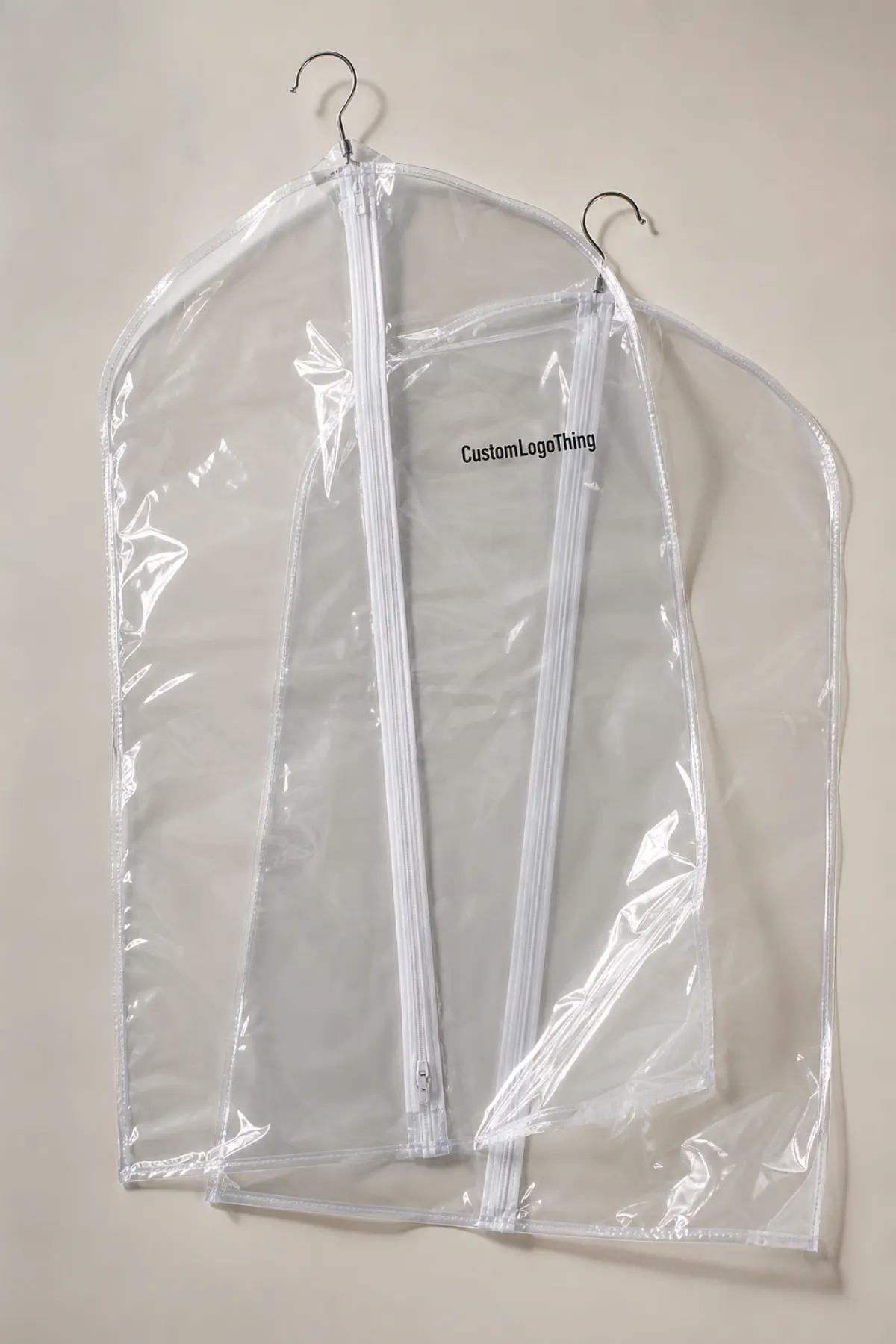
Start with visibility and fit. Hold the sample in daylight and under the lighting used in store or photography. Clear film can shift from crisp to slightly dull depending on the light, and that difference matters when the garment inside is supposed to look premium. Then load the actual product, not a substitute. A tee, knit, blazer, and long coat each stress the bag differently.
Check whether the opening is wide enough, whether the bag recovers after filling, and whether the closure stays aligned once the garment is inside. If the film whites out, the hole stretches, or the closure peels after repeated handling, the sample is not ready. A clear bag should protect the garment without fighting the operator.
- Fit: The garment should enter without forcing the seam or overstretching the film.
- Clarity: Look for haze bands, cloudy patches, and surface scuffing.
- Closure: Zipper, flap, adhesive strip, or heat seal should close fully and stay closed.
- Hanger hole: Test the exact hanger style planned for production.
- Protection: The bag should block dust and abrasion without trapping excess moisture.
A useful field check is simple: fold the sample the way the packing team will, then load and unload it several times. That shows whether the seam holds, the opening stays usable, and the closure survives repetition. Static and drag also matter; some films cling to fabric or catch on labels and slow packing enough to matter at scale.
A clear bag is honest packaging. If the seal looks weak, everyone sees it.
Visual appeal matters, but the real question is whether the bag works as a repeatable packing tool. If it does not, approval should stop there.
How the sample approval process works from brief to sign-off
The cleanest approvals start with a tight brief. Vague requests create vague samples, which create revision loops. The supplier needs the finished width and height, film gauge, closure type, venting or no venting, hanger style, print placement, and any reinforcement points. A strong brief reads like a production spec because that is what it becomes.
The usual workflow is straightforward. A sample is made, reviewed internally, marked up with measurable notes, revised if needed, and then signed off as the production reference. The fastest cycles happen when one person owns the final decision and all feedback is written against the same version.
- Brief sent: dimensions, material, closure, and artwork are defined.
- Sample made: the factory builds a physical version for inspection.
- Internal review: merchandising, packaging, QA, and operations test it.
- Revision notes: comments include measurements, photos, and a clear decision.
- Final sign-off: the approved sample becomes the production reference.
Notes should be measurable. "Looks off" does not help. "Move the hanger hole 10 mm lower" does. "Widen the opening by 15 mm so the jacket enters without catching the zipper teeth" does. That level of specificity reduces guesswork and keeps the next sample round shorter.
Approval works best when merchandising, QA, and operations each give input, but one owner makes the call. If the team tries to satisfy every preference at once, the final bag often ends up too costly, too slow to pack, or too fragile for production.
Cost, pricing, MOQ, and quote factors that change unit cost
Price is driven by a small set of variables: size, material gauge, closure style, and printing or finishing. Bigger bags use more resin. Zippers and reinforced holes add labor. Logos, special folds, and anti-slip treatment add setup or finishing time. On paper, the quote may look simple; in practice, each choice shifts the unit cost.
MOQ changes pricing because setup is spread across more or fewer pieces. Small runs carry more overhead per unit, especially if tooling or seal settings need adjustment. Larger runs usually lower the unit price, but only if the spec stays frozen after sample approval. Late changes can erase the savings quickly.
| Order tier | Typical unit cost | What it means in practice |
|---|---|---|
| 1,000 pcs | $0.26-$0.50 | Higher setup burden; useful for launch testing or small drops |
| 5,000 pcs | $0.15-$0.30 | Often the practical middle ground for apparel brands |
| 20,000 pcs | $0.09-$0.18 | Better pricing, but only if the spec stays stable |
Those ranges assume a basic Clear Garment Bag with a common closure and no heavy decoration. Thicker film, custom printing, recycled content, special finishes, or unusual sizing can raise the quote. Sample fees and freight are separate line items and should be treated that way from the start.
There is also a tradeoff between clarity and price. Some lower-cost films look slightly hazy under bright light, especially against white garments. Cleaner films usually cost more but can support a better retail presentation. That distinction matters more for premium apparel than for warehouse-only use.
For outside reference on packaging testing, the ISTA standards are useful: ISTA packaging testing standards. If a paper insert or header card is part of the packout, FSC-certified paper can support sourcing documentation: FSC certification.
Timeline and lead time: what to expect before production starts
Lead time includes sample development, internal review, revision, sign-off, and production booking. The approval stage is often the slowest part because it depends on the brand's response time, not only the factory's speed. If the right reviewer is unavailable, the order stalls even when the supplier is ready.
A realistic schedule usually looks like this:
- Sample development: 5-10 business days for standard requests, longer for custom sizes or printed bags.
- Internal review: 2-5 business days if the right people are available.
- Revision round: 4-7 business days depending on the change list.
- Production after sign-off: 12-20 business days for a straightforward run.
Special closures, custom hang features, and branding usually add time. So do late-stage changes. A small adjustment can still require re-cutting, new settings, or another sample. Seasonal peaks such as back-to-school and holiday also stretch factory schedules, so it is safer to build extra time into the plan than to rush a sign-off.
Production lead time and freight lead time are different clocks. A bag can finish on time and still arrive late if shipping space is tight or paperwork is delayed. Brands that track both schedules tend to avoid surprises.
Material clarity, thickness, and finishing specs that affect approval
Clear Garment Bags are commonly made from PE, EVA blends, or PVC, and each behaves differently. PE is often softer and more economical. PVC can look very clear but may feel stiffer or behave differently in storage and colder environments. The right choice depends on how the bag will be used, stored, and displayed.
Thickness is the next tradeoff. Too thin, and the bag splits at the seam or tears during handling. Too thick, and it becomes bulky, hard to fold, and more expensive than necessary. For many apparel programs, the useful range lands around 40-100 microns, or roughly 1.6-4 mil, but the final spec should follow garment weight and packout method.
Finishing details can affect approval as much as the base film. Sharp edge trim can catch on fabric. A weak heat seal can peel after repeated handling. Reinforced hanger holes reduce tearing when the bag is lifted by the hanger, one of the most common stress points in use. Venting may help certain packed goods, while a fully closed bag can be better for dust control.
Surface treatment also matters. Some clear films have anti-slip characteristics so the garment stays in place during insertion. Some recycled-content films show more speckling, scent, or small visual variation. Those traits are not automatically bad, but they should be accepted knowingly, not discovered after the order ships.
If bags will move through cartons, pallets, or overseas transport, ask how they behave when compressed. A bag that looks perfect on a table may still crease heavily in bulk shipping. That is where sample approval should borrow from testing discipline, not just visual preference.
Common approval mistakes apparel brands keep making
The first mistake is approving from photos alone. Photos help document the sample, but they do not replace hands-on review. A bag can look straight in a picture and still feel awkward in use, especially if the closure is stiff or the film waves under handling.
The second mistake is ignoring the packing line. If workers have to fight the bag open, the line slows. If the opening collapses around the garment, folding gets messy. If the hanger hole sits too high or too low, the garment hangs badly in store. Small errors compound when they are repeated hundreds or thousands of times.
The third mistake is version drift. A sample gets approved, then a revised measurement lives in email, then another note says to keep the original size. The factory will follow the clearest instruction it has, which is not always the one the brand intended.
The fourth mistake is too many decision makers and no final owner. One team wants more clarity, another wants lower cost, and someone else wants a thicker film. Without one person accountable for the outcome, the sample review becomes a compromise that solves nothing.
The fifth mistake is comparing samples under different conditions. A bag judged empty is not the same as a bag judged with a heavy coat inside. A sample inspected on one hanger may behave differently on another. Even carton count matters, because a bag that looks fine in a small stack may crease when packed at volume.
"Close enough" is how brands buy rework.
Most of these errors are avoidable. They happen because teams move fast, not because anyone is careless. A written process removes some of the guesswork and makes the result easier to repeat on the next order.
Next steps: build a cleaner approval workflow before ordering
The best next move is a one-page checklist that covers fit, clarity, closure, hanger hole, packing behavior, and labeling. Keep it short enough that people will use it. Only ask for changes that can be measured, and keep one signed reference sample with the date, film spec, closure type, and revision notes attached.
Request pricing by MOQ tier before you commit to an order size. That makes the gap between 1,000, 5,000, and 20,000 pieces visible and helps the team judge whether the cheaper unit cost is worth the tradeoff. If a revision is likely, budget for it early rather than treating sample fees and freight as afterthoughts.
The goal is repeatability. A clear approval process keeps the bag consistent across reorders, which is where many packaging programs quietly break down.
What should a clear garment bag sample include before approval?
The sample should match the final size, material gauge, closure style, and hanger format. It should be tested with the actual garment, not just checked empty. If printing, venting, or reinforcement will be part of production, those details should appear on the sample too.
How many sample rounds are normal for apparel brands?
One round is ideal, but two rounds is common when the bag has custom sizing or branding. If the first sample misses fit, seal performance, or hang behavior, plan on a revision. More decision makers usually mean more comments and another round.
What drives the price of clear garment bags the most?
Material gauge, bag dimensions, and closure style are the biggest unit-cost drivers. Custom printing, special finishes, and lower MOQ levels can raise the quote quickly. Sample charges and freight should also be counted, especially when revisions are likely.
How long does sample approval usually take for garment bags?
Simple samples can move quickly, but custom specifications usually add extra turnaround time. Add time for internal review, revision requests, and sign-off across teams. Seasonal production windows can stretch the schedule further because factories are already booked.
Can I approve a sample if the size is close but not exact?
Only if the difference does not affect fit, sealing, or packing speed. For retail display or shipping use, small dimensional errors can become real problems. Best practice is to approve only when the sample matches the final spec or the deviation is formally accepted in writing.


