Clear Garment Bags wholesale Pricing for Retail packaging managers gets complicated fast because the lowest quote is rarely the lowest total cost. Thin film, poor clarity, weak seals, or a size mismatch can create rebagging labor, presentation issues, and avoidable waste. For retail teams, the real goal is not the cheapest bag on paper. It is the bag that protects the garment, fits the workflow, and still looks clean on the rack.
That is why buyers should compare landed cost, not just unit price. A bag that ships efficiently, matches the SKU, and passes inspection will usually outperform a bargain option that needs extra handling or generates complaints later. The best program is the one that stays consistent when the first carton opens and when the reorder arrives.
Why the cheapest clear bag usually costs more
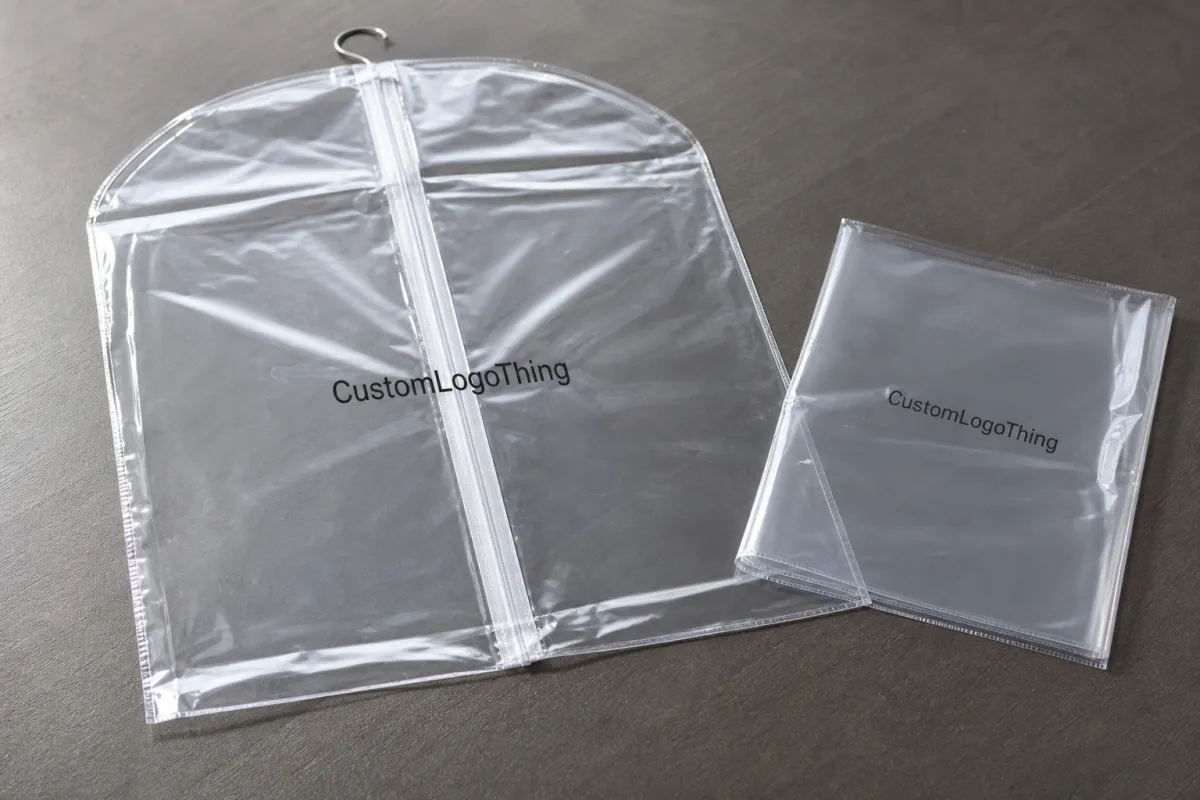
Retail buyers quickly learn that a low per-unit price can hide higher labor and replacement costs. A bargain sleeve may scuff, cloud under store lights, cling to fabric, or split at the seam during unpacking. Each failure creates a small delay; across a full run, those delays become real money.
Bag size also affects the budget. If the film is too wide, the order ships extra air and wastes freight cube. If it is too narrow, the garment presses against the film and loses the tidy presentation that helps it sell. Even a small dimensional miss can repeat across thousands of units.
Clarity matters as much as strength. A bag can be technically transparent and still look hazy or overly glossy in a bright retail environment. That is a problem for shirts, dresses, blazers, and occasionwear where the package is part of the display. If the bag distracts from the product, the spec needs work.
The best clear bag is the one nobody notices: it fits, hangs straight, and disappears behind the product.
Programs that include cartons, tags, or inserts should keep all packaging specs aligned. The same discipline that prevents oversized cartons should prevent oversized garment bags. That kind of consistency is easier to manage through Custom Packaging Products or repeat programs under Wholesale Programs.
Film, closure, and hanger options for retail apparel
Most Clear Garment Bags are made from LDPE, CPP, or a mixed-film construction. LDPE is flexible, quiet, and usually the lowest-cost option. CPP tends to run clearer and feel more premium, but it usually costs more. Mixed-film bags sit between those choices when a buyer wants better clarity without moving into the highest price tier.
Closure style affects both protection and workflow. Zipper closures work well for reusable presentation or store-to-store movement. Flap closures are common when the bag needs to protect a garment but still fold flat. Sealed sleeves are usually the most economical for warehouse bagging and straightforward replenishment. Open-top styles fit situations where the garment is hung after packaging or bagged at distribution.
Small structural details matter. Hanger holes need to be centered so the garment hangs straight. Gussets are important for jackets, thick knits, and wide shoulders. Vent holes help release trapped air, and reinforced headers may help in handling-heavy programs. Each feature should earn its cost; none should be specified out of habit.
Stock sizes work when the assortment is stable. Custom dimensions make more sense when the alternative is paying to ship empty space. Oversized packaging quietly increases freight, reduces pallet efficiency, and makes cartons harder to manage. That is not dramatic, just expensive.
Specs to lock before you request samples
Before samples go out, give the supplier real garment dimensions rather than a category label. A “shirt bag” means little without length, shoulder width, folded thickness, and whether the item is hung or folded. If the garment ships on a hanger, include hanger style and hook depth. If it is folded, note the fold sequence and how much room it needs after pressing.
Then define the bag itself. Lock the gauge, clarity target, seal strength, closure type, and any special requirement such as reduced static, better scuff resistance, or slower yellowing. For bags used under intense lighting, haze and surface finish matter. For bags moving through distribution centers, edge strength and seal integrity usually matter more. Clear expectations up front reduce sample churn and shorten the quote cycle.
Case pack, inner pack, and pallet count should be part of the first conversation. A low unit price is less useful if cartons are packed in a way that forces hand repacking. If print is involved, define the artwork zone, color count, and any barcode or size marker placement before the proof stage. Even a small printed area can affect layout, cost, and lead time.
If the bag must be recyclable, phthalate-free, or aligned with a sustainability policy, say so early. The same applies to testing language. ISTA protocols are useful for transit testing, and ASTM film tests can help define strength expectations. For paper-based components in the same packaging program, FSC certification may matter. See ISTA and FSC for the standards language many teams use when writing specs.
Clear garment bags wholesale pricing for retail packaging managers
Clear Garment Bags wholesale pricing for retail packaging managers usually moves on five variables: film gauge, custom sizing, closure style, printing, and order volume. Thicker film costs more because it uses more resin and feels firmer. Larger dimensions increase material usage and shipping cube. Add zippers, headers, or custom vents and the price rises again.
MOQ depends on what is custom. Stock-style clear bags often start in the low thousands. Custom widths, specialty film blends, and printed programs usually push the minimum higher because the line must be set up around a specific spec. Buyers should ask whether MOQ is tied to size, SKU, or total case count, since those are not interchangeable.
| Option | Typical use | Relative price impact | Buyer note |
|---|---|---|---|
| LDPE stock sleeve | Basic hanging or folded apparel | Lowest | Best fit for steady SKUs and simple replenishment |
| CPP or mixed-film bag | Clearer presentation for retail display | Moderate | Better clarity and a firmer hand, usually at a higher cost |
| Zip closure bag | Reusable or premium presentation | Moderate to high | Worth paying for only if the workflow actually uses the zipper |
| Custom size with print | Programmed retail packaging | Highest | Best for consistency, branding, and long-run control |
Freight can outweigh a small unit-price difference because clear bags ship as bulky cube. A quote that is ten cents cheaper per unit can still lose once pallet efficiency, repacking, and the shipping lane are included. Ask for sample costs, tooling, freight terms, and repeat-order pricing in one view so the first order and the reorder can be compared fairly.
The most useful quote is the one that survives a second purchase. For packaging managers, stability matters more than a number built on assumptions. That is true whether the bags sit alone or inside a broader budget that includes cartons, hang tags, and custom printed boxes.
Production steps and lead time from proof to delivery
A clean order usually follows a predictable path: quote, spec check, artwork or dieline review, sample approval, production, inspection, and shipping. Delays usually show up when one step gets skipped. If a buyer approves a proof without checking hanger-hole placement or seal orientation, the mistake gets locked into production.
Lead time depends on what the bag needs. Stock-run orders can move faster than custom film or printed jobs. After approval, many runs ship in roughly two to four weeks if material is available and the spec is straightforward. Custom extrusion, color matching, heavy seasonal demand, and freight booking can extend that timeline.
Ask for both a dock date and a delivery estimate. Transit time is separate from production time, and it changes by lane and carton volume. If stores need product in waves, split shipments can be easier to manage than one large drop. Rush orders are possible, but only when the spec is simple, the film is in stock, and the artwork is already approved.
Retail-facing quality checks that keep apparel presentable
Clear bags are judged under store lighting, not only in a sample room. Transparency, gloss, stiffness, and odor all matter. If the film looks cloudy, a good garment can appear worn. If the bag is too soft, it collapses on the rack. If it is too rigid, it can fight the hanger and create a bad silhouette.
Start with seal consistency and edge trim. Uneven trimming creates snag points, and weak seals split during handling. Hole placement should be centered and repeatable so the bag hangs straight. If one lot twists and the next hangs cleanly, the tolerance problem will likely return on reorder.
Also check for dust, smell, and lot-to-lot variation. Store teams notice those issues quickly. A pre-production sample should be approved against a written spec, and incoming inspection should catch defects before cartons are released. A simple checklist is usually enough:
- Verify dimensions against the approved sample.
- Check clarity, haze, and surface scuffing under bright light.
- Confirm case pack and inner pack counts.
- Inspect hanger-hole placement and seal quality.
- Spot-check the first carton from each lot before release.
For sustainability-sensitive programs, ask how resin content and packaging waste are documented. Recycling claims should be checked against market-specific guidance, not assumed from a broad label. Clear film is not handled the same way in every region, so local rules matter more than a general claim. For reference, the EPA recycling resources are a useful starting point.
Why packaging managers stick with one supplier
Packaging managers stay with a supplier for consistency. The dimensions hold, the film weight stays steady, the closure performs the same way on reorder, and the team does not have to explain the spec from scratch every quarter. That stability saves time and reduces the risk of small changes becoming costly over a season.
Readable quotes also help. Buyers do not need glossy sales copy. They need the MOQ, lead time, freight assumptions, and repeat-order pricing stated plainly. If a supplier can provide that without forcing extra back-and-forth, the internal review is easier and the order moves faster.
Inventory planning matters too. Retail often needs staggered replenishment rather than one large delivery. Split shipments, carton labeling, and predictable substitutions can keep inventory moving without overcommitting stock. That is especially useful when one team manages both branded packaging and functional protection across multiple lines.
Next steps for a cleaner, faster wholesale order
Start with the SKU list, garment dimensions, hanger style, and monthly forecast. If those numbers are not ready yet, get them before asking for pricing. Clear Garment Bags are easy to misbuy when the request is based on a rough guess instead of a real spec.
Ask for two or three samples so the team can compare fit, clarity, and handling in hand rather than through a screen. Then request a landed-cost quote that includes freight, case pack, lead time, and reorder assumptions. If the supplier cannot quote the repeat order clearly, the program is not fully defined yet.
If the bag is part of a wider packaging system, keep it aligned with the rest of the line. Hang tags, inserts, cartons, and outer packaging should follow the same logic instead of drifting into separate habits. That is how retail packaging stays consistent without turning every purchase into a reinvention. For a better buying brief, spell out the lane, volume, closure type, and deadline, then compare the quotes on the same basis.
What changes clear garment bag wholesale pricing the most?
Film gauge, custom sizing, and closure style usually move price first. Printing, hanger-hole reinforcement, and special finishes add cost quickly. Freight and packing density can outweigh a small unit-price difference, especially on bulky clear bags.
What MOQ is normal for clear garment bags wholesale orders?
Stock-style bags often start in the low thousands of units. Custom widths, print, or specialty film usually require a higher first run. Ask whether the MOQ is by size, by SKU, or by total case count, because those rules are not interchangeable.
What specs should I send for an accurate quote?
Send garment dimensions, hanger style, and whether the item is folded or hung. Include target quantity, ship-to ZIP code, and any required case pack. Add clarity, gauge, closure, and compliance needs so the quote is usable on the first pass.
How long does production usually take after approval?
Simple stock-run orders can move faster than custom film or print jobs. After approval, many runs ship in roughly 2 to 4 weeks, depending on factory load. Transit time is separate, so ask for both a dock date and a delivery estimate.
How do I compare quotes without getting fooled by a low unit price?
Compare landed cost, not just per-bag price. Check sample fees, tooling, freight terms, and repeat-order pricing. Verify quality consistency, because cheap bags that fail in stores are not cheap.


