A clear garment bag can look like a commodity and still create expensive problems. The Clear Garment Bags unit cost breakdown for apparel brands is not just a price-per-piece exercise. Once damage, repacking labor, freight cube, and presentation quality are included, the lowest factory quote is often not the cheapest option.
Garment packaging sits between protection and operations. The same bag that keeps a dress dust-free can also slow a warehouse line if it tears, clouds over, or arrives with inconsistent dimensions. Buyers usually see the real cost only after the first shipment lands.
The right question is not only what the bag costs, but what it does to the garment, the handling speed, and the finished presentation. That is where unit cost, landed cost, and cost per use start to diverge.
Why clear garment bags can look cheap but cost more per use
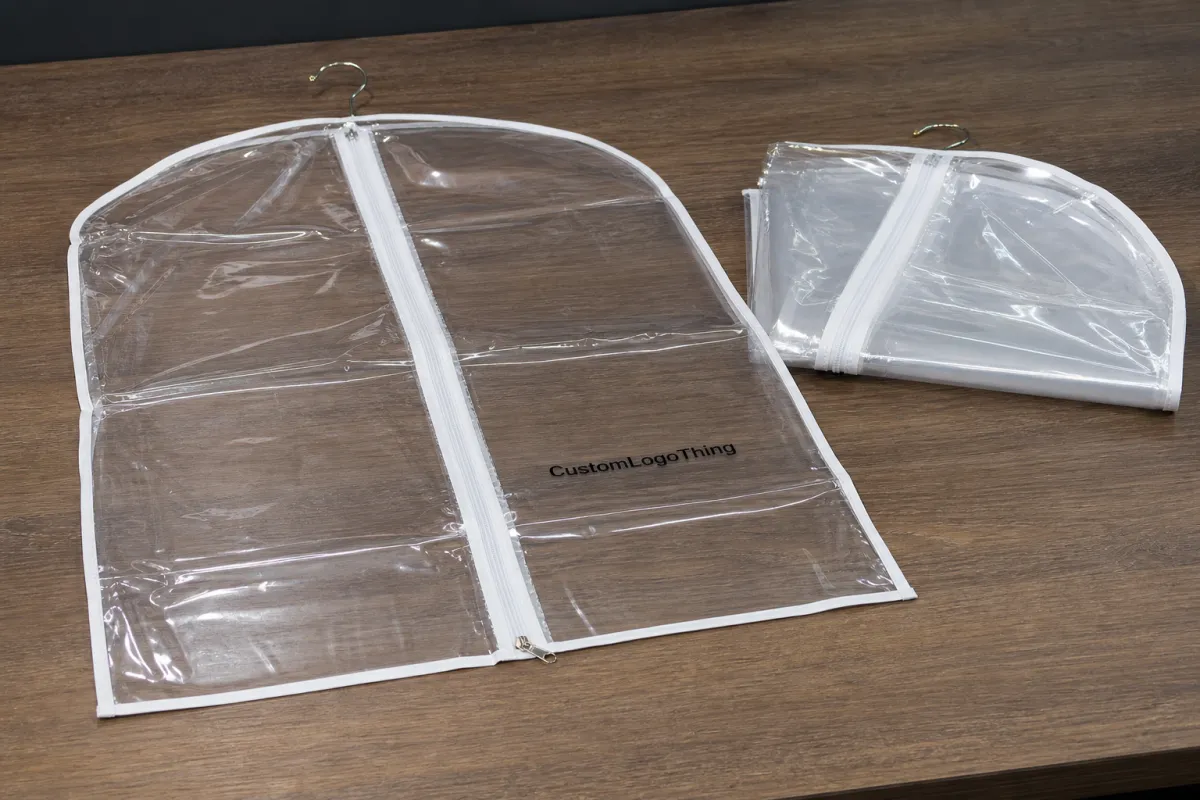
Clear bags seem simple on paper. They protect the garment, keep it visible, and help staff identify size or style at a glance. If any of those jobs fail, the bag is no longer inexpensive.
A thinner film may save a fraction of a cent, but it can increase tears during hanging, scuffing in transit, and repacking when cartons are opened more than once. Those costs do not show up on the quote. They appear later as labor hours, inventory delays, and complaints about product condition.
The effect is strongest for premium basics, outerwear, formalwear, and e-commerce fulfillment. If a small upgrade lowers damage on a high-value garment, it can be a rational trade. If a weak bag slows pick-and-pack because workers must replace split covers, the hidden cost can exceed the packaging line item in a busy week.
Clear bags also affect how product looks in storage and on the rack. A bag that stays flat, clear, and consistent signals control. One that is cloudy, warped, or cut unevenly makes even strong product look underfinished. That matters when inventory moves between wholesale, storage, and direct-to-consumer channels.
For apparel teams, the useful comparison is landed cost plus handling cost, not just invoice price. If a better bag cuts rework, lowers damage, or improves storage density, the higher unit cost may reduce overall spend.
Product details that change protection, fit, and shelf life
Material choice drives most of the performance difference. LDPE is common because it is flexible, clear, and usually the most cost-efficient option. CPP is stiffer and often gives a cleaner presentation for hanging or folded garments. Blended films sit between the two and balance clarity, noise, and stiffness. The right material depends on whether the bag is for transport, retail display, or long-term storage.
Gauge matters just as much. Moving from 0.8 mil to 1.25 mil can make a bag feel noticeably stronger, but it also raises resin use and weight. Width, length, seal width, and flap style all affect material consumption. Oversized bags waste plastic; bags that are too tight add wrinkling and handling friction.
Several features look optional until something goes wrong. Anti-static treatment helps with synthetics and knits that attract dust or cling during packing. A frosted finish can soften the look for retail display. Reinforced seams matter for heavy coats, embellished pieces, and garments with sharp trims that can cut through lighter film.
Print should also be treated as a functional choice, not only a branding one. Size identifiers, warehouse warnings, barcode windows, and carton labels can be more useful than a logo in distribution. Across thousands of garments, a few seconds saved per piece becomes real labor.
It helps to separate use cases before ordering. A transport bag is not the same as a long-term storage bag, and neither behaves like an in-store protection cover. Paying for a feature that looks upgraded but does not solve the actual problem is one of the easiest ways to inflate cost without improving performance.
If the bags move through parcel networks, ask whether the bag, carton, and outer packaging were tested for handling stress. Many brands reference ISTA protocols when evaluating transit packaging, while FSC is relevant for cartons or inserts that need verified sourcing. Those standards do not decide the bag spec by themselves, but they give procurement a better benchmark than a supplier claim alone.
What drives clear garment bag unit cost
A clear garment bag quote is usually built from resin cost, film gauge, dimensions, seal complexity, print coverage, and order volume. The challenge is that those variables move together. A larger bag consumes more material. A stronger seal adds labor. A printed bag may require setup that matters on a low-volume run.
Resin pricing is the base layer, but film gauge multiplies it quickly. A small size increase can move cost more than a minor print change because the bag uses more raw material per unit. That is why two bags that look similar on a sample board can land in very different price bands once the spec is fixed.
Closure style also changes the quote. Open-top bags are usually the least expensive. Adhesive flaps, zipper closures, and reinforced hang-hole designs cost more, but they can be justified if the garment will be handled often or stored for a long period. Venting, bottom seals, and wider seams add either material or labor, and sometimes both.
| Option | Typical unit cost | Best for | Watch-outs |
|---|---|---|---|
| Thin LDPE, standard size | $0.09-$0.16 | Basic hanging protection, high-volume essentials | Lower tear resistance, lighter presentation |
| Medium-gauge LDPE | $0.13-$0.24 | Retail-ready apparel, moderate handling | Slightly higher resin use and freight weight |
| CPP or blended film | $0.18-$0.34 | Cleaner clarity, stiffer hand feel, shelf presentation | Can rise quickly with print coverage or custom sizing |
| Custom size with print | $0.22-$0.45+ | Brand programs, warehouse labeling, premium assortment | Tooling fees, setup charges, longer approval cycles |
That table is a working range, not a fixed market price. Freight density, carton count, destination, and packing format can push landed cost sharply in either direction. A bag that packs flat and stacks efficiently may cost slightly more at source but save money on cube and pallet space.
Tooling and setup should be separated from unit pricing. If the order needs a custom die, punched hanger slot, special print, or nonstandard seal pattern, there may be one-time charges that should be spread across the run before anyone compares quotes. A number that looks competitive at first glance can become ordinary once setup is allocated properly.
For that reason, the Clear Garment Bags unit cost breakdown for apparel brands should compare identical specifications only: same dimensions, same gauge, same closure, and same print coverage. Otherwise the lower quote may simply reflect a lighter bag or a stripped-down feature set.
Pricing, MOQ, and quote inputs buyers should prepare
The fastest way to get a useful quote is to send a complete spec sheet. The must-have inputs are straightforward:
- Bag dimensions, including width, length, and any flap allowance
- Film type and gauge
- Closure style: open top, adhesive flap, zipper, or other
- Print requirements, including color count and placement
- Carton pack-out and target units per case
- Destination, shipping terms, and expected order volume
- Whether sample approval is required before production
MOQ reflects manufacturing efficiency, not a random barrier. Smaller orders usually carry a higher unit price because setup time, resin planning, and carton packing are spread across fewer pieces. As volume rises, bulk pricing usually improves in steps rather than smoothly. A 5,000-piece order and a 20,000-piece order can sit in very different price bands even when the spec is unchanged.
For printed bags, ask whether plate or cylinder charges apply. Those are the classic tooling fees. They can be modest on a large run and painful on a pilot order. The same is true for artwork changes after proofing. A clean file in the right format often avoids a second round of setup charges and shortens the approval chain.
The most useful pricing request is a side-by-side quote at three quantities: test order, replenishment order, and planned annual buy. That structure shows the break point where price per piece begins to flatten. It also helps a brand decide whether to place one larger production run or keep inventory lighter and reorder more often.
Good suppliers can quote apples-to-apples if the spec sheet is precise. If a quote says "standard clear bag" or "similar thickness," push back. Those words can hide changes in gauge, film blend, seal quality, or pack-out. Without a full spec, the comparison is mostly noise.
Process, timeline, and lead time from sample to shipment
The ordering path usually follows the same sequence: RFQ, spec confirmation, sample approval, production scheduling, inspection, packing, and freight booking. The Clear Garment Bags unit cost breakdown for apparel brands matters here because time and cost often move together. The more custom the bag, the more room the schedule needs for proofing and adjustment.
Standard clear bags without print usually move faster than custom sizes or branded versions. Once artwork, special film, or unusual dimensions enter the order, lead time stretches. A straightforward job may finish production in roughly 12-15 business days after proof approval. More complex orders can run longer depending on machine availability, packing requirements, and how quickly the buyer approves the sample.
Artwork corrections are one of the most common delay points. Late dimension changes are another. If the file needs cleanup or the bag size changes after sampling, the clock often resets. A technical spec sheet prevents more delays than a polished presentation deck.
Sampling deserves real attention. A clear bag can look correct on screen and still fail in hand because the flap sits poorly, the gauge feels too soft, or the fit is off by an inch. Requesting a production sample or pre-production proof is worth the time, especially if the order includes print or a new format. A small delay here is cheaper than a warehouse issue later.
For first runs, add a buffer. Reorders usually move more smoothly because the spec has already been approved and the supplier knows the carton pattern. That is the practical value of doing the first order carefully. Once the format is stable, procurement gets easier to forecast and the unit cost becomes easier to defend internally.
Next steps for comparing quotes and locking the right spec
Start with the failure point, not the invoice. Count monthly usage, note whether the issue is fit, clarity, strength, or handling speed, and identify where the bag currently breaks down. Then send one clean RFQ to each supplier using the same dimensions, gauge, closure style, print detail, carton pack-out, and destination. That is the only way the comparison stays honest.
Then compare more than the total. Look at film clarity, seal strength, carton count, freight method, and how closely the sample matches the intended use case. A quote that saves a few cents but creates repacking labor is not a win. A stronger bag that cuts damage and speeds handling can pay for itself quickly.
One practical check is to compare the supplier's quoted gauge against the finished feel of the sample. Another is to inspect the seal line under light, because weak seals often reveal themselves there first. Buyers who run a quick incoming inspection on the first carton lot usually catch problems before they spread through the warehouse.
Practical rule: use the clear garment bags Unit Cost Breakdown for apparel brands as the baseline, then choose the spec that protects garments, keeps handling fast, and stays consistent on reorder. If two quotes are close, the one with better repeatability is often the cheaper option in real operations.
The goal is not the thinnest bag or the longest spec sheet. The goal is the lowest actual cost per shipment. For most apparel programs, that is the difference between packaging that supports margin and packaging that quietly drains it.
Frequently asked questions
What is the usual clear garment bag unit cost for apparel brands?
There is no single standard number because price changes with film gauge, size, closure style, print, and order volume. A practical quote might land around $0.09-$0.34 per piece for common clear formats, with custom printed versions running higher. The best comparison uses identical specs, because even a small material change can move unit cost quickly. Higher MOQ usually lowers the price per bag, but freight and setup charges still need to be included in landed cost.
How does MOQ affect clear garment bag pricing for apparel brands?
MOQ affects setup efficiency, resin planning, and carton packing, which is why smaller orders usually carry a higher unit price. As volume rises, the price per bag often drops in steps rather than gradually. Buyers should ask for pricing at multiple quantities so they can see the break point between test orders and replenishment runs. That is where bulk pricing becomes meaningful.
Which specs matter most when ordering clear garment bags in bulk?
Start with dimensions, gauge, material type, and closure style, because those specs drive fit and protection. Then decide whether print, venting, anti-static treatment, or extra seam strength is actually needed for the garment type. The best spec is the one that prevents damage and repacking without paying for features the product will never use.
How long does clear garment bag production usually take?
Standard orders usually move faster than custom printed or nonstandard-size bags. Sampling, artwork approval, and freight booking are the most common schedule risks. A clear spec sheet and final artwork can shorten turnaround significantly, while late changes often add several business days. For first runs, it is smart to build in extra time.
What should I send to get an accurate quote for clear garment bags?
Send the bag dimensions, material preference, film gauge, closure style, print details, carton count, and destination. Include your target quantity and any sample requirements so the supplier can quote setup charges and unit costs correctly. If you want apples-to-apples pricing, ask every supplier to quote the exact same spec sheet.

