Conference kits look straightforward until they reach the registration table. Badges arrive loose, sponsor inserts drift around, handouts get bent, and volunteers start sorting pieces by hand while attendees wait. That is why Clear Resealable Poly Bags for conference planners moq planning deserves attention early, not after the print order is already locked. The bag is not decoration. It is the thing that keeps the kit organized, visible, and easy to handle.
The usual mistake is simple. Planners count attendees, pick a bag size that seems close, and hope the contents fit once everything is printed. Hope is not a specification. A packet that works for a one-page agenda can fail the moment a lanyard, folded brochure, sticker sheet, or sponsor card gets added. Then the team buys too much, repacks at the last minute, or places a second order no one wanted.
Why conference kits fail without the right bag format
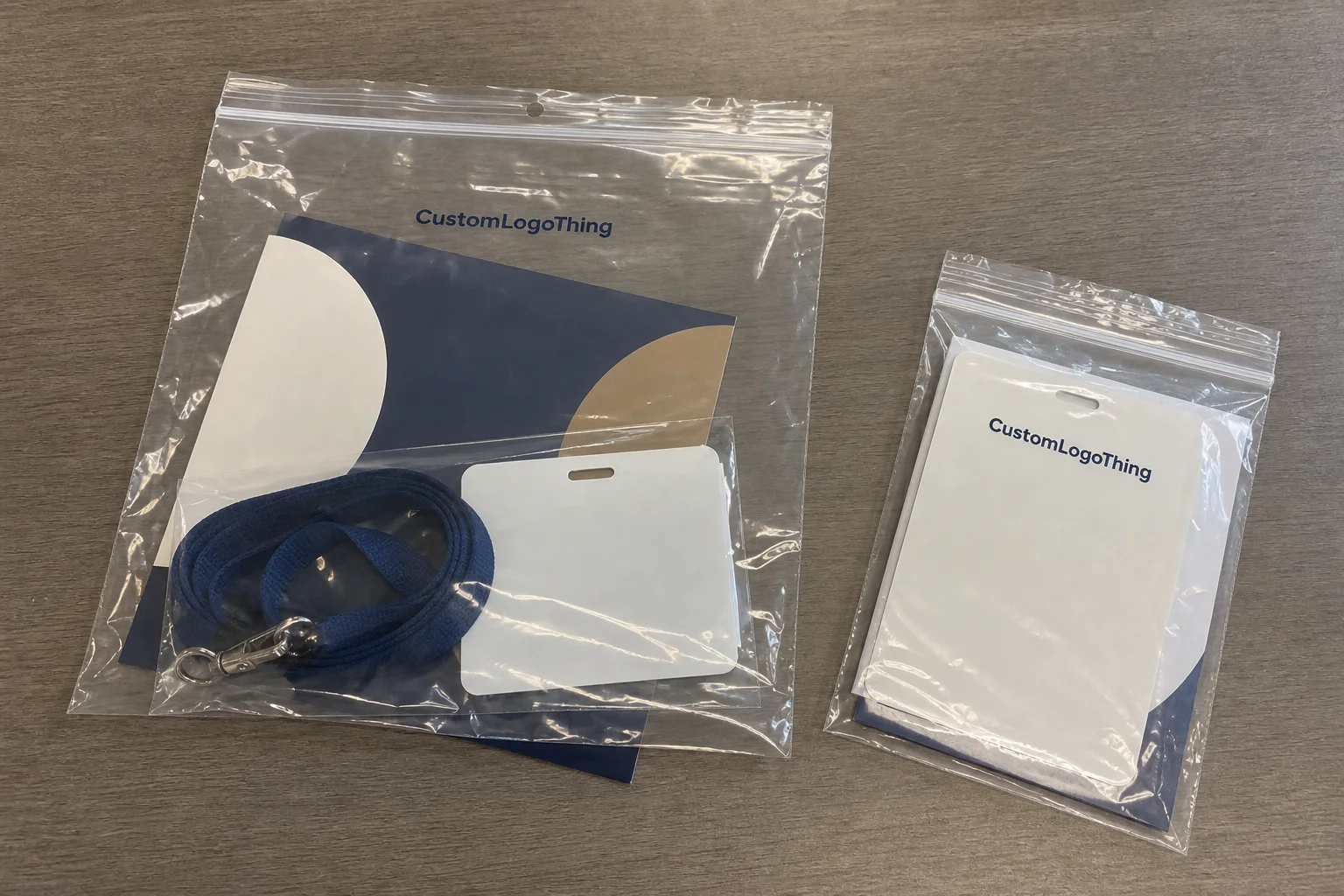
The expensive problems in conference packaging are usually small and repetitive. A kit that should take 30 seconds to assemble takes two minutes because the contents do not sit flat. A bag that cannot be reopened cleanly forces staff to throw away test packs. A loose stack of materials looks sloppy even if the design budget was healthy.
Clear resealable bags solve one specific operational problem: they let people see what is inside without opening the package. That matters at check-in, in storage bins, and during inventory counts. A volunteer can verify contents at a glance instead of tearing open random packets to figure out what was packed. That saves time, and at events, time is usually more valuable than the bag itself.
Paper envelopes and folders still have a place, but they are less forgiving. Paper tears, absorbs moisture, and adds bulk. Rigid folders protect presentation better, but they cost more and occupy more shipping space. For most conference planners, the goal is not luxury. The goal is repeatability. The packet should pack the same way every time and survive the same handling every time.
The best event packaging is the packaging nobody has to explain. If the kit can be checked, counted, and closed again without drama, the registration flow gets easier.
That also explains why over-ordering happens so often. If planners are unsure about fit, they add safety stock. If they are unsure about attendance, they add more. If the closure seems fragile, they switch styles and order a second version “just in case.” Each unknown drives up spend and leaves extra inventory behind. A tighter spec process keeps the order aligned with real use.
If the kit includes multiple components, the bag decision should happen beside the content list, not after it. A supplier can help with format guidance, but only if the planner knows the final contents and the handling method. That is the difference between a clean production run and a pile of almost-right parts.
What clear resealable poly bags do for event packaging
Conference packets are rarely one-size-fits-all. One track may need a single agenda and badge holder. Another may include a notebook, expo map, and three sponsor leaflets. Clear Resealable Poly Bags work well because they flex without collapsing, assuming the gauge and size are chosen with the actual contents in mind.
Common uses include welcome packets, exhibitor handouts, speaker kits, raffle inserts, apparel accessories, and small promotional samples. They also work for separated content streams: VIP kits, press kits, staff materials, and late-registration packets. When the bag is clear, team members can sort those streams quickly in storage and during setup. No guesswork. No opening every packet to check the contents.
The resealable closure is the other real advantage. A staff member can open the bag, verify the kit, add a late insert, and close it again without replacing the package. That saves labor and cuts waste. If a sponsor asset shows up late or a speaker changes slides and needs a fresh handout, the kit can be updated without rebuilding the whole package from scratch.
There is also an inventory-control benefit that gets overlooked. Clear bags make it easier to audit what is packed and what is missing. That matters when temporary staff or volunteers are assembling hundreds or thousands of kits. A visual check beats opening random packets and discovering, halfway through the process, that the badge lanyards were packed in the wrong box.
Compared with paper envelopes, clear poly offers better moisture resistance and better visibility. Compared with rigid folders, it ships flatter and usually costs less per unit. That lower bulk can reduce freight and carton count. On a 5,000-piece order, small changes in carton efficiency can affect both handling time and shipping cost. The packaging looks minor. The bill does not.
Many planners also use inserts, labels, or sponsor cards for branding while keeping the outer package transparent. That keeps the bag itself simple and helps control cost per piece. It also avoids the common mistake of making the outer package do too much work. Let the insert carry the design. Let the bag do the holding.
For planners building a packaging baseline across different event items, broader product catalogs can help compare formats, but the bag decision still needs to be tied to the kit contents and assembly process.
Material, closure, and size specifications to compare
Not all clear poly bags behave the same way. Material, thickness, closure style, and exact dimensions all change how the bag performs in a conference environment. The right spec depends on what goes inside, how often staff will handle it, and whether the kit needs to survive shipping before it reaches the registration table.
Most buyers start with low-density polyethylene because it balances clarity, flexibility, and cost. Thickness usually lands somewhere between 1.5 mil and 4 mil for event packaging, though heavier kits may need more. A thinner bag is fine for flat literature. A thicker one is better for mixed contents, apparel accessories, or packets that get opened and closed several times during prep.
Closure choice matters just as much. A zip-style reseal works well when contents may be checked more than once. A press-to-close format is common for quick packing lines. Adhesive flaps are useful when the package should stay shut after final assembly, but they are less convenient if staff need to reopen packets for late changes. For conference operations, resealability usually matters more than a clean first impression that falls apart by day two.
Size should be selected from the thickest finished kit, not from the flat stack of individual pieces. That sounds obvious. It is still where many orders go wrong. A bag may technically fit a brochure set, yet fail once a badge holder, folded program, or lanyard gets added. Leave space for the closure to seal cleanly and account for corners, clips, and bulging items that do not stack neatly.
Spec checks that prevent expensive reorders
- Flat width and usable length: confirm both, not just the advertised size.
- Insert clearance: leave room above the tallest item so the seal closes without strain.
- Seal integrity: test whether the closure stays secure after handling and repacking.
- Edge strength: check for tearing at corners when contents are inserted repeatedly.
- Label compatibility: make sure barcode labels stick cleanly and scan without wrinkles.
For heavier kits or bulk-shipped event materials, ask whether the bag spec has been tested for handling and transport. ISTA and ASTM references can be useful when the packet needs to survive real movement instead of sitting flat in a marketing photo. The point is not to over-engineer a conference bag. The point is to avoid a weak package and a very preventable mess.
Sustainability questions should be practical, not performative. Ask what resin is used, whether the bag fits into your local recycling stream, and whether the supplier can provide material guidance for procurement review. Soft plastics are not accepted everywhere, and planners should not assume the recycling bin solves the problem. For broader waste-reduction guidance, the EPA is a better reference than guesswork.
MOQ, pricing, and unit cost planning for bulk orders
This is where conference buyers either save money or quietly lose it. MOQ affects more than the order quantity. It changes pricing tiers, freight efficiency, storage needs, and how much dead inventory gets left behind after the event. For clear resealable bag sourcing, the real question is not “What is the minimum?” It is “What quantity actually matches the event without forcing waste?”
Minimum order quantity shifts with size, thickness, print requirements, and custom options. A stock clear bag usually has a lower MOQ than a custom-sized version. Add printing or special die lines, and the number climbs because setup and tooling costs have to be spread across the run. That is normal. The mistake is comparing two quotes without making sure they include the same configuration.
Unit cost usually drops as volume rises. That part is predictable. What is less obvious is that a lower unit price does not automatically mean a lower total cost. If the bag is too small, staff waste time forcing inserts inside. If it is too large, materials shift around and the packet looks unfinished. Either way, the hidden cost shows up in labor, repacking, or attendee perception.
| Bag option | Typical MOQ | Indicative unit cost | Best fit | Tradeoff |
|---|---|---|---|---|
| Stock clear resealable bag, standard thickness | 1,000-3,000 | $0.06-$0.12 | Simple literature packets | Less control over exact dimensions |
| Custom-sized clear resealable bag | 5,000-10,000 | $0.10-$0.22 | Mixed-content conference kits | Higher setup charges and longer lead time |
| Heavier-gauge resealable bag | 5,000+ | $0.14-$0.28 | Bulky or repeatedly handled kits | Higher material cost, better durability |
These are working ranges, not promises. Freight, carton count, and packaging format can move the final number. Still, a table like this helps planners compare apples to apples. A quote that looks cheaper may hide the wrong size or an awkward pack count. That is why unit cost and total landed cost should be reviewed together.
A useful pricing sheet should list the following:
- Bag dimensions and thickness
- MOQ and any overage allowance
- Per-bag price at target volume
- Setup charges or tooling fees, if applicable
- Carton counts and freight estimate
- Replacement allowance for damaged or late-added kits
For conference planners, the right order size is usually final attendee count plus a measured buffer. Five to ten percent overage is common when names, sponsor inserts, or VIP invitations may still change. Not every event needs that much. Too little buffer, though, turns into emergency reorders, and emergency reorders are where budget discipline disappears.
Another point: MOQ is not just a number to negotiate down. Sometimes a slightly higher MOQ gives a better pack count, steadier quality, and lower shipping cost per unit. That tradeoff is worth looking at on paper before anyone assumes smaller is smarter. It usually is not.
Process and timeline: from sample approval to delivery
The strongest conference buyers treat packaging as part of the production schedule, not a last-minute accessory. The workflow is simple, but each step can move if the content list changes. Start with a needs review: what is going into the kit, how thick is the finished packet, and who will pack it?
Next comes size selection and sample request. That sample step matters more than people admit. A bag can look fine on paper and still fail in hand if the closure is too stiff, the opening is too narrow, or the finished kit has more bulk than expected. One test-fit can stop a full MOQ from turning into expensive inventory that never closes properly.
After sample review, confirm the final specification: exact dimensions, thickness, closure type, carton quantity, and any print or labeling details. Then the order moves into production. Timing depends on whether the bag is stock or custom, whether printing is involved, and whether the supplier has the material available. Transit time changes with destination and shipping method, so production time alone is not enough.
A realistic planning buffer is not a luxury. It protects the event from three common changes: sponsor content revisions, design corrections, and late registration spikes. Those are ordinary, not exceptional. The only surprise is when planners assume nothing will change.
Stock orders are usually faster than custom configurations, while a custom-sized bag can require additional approval before production starts. Ask for the ship date, not just the production date. That distinction matters because inventory can be made and still not be where you need it when assembly begins. One of those numbers is useful. The other is a comforting fiction.
Event pack materials benefit from the same discipline used in shipping programs: confirm the spec, approve the sample, verify the carton count, and track freight. That sounds procedural because it is. Procedure is what keeps shortages, rework, and overbuying from becoming the same problem in different clothes.
How to choose a supplier that fits event deadlines
A supplier should do more than quote a price. The better partner asks what is inside the kit, how many handling points the bag will face, and whether the order needs to support one registration desk or several. That kind of questioning usually signals better spec discipline. It also tends to produce fewer surprises later, which is the actual goal.
Responsiveness matters. If a supplier takes days to answer a simple size question, that may become a problem once revisions begin. Also check whether material specs, packaging counts, and shipping methods can be provided in writing. The clearer the paperwork, the less room there is for delivery confusion later. Email threads are a poor substitute for a spec sheet.
Consistency is another quiet requirement. Clear bags should hold gauge consistency, dimensional accuracy, and seal quality across cartons. If one carton is off, volunteers notice fast. One bag tears, one seal fails, and suddenly the event team spends time policing packaging instead of running registration. No one wants to be the person rebuilding 300 packets at 10 p.m.
Inventory depth matters too. If the conference date is fixed and a reorder is possible, ask whether the supplier can repeat the same spec for the next run. That matters for multi-city programs, annual summits, and events where sponsor kits are replenished in phases. A supplier who can only quote one run and forget the rest is not much help.
My view is plain: the right supplier acts like part of the logistics team. They should talk tradeoffs honestly. If a thicker gauge raises cost but reduces damage, say so. If a smaller custom bag drives up MOQ, explain it without the pitch language. Buyers do not need a performance. They need facts they can use.
Supplier due diligence should also include documentation around material sourcing where relevant. If procurement needs sustainability language for internal review, ask for available certifications and chain-of-custody details. For printed components tied to paper-based inserts, FSC guidance may matter. For the bag itself, the bigger issue is whether the material and end-of-life story make sense for the event audience and local rules.
Next steps for ordering without overbuying
Start with the final pack components, not the bag. Count the badge, agenda, inserts, business cards, apparel item, and any sponsor samples. Then add a realistic overage for errors, damaged packets, and late additions. That sequence prevents the most common mistake: buying for a flat stack instead of a finished kit.
Request quotes on two or three sizes if you are unsure. A slightly larger bag may reduce labor and improve closure reliability. A smaller one may lower freight and unit cost. The best choice is not always the cheapest quote. It is the one that fits the actual kit with the least waste and the fewest assembly problems.
Before approving a supplier, confirm the MOQ, sample timing, production lead time, and freight estimate in one conversation. Split those questions and you end up comparing incomplete numbers. Put them together and the decision gets much clearer. That matters when calendars are tight and sponsors keep sending small revisions that are anything but small.
Create a simple internal spec sheet before contacting the supplier. Include dimensions, closure type, target content weight, pack count per carton, and whether the bag must be opened and reclosed during the event. That sheet gives every quote a common baseline. It also keeps procurement from mixing up packaging formats that look similar but behave very differently in use.
For conference planners who need to source with discipline, Clear Resealable Poly Bags for conference planners moq planning should be treated as a packaging decision tied to labor, timing, and attendee experience. If the bag size, closure, MOQ, and delivery window are aligned before the order goes in, waste drops and the registration process stays moving. That is the real win.
What size clear resealable poly bags work best for conference planner kits?
Choose the bag size based on the thickest finished kit, not the flat stack of pieces. Leave enough clearance for inserts, badges, and small promo items so the closure seals cleanly. A test-fit with one assembled packet is the safest way to avoid a costly mismatch.
How does MOQ affect pricing for resealable poly bags?
Higher MOQs usually lower unit cost because setup and packaging expenses are spread across more bags. Custom sizes and closure styles can increase the minimum order quantity. Match MOQ to realistic attendee counts plus a small overage to avoid extra inventory.
Can these bags be used for reusable conference materials?
Yes, resealable closures make them suitable for materials attendees may open and reuse during a multi-day event. They also help staff inspect contents, add inserts, or repackage kits without replacing the bag. Durability depends on thickness, seal type, and handling.
What should planners confirm before approving a quote?
Confirm exact dimensions, material thickness, closure style, and carton counts. Ask whether sample approval is included before full production. Verify freight timing so the order arrives before assembly and registration.
How far in advance should conference planners order poly bags?
Order as soon as kit contents are finalized to protect against revisions and shipping delays. Leave extra time if the order requires a custom size or non-stock configuration. Build in buffer time for sample review, sponsor changes, and late registration volume.


