When a customer opens a parcel and sees a clean, clear bag holding the product neatly in place, the brand feels more deliberate. Not fancy. Deliberate. That is exactly why Clear Resealable Poly Bags for ecommerce brands material comparison deserves real attention instead of a quick supplier quote and a shrug.
The bag affects presentation, but it also affects packing speed, return handling, dust protection, and how often staff need to touch the product before it ships. In a fulfillment workflow, those small frictions add up. A good bag saves time. A bad one creates tiny annoyances that turn into labor cost and repacking.
Clear resealable bags are common for apparel, accessories, beauty items, sample kits, stationery, and small hardware. They help warehouse teams identify SKUs faster, keep products grouped, and give customers a more polished first impression without adding much weight. The catch is that not all clear bags behave the same. Material choice changes clarity, stiffness, seal performance, and how the bag survives being packed into a mailer or carton.
That is where buyers get into trouble. They compare “clear poly bags” as if that is one product. It is not. A soft polyethylene bag, a stiffer polypropylene-style bag, and a heavier multilayer option can all look similar in a catalog photo and perform very differently once packed, stacked, and shipped.
“A clear bag should protect the product, present it well, and keep the line moving. If it only does one of those things, the brand usually pays for it somewhere else.”
Why Clear Resealable Bags Can Shape the Customer Experience
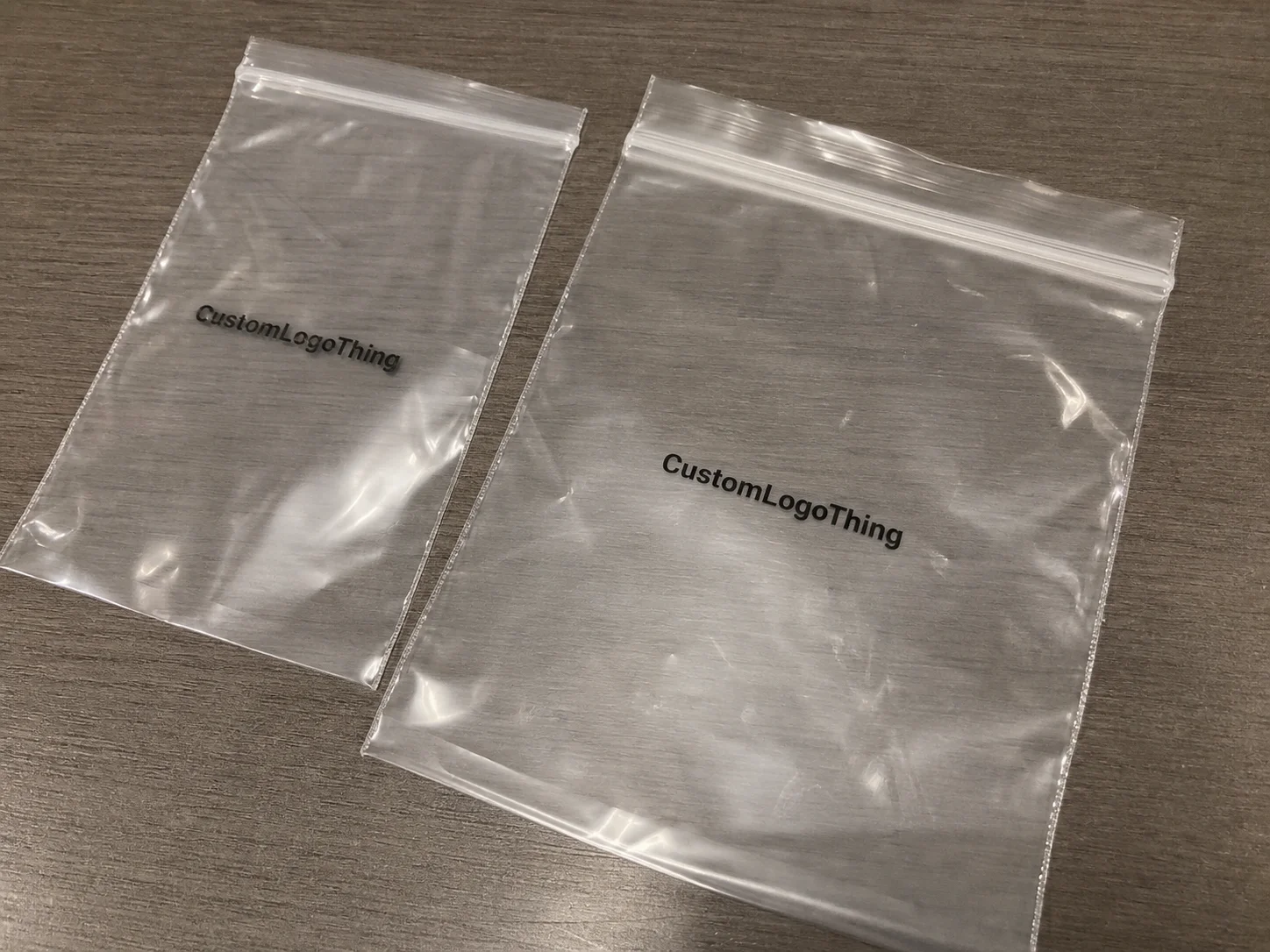
A resealable poly bag is a clear plastic bag with a closure that can be opened and closed again. The common styles are press-to-close zipper bags, slide zipper bags, adhesive flap bags, and tamper-evident versions. Each one changes the customer experience in a slightly different way, and each one creates different expectations for the packing team.
For ecommerce brands, the bag is doing more than holding an item. It protects against dust and scuffing, keeps small components together, and helps staff confirm the contents without opening the package. That matters for returns, inventory checks, kitting, and repacking. A product that can be verified visually is faster to process than one that has to be torn open and identified by guesswork.
Clear packaging also supports the brand presentation inside the box or mailer. If the outer shipper is plain kraft, corrugated cardboard, or a printed mailer, the inner bag still influences how finished the order feels. Not because customers sit around admiring polyethylene. They do not. But they do notice when a product arrives clean, centered, and easy to understand.
The material family matters here. LDPE, LLDPE, and polypropylene-style clear films each have their own feel and performance profile. Some are soft and forgiving. Others are crisper and more rigid. Some handle puncture stress better. Others make the product look cleaner under light. The best choice depends on the product, the outer packaging, and the way the order moves through the warehouse.
There is also a sustainability angle, but buyers need to be realistic about it. A clear bag can be part of a lower-waste system if it reduces damage, repacking, or product loss. It is not automatically “better” just because it is lighter than a tray or box insert. The actual impact depends on resin type, thickness, reuse potential, and whether the rest of the packaging system is doing unnecessary work.
How the Bag Structure and Closure Actually Work
The structure is where packaging performance starts. A mono-layer clear bag is usually the simplest and most economical option. It is often fine for light apparel, inserts, cards, and accessories without sharp edges. A multilayer construction can improve puncture resistance, stiffness, or clarity, but it usually costs more and may complicate recycling claims depending on the exact build.
The closure is just as important as the film. A press-to-close zipper is familiar and easy for customers to reuse. A slide zipper feels more premium and is often easier for people with limited dexterity, although it usually adds cost. An adhesive flap can create a stronger first-close seal and help keep dust out. If opening evidence matters, a tamper-evident closure is the better route.
Seal integrity is where many bags fail in the real world. A bag can feel fine during a quick hand test and still pop open once it is packed tightly into a carton or squeezed by neighboring items. That matters for beauty products, sample kits, folded garments, and small components that push against the seam during transit. If a bag cannot stay closed after repeated handling and vibration, the nice-looking spec sheet is just paperwork.
Testing should reflect the actual shipping path. If a brand ships through parcel networks with compression and drop risk, the closure should be checked under conditions that mimic that journey. That includes loaded pack-outs, carton fit, and some form of transit simulation or at least rough handling. For brands already using industry test protocols, packaging decisions often get paired with standards such as ISTA methods for shipping performance. More information is available at ISTA.
Material feel changes with structure too. Softer LDPE-style bags drape easily and are forgiving during packing. Crisp PP-style films hold shape better and can look more retail-ready, especially when paired with a label or insert. Neither is automatically superior. A high-gloss, stiff bag can look great on paper and still be annoying on a fast line if it is hard to open or seal repeatedly.
- Soft film: easier to fold, load, and reseal
- Crisp film: better structure and a cleaner display feel
- Press-to-close zipper: familiar, reusable, and easy to explain
- Slide zipper: smoother for customers, often at a higher cost
- Adhesive flap: useful for dust resistance and first-open behavior
For brands using recycled-content materials, paper-based inserts, or FSC-certified outer packaging, the bag still needs to work within the rest of the system. A beautiful component that slows packing is not a win. It just looks good while costing money.
Material Comparison: Clarity, Strength, and Brand Presentation
This is the part that usually decides the purchase. The clear resealable Poly Bags for Ecommerce Brands material comparison comes down to the balance between clarity, strength, flexibility, and price. Buyers tend to focus on “clear” as though all clear films are visually identical. They are not. Haze, gloss, scuff resistance, stiffness, and the way the film catches light can change the perceived quality of the entire package.
LDPE is generally the softer, more flexible option. It works well for products that need a forgiving bag and for items that are easy to pack but not especially rigid. It is often a good fit for folded apparel, soft accessories, and inserts. LLDPE usually improves puncture and tear resistance, so it is common when products have corners, when packs are tight, or when the bag will be handled a lot. PP-style clear film tends to be crisper and more rigid, which can improve shelf-like presentation and make the package look cleaner under lighting.
Thickness matters, but not in a simplistic “thicker is better” way. A 1.5 mil bag may be enough for lightweight, low-risk items. A 2.5 to 4 mil bag can make sense for sharper edges, premium products, or repeated customer reuse. Still, more thickness increases material cost and can make the bag stiffer than the workflow wants. If it takes two extra seconds to load each bag, that is real money across a fulfillment run.
| Material | Feel | Typical Strength Profile | Best Fit | Common Tradeoff |
|---|---|---|---|---|
| LDPE | Soft, flexible | Good general durability | Apparel, inserts, light accessories | Less crisp presentation |
| LLDPE | Supple, tougher | Better puncture and tear resistance | Items with corners, kits, mixed products | Can feel less premium than stiffer clear films |
| PP-style clear film | Crisp, rigid | Strong presentation, decent stiffness | Retail-ready display, beauty accessories | Less forgiving in rough packing |
There are other specs that can matter more than the basic material name. Anti-static treatment is useful for electronics and some hardware kits. Recycled-content film may support sustainability goals, but buyers should check whether it affects clarity, seal behavior, or print quality. If the packaging is meant for food-contact use, the supplier should provide the right compliance documentation. No one wants a cute product bag with questionable paperwork.
Clarity is also not the same thing as gloss. A glossy bag can still look hazy. It can also show scuffs more easily. That becomes obvious on premium accessories, cosmetics, and collectible items where customers expect a clean presentation. If the film picks up scratches during packing, the product may look dull even if the bag itself is technically transparent.
The outer packaging matters too. If the shipper is a recycled-content mailer, a kraft paper box, or a corrugated cardboard carton, the inner bag has to work visually and physically inside that system. Buyers should not compare the bag in isolation. The right choice is usually the one that supports the full pack-out without creating friction for warehouse staff or confusion for the customer.
Cost, MOQ, and Unit Pricing Factors Buyers Should Compare
Pricing for clear bags looks simple until the quotes arrive. Then the differences pile up. Resin type, thickness, bag size, closure style, printing, and order quantity all change the price. A plain stock bag and a custom printed version are not competing on the same terms, even if both are called “Clear Resealable Poly Bags.”
MOQ matters because it determines how much inventory a brand has to commit before it knows the spec is right. A smaller MOQ is useful when the bag design is still being tested. Higher volumes can reduce unit cost, but only after the spec is locked and demand is stable. If the packaging is still in its trial phase, a huge order is usually a bad idea dressed up as efficiency.
Typical pricing can vary a lot, but many buyers will see stock simple-format bags around $0.04-$0.12 per unit at larger quantities. Custom sizes, thicker films, heavier gauge zippers, or printed bags can land closer to $0.12-$0.28 per unit or higher, depending on the run size and print coverage. That is not a quote. It is the kind of spread that shows up when specs are compared correctly.
For fair comparison, the quote needs to cover the same dimensions, same mil thickness, same closure type, same print assumptions, and the same quantity break. If freight is included in one quote but not the other, the numbers are not comparable. This sounds obvious. It is still where people get fooled.
- Lower unit price: fine for commodity items, but risky for fragile or premium products
- Mid-range bag: often the sweet spot for clarity, durability, and packing speed
- Premium option: worth it when presentation, reuse, or seal reliability matter more than a low quote
There is also hidden cost in labor and damage. A slightly better bag can cut rework, reduce scuffing, and speed up pack-out. On higher-value SKUs, that can matter more than a few cents saved per unit. Cheap packaging that causes product complaints is not cheap. It is just delayed expense.
If the bag is part of a broader sourcing package that includes outer shippers or other inserts, it helps to evaluate everything together. Some brands split packaging decisions into separate silos and then wonder why the final system feels mismatched. If you are also buying Custom Packaging Products or matching the bag to Custom Poly Mailers, cost it as a set rather than line by line in isolation.
Process and Lead Time: From Spec Sheet to Production Run
The normal workflow starts with the product. Measure the packed dimensions, note the weight, identify sharp edges, and decide how many times the customer will likely open the bag. Then choose the film, the closure, and whether printing is needed. After that comes sampling, proof review, and production.
Sampling is where the real information shows up. A spec sheet can say the bag is easy to close. The sample may tell a different story. Buyers should check zipper feel, opening width, film clarity, scuff resistance, and whether the bag is too stiff to load quickly. If the product includes inserts, tags, or multiple items, the sample should reflect that exact load.
Lead time depends on material availability, bag complexity, print requirements, proof revisions, and shipping method. Stock clear bags can move quickly if inventory is already available. Custom sizes and printed orders usually need more time because of setup and approval. In many cases, a simple stock order may ship within days once inventory is confirmed. Custom production often lands around 10-20 business days after proof approval, though the exact window varies by order size and factory schedule.
Before approving production, procurement teams should check the details that tend to create problems later:
- Dimensions: confirm usable inside space, not just outer size
- Thickness: verify mil spec and tolerance
- Closure: test zipper tension or adhesive bond strength
- Print area: confirm logo placement and bleed
- Packing method: verify the bag works at line speed
- Transit fit: test inside the actual mailer, shipper, or carton
Real-world testing helps more than a polished proof. Load the bag with actual products and inserts. Stack it with neighboring SKUs. Label it. Put it into the same outer packaging it will ship in. A bag that works on a clean desk can behave differently once it is compressed inside corrugated cardboard or shoved into a tight mailer.
Step-by-Step Guide to Choosing the Right Bag for Your Product
Step 1: Define the product risk. A soft t-shirt has a different need than a metal accessory with edges. If the product can puncture packaging, start with a tougher film and a thicker gauge. If the item is smooth and light, do not overbuild the spec just because thicker sounds safer.
Step 2: Decide what the bag is supposed to do. Presentation? Protection? Internal kitting? Customer reuse? The answer changes the closure choice and sometimes the material choice too. A bag meant to be reopened several times should have a closure that still feels reliable after use.
Step 3: Compare closure options based on actual customer behavior. Press-to-close zippers are familiar. Slide zippers feel more refined. Adhesive flaps are better when first-open security matters. If tamper evidence matters, do not settle for a closure that can be opened without showing it.
Step 4: Request samples in sizes close to the real pack-out. Then compare clarity, stiffness, seal feel, and whether the film clouds, scratches, or picks up static. If the product includes inserts, tags, or bundles, test them inside the sample bag rather than imagining the fit.
Step 5: Check warehouse compatibility. Can staff fill it quickly? Can it be labeled cleanly? Does it need a tool to close properly? Fast fulfillment teams care about the seconds here. Pretty packaging that slows labor becomes expensive very quickly.
Step 6: Balance cost against performance. The lowest quote is not the best value if the bag fails in transit or makes the product look less premium than expected. Better decisions usually come from matching the material to the product, the outer packaging, and the way the order actually ships.
If sustainability is part of the brief, ask how the bag fits with the rest of the packaging system. A clear inner bag can still make sense alongside recycled-content mailers, kraft paper inserts, or FSC-certified boxes if it reduces damage and keeps returns manageable. Ask about post-consumer content, resin options, and whether recycled materials affect clarity or sealing. That is a better question than “can we say eco-friendly?” because packaging teams live in the real world, not a marketing deck.
Common Mistakes Ecommerce Brands Make When Comparing Bags
The first mistake is choosing by price alone. A low quote can hide weak closure performance, poor thickness consistency, or a film that looks cloudy once it is packed. The second mistake is ordering a size that only works before inserts, tags, or bundled items are added.
Another common error is confusing gloss with clarity. A bag can be shiny and still look hazy under certain lighting. That matters for cosmetics, collectibles, and premium accessories where presentation affects perceived value. On the other side, some brands over-spec heavy-duty film for very light products, which adds cost without improving the customer experience.
Skipping sample testing is expensive. It is easy to approve a spec and later discover the zipper opens too easily, the bag is hard to close at speed, or the loaded package does not fit well in the outer shipper. If the bag is meant to support reuse, a closure that wears out after a few openings misses the point entirely.
There is also a branding mistake that shows up a lot. The packaging does not match the promise. If the product is positioned as premium, the bag should feel clean and controlled. If the brand claims low waste, the packaging should not look unnecessarily heavy or excessive. The bag does not need to do brand storytelling for you, but it should not fight the message either.
And one more: using supplier language as if it were proof. “High clarity,” “premium grade,” and “extra strong” are not specifications. Ask for actual mil thickness, resin type, closure design, and sample confirmation. Claims are cheap. Film costs money.
Expert Tips and Next Steps for Better Sourcing Decisions
Build a comparison sheet before sending out RFQs. Include size, thickness, material, closure, print coverage, MOQ, unit price, lead time, and sample availability. Once those columns are lined up, the decision gets much easier and the sales talk gets less useful, which is usually a good sign.
Ask every supplier for the same quote basis. Same dimensions. Same mil thickness. Same closure. Same print assumptions. If one quote includes freight and another does not, or one includes tooling and the other does not, the numbers are not comparable.
If possible, test three versions: a value option, a mid-range option, and a premium clarity option. That spread usually shows what the packing team, customer service team, and buyers actually care about. One option may pack faster, another may look better, and a third may hold up best in transit. Side-by-side handling tells you more than a polished PDF ever will.
For fragile, moisture-sensitive, or frequently reopened products, prioritize closure integrity and film durability over visual perfection. A little extra shine is not worth much if the seal fails or the bag tears during fulfillment. For higher-value items, a pilot run is usually worth the spend because it exposes problems before they become customer complaints.
It also helps to compare the bag against the rest of the packaging stack. The inner bag, outer shipper, insert, label, and any recycled-content or biodegradable packaging components should function as one system. If they do not, the order feels assembled instead of designed.
If you are narrowing the shortlist, the practical move is simple: request matched samples and matched quotes, run them through the actual packing workflow, and check fit, seal reliability, clarity, labor speed, and transit performance before you place the order. That is usually enough to avoid expensive surprises and choose a bag that serves the product instead of making life harder for everyone touching it.
For broader packaging context, you can also review our Case Studies to see how different packaging choices are evaluated across product types.
FAQ
What is the best material for clear resealable poly bags for ecommerce brands?
The best material depends on the product. Softer polyethylene films work well when flexibility matters, while stiffer clear films can improve presentation and give the package a more retail-ready look. The real test is clarity, puncture resistance, and how often the bag will be opened and resealed.
How do I compare clear resealable poly bag pricing fairly?
Compare the same size, thickness, closure type, and print requirements across every quote. Then add MOQ, freight, tooling, and any sample charges so you are looking at true landed cost, not just the headline unit price.
Do thicker bags always mean better quality?
Not always. Thicker bags can improve durability, but the right material, seam quality, and closure matter just as much. A bag that is too heavy can raise cost without improving the customer experience or helping the packing line.
How long does production usually take for custom clear resealable bags?
Lead time varies by material availability, customization, proofing, and order size. Stock items are usually faster, while custom sizes or printed bags often take longer because of setup, approval, and production scheduling. A common range for custom runs is around 10-20 business days after proof approval, but that can move.
What should I test before ordering for my ecommerce brand?
Test fit, seal strength, clarity, packing speed, and how the bag performs after repeated opening or transit handling. Use actual products and inserts so the test reflects real fulfillment conditions, not just a clean sample on a desk.


