Why frosted zipper poly bags can improve ecommerce unboxing and fulfillment
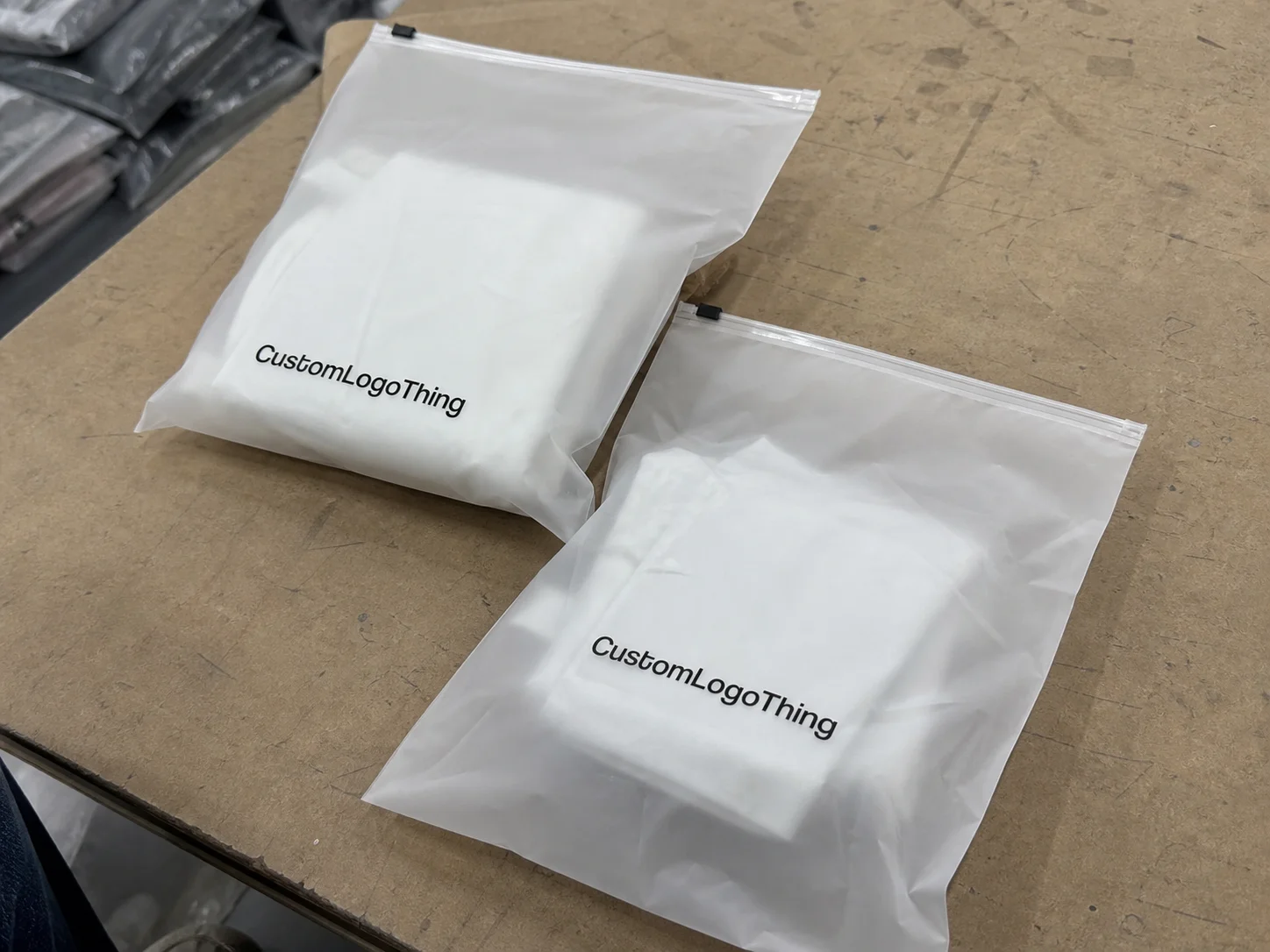
Packaging issues usually show up where the product meets reality: on the pick line, in the warehouse, or in the customer’s hands after transit. Clear bags are inexpensive and easy, but they also expose scuffs, dust, and minor variations. That is where frosted zipper Poly Bags for Ecommerce Brands moq planning becomes a practical decision rather than a style preference.
The frosted finish softens visibility without hiding the product completely. The bag still shows shape and structure, but it diffuses light enough to make fingerprints and minor surface flaws less obvious. For brands that want a cleaner presentation without moving to a rigid box or laminated pouch, that balance is useful.
The zipper matters just as much. A resealable closure keeps sets together during storage, kitting, and returns handling. It also gives packing teams flexibility when a bag is opened for inspection and then resealed. Heat-seal-only bags can work, but they do not offer the same reuse or inspection benefit.
The practical benefit is not just presentation. A good bag format can reduce lost inserts, missing accessories, and fulfillment errors that become customer service tickets later. For buyers comparing packaging formats and material expectations, references from industry packaging organizations and EPA materials guidance can help frame decisions around waste, performance, and end-of-life handling.
Product construction, frosted finish, and closure options that affect performance
Most Frosted Zipper Poly Bags are made from LDPE or a comparable polyethylene blend. The film needs enough flexibility to pack quickly, enough toughness to survive handling, and enough surface texture to deliver the matte look buyers expect. The frosting is usually part of the film finish itself, not a heavy coating.
Thickness is one of the first decisions buyers make, and it affects everything from feel to failure rate. A 2 mil bag is often fine for light apparel, flat accessories, and inserts. Move up to 3 mil and the bag usually feels better for most ecommerce use, especially when the product is handled multiple times. Four mil is more appropriate for heavier kits, repeated reuse, or items with sharper corners.
Zipper style is another fork in the road. A standard press-to-close zipper is the most common because it keeps cost under control and works well for high-volume fulfillment. A slide zipper costs more, but it can improve the open-close experience on larger or more premium bags. Whether that premium is worth it depends on product value, how often the bag gets reused, and whether the closure is something the customer will actually notice.
Common features such as hang holes, euro slots, tear notches, and gussets can be useful, but each one adds complexity. A hang hole helps with retail display or warehouse hanging. A gusset gives the bag more volume and can help it stand up better. A tear notch can make opening easier. None of these features should be selected just because they look complete on a spec sheet. They should solve a problem.
Frosted finish improves presentation, but it does not replace proper film engineering. If the gauge, zipper, seal quality, and print setup are not aligned, the bag can still fail in day-to-day use.
| Bag option | Typical use | Strengths | Tradeoffs |
|---|---|---|---|
| 2 mil frosted press-to-close | Light accessories, flat apparel, inserts | Lower cost per piece, flexible, easy to pack | Less puncture resistance, lighter premium feel |
| 3 mil frosted zipper | Most ecommerce apparel, beauty, wellness | Balanced durability and appearance | Slightly higher cost and storage volume |
| 4 mil frosted slide zipper | Heavier kits, gift sets, repeated reuse | Stronger feel, easier reopen/close | Higher MOQ pressure, higher unit cost |
Durability testing does not have to be academic to be useful. Even a basic check against handling, carton compression, and transit abuse can show whether the bag will hold up once it leaves the warehouse. For more formal references, buyers can review ISTA transport testing information.
Size, gauge, print area, and SKU planning for ecommerce assortments
Bag size should start with the finished product, then add real clearance for inserts, labels, and the speed your packers need on the line. If the bag is too tight, the zipper becomes annoying and packing slows down. If it is too loose, the item shifts around and the package looks unfinished. That tradeoff gets even sharper in Frosted Zipper Poly Bags for ecommerce brands moq planning because every size you add also creates more inventory to track, quote, and reorder.
The cleanest programs usually rely on a small set of core sizes. Three or four dimensions can cover a surprising amount of volume if products are grouped by footprint instead of by whoever happened to request a sample first. Fewer sizes mean fewer dead inventory problems, fewer receiving mistakes, and less cash tied up in slow movers.
For apparel, a flatter bag with a little extra width often packs better than a tall narrow option. For accessories or wellness items, a slightly taller bag can create a cleaner front view and leave room for inserts or instructions. Bundled kits are the hardest to standardize because the product may fit before the zipper closes, then look compressed or crooked afterward. A test pack tells the truth faster than a spec sheet does.
Print area needs the same attention. Frosted film changes how ink reads because the surface scatters light. High-contrast artwork usually works best. Fine lines, small copy, and low-contrast logos can get muddy fast. Barcode placement, handling icons, and compliance marks need breathing room so they stay legible after printing.
A practical SKU structure usually looks like this:
- Core sizes for the highest-volume products and regular replenishment
- Secondary sizes for seasonal or lower-volume items
- Specialty sizes only after demand is proven
That approach keeps storage tighter and helps your supplier quote better MOQ tiers without forcing you to overbuy. It also makes reorder planning less painful.
Cost, pricing, MOQ, and unit cost factors buyers should compare
Price on a custom pouch is never just a piece price. The real quote depends on material thickness, zipper style, bag dimensions, print coverage, number of ink colors, packaging format, freight method, and any setup or tooling charges. If a supplier only gives one number and calls it a day, that is not a quote.
MOQ rises as the spec gets more complicated. A plain frosted zipper bag usually allows a lower entry quantity than a fully printed custom run. Special zipper profiles, nonstandard sizes, and carton configurations can push the minimum higher. If custom plates or print prep are involved, the buyer should expect both a higher MOQ and a longer lead time.
The mistake many ecommerce teams make is chasing the lowest unit price without looking at landed cost. A cheaper quote can become expensive if it forces excess stock, repeated small reorders, or awkward freight. The real cost is not only what comes off the press. It is what lands in your warehouse and actually gets used.
A decent quote comparison should include three quantity tiers so the economics are visible at different volumes. Ask for setup charges separately. Ask whether artwork changes are included. Ask how samples are billed. And ask what the carton count looks like, because freight cost often follows packing efficiency more than people expect.
- Request pricing at three quantity tiers, such as 1,000, 5,000, and 10,000 pieces.
- Separate setup charges, tooling fees, and print prep from unit price.
- Confirm carton pack counts and likely shipping method.
- Ask whether samples or proofs are charged, credited, or waived after order placement.
- Compare landed cost, not just factory price.
| Quote element | Why it matters | Buyer question to ask |
|---|---|---|
| Material gauge | Affects durability and feel | Is this 2 mil, 3 mil, or 4 mil? |
| Zipper style | Affects functionality and price | Is it press-to-close, slide, or another profile? |
| Print complexity | Affects setup and production cost | How many colors and what coverage are included? |
| MOQ tier | Affects cash flow and inventory risk | What quantity gives the best balance of price and storage? |
For buyers comparing packaging families, the Custom Packaging Products page is useful for sorting bag, mailer, and retail-style options side by side. If the main shipments are soft goods, Custom Poly Mailers are worth a look too, because the outer shipper can sometimes do more for total shipping cost than a nicer inner bag alone.
Process, timeline, and production steps from artwork to delivery
The usual path goes through quote review, spec confirmation, artwork approval, proof sign-off, production, quality checks, packing, and shipment. The problems rarely happen in the middle. They happen at the handoffs. One team approves dimensions, another changes zipper placement, and a third realizes the launch moved up by two weeks.
That is why frosted zipper Poly Bags for Ecommerce Brands moq planning needs the production calendar built in from the start. For a straightforward run with approved specs, a typical production timeline is often 12 to 15 business days after proof approval. More complex printing, sample revisions, or high-volume orders can extend that. Transit time then gets added on top depending on destination and shipping method.
If the artwork is still in motion, expect more back-and-forth. Small fixes are manageable. Late changes to print alignment, zipper placement, or bag size are not. Those changes can force a revised proof, reset the production schedule, or create enough confusion that the launch date starts slipping.
A safer workflow is simple: lock the spec first, then fit the artwork to the confirmed dimensions. Do not try to redesign the bag and the graphics at the same time unless you enjoy rework. Most production delays are not caused by the bag itself. They come from unclear approvals and last-minute revisions.
Reorders should be placed before stock hits zero. Once a packaging item is approved and running cleanly, repeat orders are easier to manage, but emergency restocking tends to create rush freight, higher costs, and unnecessary stress.
What makes a packaging supplier reliable for repeat ecommerce orders
Reliability shows up in repeatability. The second run should match the first run on size, zipper function, print placement, and film feel. If it does not, the fulfillment team ends up sorting bags by hand or figuring out why inserts no longer fit. That wastes labor and creates noise in a process that should be boring in the best possible way.
Clear documentation matters more than polished pitch language. A good supplier can tell you the exact bag dimensions, gauge, closure type, print limitations, and MOQ tiers without dancing around the answer. If they are fuzzy on basic specs, that usually means the process is not controlled enough for ongoing ecommerce use.
Quality checks should cover seal integrity, zipper engagement, frost consistency, print adhesion, and carton pack accuracy. Buyers should also ask how consistency is monitored over the run, not just at the sample stage. A bag that looks great for a few units but starts slipping in production is not a win.
Trust comes from process discipline, not promises. Reliable suppliers give realistic lead times, explain where MOQ shifts by size or print coverage, and flag the tradeoffs before the order is placed. They also know how to translate a brand idea into factory-ready specs, which is not the same thing as selling a generic stock pouch and hoping for the best.
For buyers comparing vendors, ask how reorders are handled, how spec changes are managed, and what happens if a shipment arrives damaged. Those answers tell you more than a polished sample photo ever will. If you need a starting point for broader packaging evaluation, the Case Studies and FAQ pages can help frame the questions before a production run is committed.
Next steps to quote and launch your frosted zipper poly bag program
Before requesting pricing, gather the basics: finished product dimensions, target bag size, expected quantity range, zipper preference, print file, and desired ship date. That is enough information to get a quote that means something. For Frosted Zipper Poly Bags for ecommerce brands moq planning, a concise brief usually saves more time than a long email thread full of nice words and missing measurements.
Start with the one to three highest-volume SKUs. Test those first. Once the main packaging format is stable, add secondary sizes only if the demand justifies them. That keeps inventory tighter and prevents slow movers from dragging down the whole program.
Ask for tiered pricing so the economic jump between test volume and production volume is visible. Sometimes the lower MOQ is the smarter choice because cash flow matters more than a slightly better unit price. Sometimes the higher quantity makes sense because the pricing step is steep enough to justify a larger run.
Use samples or proofs, especially if the bag is frosted and the artwork has not been printed on that surface before. Ink can read differently on matte film than it does on glossy labels or clear poly. A quick proof can prevent a batch from being reworked because the logo contrast looked fine on screen and weak in print.
“The right bag keeps pack-out clean, reorders predictable, and inventory from turning into dead stock.”
That is the standard that matters. Lock the specs, verify the quote, and plan the first order with enough buffer to protect launch timing.
What MOQ should ecommerce buyers expect for frosted zipper poly bags?
MOQ depends on bag size, gauge, and whether the order is plain, lightly branded, or fully printed. Simpler specifications usually allow lower entry quantities than more complex custom runs. Ask for tiered pricing so you can compare the cost difference between test volume and production volume.
Do frosted zipper poly bags work better than clear bags for branded ecommerce packaging?
Frosted film usually looks more premium and hides scuffs or mix-and-match contents better than clear film. Clear bags may be better when full product visibility is the main priority. For branded presentation and neat pack-out, frosted bags often give ecommerce brands a more polished result.
How do I choose the right size for my product and insert cards?
Measure the finished product, then add clearance for closures, inserts, and fast packing on the fulfillment line. Avoid oversizing too much, since excess space can make the package look loose and less premium. Standardizing a few core sizes across SKUs usually improves inventory control and MOQ planning.
What affects unit cost the most on custom frosted zipper poly bags?
Material thickness, zipper style, print complexity, and total order quantity are the biggest drivers. Freight, carton pack counts, and packaging format also affect landed cost. Ordering larger quantities generally lowers unit cost, but only if the volume matches actual demand.
How long does production usually take after artwork approval?
Timeline varies by customization level, proofing requirements, and production queue timing. Delays usually come from late artwork changes or unclear specs rather than the bag itself. Build in enough time for proof approval, production, packing, and transit so inventory arrives before the launch or replenishment date.


