For hotel groups, Clear Resealable Poly Bags for hotel groups MOQ planning is less about packaging in the abstract and more about keeping operations tidy across multiple properties without locking cash into the wrong inventory. A small clear bag can handle guest amenity kits, welcome items, retail pieces, and housekeeping extras. The catch is that the bag has to fit the job, the reorder rhythm, and the budget. Otherwise it becomes one more thing sitting in a storage room, staring back at you.
From a buyer’s point of view, the appeal is practical. Clear bags let staff verify contents quickly. Resealable closures make packing and re-packing easier. Bulk purchasing usually improves unit cost once the order clears the setup threshold. The trick is choosing a film, closure, and size that match real hotel use instead of a spec sheet fantasy.
For group programs, MOQ planning also has a hidden benefit: it reduces chaos. One approved bag size can often serve several departments if the dimensions are chosen carefully. That means fewer SKUs, fewer reorder mistakes, and fewer awkward questions from procurement when a property runs out of the “right” version and grabs the nearest substitute.
Why hotel groups order clear resealable poly bags in bulk
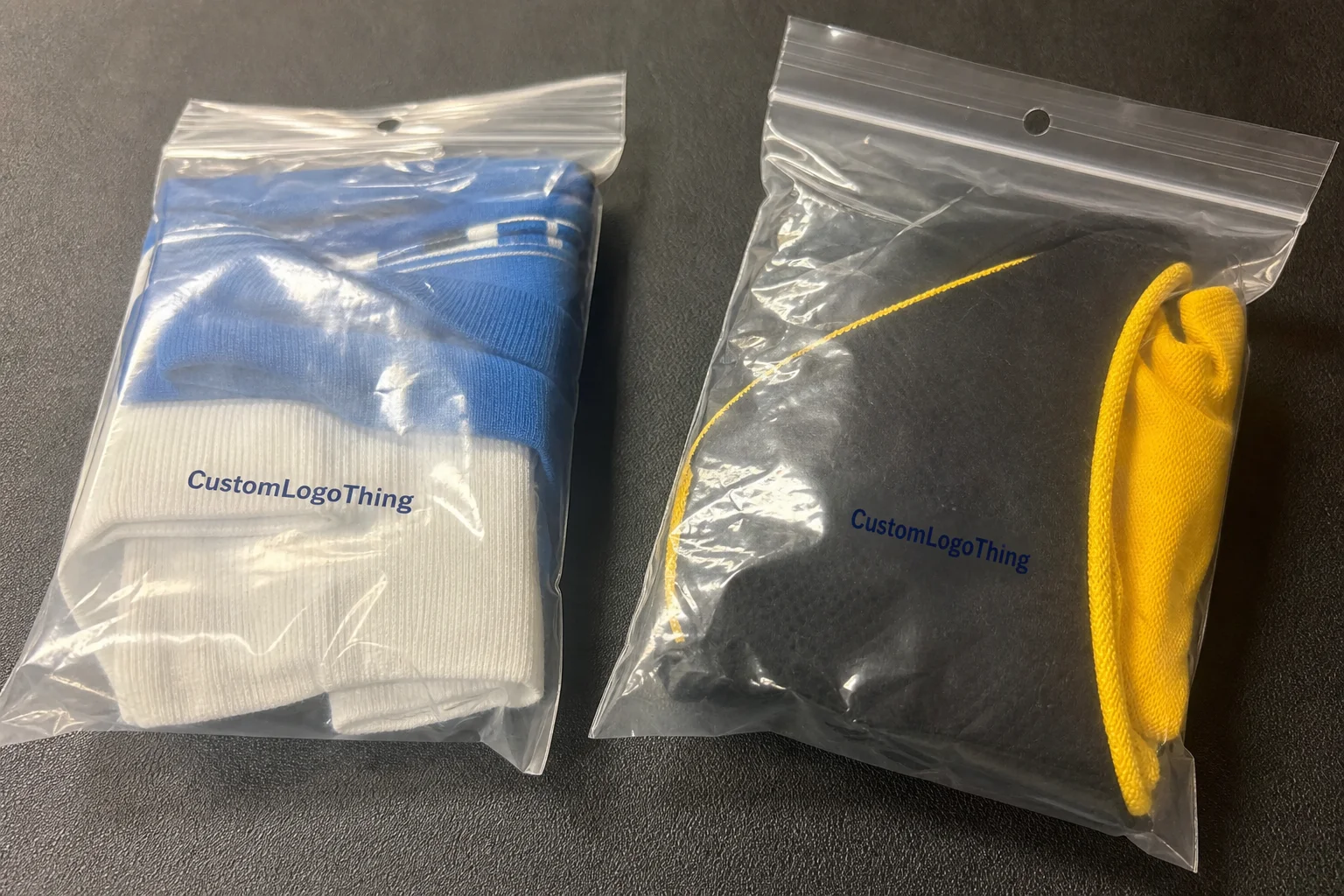
Hotel operations run on repetition. One property needs amenity kits. Another needs replacement toiletries. A third uses the same format for front-desk retail items or service parts. Bulk buying works because the packaging format can support several uses while keeping the contents visible and sorted. That visibility saves time in packing, room checks, and back-of-house replenishment.
A clear bag does three useful things. It lets staff verify contents without opening the package. It reduces sorting mistakes when multiple kit types move through the same line. It also makes inspection easier before guest delivery, which matters because a presentation error can sour the experience even when the actual product is fine.
The resealable closure matters just as much. Press-to-close tracks and zip-style closures let a team member open the bag, insert or remove an item, and close it again without tape or heat sealing. That sounds minor until you multiply it across several properties and hundreds or thousands of unit touches each week. In hospitality, seconds disappear fast.
“If the bag is the right size and closes cleanly, staff move faster and the guest sees a tidier package. If it is oversized or flimsy, the waste shows immediately.”
Standardization is another reason hotel groups buy in bulk. One clear bag size can often cover guest amenities, service parts, and small retail items if the dimensions are right. That lowers SKU count and gives purchasing more room to negotiate. It also helps when a group wants to keep several properties aligned on the same packaging standard instead of approving a different bag every time someone asks for “just a small tweak.” Those tweaks add up. They always do.
For repeat programs, buyers usually care more about consistency and reorderability than about chasing the absolute lowest price on one run. A reliable supply with stable dimensions, closure feel, and clarity tends to beat a cheaper bag that changes from order to order. If the package is part of the guest-facing experience, consistency is not optional.
Product details: film, seal type, and hotel-use formatting
Most hotel buyers start by choosing between LDPE and PP, and that choice affects more than appearance. LDPE is usually softer and more flexible. PP tends to feel stiffer and can give a crisper presentation when clarity matters. Both can work well. The better fit depends on how the bag will be handled, what it will hold, and whether the package is being used for storage, presentation, or both.
True clarity depends on resin quality, film thickness, and processing. Two bags can look nearly identical on a spec sheet and behave very differently once filled. A film that looks clean in a sample photo may show more haze, scuffing, or fingerprints under lobby lights. That is why an empty bag on a desk is a poor judge. Filled samples tell the truth much faster.
Closure style should match use. A press-to-close or zip-style track works well for amenity packs and reusable supply kits because staff can open and close the bag many times. Adhesive strip closures suit single-use presentation packs where the bag is meant to stay closed after assembly. Header-style formats help when the contents need hanging capability, but they are not always necessary for standard hotel applications.
Clear bags can stay unprinted for a minimal look, or they can carry a logo, size mark, or handling instruction. For hotel groups, less is usually better. A small logo or a discreet property mark keeps the package clean while still reinforcing brand identity. Heavy print coverage hides the contents and raises cost, so it should have a real operational purpose, not just a “because branding” reason that sounds nice in a meeting.
There are a few practical details that matter more than buyers expect:
- Tear resistance for frequent handling by housekeeping or front-desk staff
- Moisture protection for toiletries, wipes, or folded linens
- Hole punching if the bags need to hang on racks or peg displays
- Compatibility with kitting lines or manual pack-out stations
- Surface finish that looks clean under bright lobby or back-of-house lighting
If the bag will hold swabs, soaps, welcome cards, accessories, or replacement parts, the dimensions should be matched to the actual item set rather than estimated loosely. Oversized bags look underfilled and sloppy. Undersized bags can distort seals, wrinkle the film, and make the kit harder to present neatly. That’s not a small issue in hospitality. Presentation travels fast.
For packaging formats that often overlap with hotel procurement, the internal resource on Custom Packaging Products can help buyers compare options without rebuilding the same shortlist every time.
Clear film also has a handling personality of its own. Some films show fingerprints and scuffing more than others. Anti-static behavior can matter if the bags are packed in dry environments or moved quickly through a kitting area. If the finished package has to look pristine, ask for a filled sample rather than judging an empty bag alone. Empty bags are cheap to admire and terrible for decisions.
Specifications that affect fit, presentation, and durability
There are six specs that should be locked early: width, height, usable closure area, film thickness, closure type, and transparency level. If the bag will be printed, add print coverage and ink count. Without those details, quotes drift, samples miss the mark, and the buyer ends up making decisions with half the information missing.
Thickness affects more than durability. It changes hand feel, stiffness, the way the bag holds shape, and the way a filled package presents. A lighter gauge can lower cost per piece, but it may feel too soft for guest-facing packaging. Thicker film can improve appearance and handling, though it raises material cost and sometimes freight weight. The right choice depends on whether the bag is being used for storage, presentation, or a bit of both.
Flat dimensions and gusset depth deserve special attention. A bag that works for a folded insert may fail once a toiletry bottle or multi-item kit goes in. Even a small gusset can change how a filled bag sits on a shelf or in a cart. Buyers often approve dimensions from a drawing alone, but a physical sample usually exposes the problems faster.
For hotel programs, I also look at how the film behaves under bright light. Some clear bags look excellent in a photo and then reveal every scuff as soon as people touch them. If the package will be seen by guests, ask for a production proof or a pre-production sample. That step costs far less than remaking an entire run.
Material choice also affects operational tolerance. LDPE can be more forgiving with bulky contents and repeated opening. PP can look sharper, but that same stiffness can work against you if the contents are oddly shaped or the pack-out line is moving quickly. There is no universal winner. There is only the bag that fits the use case without drama.
Here is a simple way to compare common clear bag options:
| Bag type | Typical use | Strengths | Watch-outs |
|---|---|---|---|
| LDPE clear resealable bag | Amenity kits, soft goods, housekeeping items | Flexible, easy to handle, good for frequent opening | Can feel softer and less rigid for display |
| PP clear resealable bag | Retail packs, presentation items, crisp display needs | Sharper look, firmer hand feel, strong clarity | Can be stiffer and less forgiving with bulky inserts |
| Adhesive closure clear bag | Single-use guest packs, sealed welcome items | Simple closure, clean appearance, fast pack-out | Not ideal if staff need to reopen the bag often |
| Zip-style resealable bag | Multi-item hotel kits, refillable supplies | Fast open-close handling, reusable in operations | Track quality should be tested with actual packing speed |
For buyers who need material references, the Association of Plastic Recyclers and general guidance from packaging.org can help when resin choice or sustainability claims are part of the discussion. That matters more than ever because procurement teams are increasingly asked to justify not just cost, but material behavior and end-use expectations too.
Pricing, cost, MOQ, and quote planning for multi-property orders
Pricing for Clear Resealable Poly Bags usually comes down to five variables: resin, size, closure style, print requirements, and quantity. Packaging format matters too. Bulk-packed bags cost less to prepare than retail-ready cartons with more handling and labeling, but the cheaper format is not always better if your warehouse or properties need cleaner distribution.
For hotel groups, MOQ planning should be based on total network demand, not one property at a time. If five hotels each need a smaller amount of the same bag, the group often gets a better result by consolidating demand into one SKU. That reduces setup charges, spreads tooling costs over more units, and usually improves unit cost once the order crosses a more efficient production level.
As a working range, plain stock-style clear bags can be relatively low cost, while custom-printed or custom-sized versions move higher because of setup and production handling. For larger consolidated runs, unit cost may land in the few-cents range and can climb into the low tenths of a dollar depending on size, thickness, closure style, and print coverage. Small custom runs with multiple delivery locations and special packing instructions will price higher. That is normal, not a vendor conspiracy.
Here is the part many procurement teams miss: the lowest unit price is not always the lowest total program cost. Freight, carton count, storage space, reorder timing, and the risk of running short all belong in the comparison. If a slightly higher unit price gives you shorter lead time and fewer stockouts, that may be the better business decision for an active hotel group.
Quote requests are stronger when they include the real operating picture:
- Intended use, such as amenity kits, welcome packs, retail items, or housekeeping supplies
- Bag dimensions and target film thickness
- Closure preference
- Print requirements, if any
- Annual usage estimate across all properties
- Delivery locations and replenishment cadence
If a hotel group wants a better cost structure, standardizing one or two bag sizes usually works better than ordering several small variations. That reduces SKU sprawl and makes bulk pricing easier to defend internally. It also makes reordering more predictable, which matters when regional purchasing has to keep multiple properties aligned and nobody wants to explain why three nearly identical bags exist for the same program.
For buyers comparing bag programs against other custom formats, the internal page for Custom Poly Mailers is a useful reference point for seeing where cost shifts once closure type and presentation requirements change.
Production steps, lead time, and delivery coordination
The production sequence is usually straightforward, but hotel buyers do better when they treat it as a managed project. First comes specification review. Then artwork confirmation, if the bag is printed. After that come sample or proof approval, production scheduling, quality checks, packing, and shipment. Each step can move quickly, but only if the input is complete and approvals are clean.
Lead time depends on whether the order is stock, custom printed, or a new size with a different closure format. A stock item may move faster, while a custom run usually needs more time for artwork, tooling, and setup. For first-time orders, I would plan extra time for revisions and final signoff. That buffer matters when the bags are tied to a hotel opening, a seasonal promotion, or a property-wide refresh.
Multiple delivery destinations need planning too. A group may want one shipment to a central warehouse, another to a regional distribution center, and a third to a specific property for launch inventory. If carton labels, pallet requirements, and receiving instructions are not clear, freight can become the bottleneck even when production stays on schedule.
Good suppliers will ask about carton counts, pallet height limits, and whether the destination can receive mixed product or needs single-SKU pallets. That level of detail sounds tedious, but it prevents dock delays and makes downstream distribution easier once the bags arrive. A smooth delivery is often the difference between a clean rollout and a scramble in receiving.
For hotel groups, it is smart to tie delivery to a reorder calendar. If occupancy rises in certain months, build that into the forecast instead of waiting until the last carton is open. That kind of planning keeps the packaging program steady and cuts down on emergency purchasing, which is usually expensive and rarely flattering.
How to choose a supplier for hotel bag programs
Not every bag supplier is set up for hotel work. A good partner should understand the difference between selling a generic poly bag and matching a bag to a real operational use. That means asking the right questions about contents, presentation, property count, and reorder rhythm instead of pushing the same stock size to every buyer.
Transparency helps a lot. You want clear spec sheets, realistic MOQ guidance, sample availability, and direct answers on print, closure style, and packing format. If a supplier cannot explain why a certain thickness suits your use case, or if they stay vague about setup charges and tooling fees, slow down. That usually ends better than pretending the details will magically sort themselves out later.
Consistency matters even more for hotel groups than for single-location buyers. Clarity should stay stable. Closure feel should stay stable. Dimensions should stay stable. If one reorder drifts from the approved sample, the presentation changes across the portfolio, and that is exactly the kind of problem procurement exists to avoid.
Responsive quoting matters too. Hospitality programs often move quickly because openings, renovations, and amenity refreshes do not wait for a slow back-and-forth. A strong supplier should help balance cost, durability, and presentation without overspecifying the package and inflating the program with features nobody uses.
It also helps if the supplier understands quality-control checks beyond “looks fine.” Good checks include seal integrity, consistent closure engagement, proper gauge, correct dimensions, clean print registration, and package count verification. For printed programs, color consistency matters as well, even when the artwork is minimal. A logo that shifts shade from one batch to the next may not matter to a warehouse, but guests notice. Guests always notice the weird stuff.
If you need a place to organize order details, the FAQ page on Custom Logo Things is a practical internal reference point for common packaging questions and ordering basics.
“The best hotel packaging program usually disappears into operations: staff can use it quickly, guests see a clean presentation, and purchasing can reorder it without re-learning the whole spec every time.”
Next steps for ordering clear resealable poly bags
Start with the use case. Are these bags for guest amenity kits, retail items, housekeeping supplies, or multi-item welcome packs? That answer drives the size, closure, and film choice more than anything else. Once the use is defined, gather the basics: dimensions, quantity, print needs, number of properties, and preferred delivery timing.
If presentation matters to guests, ask for a sample or a clear spec confirmation before production starts. Then test the bag with the actual contents. Look at the seal, the fit, and the way the filled package sits on a cart or counter. A bag that looks fine empty may not behave the same way once folded inserts or bottles are inside.
Review the quote against MOQ planning, reorder cadence, and freight terms. A lower unit price only matters if the order size fits your storage plan and your usage pattern. If the order is too large, it creates slow-moving stock. If it is too small, you may pay more in repeat setup charges and frequent shipments. That is how a “cheap” item gets expensive without much effort at all.
A simple rollout plan usually works best:
- Approve the spec and sample
- Confirm the first production run
- Set reorder thresholds by property or region
- Keep the approved bag details on file for future purchases
That way, Clear Resealable Poly Bags for hotel groups MOQ planning stops being an ad hoc purchasing task and becomes a repeatable packaging program. Focus on the facts: fit, closure, cost per piece, and the real buying rhythm across all properties. That is the part that keeps the program from turning into a storage-room mystery later.
What is the best MOQ planning approach for clear resealable poly bags for hotel groups?
Base MOQ planning on total group volume, not one property at a time, so you can consolidate demand and lower unit cost. Standardize one or two bag sizes wherever possible to avoid splitting volume across too many SKUs. Build in safety stock for launch periods and seasonal occupancy spikes, especially for guest-facing amenity programs.
Which closure type works best for hotel amenity packaging?
Press-to-close and zip-style closures are popular when staff need fast open-and-close handling. Adhesive closures can work well for single-use presentation packs, while resealable tracks are better for reusable or replenishable contents. The best choice depends on how often the bag will be opened, not just on price.
How do clear resealable poly bags affect pricing for hotel group orders?
Price changes with size, thickness, closure type, print requirements, and quantity. Bigger consolidated runs usually lower unit cost, while small custom jobs carry higher setup impact. Freight, carton count, and storage needs should be included when comparing quotes.
Can clear resealable poly bags be printed for hotel brands?
Yes, they can be printed with logos, room-use instructions, sizes, or other simple branding elements. Clear film works especially well for minimal print because the contents stay visible. Artwork should be finalized early so proofing does not delay production.
What information should I send for an accurate quote on hotel bag orders?
Send bag dimensions, closure preference, material or thickness target, print details, and estimated annual quantity. Include property count, delivery locations, and whether you need a one-time order or ongoing replenishment. If possible, share a sample of the items to be packed so sizing can be matched correctly.


