Clear Resealable Poly Bags for sports clubs moq planning sounds narrow until you see how many moving parts depend on it. Kit rooms get crowded. Volunteers rush. Sizes get mixed. Merchandise tables turn into a mess fast if packaging slows down sorting or hides the contents.
The bag itself is doing more work than people expect. Clear film lets staff identify items at a glance, and a resealable closure means the same package can be opened, checked, and closed again without wasting another bag. That matters for clubs managing uniforms, fan merch, sponsor inserts, wristbands, or event handouts, especially when the order volume changes by season.
Practical truth: if the bags tear easily, cloud up, or refuse to close cleanly, the real cost shows up in labor, rework, and lost time. The unit price is only the part on the invoice.
Why Sports Clubs Use Clear Resealable Poly Bags to Cut Errors and Speed Distribution
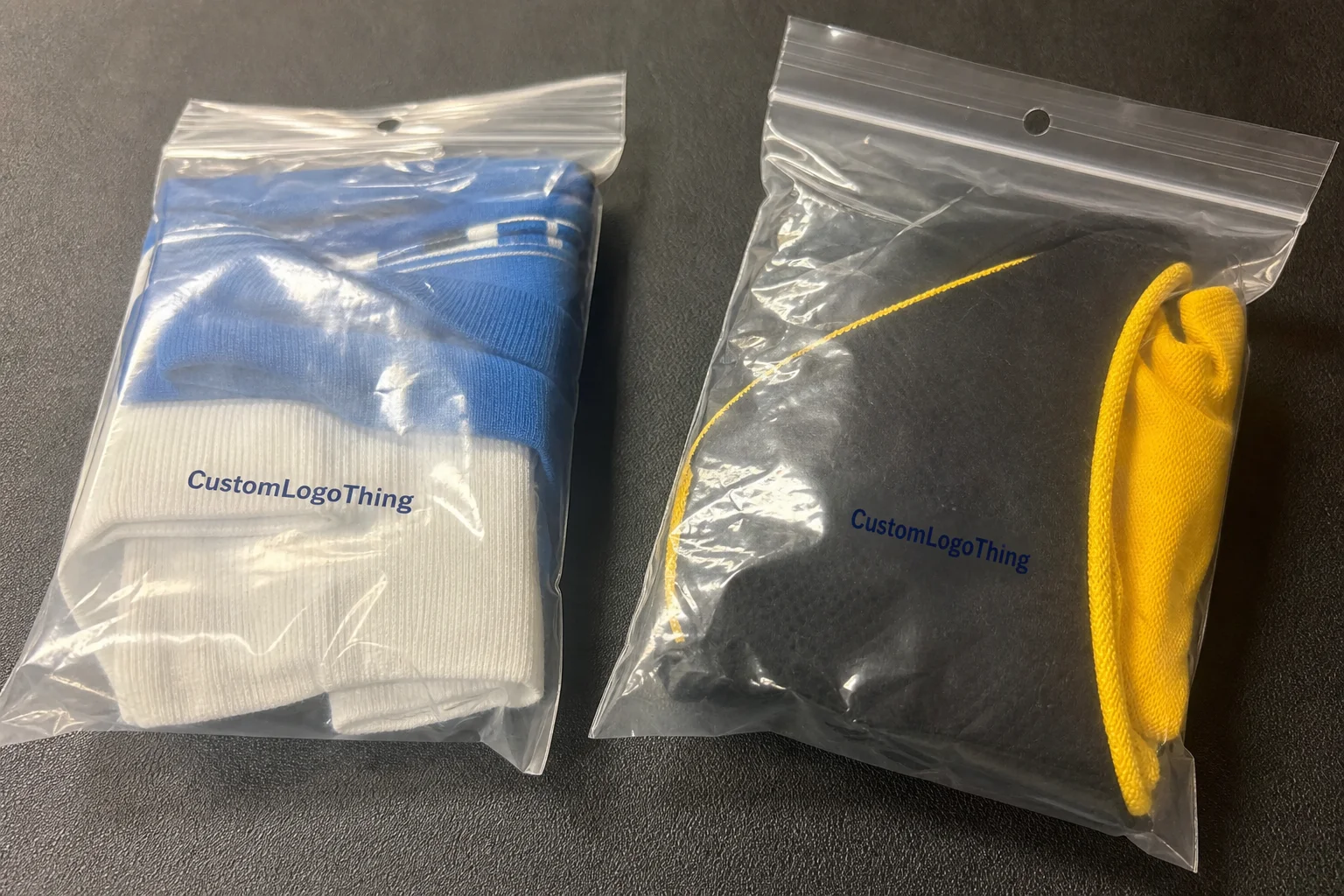
Sports clubs deal with repeatable packing problems. Uniforms arrive in mixed sizes. Merch gets split by team. Wristbands disappear into the wrong pile. A clear resealable bag reduces that friction because staff can verify contents without opening every package. That saves minutes at each step, and those minutes add up when a volunteer line is moving through dozens or hundreds of pieces.
Visibility is a bigger advantage than it sounds. If a shipment includes youth jerseys, adult socks, and sponsor cards, a transparent bag helps staff confirm the pack before it reaches the table. That cuts down on mix-ups during check-in, pickup, or game-day distribution. It also helps when a club is handling returns, replacements, or last-minute size swaps.
Resealability is the other half of the value. Many club items are handled more than once. Someone opens the bag to confirm a size. Another person adds a paper insert. A third person checks the label and closes it again. A decent zipper profile should tolerate that kind of use without splitting or sliding open after one pass.
There is also the cleanliness factor. Storage rooms are not sterile. Neither are trunk loads, folding tables, or warehouse shelves that sit near a gym floor. Clear Resealable Poly bags help protect folded apparel, cards, and small accessories from dust, scuffing, and light moisture while still keeping the item visible. For clubs selling merchandise, the bag also makes the table look more organized. Which, frankly, is usually half the battle.
- Faster inventory checks: staff can count and identify items without opening every pack.
- Cleaner event handouts: size, name, or team grouping stays sorted.
- Better resale presentation: merch looks tidier on tables and shelves.
- Less transport damage: items stay contained during loading and unloading.
For buyers working through Clear Resealable Poly Bags for sports clubs moq planning, the packaging is part of the workflow. It is not just a wrapper. It helps the club move faster, make fewer mistakes, and keep inventory under control.
Product Details That Matter for Team Merchandise and Kit Packing
Not every clear bag behaves the same way. Material choice changes flexibility, clarity, stiffness, and price. The two most common films for club use are LDPE and PP. LDPE is softer and more flexible, which makes it useful for folded apparel and repeated handling. PP usually has a crisper look and higher gloss, so it often fits retail-style presentation better.
That difference is not cosmetic only. A softer film can make stuffing easier and reduce cracking at fold lines. A stiffer film can hold shape better on a peg or merch wall. If the club wants a cleaner display and the bag will mostly sit on a table or rack, PP may be the better fit. If the bag needs to bend, travel, and open and close often, LDPE often wins on handling.
The closure deserves more attention than it usually gets. A basic press-to-close zipper may be fine for light use, but if volunteers are opening and resealing packages repeatedly, the zipper profile needs to stay aligned across the full width. A cheap zipper that works once is not a solution. It is a future complaint.
Transparency matters too. A clear bag should show the item, size label, barcode, and any insert without making the user squint under venue lighting. High-gloss film looks sharp, but under strong lights it can create glare. Slightly softer finishes can scan and read better in those situations. For club merchandise, that tradeoff is often more useful than chasing the brightest possible film.
Functional details can improve usability without pushing the order into unnecessary complexity:
- Hang holes for peg display or storage racks
- Writable panels for player names, size marks, or event dates
- Reinforced seal areas for repeated opening and closing
- Tamper-evident features for sponsor kits or retail packs
- Printed handling notes for volunteers and fulfillment teams
Different club items call for different bag behavior. Jerseys and training tops need more room and a stronger closure. Socks, wristbands, patches, and printed inserts usually fit in smaller formats. Fundraising kits that contain several pieces need enough width to keep the contents flat and stackable. Small hardgoods need enough film strength to resist punctures from corners or sharp edges.
For buyers reviewing Custom Packaging Products, the right bag is usually the one that matches handling conditions, not the prettiest sample on a desk. A bag can look fine flat and still fail after fifty open-close cycles.
| Bag Type | Typical Use | Strength | Visual Finish | Common Buyer Tradeoff |
|---|---|---|---|---|
| Light-duty clear resealable bag | Paper inserts, wristbands, flat handouts | Lower | Simple, clean | Lowest cost, less durability |
| Mid-weight resealable poly bag | Team merch, folded apparel, socks | Moderate | Good clarity | Balanced cost and handling strength |
| Heavier retail-ready bag | Higher-value items, repeated opening | Higher | Sharper presentation | Higher unit cost, better durability |
Specifications to Confirm Before You Order
If you want a usable quote for Clear Resealable Poly Bags for sports clubs moq planning, the spec has to be precise. Width, length, thickness, zipper type, seal width, and any print or labeling requirements all affect pricing. A vague request gets a vague number. That is not a mystery; it is just how packaging pricing works.
Start with the item that goes inside the bag. Measure the folded garment or accessory pack, then allow enough extra room for easy insertion. Too small and the zipper gets stressed. Too large and the pack looks sloppy, traps too much air, and wastes carton space. Good sizing makes storage easier and improves presentation at the same time.
Thickness is usually described in gauge or mil. Lighter film works for inserts, paperwork, and small accessories that will not be handled much. Thicker film makes more sense for apparel, retail items, or any package that will be opened and resealed repeatedly. In practice, the best thickness is not always the thickest one. It is the one that survives the actual handling load without inflating cost.
Print should be defined early if the club wants branding. A simple one-color print usually keeps setup fees lower and avoids unnecessary tooling cost. Multi-color artwork looks more polished, but it increases setup complexity and can slow the order. Some clubs skip printing entirely and use labels instead. That is often the smarter route when the bag only needs size identification, event coding, or barcode placement.
Clubs working with schools, leagues, or nonprofits sometimes need basic documentation too. That can include material descriptions, repeatability across runs, or transport-related testing expectations. For buyers comparing packaging programs, the ISTA test standards are useful for understanding shipment handling, while the FSC site is a reference point when paper-based packaging enters the discussion alongside plastic bags.
What to lock down before quoting
- Exact width and length
- Thickness target, such as light, medium, or heavier film
- Zipper type and seal style
- Print or label requirements
- Quantity by season or event
- Shipping destination and required delivery date
Pricing and MOQ Planning for Club Orders
Pricing for Clear Resealable Poly Bags for sports clubs moq planning comes down to a few practical variables: film type, thickness, dimensions, zipper profile, print coverage, and total quantity. If the bag needs custom dimensions or special features, the cost usually rises because the production line has to be set up specifically for that run.
MOQ is where clubs either save money or create friction for themselves. Lower quantities usually cost more per piece because setup time, machine adjustment, and production waste are spread across fewer bags. Larger planned runs usually improve pricing because the fixed costs are spread across more units. The math is simple, even if the quote sheet likes to pretend otherwise.
The useful rule is this: do not buy packaging by guesswork. Estimate seasonal use, separate internal storage needs from resale needs, and decide whether one bag size can cover multiple items. Clubs often overcomplicate the order by requesting a unique bag for every product, when two or three standard sizes would do the job just fine.
Common cost drivers include:
- Bag size: larger bags use more material
- Thickness: heavier film increases material cost
- Zipper quality: stronger closures cost more but perform better
- Print coverage: more ink and more setup time
- Quantity: higher volume usually lowers unit cost
- Special features: hang holes, reinforced seams, or custom finishes
For clubs trying to control spend, the smartest levers are standard sizing, limited print complexity, and scheduled replenishment. A plain stock bag can be perfectly fine for storage and internal fulfillment, while a branded bag may belong only on retail items or sponsor-facing kits. That split keeps the program cleaner and usually lowers total spend without making the tables look amateur.
Typical pricing ranges vary by spec and market conditions, but a small branded run will usually carry a noticeably higher unit cost than a larger unprinted order because setup charges are spread over fewer pieces. If you need to compare options, ask for quotes at two or three quantity levels. That shows where the price curve improves. A single price point is convenient, but it rarely tells the full story.
Buyer tip: if the order may repeat, lock the spec now. Reordering the exact same bag later is usually easier than trying to match a loosely defined package six months from now.
If the club also ships apparel out of the facility, a related format such as Custom Poly Mailers can support outbound orders while the resealable bags handle on-site sorting and distribution. Same planning logic. Different job.
Process and Timeline: From Spec Sheet to Delivery
The production path is straightforward when the buyer is prepared. First, confirm dimensions and quantity. Next, approve artwork or labeling. Then review a sample or proof if the order needs one. After that, the job moves into manufacturing and packing. Clear information at the start usually prevents delays later.
Lead time depends on whether the bags are stock or fully custom, how complex the print is, and how material is scheduled. A simple unprinted order can move faster than a branded program with multiple colors or special closures. If resin supply is tight or the line is busy, timing stretches. That is normal. Surprises are the part nobody needs.
Clubs should have these items ready early:
- Final artwork files or logo files
- Brand usage guidelines, if any
- Barcode or label information
- Exact bag size and thickness target
- Shipping destination
- Season launch, tournament, or fundraiser date
A sensible project schedule works backward from the event date and leaves room for proof review and transit. That buffer matters if the bags need to arrive before registration day, merchandise pickup, or sponsor distribution. A missed approval window can move the whole run, and nobody enjoys explaining that to a team coordinator who already has enough to juggle.
When buyers ask about transport expectations, packaging teams often point to standards like ISTA because bag performance is only one piece of the shipping picture. If the bags will be boxed and shipped, the outer carton, pack-out method, and warehouse handling also affect the result. Packaging is a system. Treating it like a single component usually ends in complaints.
Why Buying from a Packaging Manufacturer Improves Consistency
Working directly with a packaging manufacturer usually gives a sports club better control over the details that matter most: film consistency, seal performance, print repeatability, and delivered count. Those are not glamorous benefits, but they are the ones that keep a program from drifting between seasons.
Technical support helps too. A manufacturer can match film to handling load, explain whether the zipper profile needs to be stronger, and suggest whether a slightly different size would pack better. That kind of guidance is useful when the club is trying to balance appearance, durability, and cost across several item types.
Reorder continuity matters more than many buyers expect. Clubs with seasonal events, multiple divisions, or recurring team shops need packaging that can be repeated without surprise changes. A good manufacturing file keeps the same spec on record, which reduces the chance of receiving a bag that looks close but performs differently. That saves time and avoids awkward conversations about why the “same” bag suddenly feels different.
Reliability is the real value. Most clubs do not need fancy extras. They need consistent thickness, clarity, seal strength, and delivered quantity. If the order says 5,000 pieces, it should not arrive at 4,700 because the plan was loose or the production check was weak. That is not an ambitious standard. It is the baseline.
For clubs building a broader packaging program, reviewing Custom Packaging Products can help keep sizes, materials, and handling methods aligned across merchandise lines. That makes the operation look organized without pushing the club into custom work it does not actually need.
Next Steps for a Clean, Accurate Club Packaging Order
If you are preparing an order for clear resealable poly bags for sports clubs moq planning, start with three things: the item dimensions, the expected quantity by season, and whether the bags need printing, labels, or plain stock only. That alone usually tightens the quote and cuts out the back-and-forth.
Then separate the use cases. One bag can be the lowest-cost option for storage and internal handling. Another can be the cleaner presentation bag for retail, sponsor packets, or visible handouts. Not every package needs the same finish, and forcing them into one spec usually wastes money somewhere.
When you request a quote, ask for exact size, material preference, thickness target, and MOQ so the pricing reflects real production requirements rather than broad estimates. If the order may repeat, say that up front. Reorder continuity often matters almost as much as unit price, especially when a club manages several divisions or event cycles.
The cleanest route is to submit the spec sheet, artwork, and timeline together. That gives the packaging team enough detail to recommend the right bag, estimate setup charges, and build a quote that matches the actual job. If the request is built on real use, real quantities, and a realistic delivery window, the order usually stays on track. Funny how that works.
For clubs that want packaging to stay clean, organized, and easy to distribute, the right bag spec makes a measurable difference. The best orders are built from actual handling conditions, not wishful thinking. That is how clubs reduce errors, control spend, and keep the whole process from turning into a small disaster with a packing table.
FAQ
What is the best MOQ planning approach for clear resealable poly bags for sports clubs?
Start by forecasting peak-season usage, then add a small buffer for damaged, reissued, or late-added items. If multiple departments share packaging, consolidate sizes where possible to reduce the number of SKUs and improve MOQ efficiency. Standard sizes usually help more than custom dimensions when the product range allows it.
How do I choose the right thickness for club merch and uniform bags?
Use lighter gauges for flat printed inserts, paperwork, or small accessories that will not be handled heavily. Choose a thicker film for folded apparel, resale items, or packages that will be opened and resealed multiple times. Match thickness to handling conditions, not just product weight, because repeated transport and sorting often require more durability.
Can clear resealable poly bags be printed with a club logo?
Yes, printing is possible on many clear films, though design complexity, ink coverage, and film surface all affect the best method. Simple one-color logos usually keep costs lower and maintain strong legibility on transparent packaging. If print is not needed, labels can be a cost-effective alternative for size, event, or sponsorship identification.
What affects the price most on a custom club bag order?
Bag size, film thickness, zipper style, print setup, and total quantity are usually the largest drivers. More complex artwork, special closures, or unusual dimensions generally raise both setup effort and unit cost. Ordering in larger, planned batches usually improves pricing because the production run is spread over more pieces.
How long does production usually take once the order is approved?
Timeline depends on whether the bags are stock or fully custom, plus artwork approval speed and material availability. Simple, unprinted orders often move faster than branded orders that require proofing and setup. The fastest way to keep the schedule moving is to approve dimensions, artwork, and shipping details before the order enters production.


