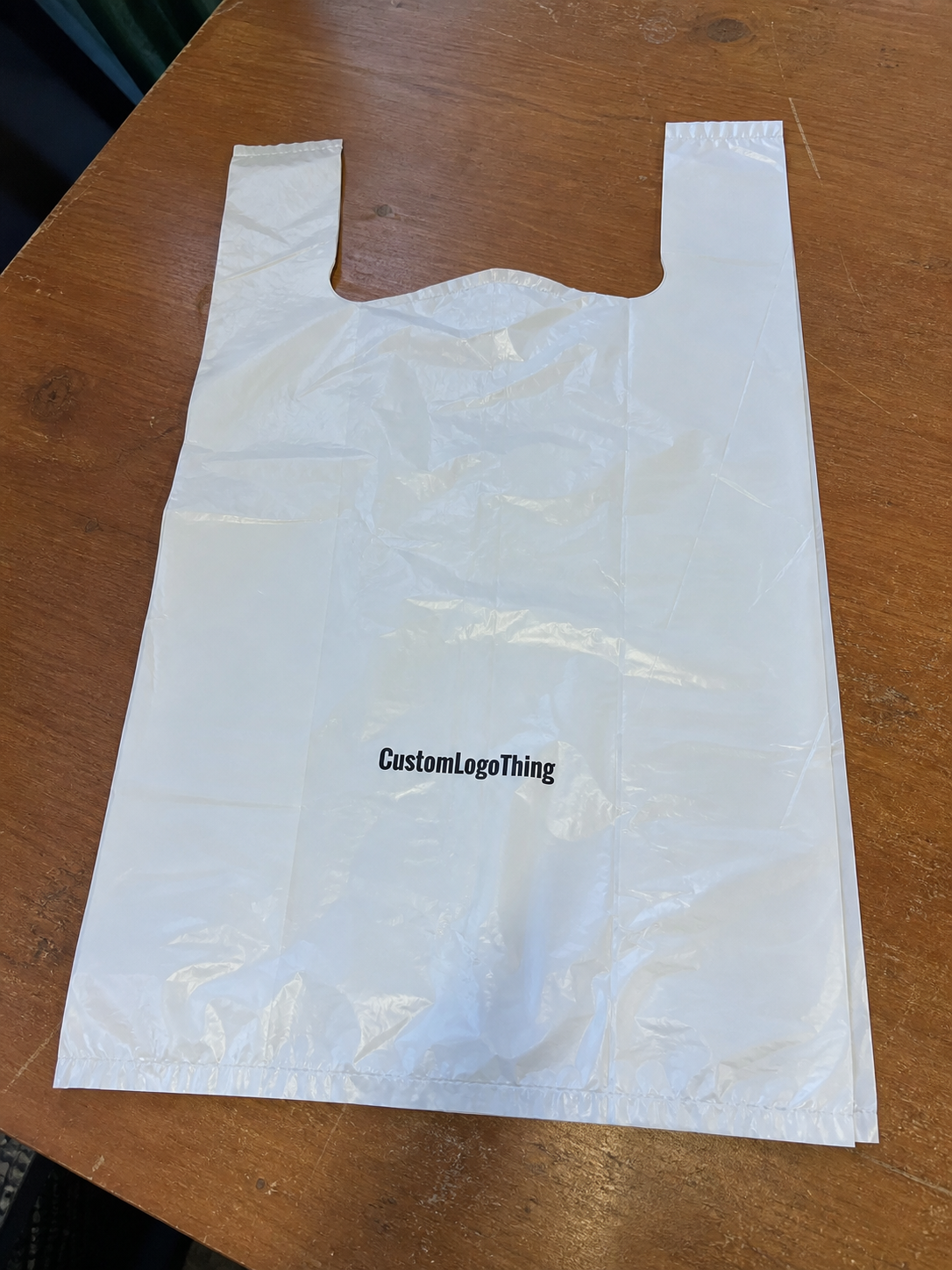
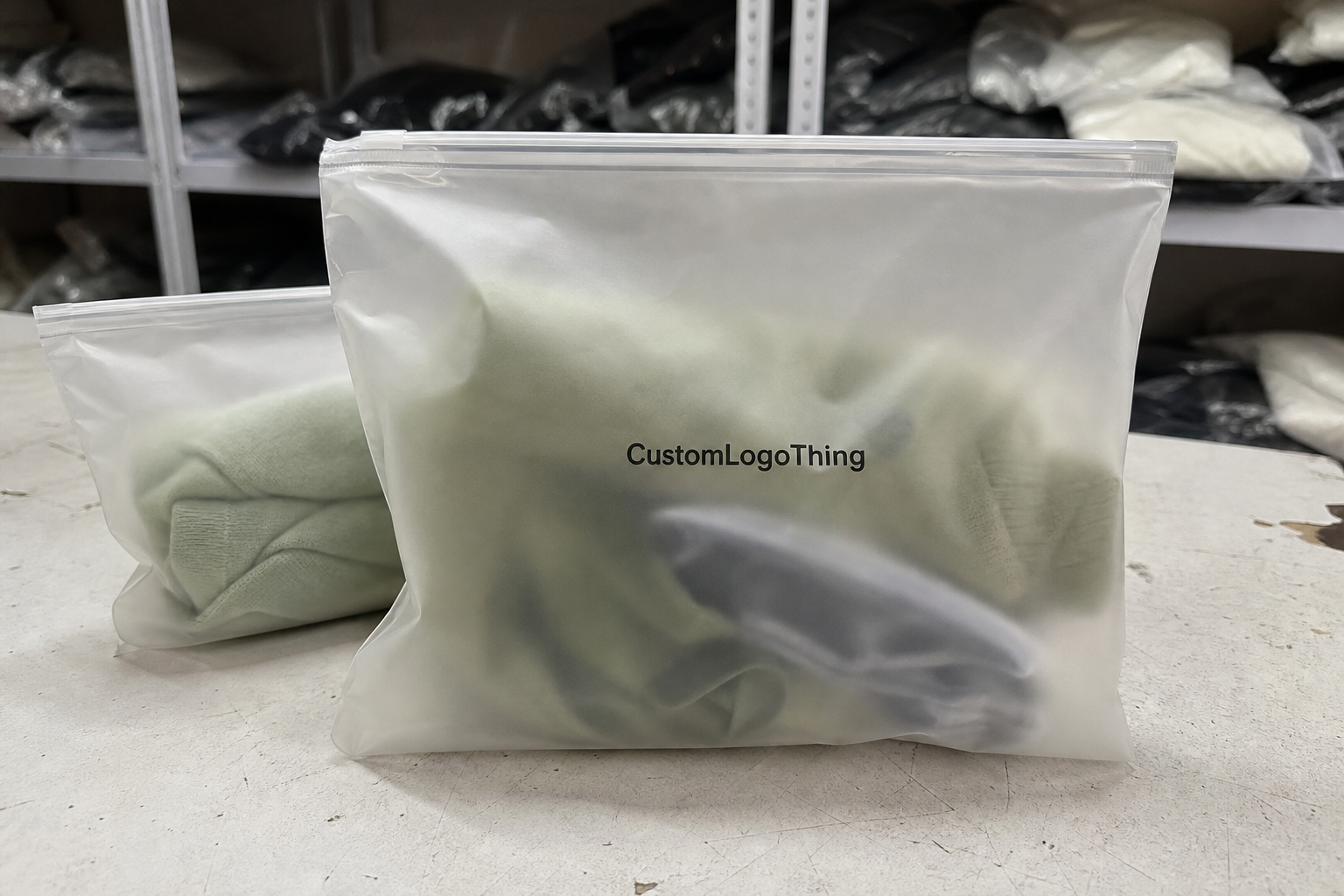
For a streetwear label, packaging is not filler. It is the first retail surface people handle, and sometimes the only one that gets seen before checkout. The right Clear Resealable Poly Bags for streetwear labels material comparison can be the difference between a folded tee that looks dialed in and one that looks like it got tossed into the nearest plastic sleeve and hoped for the best.
That first visual matters because the bag is doing two jobs at once: protecting the garment and presenting the brand. A good resealable bag keeps dust off, helps with SKU separation, and makes returns easier to manage, while also keeping barcode labels, size stickers, and inserts visible. If you are comparing Clear Resealable Poly Bags for streetwear labels material comparison, you are really comparing how the bag behaves on a folded hoodie, how it survives warehouse handling, and how it supports the brand story without shouting over the clothing.
Why clear poly bags can make a streetwear drop look more premium
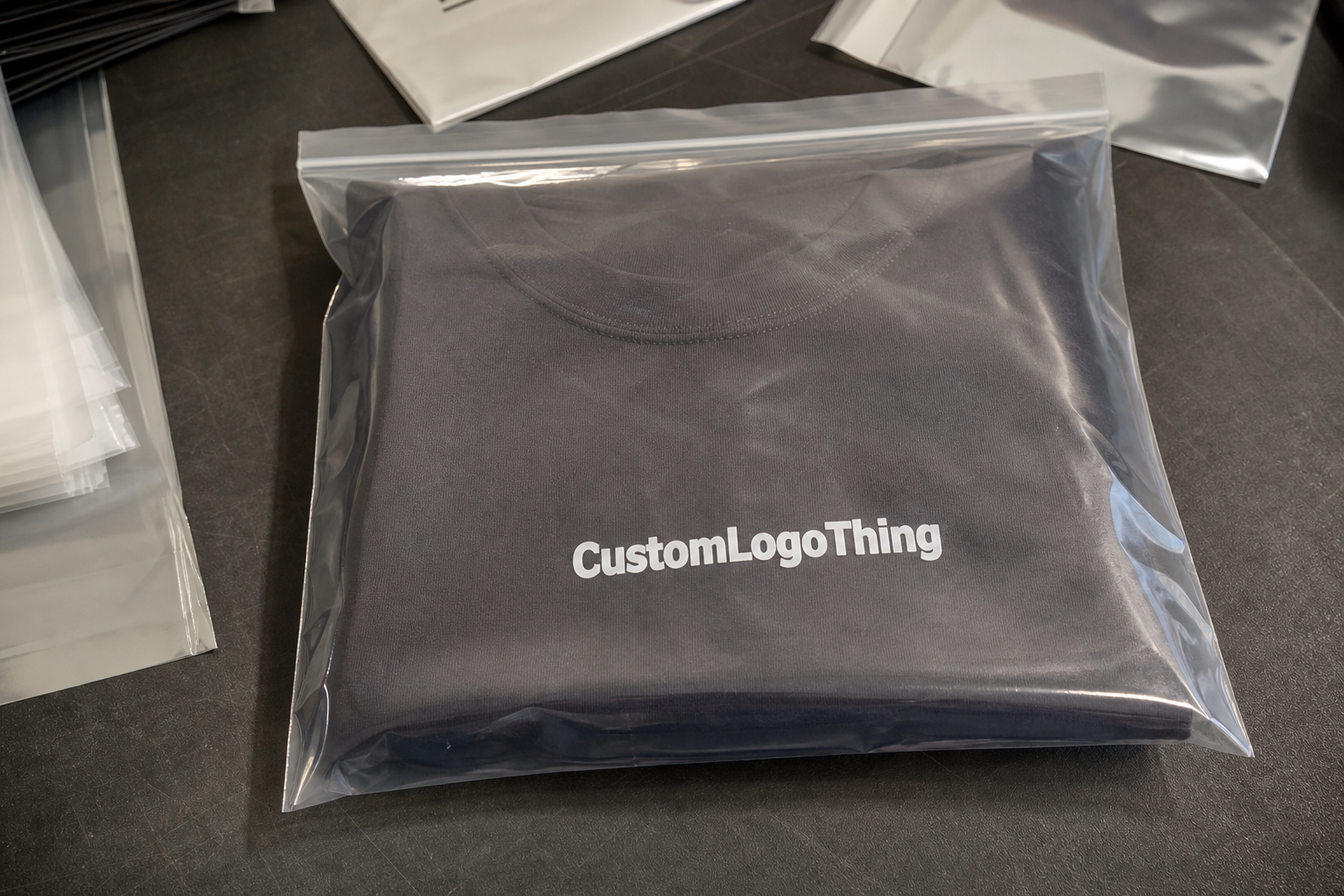
Think about a folded tee, a fleece hoodie, and a cap landing on the same packing bench. If the bag is cloudy, wrinkled, or sized too loosely, the product looks less considered right away. If the bag is clear and fitted well, the garment edges stay neat, the label is visible, and the customer sees order instead of clutter.
Streetwear buyers notice texture, finish, and visual discipline. Packaging sets that expectation before the item is opened. I have seen brands invest in woven labels, premium neck prints, and branded inserts, then lose some of the effect because the outer bag was too cheap-looking or too oversized. The clothing may be strong. The packaging should not fight it.
A resealable poly bag is a flexible plastic film bag with a reclosure, usually an adhesive flap, press-to-close strip, or zip-style seal. It is used to fold apparel consistently, separate sizes and SKUs, and protect returns that may be opened and reclosed more than once. If you are standardizing packaging across tees, hoodies, and accessories, you may also pair these bags with Custom Labels & Tags or other Custom Packaging Products so the whole presentation feels intentional.
A good clear bag should disappear visually while still doing real work. If it draws attention for the wrong reasons—cloudiness, wrinkles, weak seals—it is no longer helping the brand.
That balance is where the comparison starts. Not every clear film behaves the same, and for streetwear, you usually need a middle ground between clarity, toughness, print compatibility, and a clean hand feel that does not turn the package into something brittle or overly glossy.
How resealable poly bag construction affects clarity, seal, and hand feel
People usually start with one question: how clear is it? Fair enough. But clarity alone does not tell you much about how the bag will pack, seal, or hold up after a shift of handling. The resin family, thickness, surface finish, and closure design all change the result.
LDPE is the soft, flexible option many buyers know well. It drapes easily around folded garments, hides minor scuffs better than harder films, and feels forgiving on the packing line. The tradeoff is that LDPE usually has less stiffness, so the bag may look a little less sharp for premium retail display unless thickness is dialed in carefully.
CPP often brings better gloss and a more structured feel. It can give a bag a cleaner, tighter look on folded apparel, which is useful for display-driven packaging. BOPP/OPP tends to push clarity even further and can feel very crisp, though it may be less forgiving if you need puncture resistance around metal trims, zippers, or bulky seams. That is why Clear Resealable Poly Bags for streetwear labels material comparison has to include the actual garment, not just the film sample.
Thickness matters just as much as resin. A 1.5 mil bag and a 2.5 mil bag can be made from similar material families, but the heavier film usually resists tearing better and keeps a smoother profile around thicker folds. Too thin, and you may get stretching, edge roll, or a bag that opens up in the carton. Too thick, and the material can feel stiff and slow down packing.
Surface finish changes the visual outcome too. A high-gloss film can look bright and clean under store lighting, while a lower-gloss or anti-glare film may reduce reflections around printed labels. Additives like anti-static agents, slip additives, and haze reducers can help the bag feed better, reduce cling, and improve clarity, but the formulation has to stay balanced. Too much slip, for example, can make stacking and counting harder if bags slide all over the bench.
Closure style affects convenience and reuse. Adhesive flaps are common for quick packing and a tidy appearance. Zip-style and press-to-close options give the buyer a more reusable package, which can be useful for retail inspection or returns. The downside is that the closure can add cost and sometimes bulk. In a busy operation, the right closure is the one that supports speed without sacrificing reliability.
For brands comparing Clear Resealable Poly Bags for streetwear labels material comparison, treat the closure as part of the film system rather than an afterthought. A great film with a weak adhesive still creates problems. A modest film with a dependable closure often performs better in the real world.
Material comparison: choosing the right film for streetwear packaging
If you are narrowing down Clear Resealable Poly Bags for streetwear labels material comparison, compare the film families against the garment type they will carry. The right answer for a slim tee is not always the right answer for a heavyweight fleece set.
| Material | Clarity / look | Strength & puncture resistance | Feel | Typical use | Cost position |
|---|---|---|---|---|---|
| LDPE | Good, slightly softer visual | Very forgiving, decent tear resistance | Soft, flexible | Tees, light fleece, storage bags | Lower to mid |
| CPP | Clear with strong gloss | Good seal consistency, moderate puncture resistance | Crisper, more structured | Premium folded apparel, retail display | Mid |
| BOPP / OPP | Very clear, sharp presentation | Good clarity, can be less forgiving on sharp edges | Crisp, stiffer hand feel | Branded apparel, inserts, hang tag visibility | Mid to higher |
| Mixed laminates | Can be excellent if specified well | Often best when combining properties | Tailored to the spec | Premium or unusual pack requirements | Higher |
LDPE works well when the packaging needs to forgive odd folds, bulkier seams, or a little movement during shipping. It is also common when a brand wants a softer hand feel and is less focused on a glassy retail appearance. For hoodies and heavier fleece, LDPE often wins because it is less likely to crack or show stress whitening around tight edges.
CPP is a strong choice for brands that want a cleaner, more structured presentation. It can be a better fit for folded sets where the bag needs to hold a neat shape on the shelf or in a warehouse bin. If your packaging standard calls for an easy-to-read size sticker and a flat insert card, CPP usually helps keep the front face looking organized.
BOPP/OPP is often selected when visual sharpness is the main goal. It can make printed branding, SKU labels, and product information look especially clean through the film. The caution is practical: BOPP/OPP may be less forgiving around heavy zippers, thick ribbing, or sharp accessory edges. I would not automatically choose it just because it looks clearer in a sample sheet.
Mixed laminates are worth considering when you need a custom blend of features, but they can raise cost and sometimes complicate sourcing. They make more sense for premium lines, special drops, or packaging that has to perform across a wider handling range. If your brand is also using Custom Poly Mailers for e-commerce shipping, it can be smart to align the visual language between mailer and bag so the whole unboxing feels coordinated.
Some brands ask about recycled content, post-consumer waste content, or FSC certified paper elements in the same packaging system. Those are good questions, though the bag itself is still usually a plastic film choice. If sustainability is part of the brief, many teams pair the bag with recycled materials elsewhere in the pack, or use corrugated cardboard and kraft paper inserts that can be recycled more easily. Biodegradable packaging claims should be checked carefully, because film performance and end-of-life behavior depend on the exact formulation and local disposal conditions.
Cost, pricing, MOQ, and unit cost: what actually drives the quote
Pricing gets easier to read once you see how it is built. The quote usually comes down to resin type, film thickness, bag dimensions, closure style, print requirements, and whether the order is stock or custom-made.
For a typical run, a plain clear bag in a common size might land around $0.06 to $0.15 per unit at higher quantities, while a thicker or more specialized version can move into the $0.18 to $0.35 range or more depending on size, closure, and finish. Lower minimum orders usually push unit cost up because setup, cutting, packing, and QC labor are spread across fewer pieces. That is just how the economics work.
MOQ matters because small runs have less room to absorb production setup. If you order 2,000 bags, the press setup and handling effort represent a larger share of the total cost than they do on 20,000 bags. This is why a buyer may see a much better price break once the quantity reaches a certain threshold. The jump is not magic; it is simply fixed cost dilution.
Features that look small on paper can alter the quote more than people expect:
- Higher-clarity film can add cost if the resin and processing are tighter.
- Anti-static treatment adds value for faster handling, especially in dry environments.
- Hang holes or venting require more tooling and checking.
- Custom printing, even a simple logo or one-color mark, increases setup and inspection time.
- Special closures usually cost more than a basic adhesive flap.
The smartest budget move is to buy the minimum spec that protects the garment and supports the brand, then only upgrade features that customers will actually see or feel. If your product is shipping in a corrugated cardboard outer box anyway, the inner bag may not need every premium option. If the bag is the main retail-facing package, the visual spec deserves more attention.
From a buyer’s point of view, ask for pricing at two or three quantity breaks and compare the total landed cost, not just the unit quote. Sometimes a slightly larger order reduces the per-piece cost enough to justify a small increase in inventory.
Production steps and turnaround: from spec sheet to packed cartons
The cleanest way to handle clear resealable poly bags for streetwear labels material comparison is to start with a spec sheet, not a guess. Define the garment type, folded dimensions, desired clarity, closure style, and target quantity before asking for samples or pricing.
The production workflow usually follows a predictable path. First, the buyer confirms the finished bag size and the usable opening width. Then the material type and thickness are selected, along with whether the bag needs a flap, zip, or press-to-close feature. After that comes proof approval or sample approval, and only then does mass production start.
That sequencing matters because tolerances can shift the actual fit. A hoodie with bulky drawstrings and a raised neck print may need more room than the flat folded size suggests. A slim tee can look sloppy if the bag is too wide, but a heavyweight fleece can stress the seal if the bag is cut too tight. The finished size on paper is not the whole story; the folded product shape is what the bag really has to handle.
Lead time depends on stock material availability, complexity of the size, quantity, and whether a sample run is needed. A straightforward stock-style bag may be ready faster than a fully custom spec. Custom-printed packaging and special treatments generally add more time because the process includes setup, testing, and extra inspection. For planning, many buyers should expect roughly 12 to 15 business days after proof approval for a standard custom run, though that depends on the schedule and the exact spec.
It also helps to confirm what arrives in the cartons. Ask whether the bags are packed flat, folded, or nested, and how many pieces are in each inner pack. That affects counting speed on the line. If the bags are going straight into a retail prep station, clean carton counts and easy access can save real labor. For testing and transit expectations, industry references such as ISTA and EPA recycling guidance can also be useful context, especially if the packaging program is being tied to shipping performance or disposal messaging.
Common mistakes when comparing clear bag materials for labels
The biggest mistake is choosing by clarity alone. A bag can look excellent on a sample sheet and still fail once it meets a folded hoodie with thick drawcords, ribbing, or a stiff neck print. In real packing, the film has to survive corners, movement, and repeated handling without tearing or turning cloudy from stress.
Another common miss is sizing the bag to the garment’s flat dimensions instead of the folded package size. That usually leads to bags that are too tight at the seams or too loose and baggy after packing. Either problem hurts the presentation. If the bag balloons around the garment, the package looks sloppy. If it is over-tight, sealing gets difficult and the corners can fail.
Seal strength and closure reuse are easy to overlook, but they matter a lot for retail and returns. A bag that opens cleanly once and fails on the second closure can frustrate customers and warehouse staff. Weak adhesive in cold storage can also create problems, and static cling can make the bag awkward to pack or difficult to stack.
There is also a hidden speed issue. Some films look premium because they are thick and glossy, but they slow the line because they resist folding or sticking open for product insertion. If your team is packing hundreds of pieces per shift, even a small loss in speed becomes expensive. Clear resealable poly bags for streetwear labels material comparison should always include packing efficiency, not just appearance.
Expert tips for specifying bags that work in real streetwear operations
Test the sample with the actual folded garment, not a paper dummy. That sounds basic, but it is one of the easiest ways to avoid a bad spec. Hoodies have bulk. Tees can trap air. Accessories can poke at the seal. Real product changes everything.
If the bag will be touched multiple times, prioritize puncture resistance and seal reliability over shaving a fraction of a cent on film thickness. A slightly stronger bag often saves more money than a thinner bag costs, because it reduces rework, damage, and customer complaints. Honestly, that is where many brands underbuy.
Standardizing bag sizes across similar SKUs can simplify the whole operation. If your core tees and light fleece pieces fit one or two sizes, inventory gets easier, the packing team makes fewer mistakes, and reorder planning becomes cleaner. You do not need a different bag for every single item unless the garments truly demand it.
Think about the customer journey too. Easy-open reseal, clean transparency, and a label that stays readable all help the bag feel like part of the experience instead of a throwaway layer. If you want the packaging mix to feel cohesive, some brands also match the bag with branded tissue, FSC certified paper inserts, or kraft paper wraps, then place the garment in a clear outer bag so the retail face still looks clean.
For brands that care about sustainability messaging, be careful with claims. Recycled materials, post-consumer waste content, and biodegradable packaging can all be part of a responsible packaging strategy, but they need to be verified by the actual material spec. The right choice depends on your product, your shipping model, and how much presentation matters at the point of sale.
Next steps for choosing the right bag spec for your line
If you are ready to move from comparison to buying, create a one-page spec sheet. List the garment type, folded size, desired clarity, closure style, target quantity, and whether the bag needs barcode visibility or retail hang-hole features. That makes quotes far easier to compare apples to apples.
Then order samples of at least two film types and test them on your heaviest, bulkiest, and most delicate items. A tee sample alone will not tell you how the film behaves on a hoodie or a layered set. The heavier item usually reveals the truth quickly.
Ask for pricing at multiple quantity breaks so you can see where the unit cost improves. If the gap between one size and another is small, you may decide to standardize a single bag size. If the line includes very different products, splitting the spec by category may be the better call.
Once the test results are in, build a simple packaging standard for tees, hoodies, and accessories. Review it against storage space, packing speed, and the brand’s presentation goals. That kind of discipline keeps the bag program from drifting into random one-off orders and helps the whole packaging system stay clean and predictable.
For custom logo packaging, the practical answer is usually the one that fits the garment, holds up in handling, and presents the brand clearly. That is the real point of clear resealable poly bags for streetwear labels material comparison: not chasing the shiniest option, but choosing the material that gives your line the right mix of clarity, seal strength, and cost control.
What is the best clear resealable poly bag material for streetwear labels?
LDPE is usually the most forgiving for soft, flexible packaging, especially for hoodies and folded tees that need a little give. CPP and BOPP/OPP often look clearer and more premium for retail presentation. The best choice depends on garment weight, desired clarity, and whether the bag needs to be reused.
How do I compare clear resealable poly bags for streetwear labels material options?
Compare clarity, haze, thickness, seal strength, and puncture resistance side by side. Test each material with the actual folded garment, not just a flat sample. Also check whether the closure is adhesive, zip-style, or press-to-close because that changes usability.
What thickness should clear resealable poly bags use for hoodies and tees?
Tees can often work with lighter film if the bag has enough strength and a reliable seal. Hoodies and heavier fleece pieces usually need a thicker film for tear resistance and a cleaner presentation. Thickness should be chosen after testing the folded product size and shipping conditions.
Do clear resealable poly bags increase packaging cost a lot?
They can, but the biggest cost drivers are material type, size, closure style, and order quantity. Higher clarity and custom features raise unit cost, while larger MOQs often reduce it. The best budget move is to choose only the specs that customers will notice or that protect the product.
What should I ask for before placing a custom order?
Request finished dimensions, material type, thickness, closure method, and carton pack details. Ask for a sample or proof so you can test fit, clarity, and seal performance. Confirm lead time, MOQ, and any extra charges for printing, sizing changes, or special treatments.