Clear Resealable Poly bags for corporate buyers moq planning sounds like a narrow packaging topic. It is not. Once the order touches receiving, kitting, storage, and repeat replenishment, the bag stops being a small line item and starts affecting labor, organization, and how easily a team moves product through internal distribution. For buyers handling samples, stationery, hardware, inserts, or retail kits, the right bag keeps inventory visible, separated, and easier to issue.
That makes this a control decision as much as a purchase decision. The aim is to standardize the pack, protect the contents, and avoid paying for more material or more complexity than the job needs. In practice, Clear Resealable Poly Bags for corporate buyers moq planning should be treated like a specification exercise, not a casual reorder.
Why clear resealable bags solve the “small item, big control” problem
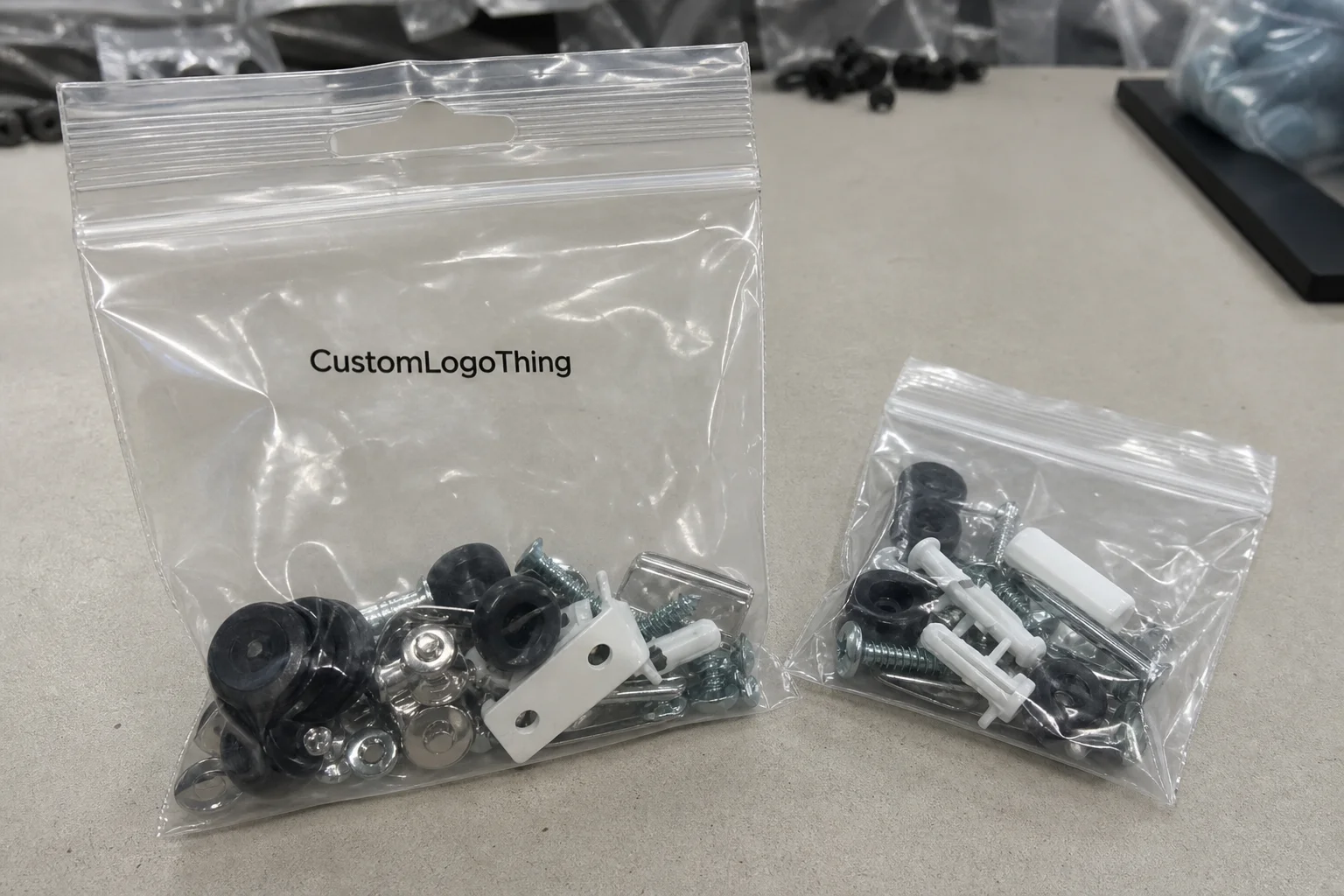
Small parts create oversized headaches. A shipment of screws, labels, brochures, cables, or sample sets can look organized on paper and still become a mess once it reaches a warehouse shelf or an office supply room. Clear Resealable Poly Bags fix the obvious part first: they let staff see the contents without opening every unit, and they keep each item group separated.
The value is practical. Clear film supports instant identification, the resealable closure allows repeated opening and closing, and one standard bag size reduces sorting mistakes. If a department is repacking inserts, building welcome kits, or bundling accessories for retail, consistent bagging often cuts handling time in ways that do not show up in the first quote.
“The cheapest bag is not always the cheapest packout. If the wrong size slows down kitting or causes rework, the real cost rises fast.”
Corporate buyers often underestimate how much packaging consistency affects receiving and internal distribution. One department may need barcode visibility, another may need a writable panel, and a third may need a bag that fits a folded insert card without bulging. Clear Resealable Poly Bags for corporate buyers moq planning works because it links the packaging spec to the operating process, not just the unit price.
- Visibility: contents can be inspected without opening every unit.
- Repeat use: resealable closures help with samples, reference sets, and shared inventory.
- Standardization: one approved format reduces confusion across departments.
That is why many procurement teams end up treating these bags as a control tool. They keep products neat, protect contents from dust and handling, and support a cleaner presentation for both internal and customer-facing uses.
Material and closure options that affect performance
Two choices drive most of the performance discussion: film type and closure style. The common films are LDPE and PP. LDPE usually feels softer and more flexible, which helps when the item has edges, folds, or some dimensional variation. PP tends to give a crisper, clearer look and a firmer hand feel, which some buyers prefer for presentation.
For closure, the usual options are zip-style seals and adhesive flap styles. Zip closures are the better fit when the bag will be opened and closed repeatedly, such as for samples, internal kit replenishment, or reusable parts storage. Adhesive flaps make more sense when a cleaner first-opening presentation matters more than repeated access. They also work well for one-time packing runs where the product should stay closed after issue.
Thickness matters just as much as film type. Bags are usually specified in mils, and moving from a thinner gauge to a heavier one changes durability, feel, and seal integrity. A lighter bag may work at 1.5 to 2 mil for brochures or low-risk inserts. Three mil or heavier is often better for hardware, accessories, or items with sharper edges. The right gauge still depends on item weight, shape, and how much handling the bag will see.
Practical details matter more than many buyers expect:
- Opening orientation: top-load or side-load changes how efficiently staff pack the item.
- Seam strength: weak side seals can split when the bag is overfilled.
- Venting: useful if trapped air affects carton stacking.
- Writable panel: helpful for batch numbers, internal references, or receiving notes.
- Hang hole: important if the bag must display on a peg or retail fixture.
From a production standpoint, the best choice is usually the one that fits the item and handling conditions without overspecifying the bag. A thicker film or heavier closure can raise cost per piece without adding much value if the contents are lightweight and stable. Under-specify it, though, and the result can be tears, poor sealing, or a flimsy look that hurts confidence during receiving.
Size, gauge, and print-ready specifications to lock down early
Before anyone asks for a quote, the base specification set should be locked down. That means finished width, finished length, usable opening, thickness, closure style, and any print-area limits if the bag will carry branding or identification copy. If those items are vague, pricing can drift and samples get delayed while the supplier guesses at fit.
Measure the product itself, then add clearance for the real world. A folded insert card, a small kit with mixed contents, or a part with a non-uniform shape needs extra room so the bag closes properly and still looks clean. In practice, a little tolerance built into the spec is better than forcing the product into an exact-fit bag that becomes difficult to pack consistently.
Clarity is another specification worth defining early. If the bag must allow barcode scanning, label reading, or visual inspection, the film should support that use without haze or distracting distortion. Clear bags can vary more than buyers expect, especially when comparing LDPE and PP across different thicknesses.
| Spec item | Why it matters | Common buyer mistake |
|---|---|---|
| Width and length | Controls fit, pack speed, and appearance | Measuring the product only, not the packed item |
| Thickness | Impacts durability and perceived quality | Choosing the thinnest option to save a small amount |
| Closure style | Determines repeat use and sealing behavior | Assuming every resealable bag functions the same way |
| Print area | Controls branding and legibility | Ignoring trim space and seal interference |
| Carton pack count | Affects receiving and warehouse handling | Ordering without considering internal distribution |
If the bag is printed, the artwork area needs attention as well. Registration tolerance, seal-edge space, and trim margins all affect what can be printed cleanly. Request a sample or a formal spec sheet before approving a full run, especially if the bags will be used for branded kits or customer-facing distribution. For related packaging formats, many buyers also compare Custom Packaging Products to see how film options and presentation requirements stack up.
Cost, pricing, and MOQ planning for corporate procurement
Pricing usually moves with five variables: size, film thickness, closure type, print coverage, and total order volume. A larger bag uses more resin, a heavier gauge adds material cost, and printed artwork increases setup work. Freight, samples, and special pack-out requirements can change the total more than buyers expect.
MOQ exists for a reason. The supplier has to convert film, prepare the production line, set up closure equipment, and, if printing is involved, manage plate or setup charges. Those fixed costs are spread across the run, so very small orders often carry a higher unit cost than expected. For custom runs, setup fees or tooling charges can affect the first order more than the film itself.
Corporate buyers can often lower unit cost by standardizing one or two bag sizes, simplifying artwork, or combining several departments under one purchase order. A slightly higher MOQ sometimes reduces annual spend because it improves bulk pricing and lowers the odds of stockouts. That is a real procurement tradeoff: pay less per piece with a larger batch, or protect cash flow with a smaller buy and more frequent replenishment.
Here is a practical way to compare quotes:
| Quote element | Why to verify | What it can change |
|---|---|---|
| Unit cost | Base price per bag | Total spend on the order |
| MOQ | Minimum quantity accepted | Inventory risk and cash tied up |
| Setup charges | Common on custom print or special specs | First-order cost |
| Freight | May or may not be included | Land cost per piece |
| Sample cost | Needed for fit confirmation | Approval speed and confidence |
When buyers compare Clear Resealable Poly Bags for corporate buyers moq planning, the real question is not “what is the lowest quote?” It is “what quote gives the best cost per piece once freight, approvals, and reorder timing are included?” A quote that looks slightly higher can still win if it reduces waste, prevents rush shipping, and gives a more stable supply plan.
For reference, plain stock bags for simple internal use can fall into a low-cent range per piece at scale, while custom printed or heavier-gauge bags usually climb from there. Small custom orders tend to carry the biggest premium because setup costs get spread over fewer units. None of that is mysterious. Fixed costs are fixed. The math is the math.
If your procurement team needs a broader reference point for packaging categories, the FAQ page is a useful starting point before narrowing to a final spec.
Process and lead time: from spec sheet to shipped cartons
The normal workflow is straightforward, but delays show up when details are vague. It usually starts with a needs review, then spec confirmation, quote approval, sample or pre-production check, production, quality inspection, and shipment. When all the information is complete up front, the project moves much faster.
What speeds things up? Exact dimensions, closure type, artwork files in the right format, carton pack counts, and the expected delivery schedule. If a buyer can also confirm whether the bags are for manual packing or a line-assisted process, the supplier can match the bag structure to the real use case. That matters for corporate orders with mixed stakeholders, because sales, operations, and receiving often want different things from the same pack.
Delays usually happen in a few predictable places:
- Measurements are incomplete or taken from the wrong item.
- Artwork is revised after pricing has already been approved.
- The closure changes after sampling.
- Internal sign-off takes longer than expected.
For planning, many corporate buyers allow enough margin to reorder before stock gets tight. A buffer protects the schedule and avoids rush production, which tends to cost more and creates stress for everyone involved. If a packaging program supports multiple departments, one internal owner should handle sign-off. Otherwise the project starts to look like a group email with a budget.
For buyers comparing packaging formats, it can help to review Custom Poly Mailers alongside bag options, especially if the program includes both inserts and shipped kits. Different packaging forms solve different handling problems, and it is better to compare them intentionally than assume one type will fit every job.
Quality control points that matter in repeat corporate orders
Repeat orders are where packaging discipline really shows up. The approved reference sample should anchor future runs so the buyer does not get version drift over time. Even a small change in thickness, clarity, or seal placement can cause problems once the bags are stacked, packed, or issued in volume.
Every lot should be checked for seal alignment, thickness consistency, clarity, closure function, carton count accuracy, and print registration if artwork is involved. If the bags are used on automated or semi-automated packing lines, a slight dimensional inconsistency can create feed issues or force operators to slow down. That becomes a labor cost, not just a quality issue.
Storage matters too. Clear resealable bags should be kept flat, away from heat, and protected from dust before use. Heat can affect film behavior, and dust can make a clean bag look cloudy or unfinished. If the bags are destined for a customer-facing kit, that visual quality matters more than many procurement teams first assume.
Good suppliers document specs clearly so future POs can be matched to the approved version. That means keeping the size callout, gauge, closure style, artwork file, pack count, and carton configuration tied to the order history. The better that recordkeeping is, the easier it is to avoid surprises on replenishment runs.
Why working with a packaging manufacturer simplifies reorders
Working directly with a packaging manufacturer usually makes life easier for corporate buyers because one source can handle sizing guidance, film selection, closure compatibility, sampling, and order forecasting. That matters when a department needs a clean quote quickly and procurement wants the numbers to line up with internal approvals.
There is also the documentation side. A manufacturer can keep purchase-order friendly records, carton pack details, and approved spec references in one place, which reduces friction when the next reorder comes in. From a buyer’s standpoint, that is not just convenience; it is control over continuity.
Another advantage is better balance between cost and performance. Not every application needs a heavier gauge or a more elaborate closure. A good supplier will help avoid overspecifying the bag, which protects budget while still meeting the handling requirement. That is the practical side of clear resealable poly bags for corporate buyers moq planning: fewer surprises, fewer unnecessary extras, and a cleaner path from approval to replenishment.
For teams that need a supplier relationship tied to real packaging capability, the right partner should feel like an extension of procurement, not just another quote source. They should understand unit cost, lead time, MOQ, and the details that keep a program stable over multiple purchase cycles.
Next steps for buyers who need a clean quote fast
If you need pricing quickly, send the supplier a spec packet with the target bag dimensions, item weight, closure preference, print needs, estimated annual usage, and delivery schedule. That gives the quote team enough information to narrow the material and closure options without back-and-forth.
It also helps to ask for two paths: one optimized for the lowest unit cost and one optimized for the lowest MOQ risk. Those two quotes often tell a buyer more than a single number does, because they show the tradeoff between bulk pricing and inventory flexibility. If the bags will support internal distribution or customer-facing kits, ask for a sample confirmation before production approval.
A clean quote is easier to get when the reorder pattern is visible. Share forecasted timing if the bags will be replenished quarterly, seasonally, or by project. That lets the supplier plan around lead time instead of rushing later, and it gives your team a better chance of avoiding stockouts.
For buyers comparing clear resealable poly bags for corporate buyers moq planning across departments, the smartest move is to settle the spec once, approve the sample once, and keep the order history accurate enough that future replenishment is simple. Send the exact requirements, and the right bag can be matched on the first quote instead of after several revisions.
FAQs
What information do I need for clear resealable poly bags MOQ planning?
Provide the finished bag size, item dimensions, bag thickness, closure type, print requirements, and estimated annual usage. If possible, include a sample or photo of the item to confirm fit and clearance. It also helps to say whether the bags will be used manually or on a packing line so sizing and closure selection can be matched correctly.
How do I compare pricing between different poly bag quotes?
Compare the same size, material thickness, closure style, print coverage, carton pack count, and freight terms. Check whether sample charges, plate or setup fees, and artwork support are included. A lower unit price can be misleading if it comes with a much higher MOQ or hidden logistics costs.
What MOQ should corporate buyers expect for resealable poly bags?
MOQ varies by size, material, and whether the bags are printed or plain. Standard sizes with simpler specs usually support lower minimums than custom sizes or full-coverage print orders. Planning around one or two standard formats often helps reduce MOQ pressure and improves replenishment flexibility.
Can clear resealable bags be used for printed inserts or product kits?
Yes, clear bags are commonly used when the item, insert card, or kit contents need to stay visible. Make sure the bag has enough internal clearance for the insert card and any folded materials. If branding matters, you can add a printed area, label, or custom insert without sacrificing product visibility.
What is the best way to avoid lead time delays on a corporate order?
Finalize dimensions, artwork, closure style, and order quantity before requesting production. Approve samples quickly and keep one internal contact responsible for sign-off. Plan reorders early so production can run on schedule instead of becoming a rush job.


