Matte Zipper Bags bulk order quotes usually move because of the spec, not because of the supplier. Finish, zipper type, film structure, print coverage, carton count, and approval timing all affect unit cost and lead time. If the brief is vague, the quote will be too.
Why Matte Finish Makes Zipper Bags Look Sharper
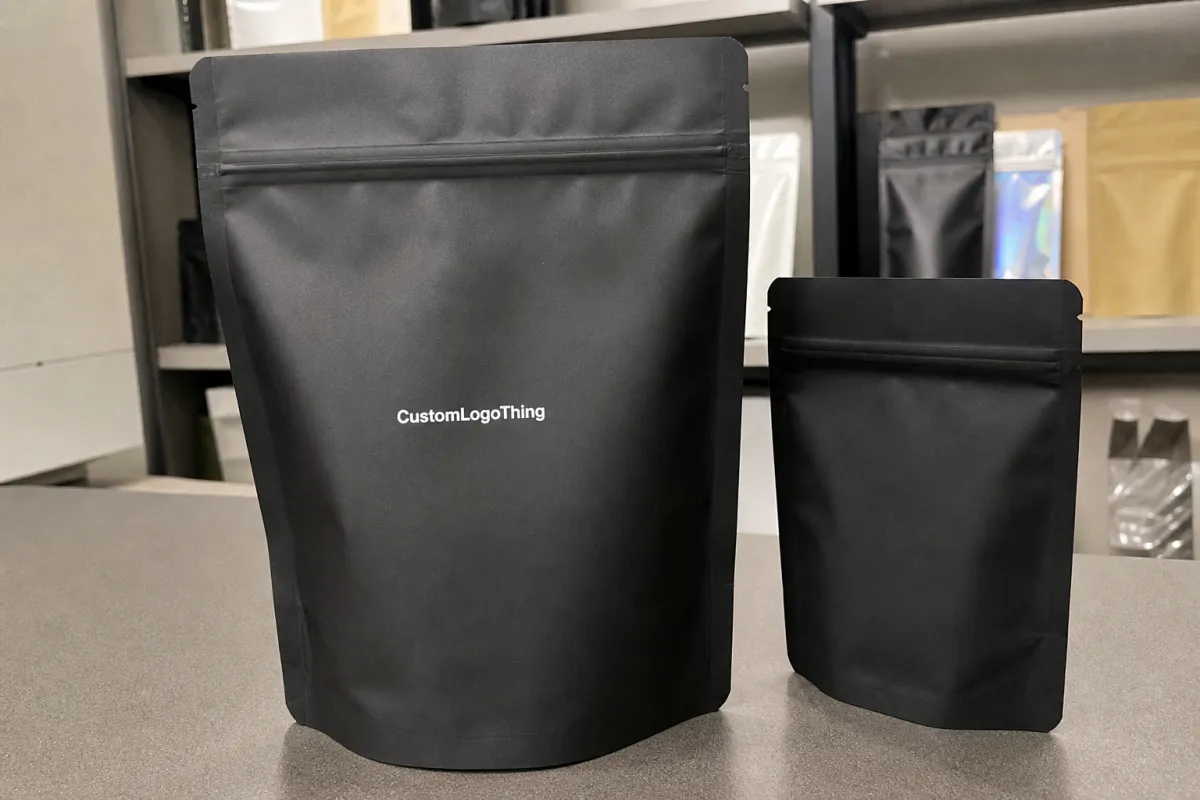
Matte film reduces glare, which makes artwork easier to read under retail lighting, warehouse lamps, and phone cameras. Fingerprints and small scuffs are also less obvious. For products that are handled often, that helps the packaging look consistent longer.
That is why matte is common for snacks, supplements, coffee, cosmetics, and refill products. Those categories are photographed, stacked, carried, and reopened frequently. Gloss can look louder on day one, but it can also flatten type and wash out darker art. Matte tends to keep the design calmer and more legible.
Matte also makes print quality easier to judge. Reflection can hide minor registration issues on glossy film. On matte, color shifts, edge movement, and other print problems are easier to spot before a full run is approved. That is useful when the goal is to catch issues early rather than after cartons are already on a truck.
Not every matte finish behaves the same. Standard matte laminate, soft-touch film, and matte lacquer can look similar but feel and wear differently. Soft-touch often feels premium, but it can cost more and may show rub marks differently. If the bag will move through shipping, retail bins, or heavy handling, the surface choice matters as much as the design.
For bulk packaging, treat matte as part of the full build: finish, zipper, thickness, and print method all interact. The quote usually becomes clearer once those pieces are decided together.
Matte Zipper Bags Bulk Order: Sizes, Styles, and Materials
Size is often the first question, but it should not be the first decision. Product shape, fill behavior, shelf use, and packing line requirements come first. A pouch that looks right in a mockup can still fail on the line if the product bridges, traps air, or settles unevenly.
Choose the format around the product
Flat pouches work well for sachets, sample packs, and low-volume items. Stand-up pouches give more shelf presence and a larger printable front. Gusseted bags suit bulkier fills or products that need extra volume without moving to a much larger bag. Windowed designs can improve visibility, but every clear area affects the structure and barrier plan.
One size does not fit every fill weight. A coffee bag, a protein powder pouch, and a snack pouch may all hold similar ounces but need different footprints, headspace, and zipper placement. The best size is the one that fills cleanly, seals correctly, and sits well after shipping.
Material structures control protection and feel
Most Matte Zipper Bags use laminated flexible packaging structures. Common builds include PET/PE, PET/AL/PE, and matte BOPP-based laminations. Each one changes oxygen barrier, moisture barrier, stiffness, and print behavior. The more sensitive the product, the more important the barrier layer becomes.
For coffee, dry food, supplements, and fragrance-sensitive items, barrier is not a cosmetic decision. It affects shelf life and freshness. Foil laminates give stronger protection, but they can raise cost and make the pouch stiffer. Clearer structures may reduce cost, but they may give up performance that matters for aroma or storage life.
It also helps to know whether matte comes from the laminate or a surface coating. A matte laminate often gives a more stable finish and better overall feel. A coated matte effect may be cheaper on some jobs, but it can wear differently under abrasion. If the pouch will be touched often, ask how the surface looks after handling, not just in the proof.
Resources from Packaging School and ISTA can help teams read packaging terms more clearly, but the final decision still comes down to the spec sheet.
Closure features affect use and price
Press-to-close zippers are common because they balance cost and convenience for many dry goods. Tear notches help the first open feel intentional. Hang holes support peg displays. Child-resistant closures are a different category and usually add complexity and lead time.
Adding features one by one can create problems elsewhere. A zipper that is easy for consumers may slow packing if the seal zone is too tight. A hang hole can interfere with stacking. A window can reduce print area and force layout changes. Each feature has a tradeoff.
Before asking for pricing, lock the core details: bag dimensions, material stack, finish, zipper style, whether the pouch needs a window or gusset, and any retail hardware such as a euro hang hole. That usually produces a cleaner first quote.
Specs That Change Unit Cost and Print Quality
Unit price usually moves because several choices stack together. Film thickness, layer count, seal width, zipper gauge, matte treatment, and print count all affect the final number. A thicker structure is not automatically better; it just has different performance and cost characteristics.
Seal performance matters as much as the visual finish. If the bag must survive drop tests, humid storage, or repeated opening and closing, the seal zone and zipper tolerances become more important than the look. A premium matte surface cannot make up for a weak seal.
Print choices are where quotes start to spread. A one-color logo on matte film is straightforward. A full-wrap print with white underlay, spot accents, and fine type is not. White ink under a dark matte surface can make graphics pop, but it adds setup time and can change how the ink sits on the film. Metallic accents and spot varnishes can look strong on matte, but only if registration is tight.
Matte also changes how artwork is read. Gloss can hide small unevenness by reflecting light. Matte shows more detail, which helps quality control but demands cleaner art files. Tiny reversed type, thin lines, and low-contrast gradients deserve extra review before approval.
Tolerances matter too. A few millimeters can affect sealing jaws, label placement, and how many pouches fit in a carton. On a shelf, the same difference can change whether the bag stands neatly or slumps. For bulk orders, the dimension spec should be precise enough to support the line without driving unnecessary rejects.
"A bag that looks right on screen can still fail in use if nobody checked zipper feel, seal strength, or the way the pouch sits after filling."
Quality checkpoints should be written down before production starts: color target, zipper alignment, seal integrity, and any drop or distribution testing that fits the product. An ISTA-style check can be useful when the shipment is fragile or the route is rough. The goal is not over-engineering; it is catching problems while they are still inexpensive.
One detail that gets missed: matte surfaces can show scuffing differently depending on the layout. Large dark panels may look excellent in the proof and slightly worn after transit if outer cartons rub. If the brand depends on a clean matte look, it is worth asking how the finish behaves after abrasion.
Cost, Pricing, and MOQ Breakpoints
Pricing becomes easier to read once the buyer separates structure from decoration. The base film, barrier layer, and zipper set the floor. Print complexity, matte treatment, and special closures add on top. Quantity lowers the unit price, but it does not erase the penalty for unusual specs.
For a typical matte zipper Bags Bulk Order, MOQ usually falls into a few workable bands. Stock-supported matte pouches may start around 1,000 to 3,000 pieces. Standard custom printed pouches often sit closer to 5,000 to 10,000 pieces. Specialty builds, child-resistant closures, or uncommon laminates can push the threshold higher.
| Option | Typical MOQ | Common Unit Price Range | Best For | Main Watch-Out |
|---|---|---|---|---|
| Stock matte zipper pouch | 1,000-3,000 | $0.12-$0.24 | Fast-turn samples, simple retail tests | Limited size and print options |
| Custom printed stand-up pouch | 5,000-10,000 | $0.18-$0.42 | Retail brands, subscription packs, seasonal SKUs | Proofing and artwork corrections can add time |
| Barrier-heavy or specialty zipper pouch | 10,000+ | $0.28-$0.65 | Freshness-sensitive, regulated, or premium products | Higher setup cost and tighter spec control |
Those numbers are directional, not a promise. Matte may add only a small amount on one job and a noticeable amount on another, depending on whether it is a surface treatment or part of a broader laminate change. The bigger jumps usually come from changing structure, adding a new closure, or increasing print complexity.
There are three easy ways to lower cost without hurting the project: use a standard size if it already fits the fill weight, reduce print colors if the brand can tolerate it, and consolidate multiple SKUs into one run when the artwork is nearly identical. Those are often the cleanest savings.
Watch freight and carton configuration too. A low unit price can be offset by oversized cartons, inefficient palletization, or chargebacks for late delivery. The bag price is only one part of landed cost. If the launch window is tight, shipping mode can matter as much as film choice.
Prepare the quote inputs before you ask for pricing: bag dimensions, fill weight, finish, zipper style, material preference, print colors, total quantity, carton count, and target ship date. A complete brief usually saves more time than a long follow-up thread.
Production Steps and Lead Time for Bulk Runs
The production sequence is usually straightforward, which is why delays are often preventable. A typical run moves through inquiry, spec review, artwork proof, sample approval, manufacturing, inspection, and freight booking. The weak point is usually one of the handoffs.
Lead time depends more on complexity than quantity alone. A simple matte pouch with standard print may move quickly once the proof is approved. Add a custom barrier structure, multiple print layers, a special closure, or a finish that needs tighter process control, and the timeline stretches. For straightforward orders, about 12 to 15 business days after proof approval is common. More complex builds can take longer if materials need sourcing or tooling changes.
Shipping time is separate. A domestic shipment and an ocean freight move are not interchangeable, and launch plans fail when they are treated that way. If the packaging supports a seasonal reset, subscription cycle, or retail promotion, the freight buffer should be built into the order plan from the start.
Sample timing should be decided early. If the matte surface, zipper feel, or print density is central to the purchase, approve a sample or pre-production proof first. That adds a few days, but it can save an entire production batch.
Keep the approval path simple. The more people touch the proof, the more chances there are for a mismatch between the art file, spec sheet, and order record. For teams managing several SKUs, one pouch revision can affect carton counts, labels, and picking logic. Lead time is often lost in the inbox, not the press room.
Supplier Controls That Reduce Rework and Delay
Quality control is the cheapest insurance in packaging. If a supplier keeps seal strength consistent, zipper alignment straight, print registration tight, and finish uniform across the run, the buyer avoids relabeling, rework, and customer complaints.
Documentation matters as much as machinery. The spec should be confirmed in writing, not inferred from a screenshot or a quick call. The proof stage should state what was approved, including dimensions, color targets, zipper style, and finish. A bag can look acceptable on a monitor and still feel wrong in hand if the seal lip is too narrow, the zipper is stiff, or the film is thinner than expected.
There is also a difference between responsive support and reactive support. Responsive support asks useful questions early: fill weight, product density, barrier needs, print count, carton plan, closure behavior, and shipping route. Reactive support waits until the proof is already wrong. The first approach lowers risk; the second turns packaging into damage control.
For regulated products, or any program with strict shelf-life or contact requirements, supplier discipline matters even more. Ask what tests are being used, how approvals are documented, and what happens if a lot misses spec. If the supplier can explain the process clearly, that is a good sign. If the answer stays vague, the risk will usually show up later in the schedule.
One more detail: zipper feel can vary by lot. A closure that is technically functional may still feel too tight, too loose, or inconsistent across a run. That matters for consumer perception. The pouch is judged by whether the customer can open it, reseal it, and trust it again tomorrow.
Next Steps to Quote, Sample, and Place Your Order
A useful quote starts with a useful brief. Gather the basics first: bag dimensions, fill weight, artwork files, finish preference, zipper style, quantity, target delivery date, and whether the product needs food-contact, retail, or storage-specific protection. That list cuts down back-and-forth quickly.
If the matte surface, zipper feel, or print coverage affects the buying decision, request a sample or proof. Screen images are not enough. Matte changes how color reads and how light moves across the artwork. It can make a design look more expensive or unexpectedly flat, and the only honest way to judge that is on the physical pouch.
After that, the order should move through a simple internal path: compare options, confirm the structure, approve the artwork, lock the ship window, and release the purchase order. Keeping the process orderly matters because packaging delays usually come from ambiguity rather than from the bag itself.
From there, the matte Zipper Bags Bulk order becomes a managed production job instead of a guess. That is where the real savings usually live: fewer revisions, fewer surprises, and fewer expensive compromises after the order is already underway.
What is the usual MOQ for a matte zipper bags bulk order?
MOQ depends on size, print coverage, and whether the pouch is stock-supported or fully custom. Standard styles usually start lower than custom structures or specialty closures, and the difference can be significant if the bag needs a custom laminate or zipper feature.
How does matte finish affect pricing on bulk zipper bags?
Matte finish can add cost if it requires a specific coating, laminate, or print process. In many jobs, the larger price drivers are material structure, quantity, and print complexity, so the finish should be reviewed alongside the full spec instead of in isolation.
Can I get custom sizes in a matte zipper bags bulk order?
Yes, most bulk programs can be sized to your fill weight, shelf footprint, or packing line needs. Custom sizing may increase MOQ and setup time, so exact dimensions should be confirmed early if you want a reliable estimate.
What information speeds up a quote for matte zipper bags?
Provide bag dimensions, material preference, finish, zipper style, print colors, total quantity, carton count, and target delivery date. Adding the product type and fill weight helps the supplier judge barrier needs and likely lead time more accurately.
How long does production usually take for matte zipper bag bulk orders?
Lead time varies by customization level, sample approval speed, and production schedule. Straightforward builds may move within about 12 to 15 business days after proof approval, while complex structures or specialty closures can take longer.

