If you are searching for a Clear Zipper Bags Wholesale Supplier for coffee, the first question should be whether the bag protects freshness, handles distribution, and presents the roast clearly. A coffee bag has to do all three well. Otherwise it is just a transparent container with a short useful life.
Clear coffee bags have one clear advantage: buyers can see the product immediately. Roast color, bean consistency, and fill level become part of the shelf presentation. That can help a brand look more transparent and more premium, but it also means the package has to be clean from the start. Dusty beans, uneven fill weights, and weak seals are easier to spot.
For brands with repeat releases, the format can also simplify operations. A stable bag structure lets you keep the same dimensions while changing labels, overprints, or inserts for seasonal blends, single-origin coffees, and small test runs. That consistency matters when inventory is tight and reorders need to move quickly.
Why Coffee Brands Switch to Clear Zipper Bags Instead of Blind Buying
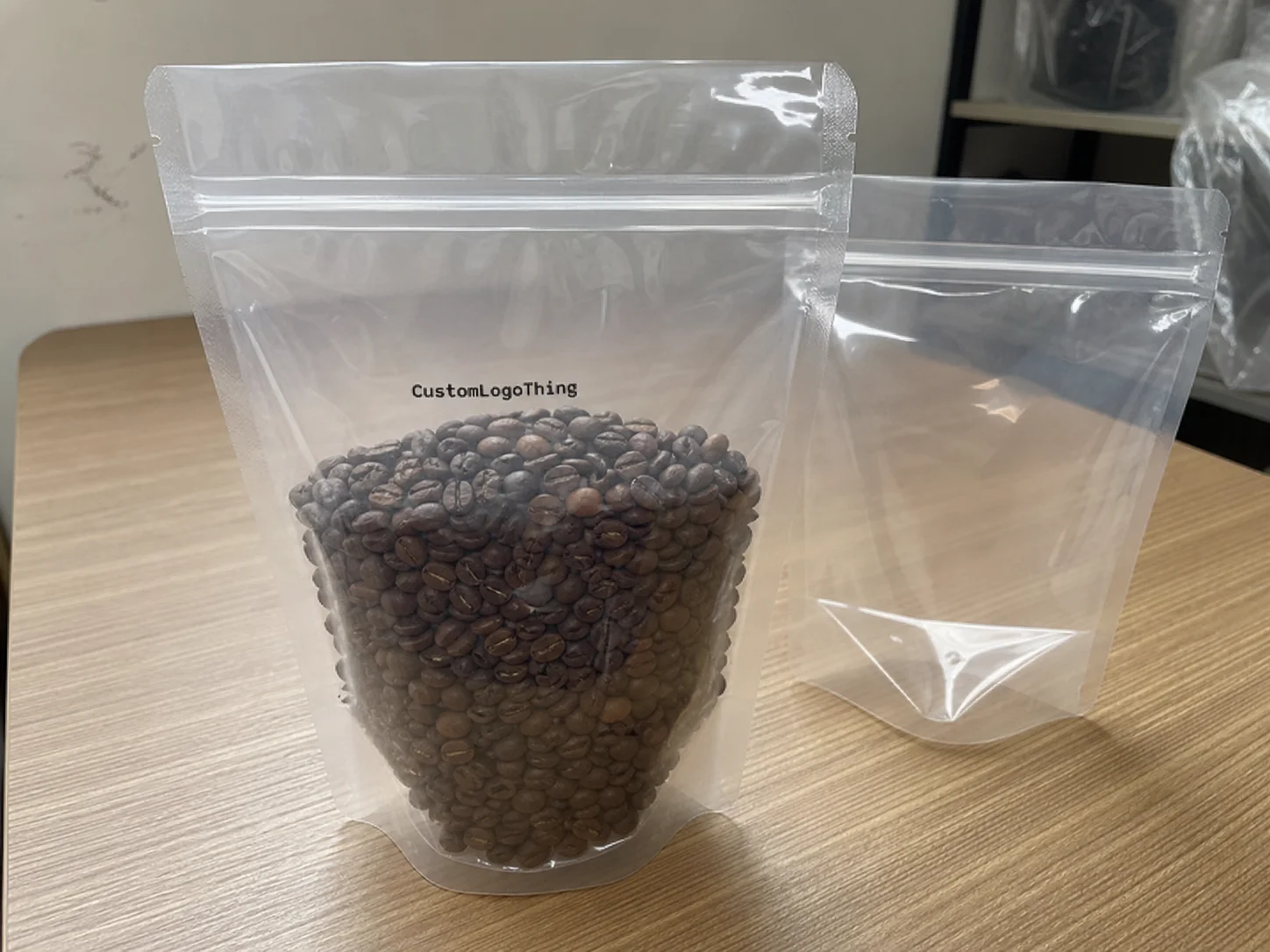
Coffee sells on visual cues before it is brewed. A transparent pack gives shoppers an immediate view of the beans and a faster read on roast style, from lighter specialty profiles to darker commercial roasts. That is useful in retail, at markets, in sampler packs, and in subscription programs where the product changes often.
Clear packaging is not forgiving, though. A brand that fills unevenly or handles beans carelessly will show it. Bags that look strong in a mockup can look ordinary once the product is inside if the beans are chaffy, the fill line is sloppy, or the zipper sits crooked. The package exposes those issues instead of hiding them.
There is also a practical benefit for operations teams. When the base bag remains the same, it becomes easier to reorder, forecast inventory, and support smaller product drops without a fresh packaging redesign each time. That matters for roasters who launch seasonal lots or want to test a new origin without committing to a full packaging refresh.
“Clear bags do not hide sloppy filling. They reward disciplined production and make weak packaging choices obvious.”
That is one reason many buyers start with a Clear Zipper Bags wholesale supplier for coffee rather than sourcing bags, labels, and accessories separately. One packaging system is easier to spec, easier to approve, and usually easier to reorder without fit problems.
Clear Zipper Bag Construction That Works for Coffee
The right construction depends on the coffee, the shelf-life target, and how the bag will be handled after filling. For roasted coffee, common structures include PET/PE laminates and mono-material recyclable structures. PET/PE usually offers strong clarity and mechanical performance. Mono-material options may fit brands with recycling goals, though barrier, stiffness, and sealing behavior can differ from traditional laminates.
If the coffee is freshly roasted whole bean, ask about a one-way degassing valve. It allows carbon dioxide to escape without letting as much oxygen back in, helping prevent swelling while preserving roast quality. For ground coffee, where aroma loss happens faster, barrier performance matters even more. A clear pack does not change coffee chemistry, so the film has to do the real work.
The zipper should be treated as a functional component, not a minor accessory. It should close cleanly, reopen easily, and hold a dependable seal through repeated use. If customers have to press the zipper multiple times or pinch it along the edge, the experience drops quickly.
Common features worth considering
- Bottom gusset for shelf stability and easier filling.
- Tear notch for a cleaner first open.
- Hang hole for peg displays or retail hooks.
- Matte or gloss finish depending on the brand look and print style.
- Valve placement for fresh-roasted whole bean coffee.
Size selection should follow fill weight, bean density, and the way the bag will sit on shelf. A 250g bag is common for retail coffee and small-batch launches. A 500g format works for many specialty brands and cafés that want a larger footprint. Bigger club or bulk sizes can work too, but they need careful dimension planning so the package still stands properly once filled.
Before approving construction, think about storage and distribution conditions. Will the bags sit in a warm warehouse? Will they travel flat or prefilled? Will they be stacked on pallets or displayed directly to consumers? These details affect film thickness, barrier needs, zipper choice, and carton packing.
Specifications Coffee Buyers Should Confirm Before Ordering
Many packaging delays start with incomplete specifications. Buyers ask for pricing before the dimensions are locked down, then spend the next week revising the request because the zipper style, gusset depth, or print area was never defined. A real quote needs real specs.
Start with the basics:
- Width
- Height
- Gusset depth
- Zipper type
- Material thickness
- Barrier level
- Print method
Barrier deserves special attention because coffee is sensitive to oxygen and moisture. Whole bean coffee generally keeps its quality longer than ground coffee, but both need protection from air and humidity if the goal is to hold aroma through retail storage or shipping. If a quote only mentions appearance and never mentions barrier performance, that is a gap worth asking about.
It also helps to request a dieline or spec sheet before artwork approval. That prevents logos, copy, barcodes, and legal text from landing in the wrong spot. It is easy for a clean design to clash with the zipper fold, side gusset, or sealing area when nobody checks the layout against the actual bag dimensions.
| Option | Best for | Typical strengths | Watch-outs |
|---|---|---|---|
| Retail-ready clear zipper bag | 250g and 500g coffee | Good shelf presence, easy reorders, strong branding zone | Needs accurate specs and cleaner fill quality |
| Sample or promo bag | Tasters, events, trial runs | Lower unit cost, faster to launch | Less room for print, often simpler construction |
| Valve bag with clear panel | Freshly roasted whole bean coffee | Better aroma release, strong retail utility | Higher cost, more production variables |
| Mono-material clear structure | Sustainability-led brands | Cleaner recycling story in some markets | Barrier and stiffness may differ from PET/PE |
Ask for a physical sample when the order is large enough to justify it. A printed mockup on screen is not the same as a bag in hand. Real samples reveal zipper feel, film clarity, stiffness, seal consistency, and whether the bag stands properly once filled.
For shipping performance, third-party transport guidance can be useful. The ISTA transport testing guidelines are relevant when coffee bags will move through parcel networks or pallet distribution. If your packaging includes paper components or you are making recycled-content claims, documentation matters there as well; material and certification language should be checked carefully through organizations like the FSC when paper-based elements are involved.
Pricing, MOQ, and Unit Cost for Coffee Packaging Orders
Pricing depends on size, structure, print coverage, zipper style, valve inclusion, finish, and quantity. Identical-looking bags can have very different quotes. If a supplier does not ask enough questions before pricing, they are guessing.
For clear zipper coffee bags, a simple stock-style pouch may land roughly around $0.10 to $0.22 per unit at meaningful quantities. More customized coffee-ready formats with printed panels, better closures, and valves can move into the $0.18 to $0.45 per unit range or higher depending on finish, size, and order volume. Smaller runs usually cost more per piece because setup charges and production overhead are spread over fewer units.
MOQ varies by structure and print method. A stock or semi-custom format may accept lower quantities, while a fully custom printed bag usually needs a higher minimum. For a new coffee line or a limited release, ask for quantity tiers side by side so you can see where the unit cost actually improves.
What changes the quote fastest
- Barrier film thickness
- Valve inclusion
- Print coverage and number of colors
- Special finishes like matte lamination
- Zipper style and closure quality
- Order size
Sample or prototype pricing should be treated separately from production pricing. A pre-production proof may carry its own charge, especially if the supplier needs to test print alignment, fit, or color consistency. It is money well spent if it catches a sizing mistake before the full run starts.
Compare landed cost, not just unit cost. Freight, duties, packaging count, and lead time all affect the real cost of the order. A lower price on paper can turn into a weaker deal once shipping and delays are included.
If you are still building your packaging program and need to compare formats before requesting a quote, reviewing a supplier’s Wholesale Programs page can help you understand quantity tiers and available constructions without starting from scratch every time.
Process and Timeline From Quote to Delivered Coffee Bags
A good order process is usually simple: inquiry, spec confirmation, artwork review, sample approval, production, quality check, and shipping. The sequence is ordinary, but it only works if each step is completed before the next one begins.
The common problems are predictable. Dimensions arrive late. Artwork files are not print-ready. A buyer asks for one zipper style, then changes it after the quote is already approved. Sometimes the valve is added after the proof is done, which means the quote has to be reworked. Those revisions take time, and they usually cost more than expected.
For custom coffee packaging, a realistic production timeline is often 12 to 20 business days after proof approval, depending on quantity, construction, and print complexity. Simpler stock or semi-custom options can move faster. Fully custom runs with special finishes, multiple colors, or valves generally take longer.
Approval checklist before production starts
- Bag size confirmed
- Material structure confirmed
- Zipper and valve selected
- Artwork file approved
- Barcode and label zones checked
- Packaging count confirmed
- Delivery address verified
After the deposit is paid, communication should stay active. You should receive updates about proofing, production status, quality review, and shipping. A supplier does not need to send constant messages, but silence early in the process often becomes a problem later.
Transit packaging matters too. Outer cartons, inner wrapping, and pallet loading all affect whether the bags arrive in usable condition. Coffee bags can crease, crush, or scuff in shipment, especially if they are packed loosely or stacked badly.
What to Expect From a Reliable Coffee Packaging Supplier
A reliable supplier understands that coffee packaging is a technical product, not just a printed pouch. They should be able to explain print registration, zipper behavior, seal integrity, material differences, and how the package will perform after filling.
Ask to see previous samples or production photos. Good samples reveal whether the supplier can hold print alignment, maintain clean seals, and keep the zipper functioning across a run. If they cannot show actual work, you are making decisions blind.
Quality control for coffee bags should include:
- Zipper function and closure consistency
- Seal integrity under normal handling
- Print alignment and color accuracy
- Odor resistance for food-contact packaging
- Shipment protection so bags do not arrive crushed
It also helps if the supplier can support repeat reorders without forcing a full spec rebuild each time. Coffee brands often rotate limited editions, single-origin lots, and seasonal releases, and the packaging partner needs to handle that pace without introducing fresh errors on every order.
For sustainability claims, check the language carefully. “Recyclable,” “compostable,” and “certified” are not interchangeable terms, and they do not always apply in the same market or to the entire package. If a supplier mentions recycled content or certification, ask exactly which layer or component is covered and what documentation is available.
Broader material and waste considerations can also be informed by public resources such as EPA guidance on materials and waste.
Next Steps to Order the Right Clear Coffee Bags
Start with the coffee itself. Gather the fill weight, target shelf life, barrier needs, and whether the bag requires a degassing valve. If the bags will be used for retail, subscription shipping, or café resale, include that context.
Prepare your artwork files before asking for a final quote. Even a simple vector logo can make the pricing conversation more precise because the supplier can estimate print area, layout, and setup needs more accurately. If the artwork is not ready, say so clearly.
Before approving an order, ask for three things: a sample set, a written spec sheet, and a lead time estimate. Those documents reduce confusion later and make it easier to compare offers from different suppliers on equal terms.
For most coffee brands, the practical way to compare suppliers is by MOQ, unit cost, turnaround time, and the quality of the construction details. The lowest price does not matter if the barrier is weak, the zipper fails, or the bag arrives late enough to disrupt a roast schedule.
If you need a Clear Zipper Bags Wholesale Supplier for coffee, check the material, the closure, the fit, the print zones, the quality-control process, and the landed cost. The right package should support freshness, look clean on shelf, and make repeat ordering easier instead of more complicated.
FAQs
What size clear zipper bags work best for coffee packaging?
For roasted coffee, 250g and 500g are the most common retail sizes. Sample packs usually need smaller dimensions and less gusset depth. Choose the bag based on fill weight, bean density, and shelf presentation rather than artwork space alone.
Can a clear zipper bag for coffee include a one-way valve?
Yes. Many coffee bags can be built with a one-way degassing valve. It is especially useful for freshly roasted whole bean coffee. Confirm valve placement, barrier structure, and whether your filling process supports the format before approving the spec.
How do I compare pricing from different clear zipper bags wholesale suppliers for coffee?
Compare unit cost, MOQ, tooling or plate charges, and freight separately. Then review material thickness, print coverage, and extras like zippers or valves. Ask for landed cost so a low quote does not become the most expensive order by the time it arrives.
What is the usual MOQ for custom coffee zipper bags?
MOQ depends on the bag size, print method, and structure. Simple stock-style orders can be lower, while fully custom printed bags usually need higher volumes. Ask for multiple quantity tiers so you can see where the unit cost actually starts to improve.
How long does production usually take for clear coffee packaging orders?
Timeline depends on artwork approval, sample confirmation, order size, and production complexity. Stock or semi-custom options are usually faster than fully custom runs. To avoid delays, approve the spec and artwork early with complete files.


