Small jewelry launches rarely need a large packaging commitment. They need packaging that protects the product, presents it cleanly, and does not leave a brand sitting on boxes it will not use for months. That is why Clear Zipper Bags moq for jewelry brands comes up so often: the buyer wants a polished first impression without locking cash into a large run too early.
Clear Zipper Bags are one of the easiest formats to test before scaling. They show the product, seal quickly, ship light, and can work for earrings, rings, bracelets, and gift sets. The tradeoff is predictable. Lower MOQs usually mean fewer size choices, simpler print, and less room for decorative extras. That is still better than ordering far more packaging than the line can absorb.
For jewelry brands, the practical question is not whether Clear Zipper Bags are attractive. It is whether the size, film, zipper, and print method fit the product and the sales plan. The answer changes depending on whether the order is for a new drop, a permanent SKU, a market test, or a seasonal bundle.
Why Jewelry Brands Order Clear Zipper Bags in Small MOQs
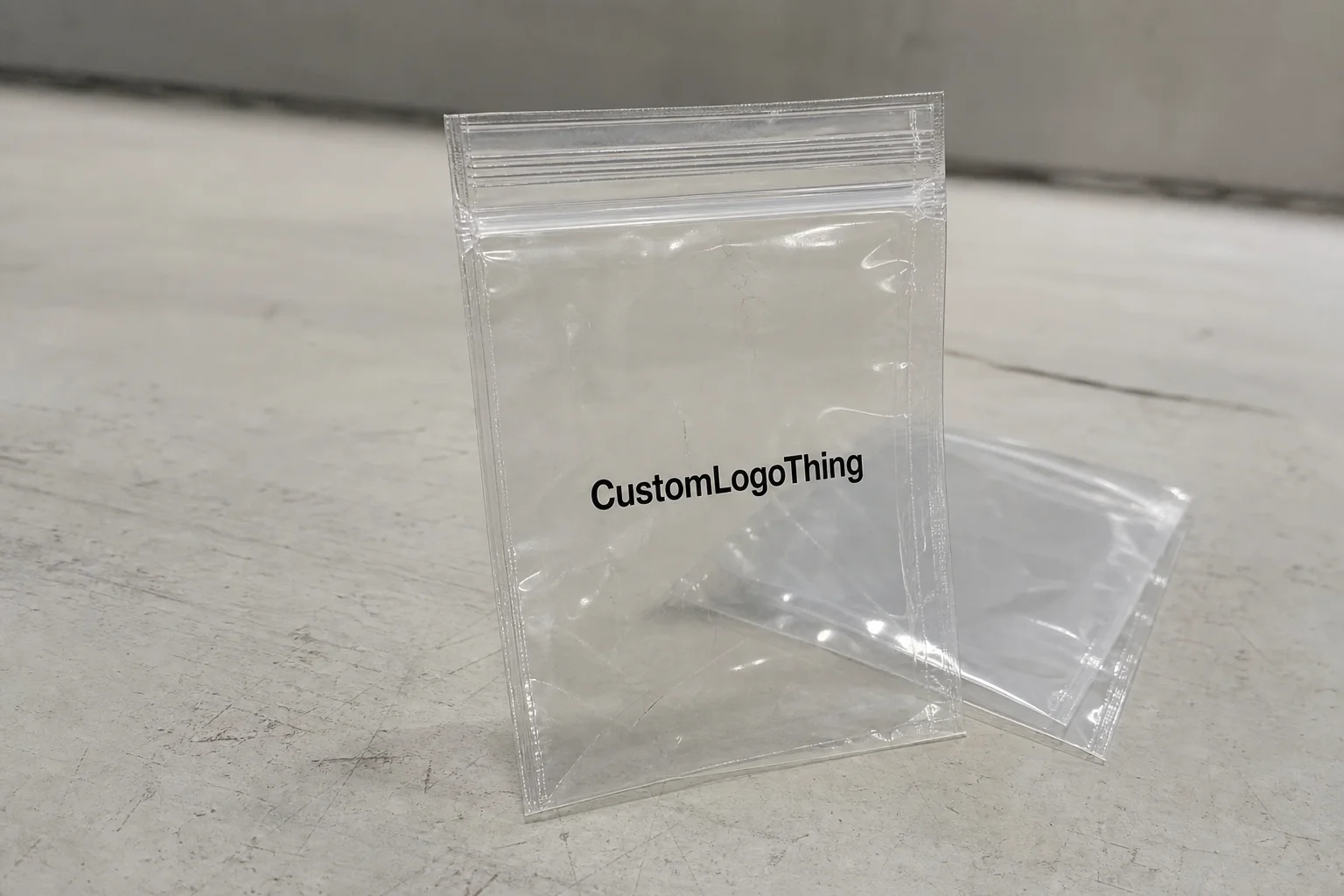
Jewelry packaging has to do more than hold a piece in place. It has to show the item clearly, resist scuffs, keep dust out, and support retail handling without adding unnecessary weight. A clear zipper bag does that with a much simpler structure than rigid boxes or molded inserts.
Small MOQs matter because many jewelry collections are still in the testing phase. A brand might launch three ring styles, a limited earring set, or a holiday bundle that will only sell for one quarter. In those situations, overordering packaging is a real risk. Inventory costs sit quietly until the line changes, and then they become dead stock.
Low-MOQ packaging is also useful for product tests and photo samples. A brand can check how a bag reads on shelf, how it photographs, and how customers respond to the packaging feel before committing to a bigger run. That kind of trial run usually reveals more than a mockup ever will.
There is a catch. Lower MOQ almost always means some compromise. Standard dimensions are easier to source than fully custom ones. One-color printing is easier to run than full-color artwork. Extra features such as frosted film, a hang hole, or a euro slot can raise the setup burden and push the order into a higher pricing tier. That is normal manufacturing behavior, not a supplier trying to be difficult.
When comparing quotes, ask for three numbers side by side: MOQ, unit price at that MOQ, and the next price break. Those figures show the real structure of the offer. A polished quote with vague language does not tell you much if the minimum order is larger than your launch plan can support.
If you need a broader view of packaging selection, our Case Studies page shows how different formats can match different product and budget requirements. The details matter because packaging decisions are usually made under pressure, and rushed choices tend to cost more later.
Clear Zipper Bag Styles That Actually Work for Jewelry
Not every clear zipper bag suits every jewelry item. Buyers often discover that only after a sample arrives and the bag feels too narrow, too loose, or too bulky once the insert card is added.
Flat Clear Zipper Bags are the most common choice for lightweight items such as studs, slim rings, and simple bracelet cards. They are easy to source, easy to store, and usually the most practical option when the order volume is still modest. For many brands, flat bags are the least complicated path to a clean retail presentation.
Stand-up zipper pouches are better for bundled pieces, gift sets, and jewelry that includes a polishing cloth, backing card, or small insert. The bottom gusset helps the pouch stand upright on a shelf or display table. That added structure improves presentation, although it also uses more film and raises the unit price.
Gusseted flat bags help when the item has more depth than a basic piece can handle. Layered bracelets, charm bundles, and necklace sets often need that extra volume so the closure does not press hard against the product. The larger the gusset, the more the bag starts to behave like a pouch rather than a thin sleeve, so the sizing should be checked carefully.
Closure choice matters more than many first-time buyers expect. A standard top zipper is usually the safest choice for retail use because it is familiar, easy to operate, and widely available. Slide zippers can feel more refined, but they may increase both price and MOQ. Hang-hole versions are useful for peg displays, especially in multi-brand stores, but only if the hole size and placement are confirmed before production starts.
Optional upgrades should be chosen with discipline. Frosted film, matte surfaces, tear notches, euro slots, and printed logos can improve the look of the package, but each one adds complexity. Sometimes that complexity means extra tooling or a longer approval cycle. Sometimes it simply means the supplier needs a more detailed spec sheet. Either way, every feature should serve a clear purpose.
- Rings and studs: compact flat bags with minimal print
- Bracelets: longer flat bags or slim pouches with room for a card
- Necklaces: longer formats that avoid bending the chain
- Gift sets: stand-up or gusseted styles with space for inserts
Materials, Thickness, and Print Specs Buyers Should Check
Material choice affects the way the bag looks, feels, and seals. For jewelry packaging, buyers usually compare PE, CPP, and PET/PE laminates. PE is flexible and often used in lower-cost runs. CPP can provide a little more stiffness and clarity in some constructions. PET/PE laminates usually feel more premium and support print well, though the added structure tends to raise the price.
Thickness is another place where buyer assumptions can cause trouble. Thicker film is not automatically better. A thin bag can work perfectly for lightweight earrings or small inserts, especially when cost and storage space are tight. A thicker film can improve the sense of quality and protect the item more effectively, but too much thickness can make a small jewelry bag feel clumsy and harder to close.
For most jewelry lines, a mid-range thickness is the safest place to begin. It usually provides a good balance of clarity, stiffness, zipper performance, and resistance to accidental creasing. If the bag will be displayed in a retail setting, low-quality film becomes obvious quickly. If it will hold plated or coated jewelry, a smoother surface and a clean seal matter just as much as the visual finish.
Before quoting, confirm these specs in writing:
- Width and height
- Gusset depth if needed
- Zipper type
- Film thickness
- Print area
- Closure style
- Hang hole or euro slot if applicable
Branding options are straightforward, but they should be chosen with the order size in mind. A one-color logo is usually easier to produce at lower quantities. A full-color design can look strong on shelf, yet it often increases both the MOQ and the unit cost. If the first run is meant to test the product rather than lock in a long-term package system, a clean logo, a label, or no print at all may be the smarter move.
It also helps to ask about odor, anti-static behavior, and whether the film may touch plated or coated jewelry directly. Some finishes are more delicate than they appear, and a poor material choice can leave scuffing or clouding on the product. Those problems are not dramatic in the factory; they become obvious when a customer opens the package.
“A useful sample should answer three questions fast: is the bag clear enough, does the zipper close properly, and does the logo sit where it should?”
A physical sample or a pre-production proof is far more valuable than a spec sheet alone. Paper specifications can confirm dimensions and materials, but they do not show how the bag behaves in hand, how the zipper feels, or whether the film hangs awkwardly once filled.
For formal packaging and material references, the Packaging Consortium and ISTA are useful starting points for testing and packaging standards. If your packaging program includes sustainability claims, review guidance from EPA and FSC before making statements that need to be backed up.
Clear Zipper Bags MOQ, Cost, and Quote Drivers
The MOQ for clear zipper bags depends on size, material, print complexity, and any additional processing. It is not determined by the product category alone. A simple flat bag in a standard size can usually start lower than a custom pouch with a hang hole, special finish, and two-color artwork. Complexity is what pushes the order up.
Several factors usually drive price:
- Custom dimensions instead of standard sizes
- Multi-color printing
- Special finishes such as matte or frosted film
- Added features such as hang holes, tear notches, or euro slots
- Tooling fees for custom setups
- Setup charges tied to print preparation
For pricing, ranges are more useful than fixed numbers. Low-MOQ jewelry bags usually cost more per piece because the setup cost is spread across fewer units. As order quantity rises, the bulk pricing typically improves quickly. A smaller run might sit in a noticeably higher cost per piece band, while a larger order can lower the unit price enough to offset some storage cost.
Here is a practical comparison buyers can use as a rough reference. These are typical market patterns, not guarantees.
| Order Type | Typical MOQ | Likely Cost per Piece | Best For | Tradeoff |
|---|---|---|---|---|
| Standard clear flat bag, no print | 500-1,000 pcs | $0.05-$0.12 | Testing, inserts, simple retail use | Limited branding, basic look |
| Printed flat bag, one-color logo | 1,000-3,000 pcs | $0.10-$0.22 | Small branded launches | Setup charges may apply |
| Custom size pouch with zipper and print | 3,000-5,000 pcs | $0.18-$0.35 | Premium sets and display use | Higher tooling fees, higher lead time |
| Special finish with multi-color print | 5,000+ pcs | $0.28-$0.60+ | Retail lines and repeat SKUs | More expensive, less forgiving |
Freight is part of the total cost, as are sample charges and any rework caused by artwork changes after approval. A useful quote should separate unit price, setup charges, tooling fees, sample cost, and shipping. If those pieces are bundled together without explanation, it becomes difficult to compare suppliers in a meaningful way.
The cleanest comparison method is to request the same spec sheet from each supplier. Use the same dimensions, material, zipper type, print count, and finish across every quote. Otherwise the numbers are not really comparable, even if they appear close on the page.
For jewelry brands that are still testing a collection, the lowest MOQ is not always the best financial choice. A slightly higher quantity can drop the unit price enough to justify the additional inventory, especially if the packaging will be reused across several SKUs. That calculation only works if the bag is versatile enough to support more than one item.
Process and Lead Time From Quote to Delivery
The order process is straightforward when the buyer prepares the right information. The usual sequence is quote request, file review, sample or proof approval, production, quality check, packing, and shipping. Each step moves more quickly when the spec is clear from the start.
What slows things down most often is not the factory schedule. It is missing information. Vague dimensions, artwork sent in the wrong format, last-minute changes to the zipper style, and unclear print placement all create delays. These are common because packaging is often reviewed late in the product cycle, after the launch plan is already under pressure.
A realistic lead time for custom clear zipper bags usually looks like this:
- Quote and file check: 1-3 business days
- Sample or proof approval: 3-7 business days
- Production: often 10-18 business days after approval
- Quality check and packing: 1-3 business days
- Shipping: depends on the destination and freight method
Repeat orders tend to move faster because the dimensions and artwork are already locked. That said, a reorder is not always automatic. If the film thickness, print area, or bag size changes, the job should be treated as a new production run and checked again.
Planning backward from the launch date is usually the safest approach. Freight delays, customs delays, and occasional reprint risk need room in the calendar. Tight schedules can be handled, but only if the spec is simple and the supplier has capacity available.
If the deadline matters, say so early. Telling a supplier about a hard launch date after the proof is approved often forces expensive shipping choices that could have been avoided with earlier planning.
How to Avoid the Usual Ordering Mistakes Before Production
The first and most common mistake is inaccurate sizing. Buyers estimate the bag size loosely, then the insert card does not fit, the necklace bends, or the zipper sits too close to the top edge. The correct way to measure is with the product fully packaged, including the card, tag, tissue, or insert that will actually go inside.
The second mistake is choosing the lowest price without checking the film quality. Thin material can save a few cents, but if the bag feels weak or looks cloudy under ordinary light, customers notice immediately. Good print does not rescue a package that feels flimsy in hand.
The third mistake is overspecifying the bag. Buyers sometimes push for thicker film because they want a premium feel, but extra stiffness can make a small bag awkward to use. For studs, slim rings, and simple earrings, too much rigidity can be just as frustrating as too little protection.
Another common trap is trying to force too many SKUs into one packaging run. Split quantities complicate packing and can raise the unit price. If a jewelry line includes several item types, it may be smarter to start with one shared bag format and refine the package later after sales show which SKU deserves a dedicated size.
Check how the insert card, tag, or backing material fits before approving the final artwork. A logo that looks centered on screen can end up too close to the seal line once the product is loaded. That is the kind of detail that turns into a production problem after approval, which is the least convenient time to discover it.
Simple rule: if the bag is cloudy, hard to reseal, or uncomfortable to open under normal light, customers will feel that immediately. They may not describe the technical reason, but they will know the package feels off.
For retail programs or premium gifting, both a digital proof and a physical sample are worth requesting. The proof confirms layout. The sample confirms behavior. Those are different checks, and both matter.
What a Good Packaging Partner Should Show You Before You Order
A serious supplier should show clear specs, realistic MOQ ranges, sample options, and written lead times. If the quote reads like a sales brochure instead of a production summary, the order will probably create confusion later.
Technical support matters because packaging details can be deceptively specific. Someone should be able to review the artwork, suggest a better size, and tell you whether the logo sits too close to the zipper line. That is not an extra perk; it is basic prepress discipline.
Quality control should also be visible. Ask how zipper function, seal integrity, clarity, and count verification are checked before shipment. A bag order may sound simple, but weak seals or misaligned print panels quickly turn a routine shipment into avoidable rework.
Good partners are usually direct about shipping terms, sample fees, and whether setup charges are one-time or recurring. They do not avoid the cost conversation, and they do not describe MOQ as flexible if the production reality says otherwise. Clear answers early are more useful than optimistic language later.
The best packaging partner helps the buyer choose the simplest spec that still looks professional. That reduces risk, keeps the quote manageable, and avoids paying for features that will not materially improve the customer experience.
If you want a quick reference for common packaging questions, our FAQ page covers the basics without extra noise.
Next Steps to Order the Right Bag for Your Jewelry Line
Before requesting quotes, gather three details: the bag size, the jewelry type, and the target quantity. If you already know whether you want print, a label, or no branding, include that as well. The cleaner the input, the cleaner the quote.
Artwork should be prepared in vector format if possible. PDF, AI, or EPS files are usually more reliable than a low-resolution image pulled from a website header. Decide early whether the design needs a one-color logo or a more complex layout. If the budget is tight, a simple label or an unprinted bag is often a better first run than forcing a design that is not ready.
It helps to request two quotes if the supplier can provide them: one at the minimum MOQ and one at the next price break. That comparison shows whether a slightly larger order improves the unit economics enough to justify the added inventory. In many cases, the higher quantity lowers the piece price more than buyers expect.
If the bags will be sold in-store or included in premium gifting, samples should be ordered before production. A sample reduces the risk of bad assumptions, and bad assumptions are expensive once the run is underway. After that, confirm the specs, approve the proof, lock the lead time, and place the order.
That is the most practical way to approach clear Zipper Bags MOQ for jewelry brands: keep the spec tight, compare quotes on the same basis, and pay for only the features that matter to the product. The right packaging choice is usually the one that fits the line now and still makes sense after the collection changes.
What is the typical MOQ for clear zipper bags for jewelry brands?
MOQ usually depends on size, print complexity, and material choice rather than the product category alone. Simple standard-size bags often support lower MOQs than fully custom dimensions or multi-color print runs. Ask for a spec-based quote so you can see how MOQ changes with each upgrade.
Do clear zipper bags work better than jewelry boxes for shipping?
They are lighter, cheaper, and easier to store than rigid boxes. They work well for presentation, sets, and accessories, but they do not provide the same crush protection as rigid packaging. Many brands use them inside mailers or as secondary retail packaging.
What bag thickness is best for jewelry packaging?
A mid-range thickness is usually the safest choice for a premium feel without making the bag overly stiff. Lighter items like studs can use thinner film, while necklace sets and gift bundles often benefit from thicker material. Always test clarity and zipper feel, not just thickness on paper.
Can I print a logo on low-MOQ clear zipper bags?
Yes, but the print method and artwork complexity will affect MOQ and unit cost. Single-color logos are usually easier to run at lower quantities than full-color graphics. If budget is tight, a branded label may be a smarter first step.
How long does production usually take after sample approval?
Lead time varies by spec, but custom print jobs take longer than stock bags. Simple orders move faster when artwork is final and materials are standard. Build in extra time for shipping, especially if the launch date is fixed.


