Coffee roaster Logo Patch Beanies unit cost review sounds narrow, but the buying decision is broader than the keyword suggests. A beanie has to sell quickly, sit well on a shelf, survive packing, and still look intentional after a few wears. Patch decoration helps because it gives the logo a flatter, cleaner surface than embroidery on a stretchy knit, which usually gets distorted once the hat is pulled on.
For roasters, the appeal is practical. Beanies move in winter, they fit into tasting-room displays without taking much space, and they can sit beside coffee bags without looking like an afterthought. A good one reads as merch. A bad one reads as leftover inventory with a logo slapped on it.
The unit cost only makes sense if it is tied to resale value, not just the cheapest quote. A hat that lands a little higher but looks sharper, fits better, and reorders cleanly can outperform a lower-priced option that feels flimsy or needs constant explanation at the register.
Why coffee roasters use patch beanies to sell merch faster
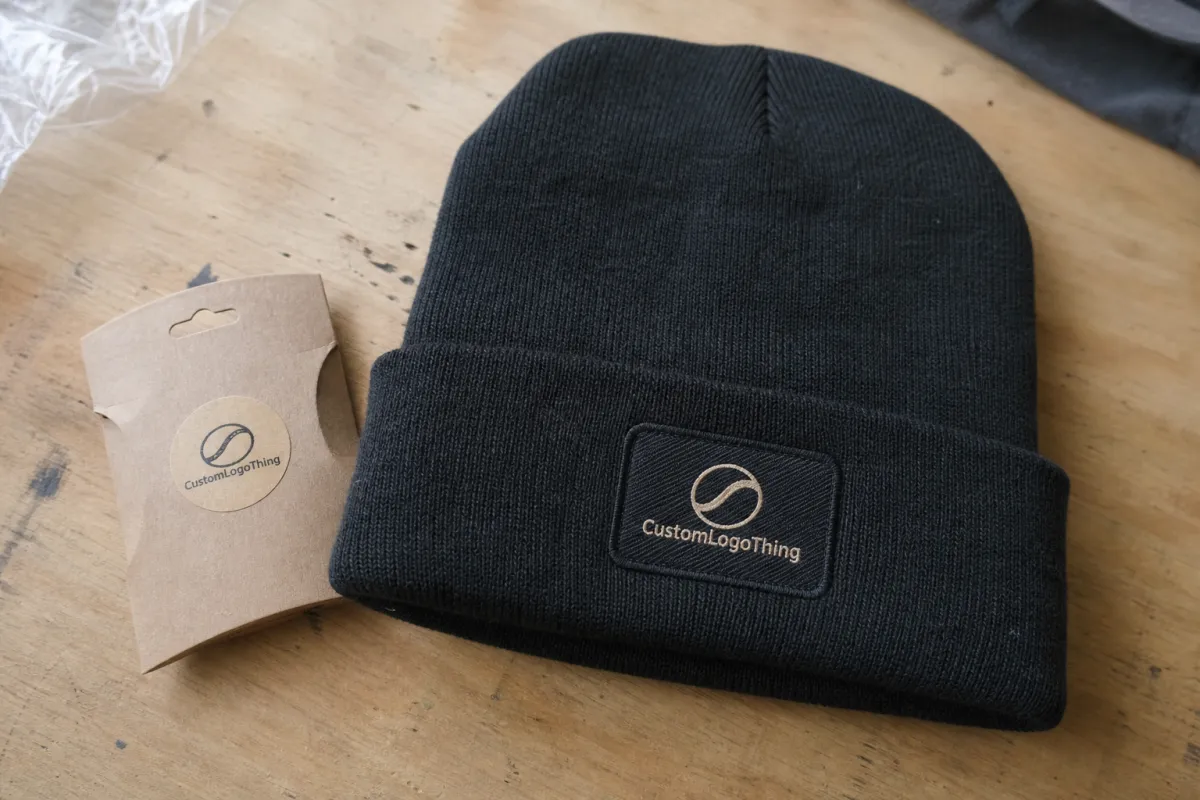
Patch beanies fit the way coffee merch actually sells. They are small enough to stack, practical enough to justify a purchase, and visible enough to carry a logo without screaming about it. That matters in a tasting room where the merch wall is usually competing with bags, cups, stickers, and the menu board. Space is limited. Attention is worse.
The patch format is especially useful on knit goods because a knit surface moves. Fine embroidery can soften or blur when the fabric stretches, and very thin text can disappear into ribbing or slub texture. A patch gives the logo a defined edge and a consistent background, which makes the design readable from a distance and still clean up close.
There is also a margin issue. Apparel can get expensive fast, but beanies are one of the few clothing items that can feel premium without requiring complex sizing. That makes them easier to stock in fewer SKUs, easier to reorder, and easier to bundle with coffee gifts during colder months. If the artwork is clear and the base cap feels substantial, buyers usually accept a slightly higher price point than they would for a plain knit cap.
A thin hat that feels cheap will still look cheap, even with a good logo.
Another reason roasters like them: they fit different channels. Staff wear them. Seasonal gift boxes use them. Retail shelves use them. Even a small batch can serve more than one purpose if the decoration is simple and the color story matches the brand palette. That flexibility is one of the reasons a coffee roaster Logo Patch Beanies unit cost review should look at sell-through potential, not just the first invoice.
Buyer reality: if the logo is hard to read at arm's length, you may save a few cents and lose the sale. Visibility is part of the cost.
For teams that care about retail-ready presentation, basic packaging standards matter too. The educational material at packaging.org is a useful reference for labeling and material language, and fsc.org helps if the merch program uses certified paper hang tags or inserts. Those details do not change the hat itself, but they affect how the piece feels on arrival and on the shelf.
Patch construction and logo placement that survive knit stretch
The main patch types buyers compare are woven, embroidered, and faux leather. Woven patches are usually the safest choice for logos with small text, thin outlines, or tight iconography because the surface can hold detail without getting bulky. Embroidered patches have more texture and can feel richer in hand, but the stitch pile can close in on narrow letterforms. Faux leather works well for simple marks and can look more retail-forward, especially if the brand uses earthy tones or a minimal badge-style logo.
Construction matters as much as material. A clean perimeter stitch usually holds up better than an adhesive-backed edge, especially on a knit item that gets stretched, folded, and packed. Heat-bonded patches can work in controlled programs, but on a soft beanie the fabric flexes too much for that to be the safest default. If the edge starts lifting, the whole piece loses polish fast.
Placement changes the read of the product. Centered cuff placement is still the most common because it gives predictable branding and enough room for a medium patch. A side placement can feel more styled, but it reduces visibility. A small patch tucked lower on the cuff can look quiet and expensive, yet it will not do much for recognition across a room.
There are a few rules that save a lot of trouble later. Keep the patch large enough that the border does not vanish into the knit. Avoid tiny type that only looks good on screen. Match the patch color to the beanie with enough contrast that the logo still reads in dim retail lighting, not just under studio lights. Charcoal, olive, tan, and marled yarns are common trouble spots because low-contrast decoration can disappear on them.
If the goal is retail sell-through, ask for a layout that shows the patch on a modeled or flat-lay mockup. That is the fastest way to see whether the logo is oversized, too small, or too close to the seam. The seam location matters more than most buyers expect. A patch that looks centered in a proof can drift once the knit relaxes.
Practical checks usually come down to three things: stitch density, edge integrity, and logo contrast. That is a boring list, which is exactly why it works.
Beanie specifications buyers should lock before requesting samples
Before a sample gets made, the base beanie style should already be chosen. Cuffed beanies are the safest option for patch placement and repeatability. Slouch beanies can sell well in fashion-forward stores, but the extra drape changes where the logo lands and makes it harder to keep the patch consistently visible across a run.
Fabric choice changes both cost and feel. Acrylic is still common because it is economical and stable in production. Recycled blends can be a better brand fit for roasters that care about sustainability messaging, but they can also feel slightly different in hand and may cost more. Ribbed knits usually hold shape well. Softer, looser gauges may look more casual, but they can warp under a patch if the cuff is too light.
Cuff height matters more than many buyers expect. A taller cuff gives more room for the patch and usually improves front-panel visibility. A shorter cuff can look cleaner, but it leaves less tolerance for placement errors. If the hat runs too loose, the front panel sags and the logo can sit lower than expected. If it runs too tight, the knit pulls and the patch tilts.
Color should be decided early. Stock yarn shades usually keep cost down and shorten lead time. Custom-dyed yarn can be useful if the brand already uses a specific coffee-bag color, but the tradeoff is extra setup, longer lead time, and a higher chance of approval delays. Always check the actual yarn in daylight before approving a large run. Computer screens lie. Fabric does too.
Packaging should also be locked before sampling starts. Polybags, hang tags, size stickers, barcodes, and carton pack counts affect both presentation and handling. A plain bulk-packed beanie is cheaper. A retail-ready pack may cost a little more, but it cuts down on warehouse labor and makes the item easier to put straight on a shelf.
Useful spec points to include in the first quote request:
- Beanie style, knit gauge, and fiber content
- Approximate weight per piece or target hand feel
- Patch material, size, and attachment method
- Logo placement and the minimum visible patch area
- Color target, including Pantone reference if the supplier can match it
- Packaging format, carton pack count, and labeling requirements
- Target delivery date and destination zip or warehouse
One more useful detail: ask for the unrolled dimensions and the cuff measurement, not just "one size fits most." Fit varies enough between suppliers that the same-looking beanie can wear very differently. A wider knit with more stretch may feel better on a display head and worse in a customer’s hand, or the other way around. That is one reason sample review matters.
Coffee Roaster Logo Patch Beanies Unit Cost Review for Bulk Orders
Here is the number buyers want first. A real coffee roaster logo patch beanies Unit Cost Review has to separate the blank hat, the patch, the attachment method, the packaging, and the freight. If those pieces are bundled together too early, the quote looks cleaner than it really is. That is how teams end up comparing prices that are not actually the same product.
The main cost drivers are predictable. Stock beanies cost less than custom knits. Woven patches usually cost less than specialty faux leather labels with extra finishing. Larger logos take more material and can require a bigger patch field. More colors, more custom yarn, and more packaging all push the price up. Even the method of attachment matters because stitching takes time and adhesive-backed methods can change the yield.
MOQ changes the math. A larger run spreads setup costs across more units, which usually lowers the per-piece number. Smaller runs are useful for a tasting-room test or a seasonal drop, but the setup burden shows up more clearly in the final unit cost. For a low-volume order, a buyer may pay more per piece simply because the line has to be set up, proofed, and packed for a short run.
Here is a practical range to use as a buying frame, not a final quote:
| Order profile | Typical unit cost | MOQ tendency | What usually drives price |
|---|---|---|---|
| Stock cuffed beanie + woven patch | $4.20-$6.50 | Lower | Standard materials, common patch size, fewer setup charges |
| Recycled blend beanie + embroidered patch | $5.80-$8.40 | Mid-range | Fiber cost, stitch time, and a more tactile presentation |
| Faux leather patch + retail packaging | $6.40-$9.20 | Mid-range to higher | Patch material, carton handling, hang tags, and finish work |
| Custom color knit + specialty patch | $8.50-$12.00+ | Higher | Custom yarn, tighter production control, and more setup time |
The landed cost matters more than the line item. A beanie that prints at $5.10 but needs extra packaging, proofing, and freight may end up more expensive than a cleaner $5.80 option. Ask each supplier to break out the setup fee, sample cost, packaging Cost, and Shipping terms. If proofing is included in one quote and billed separately in another, the comparison is already off.
For a winter retail program, resale margin usually matters more than shaving the quote to the bone. A product that sells quickly at the counter and restocks cleanly can beat a cheaper item that sits. The goal is not "lowest unit price." The goal is a price that still works after freight, handling, shrinkage, and markdown risk.
A simple way to pressure-test the quote is to set three internal numbers before you approve anything: the maximum unit cost you can accept, the setup fee ceiling you will tolerate, and the freight threshold that still leaves room for margin. That keeps the conversation grounded and makes the tradeoffs visible. It also stops the usual drift where a "cheap" quote quietly grows extras after approval.
If the order is going to more than one cafe location or a mixed merch warehouse, ask for carton counts, carton weights, and pallet details up front. Those details can change freight a lot more than buyers expect, especially on bulky knit goods that take more space than they seem to on a mockup.
Process and lead time from artwork to shipment
The workflow should be predictable. Artwork review comes first. The supplier checks whether the logo file is vector-ready, whether the patch can hold the detail, and whether any parts of the artwork need simplification. Then comes the mockup, which should show patch size, placement, edge style, and the exact location on the cuff or front panel. After that comes proof approval or sampling, then production, inspection, packing, and freight booking.
Most delays happen before production starts. Missing vector files are the most common problem because low-resolution art has to be cleaned up before anything can be approved. Late changes to patch color or size create another round of proofs. Ambiguous art directions cause trouble too. A patch that seems "medium" to one person may look tiny once it is shown against the actual beanie size.
Approval speed matters more than teams want to admit. If feedback takes three days, the schedule moves. If feedback takes a week, the schedule moves a lot. For a seasonal release, that delay can be the difference between selling into cold weather and missing the window entirely.
Standard production often lands in the 12-15 business day range after approval for simpler stock programs. Custom yarn, specialty patches, or packaging changes can push that longer. Rush options may be possible if the blank beanie and patch material are already in stock, but those options usually come with higher charges or tighter minimums. Freight still sits on top of all that. Quote date and delivery date are not the same thing.
For winter launches, holiday retail, and event drops, working backward is the only sensible way to plan. Count time for art cleanup, sample approval, production, packing, and transit. Leave room for a second approval cycle if the first proof is off. If a supplier cannot explain that sequence clearly, the order is probably going to be managed reactively later.
Packaging and transit quality matter more than they get credit for. Ask how the cartons are packed, what the outer labels show, and whether the supplier can describe compression tolerance if the shipment is moving long distance. If the order is headed to a warehouse, case counts and palletization should be clear before the first run starts. A supplier who can answer those questions usually understands more than decoration. That is useful.
What makes a packaging partner reliable on reorder programs
First orders can flatter almost anyone. Reorders are where quality shows up. If the patch shifts, the knit changes, or the color drifts from the last run, the problem becomes obvious very quickly. Consistency matters more on a reorder than on a one-off sample, because the customer expects the second batch to match the first.
The best suppliers keep a clean record of the approved version. Same patch size. Same placement. Same thread or material spec. Same carton count. That sounds obvious, but it is the kind of thing that gets lost when projects are handled by email only and nobody is keeping a written approval trail. If the order needs to repeat in six months, documentation matters almost as much as the product.
Quality control should be visible, not vague. Confirm patch alignment before the run is released. Check edge stitching so the patch does not start lifting after the beanie is folded or worn. Review a pre-shipment sample against the approved mockup. Count cartons and verify labels against the packing list. Those checks are simple, but they prevent the annoying errors that eat time and margin.
Color control is another weak spot. Knit dye lots can shift slightly, and that shift shows more on darker colors than many buyers expect. A good partner keeps enough records to explain what changed and whether the variation is within tolerance. If the answer is always "should be close," that is not a real process.
There is also a business side to reliability. Better communication means fewer rework cycles. Written proof notes reduce disputes. Honest lead times help with inventory planning. For a roaster that does seasonal drops or serves multiple cafe locations, that kind of stability has direct value. It lowers the chance of missing a launch or having to discount product because one batch does not match another.
On repeat programs, the goal is not novelty. It is repeatability with enough polish that the piece still looks considered. That is what keeps the item from feeling like leftover merch.
Next steps to quote your coffee roaster beanie order
Before requesting pricing, gather the actual inputs: logo file, desired beanie style, patch type, target quantity, packaging needs, shipping destination, and the date the order has to land. If any of those are missing, the quote will probably need revision later. That adds delay and makes it harder to compare suppliers cleanly.
Ask for two quote paths. One should be optimized for the lowest unit cost using a stock beanie and a standard patch. The other should be optimized for speed or a smaller minimum order if you are testing a new merch idea or buying for a short winter window. The point is to compare tradeoffs, not just numbers.
Then make the comparison on identical terms. Same blank. Same patch method. Same packaging. Same freight assumptions. If one quote includes proofing and another does not, adjust it before deciding. Otherwise the cheapest line item will win for reasons that do not actually exist.
For a coffee roaster, the right beanie order should be easy to explain, easy to reorder, and easy to sell. That is the standard. If the quote cannot support that, the number is not as good as it looks.
What does coffee roaster logo patch beanies unit cost usually include?
The unit price often covers the blank beanie, patch application, and basic proofing. Setup, packaging upgrades, sampling, and freight may be separate. Ask for a line-by-line quote so you can compare landed cost rather than a misleading headline price.
What MOQ should I expect for coffee roaster patch beanies?
MOQ depends on the blank style, patch method, and color count. A stock beanie with a standard woven patch usually has a lower minimum than a custom knit or specialty patch build. Smaller orders can work, but the per-piece price usually rises because setup is spread across fewer units.
How long is the turnaround for custom patch beanies?
Approval speed is the biggest variable. Artwork changes, patch revisions, and slow feedback add time before production starts. Once approved, simpler stock programs often land in the 12-15 business day range before freight, while custom specs can take longer.
Which patch type works best on textured knit beanies?
Woven patches usually perform well because they keep detail readable on a flexible surface. Embroidered patches add texture, but very small text can close in. Faux leather can work too, especially for simple logos and darker retail palettes.
What files do you need for a fast quote on coffee roaster logo beanies?
A vector logo, target quantity, preferred beanie style, patch idea, delivery location, and needed date are the fastest route to an accurate quote. If packaging or labeling is part of the order, include that upfront so the price reflects the real job.