The trade show soft touch poly mailers Unit Cost Review starts with a blunt truth: the mailer is part of the pitch. Before anyone reads the brochure or opens the sample, they are already judging the package in their hands. If it feels flimsy, loud, or generic, the contents have to work harder to recover that first impression.
That is why experienced buyers treat soft-touch mailers as a presentation tool with a logistics job, not as decoration. The finish can make a press kit feel intentional, help a VIP invite look polished, and keep post-show shipments from arriving with that tired, disposable look cheap packaging tends to create. For media kits, sample drops, and apparel inserts, that difference is real.
The pricing conversation is just as practical. A better mailer can protect inserts, reduce damage claims, and support the brand story in one move. That does not make it cheap. It makes it easier to justify when the package itself is part of the experience. If you are comparing formats, it helps to look at broader Custom Packaging Products and the event-specific range of Custom Poly Mailers before you settle on a spec.
Why trade show soft touch poly mailers beat standard event bags
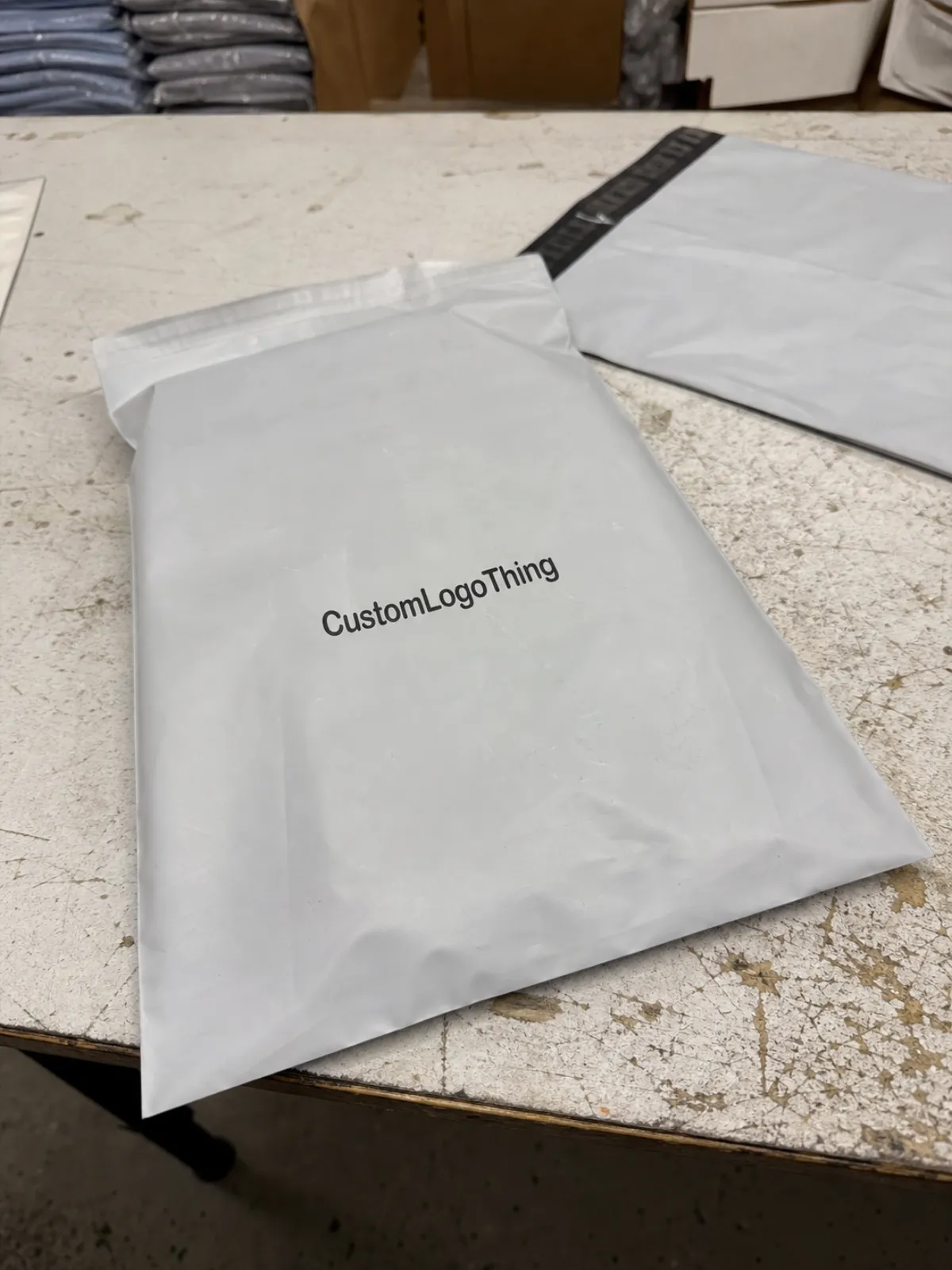
On a show floor, everything is competing for attention. Standard event bags get the job done, but they usually say very little about the brand inside. A soft-touch poly mailer has a better shot at signaling quality the second someone picks it up. That tactile cue matters more than most teams expect.
It is a good fit for press kits, VIP invitations, product samples, apparel, and outbound fulfillment after the event. It also works when the package needs to feel deliberate rather than improvised. The goal is not luxury for its own sake. The goal is to make the item feel worth opening.
That is where the business case starts. Trade show budgets are often reviewed by line item, which can hide the real tradeoff. If a sample kit has any value, then a few extra cents on packaging can be easier to defend than replacing crushed brochures or sending out a second batch because the first one looked unfinished.
The basic comparison is simple. A plain poly mailer moves an item. A soft-touch mailer frames it. That framing influences how the package is handled, how long it stays on a desk, and whether the brand reads as premium or purely functional. The best packs are not loud. They are controlled.
A good event mailer has to earn its place in three ways: better presentation, better protection, and less waste from damaged or ignored collateral.
Material build and finish choices that affect the buyer experience
Material build comes first. Most custom poly mailers use layered polyethylene film, and thickness affects stiffness, puncture resistance, and the way the mailer holds its shape when stacked on a table or packed into cartons. Thinner film can reduce cost, but it also wrinkles more easily and feels less substantial in hand.
Finish changes the entire read of the package. Soft-touch usually gives the surface a velvety matte feel with low glare and a more restrained look. Standard matte is cleaner and less tactile. Gloss is brighter and can make bold artwork pop, but it often reads as less refined for executive audiences. There is no universal winner. The right choice depends on the booth message and the contents.
Functional details matter just as much. Tear strips make opening easier and reduce the chance of damaging the contents. Tamper-evident closures are useful when the package holds confidential media materials or invite-only samples. Gussets help when the insert stack is thick, because they reduce bulging and keep the mailer looking intentional instead of overstuffed.
Premium packaging is not only about look and feel. It also protects brochures from edge wear, apparel from abrasion, and samples from light moisture during transport. If the mailer is part of the launch experience, the finish needs to be reviewed with the contents, not after the artwork is already locked. That is where teams burn time and money.
Ask for the actual film thickness, seal type, and surface finish in writing. A polished mockup does not tell you whether the bag will survive inbound shipping, booth storage, and outbound fulfillment. A spec sheet does.
Specifications that control fit, print quality, and shipping performance
Fit is the first spec to lock down. Before asking for pricing, confirm width, height, gusset depth, closure style, and printable surface area. Those numbers determine whether brochures lie flat, whether apparel fits without strain, and whether the mailer keeps its shape during handling. Too small creates bulges. Too large wastes material and can make the package look careless.
Artwork setup is just as important. Print coverage, white ink requirements, bleed, and safe zones all affect the final look and the cost. Full coverage with deep solids usually needs more attention than a simple logo placement. If brand color accuracy matters, ask how the soft-touch surface will affect ink appearance. Some colors gain depth. Others lose contrast faster than expected.
Shipping performance should never be assumed. If the mailer is going beyond the booth and into fulfillment, ask about seal integrity, puncture resistance, and moisture protection. For higher-value kits, many buyers ask for transit testing aligned with ISTA procedures so the package is checked under realistic stress instead of ideal conditions.
A complete spec sheet saves money because it lets suppliers quote the same job on the same terms. It also exposes hidden problems early, such as artwork that will be cropped by the seal area or contents that need more gusset than the buyer first estimated. Small sizing mistakes are expensive because they repeat across every unit.
If the order is going to retailers, distributors, press rooms, or direct mail recipients, the travel path matters too. Handout, drop shipment, and carrier shipment create different wear points. A useful spec should reflect how the pack will actually move, not just how it looks in a design review.
Trade show soft touch poly mailers unit cost review
Here is where buyers get misled. The trade show Soft Touch Poly Mailers unit cost review is not a one-line price check. It is a comparison of size, film thickness, finish, print coverage, quantity, freight, and lead time. A mailer that looks inexpensive on paper can turn out to be the most expensive option once setup charges or rush timing show up.
For short runs, a custom soft-touch mailer often lands around $0.55 to $1.20 per unit at 500 to 1,000 pieces, depending on size and print complexity. At 5,000 pieces, a straightforward spec can drop into the $0.18 to $0.38 range. Add full coverage graphics, white ink, or specialty finishes, and the price rises. That is normal. Material cost is only part of the bill.
MOQ behavior matters too. Lower quantities usually carry a higher unit cost because proofing, setup, and quality control are spread over fewer bags. If the packaging is for one event only, a short run can still make sense. If the same design will be used across several shows, a larger order often brings the total spend down enough to justify holding inventory.
| Run size | Typical unit cost | Best for | Cost signal |
|---|---|---|---|
| 500-1,000 pieces | $0.55-$1.20 | Single event, pilot kit, urgent launch | Higher setup share, flexible MOQ |
| 2,500 pieces | $0.28-$0.55 | Regional tour, repeating roadshow | Better balance of volume and inventory |
| 5,000+ pieces | $0.18-$0.38 | Multi-event calendar, evergreen branding | Strong bulk pricing, lower cost per piece |
Tooling and setup are the next line items to inspect. On simple print-only mailers, these charges may be small or absent. On more customized work, such as nonstandard dimensions, unusual seals, or structural changes, they can appear quickly. A useful quote separates those costs so you can tell whether the price is being driven by material, production complexity, or one-time setup.
Then there is landed cost. Freight, rush charges, protective packing, and replacement risk matter as much as the base unit price. If the mailers arrive late or unusable, the cheapest quote is no longer cheap. That is why a serious trade show soft touch poly mailers Unit Cost Review has to compare delivered cost, not just the number next to the piece price.
The lowest unit price is not the lowest total cost if the order misses the event date or needs a second production run.
One more practical point: the savings from a lower quote can vanish fast if the spec is vague. A slightly larger mailer may cost more per unit, but it can reduce wrinkling, improve pack-out speed, and lower damage risk. Buyers who only chase the printed price often miss those downstream costs. That is a bad trade in a deadline-driven category.
Process, proofs, and production timeline from quote to delivery
The cleanest jobs follow the same path: quote request, artwork review, proof, approval, production, inspection, packing, and shipment. Each step can move quickly when the brief is complete. Each step can also stall when dimensions are still changing or logo files are not ready.
Most delays happen in the same places. Missing dielines slow artwork placement. Incomplete files trigger color corrections. Late changes after proof approval create avoidable rework. The more complete the spec, the easier it is for the supplier to give a realistic delivery window and keep the schedule from slipping.
Turnaround depends on quantity and complexity, but buyers should usually plan for a production window measured in business days, then add freight buffer on top of that. Rush orders are possible, but they still depend on complete files and fast sign-off. Production cannot compress indecision.
The event date should drive the schedule, not the other way around. If the mailers are going into booth kits, build in margin for carrier delay, weather, reprint risk, and internal receiving time. Shipping stress is common enough that a conservative buffer usually costs less than emergency freight.
It also helps to think about the pack the way a logistics team would. The package has to survive storage, staging, handout, and often a second shipment after the show. That is why a proof should answer more than “does it look good?” It should answer “will it stay intact through the whole trip?”
What a dependable custom mailer supplier should prove
Reliability shows up in the details. A good supplier answers clearly about material build, print method, seal performance, and repeatability across reorders. If the answers stay vague, that is a warning sign. Buyers do not need marketing copy. They need to know why one spec costs more than another and what changes that price.
Consistency matters because trade show programs repeat. One event may need 1,000 mailers; the next may need 6,000 with the same artwork. The supplier should be able to reproduce the same look across runs without forcing the buyer to rebuild the file each time. That is process maturity, not just better sales language.
Ask what quality checkpoints happen before shipment. Thickness verification, seal inspection, and color alignment are basic expectations on custom packaging. For buyers who need a tighter benchmark, ask whether the run is checked against a sample, a documented tolerance, or a simple visual pass. Those are not the same thing, and the difference shows up in the field.
Service matters because trade show timelines punish mistakes. A misprint is not just a reprint fee. It can mean missed freight, last-minute substitutions, and wasted booth labor. In a strong trade show soft touch poly mailers Unit Cost Review, the supplier is not only quoting bags; the supplier is helping protect the event plan.
Buyer confidence should come from proof, not promises. If the supplier can show the build, the finish, the approval path, and the lead time in writing, the order gets much easier to approve. Vague answers are expensive later.
Next steps to lock specs, request pricing, and place the order
The fastest route to a clean quote is a complete brief. Send final dimensions, quantity, artwork files, finish preference, closure style, and required in-hand date. If the mailer needs a gusset, tamper evidence, or mailing compatibility, include that too. Small omissions in the brief usually come back as cost changes later.
Ask for a line-item quote. Unit cost should be separated from setup charges, freight, and any rush fees. If a supplier combines everything into one number, it is harder to compare options or explain the total internally. Procurement teams usually make better decisions when they can see where the money is going.
If color match, hand-feel, or closure performance matters to the presentation, order a sample or a short run first. That extra step often pays off when the mailer is being shown to investors, media, or high-value prospects. It is also the easiest way to see whether the finish works under booth lighting instead of in a product photo.
Confirm approval timing early. A three-day delay on proof sign-off can matter more than a small price difference, especially when the event calendar is already locked. For teams balancing event deadlines and inventory control, the smarter move is to treat trade show mailers as planned procurement, not an afterthought.
If the decision still feels close, reduce it to three checks: does the mailer fit, does it feel right, and does the timeline hold. That is the practical standard for a trade show Soft Touch Poly mailers unit cost review. Everything else is noise.
FAQ
What drives trade show soft touch poly mailers unit cost the most?
Size, film thickness, and print coverage usually drive the biggest changes in unit cost because they affect both material use and production complexity. Quantity matters a lot too, since higher volumes spread setup charges across more mailers. Rush timing, freight, and special finishes can raise the total even when the base piece price looks competitive.
What MOQ should I expect for custom soft-touch poly mailers?
MOQ depends on size, print method, and finish, but buyers should expect higher minimums than stock mailers because setup costs have to be recovered somehow. Short-run orders are possible, yet the per-unit price is usually higher. If you need several event dates, a larger MOQ can be more efficient than placing multiple small reorders.
How long does production usually take after proof approval?
Turnaround depends on the supplier, artwork complexity, and quantity, but proof approval is the point that starts the production clock. Rush orders are often available, although they still require complete files and fast sign-off. Shipping buffer time should be included so the mailers arrive before the event, not on the same day.
Can I match booth branding on trade show mailers?
Yes. Most buyers can match brand colors through careful artwork prep, the right print method, and proof review. If color accuracy matters, request a sample or a proof process that shows how the finish changes the final look. White ink, solid coverage, and soft-touch film all affect how logos read under show lighting.
What information do you need for an accurate quote?
Provide dimensions, quantity, artwork files, finish preference, and the date you need the order in hand. Include any special requirements such as tamper evidence, gussets, or mailing needs so the quote reflects the real build. The more complete the brief, the faster the supplier can deliver a reliable unit cost and timeline.

