Tea Logo Patch Beanies Material Sample Guide to Order
If you buy beanies for retail, promo, or ecommerce, the real failure usually shows up in the hand, not on the screen. A tea logo patch Beanies Material Sample guide is supposed to catch that. A patch can look sharp in a mockup and still feel stiff, glossy, itchy, or oddly plastic once it lands on a knit crown. The sample is not just a color check. It is a test of the knit, the patch face, the backing, the edge finish, and the way everything behaves on a curved, stretchy garment.
That matters because small flaws scale fast. A corner that lifts, a knit that pills early, or a logo that looks crowded after sewing can turn into returns, complaints, or a line that never gets reordered. Buyers who treat the sample as a quick approval step usually pay for it later. Buyers who treat it like a production filter usually sleep better.
The best sample is not the prettiest one. It is the one that reveals the problems early.
Tea Logo Patch Beanies Material Sample Guide Basics
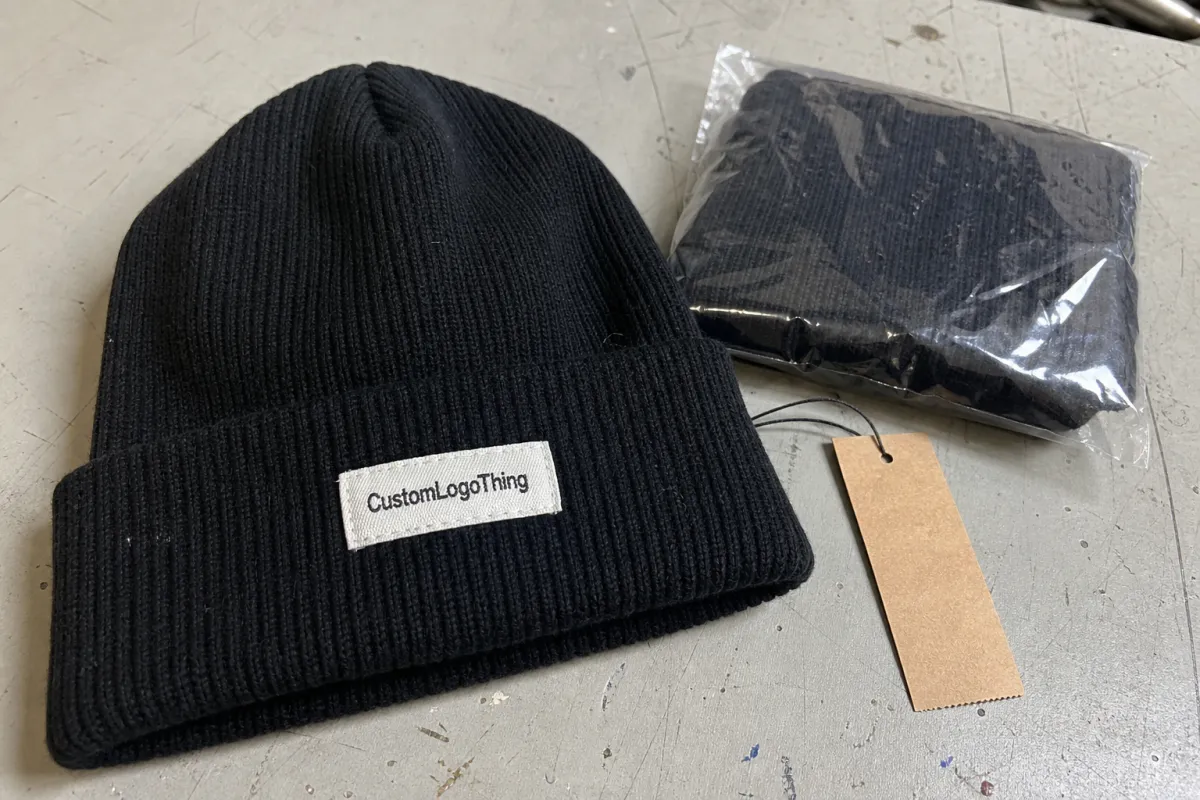
A tea Logo Patch Beanies material sample guide starts with a simple correction: you are not sampling one item. You are sampling a system. The beanie fabric, the yarn, the patch construction, the backing, the edge treatment, the stitch path, and the logo proportions all affect how the final piece looks and wears. If one part is off, the whole product feels off.
Buyers often judge the sample in the wrong order. They look at the logo first, then the color, then maybe the cost. The smarter sequence is the opposite. Start with the fabric handfeel. Then check patch thickness. Then test how the patch sits on the crown and whether the knit distorts under light stretch. A clean logo on a bad base still makes a weak product.
The feel test matters more than many teams want to admit. A retail customer may not know why a beanie feels cheap, but they will notice. A patch that is too thick can make the crown stiff. A rough edge can rub. A high-gloss finish can push the piece toward promo instead of premium. None of that shows up in a flat render.
Good sample review usually covers three layers: visual proof, wear test, and production reference. Visual proof checks layout and color. Wear test checks comfort and distortion. Production reference locks the exact construction so the bulk order does not drift. If the sample cannot answer those three questions, it is not ready.
The most common mistake is approving the artwork and forgetting the build. Artwork approval only says the logo is legible. It says nothing about stitch density, fabric recovery, or whether the patch backing will survive repeated wear. For a cold-weather item, that is a big gap. A beanie that looks right for one photo can still fail after a few wears if the patch lifts or the knit stretches out around it.
That is also why sample comparison should happen under ordinary light, not showroom light. Bright spotlights hide texture problems. Natural light or consistent white light shows surface quality, edge cleanup, and small color shifts far more honestly. If a supplier sends a sample that looks perfect only in one setup, the sample is doing marketing, not quality control.
How Patch Construction Changes Handfeel and Shape
Patch construction affects the beanie more than most first-time buyers expect. Woven patches stay flat and can hold detail well, which makes them useful for small logos, fine text, and cleaner retail styling. Embroidered patches add dimension and texture. That can look richer, but it also adds bulk. Leather feels more premium and restrained. PVC and rubber read bold and weather-resistant, but they change softness and drape. Felt feels warmer and softer. Chenille is plush and nostalgic, though it can push a piece too far toward novelty if the brand wants a cleaner look.
The question is never “which patch is best?” The question is “which patch fits the use case without breaking the handfeel?” A high-end retail beanie can justify a tighter finish, a cleaner edge, and a more exact backing choice. A giveaway beanie can usually tolerate a simpler build because the goal is visibility and cost control. The wrong patch can make even a good knit feel overbuilt.
Edge treatment is easy to underestimate. Laser-cut edges can look sharp, but thick material can still feel hard around the perimeter. Merrowed edges soften the visual outline and can hide small inconsistencies better. Heat-cut edges are neat on some synthetics, but they need careful control or the corners end up feeling rigid. On a beanie crown, those details affect how the logo sits when the knit is stretched and folded during wear.
Here is the practical inspection list buyers actually use:
- Stitch density - dense stitching can look refined, but too much makes the patch rigid.
- Backing behavior - adhesive, sew-on, Velcro, and fusion backing each change durability and comfort.
- Seam placement - poor placement creates bumps, pull lines, or visible distortion.
- Shape stability - check whether the patch warps after light stretching or repeated handling.
There is also a packaging lesson here. A product that survives the photo test can still fail under compression, bending, or transit vibration. That is why organizations such as the International Safe Transit Association remain useful references for thinking about handling risk, even outside the packaging world. The point is simple: if movement damages the presentation, the sample was not finished enough.
Material Choices That Influence Durability and Stitch Quality
The beanie fabric underneath the patch controls a lot of the outcome. Acrylic remains common because it is affordable, consistent, and easy to knit across colorways. Acrylic-wool blends feel warmer and usually read more substantial, but they cost more and need better wash testing. Recycled polyester is widely used in programs that want a lower-impact material story with good color consistency. Cotton blends feel softer and breathe better, though they are less common in heavy winter builds. A tighter rib knit generally supports a patch better than a loose, highly elastic structure.
Fiber content affects more than comfort. It changes pilling resistance, color retention, moisture feel, and how sharp the logo looks after the beanie has been worn a few times. A yarn that looks bright out of the box can fade unevenly if the dye quality is inconsistent. That is why colorfastness matters. A neutral color often hides small variations better than saturated shades, where every shift becomes visible immediately.
Stitch quality is usually where the build gets exposed. Some knits hold a patch cleanly because the fabric gives the needle enough control. Others pucker, ripple, or loosen under tension. If the patch is sewn too tightly, the fabric tunnels. If it is sewn too loosely, corners lift. The sample is where those problems show up before they turn into a bulk-order headache.
It helps to test the same logo across multiple colorways. A patch that feels balanced on heather gray may disappear on navy. A dark border can look too hard on a pale knit. If the launch includes several colors, always ask for at least one sample on the trickiest base color, not just the easiest one. That gives a more honest read on contrast and logo clarity.
| Material / Build | Typical Handfeel | Durability Notes | Common Price Effect |
|---|---|---|---|
| Acrylic knit + woven patch | Soft, familiar, easy to wear | Good for volume programs; watch for pilling | Usually the lowest baseline |
| Acrylic-wool blend + embroidered patch | Warmer and more substantial | Better premium feel; needs careful wash testing | Moderate increase |
| Recycled polyester + PVC or rubber patch | Structured, slightly technical | Strong color consistency; check softness on wear | Mid to higher, depending on tooling |
| Cotton blend + felt patch | Breathable, casual, less winter-heavy | Comfortable for light use; less insulating | Varies with blend and finishing |
If sustainability claims matter, ask for specifics. “Eco-friendly” is not a spec. “30% post-consumer waste in the yarn” or “FSC certified paperboard insert” is a spec. That distinction matters because buyers often have to defend material choices internally, and vague language does not survive procurement review. Packaging can also affect how the sample is judged. Kraft sleeves, corrugated mailers, or recycled insert cards can improve presentation, but they do not rescue a weak product.
For broader packaging and waste context, the EPA resources at epa.gov are useful if your team tracks recycled content, packaging waste, or documentation for internal reporting. That is not beanie-specific, but the same discipline applies. If the materials story is real, it should be measurable.
Sample Process and Production Timeline from Artwork to Approval
The sample process usually begins with a brief: logo artwork, patch size, beanie color, placement, and quantity range. A decent supplier will turn that into a digital proof first. That proof checks proportion and placement before any fabric gets cut. Then the physical sample is built. After that comes review, revisions if needed, and final approval. Straightforward on paper. Slower in real life.
Lead time changes fast once custom tooling enters the picture. A woven or embroidered patch can move fairly quickly if the artwork is clean and the factory already has the right thread and base materials. Leather, PVC, and rubber patches can require molds or tooling, which adds time. If the first sample misses the mark, another round is common. Specialty yarns can also slow the job, especially if the color has to match several beanie shades closely.
A practical timeline often looks like this: digital proof in 1-3 working days, physical sampling in 5-10 working days, then shipping on top of that. Custom tooling or a revision round can extend the process by another week or two. Rush orders exist, but they usually cost more and leave less room for correction. That tradeoff is real.
Speed improves when the brief is specific. Include patch dimensions in millimeters, placement distance from the cuff or crown edge, Pantone targets if color matching matters, knit weight, and the reorder range you expect. Vague notes like “make it premium” slow everything down because they force the factory to guess what premium means to you.
Most delays come from a short list of avoidable problems:
- Revision notes that are too vague to interpret consistently.
- Material swaps after the first mockup looks different from what the buyer expected.
- Missing sign-off from design, merchandising, or procurement.
- Sample rework after the patch backing or stitch pattern fails a fit test.
The cleanest approval process is still boring: approve one physical sample, freeze it, photograph it in standard light, and store it with the final spec sheet. That one habit prevents most “we thought we approved the other version” arguments later. The sample stops being a one-off and becomes the production reference.
Material Cost, MOQ, and Quote Variables That Move Price
Pricing gets clearer once you break it into parts. A quote usually includes the sample fee, patch setup, embroidery digitizing if needed, material premium, labor, packaging, and freight. That sounds granular, but it is the only way to compare two suppliers fairly. One quote may look lower until you notice the patch setup is hidden elsewhere or the sample uses a different knit weight.
Sample fees for simple knit-and-patch builds are often modest, sometimes in the $25-$80 range, but custom tooling can push the first round higher. Leather, PVC, and rubber patches may add a mold or plate cost. If the first sample is revised, the second round usually costs less than the first, but it is still not free. Freight matters too, especially when samples move internationally.
MOQ matters because setup costs have to be spread somewhere. Smaller minimums usually raise the unit price, but that can still be the right call if you are testing a new retail line or validating a seasonal design before scaling. Many buyers see 100-300 pieces as a trial order and 1,000-5,000 pieces as a more efficient production range, though the right number depends on demand confidence, size assortment, and how much inventory risk you want to carry.
These variables move price more than most people expect:
- Patch complexity - fine detail, multiple layers, and special finishes take more labor.
- Color count - more colors usually mean more setup and more inspection.
- Backing type - sew-on, adhesive, Velcro, and heat-applied finishes are not priced the same.
- Rush timing - compressed schedules often add a premium.
- Revision rounds - every extra sample cycle adds labor and freight.
Compare quotes on the same basis: same fabric blend, same patch size, same approval stage, same packaging expectation, same shipping terms. If one supplier includes kraft sleeves, FSC certified insert cards, or recycled shipping cartons while another does not, the lower number is incomplete. It is not cheaper. It is just missing pieces.
A useful quote also spells out whether the supplier can maintain logo consistency across multiple colorways and whether the sample includes the exact label placement you want in bulk. Those small details affect brand perception more than a few cents per unit. On a large order, even a small price difference adds up quickly once freight and packaging are included.
Honest comparison beats optimistic comparison every time. If the sample feels right but the quote is vague, the final production risk is still high.
Common Sample Mistakes That Create Bad Buy Decisions
The easiest mistake is approving from photos alone. Lighting, camera settings, and screen calibration can hide surface problems and edge defects. A patch that looks flat and clean online may show glue marks, raised corners, or uneven stitching in hand. If you cannot inspect the sample physically, ask for daylight video and close-ups of the edge, but do not treat that as a full substitute.
Another common mistake is testing only one sample under perfect conditions. Real wear is messier. A beanie may look fine on a table and feel too tight after ten minutes on the head. A patch may sit neatly on one size but pull on another. The sample should be worn, stretched, and viewed from several angles. Anything less leaves room for surprise later.
Spec drift causes a lot of avoidable trouble. If the sample uses a heavier knit than the bulk order, the patch may look more stable than it will in production. If a supplier changes the backing method between rounds, you are no longer comparing the same build. The buyer thinks they are comparing versions. The factory sees two different products.
Wash and rub tests matter too. Even a simple home check can reveal bleeding, peeling, pilling, or early seam failure. Retail buyers should care about that more than they usually do. A beanie that survives the first wear but not the first wash creates customer-service work and weak reviews. That is not a small problem.
Practical test set: rub the patch edge with dry hands, stretch the cuff, compare the sample to the approved photo in natural light, and, if the supplier allows it, test a light wash on one piece. That sequence catches a surprising number of failures before bulk production starts. It is not glamorous. It is effective.
Expert Tips and Next Steps for Cleaner Bulk Approval
If the choice is close, order two physical samples or side-by-side swatches. A difference that feels minor on a spec sheet can be obvious once both pieces are in hand. Handfeel, finish, patch clarity, and logo presence are easier to judge in direct comparison than from memory. That matters a lot when one version is built for retail and another leans more promotional.
Build a one-page approval checklist before the sample arrives. Keep it simple: color standard, patch placement, acceptable tolerance, care expectations, packaging notes, and who signs off. That turns a subjective review into a repeatable process. It also keeps design, merchandising, and procurement looking at the same reference, which cuts down on late-stage disputes.
Do not treat packaging as an afterthought. A beanie folded neatly in kraft paper with an FSC certified card can raise perceived quality without a huge cost bump. If the order ships Direct to Consumer, recycled or biodegradable packaging can support the presentation, but only if the product itself already passes the hand test. Packaging can frame a strong sample. It cannot repair a weak one.
Save the approved sample images with the final spec sheet and label them with the exact beanie color, patch type, and placement measurement. That file becomes the production standard if the bulk run starts to drift. Teams lose money when they rely on memory or scattered email threads. A clean reference file prevents that.
The real job of a tea Logo Patch Beanies material sample guide is simple: make the final approval boring. If the sample survives touch, wear, wash, and a fair comparison, bulk production is much safer. If it does not, the sample already paid for itself by preventing a larger mistake.
What should a tea logo patch beanies material sample guide include?
It should cover the beanie fiber content, patch type, backing method, patch size, placement, and any color targets before sampling starts. Add care expectations, wash or rub test results, and the packaging format if presentation matters. The more exact the brief, the fewer surprises later.
Which patch material usually works best on tea logo beanies?
Woven patches are a strong choice for fine detail and a cleaner retail look. Embroidered patches add texture, while leather, PVC, and rubber change the handfeel more noticeably. The right option depends on the brand position, target cost, and whether the beanie is for retail or promotional use.
How long does sampling usually take for patch beanies?
Digital proofing can take a few days, and a physical sample often takes about 5-10 working days before shipping. Custom tooling, specialty yarns, or revision rounds can add another week or two. Rush orders exist, but they usually reduce flexibility and raise cost.
What drives sample cost and MOQ the most?
Patch complexity, color count, backing type, and tooling are the biggest price drivers. Lower MOQ requests usually raise the unit cost because setup is spread over fewer pieces. Freight and extra revision cycles also add cost, so compare quotes using the same sample specs.
How can I compare samples from different suppliers fairly?
Use the same lighting, the same checklist, and the same wear test for every sample. Measure patch size, placement, knit weight, and edge finish instead of judging only by appearance. Keep one approved reference sample and lock those details before moving to bulk production.


