A coffee roaster Printed Poly Mailers Material Thickness guide sounds narrow, but that one spec often decides whether a shipment arrives tidy or shows up with split seams, scuffed print, and a customer service thread nobody wanted. A mailer can look tough on a desk and still fail once it is stacked, compressed, shoved through sortation, and handled by a carrier network that does not care how carefully the design was approved.
Thickness matters because poly mailers are asked to do several jobs at once. They need to protect the contents, carry artwork cleanly, survive sealing, hold up through transit, and still feel appropriate for the brand. Coffee roasters feel this more than many other buyers because the order mix is rarely static. One week it is single-bag subscriptions, the next it is sampler sets, bundle packs, or a retail launch that needs to look premium without turning into a box project.
What thickness really changes in a printed poly mailer
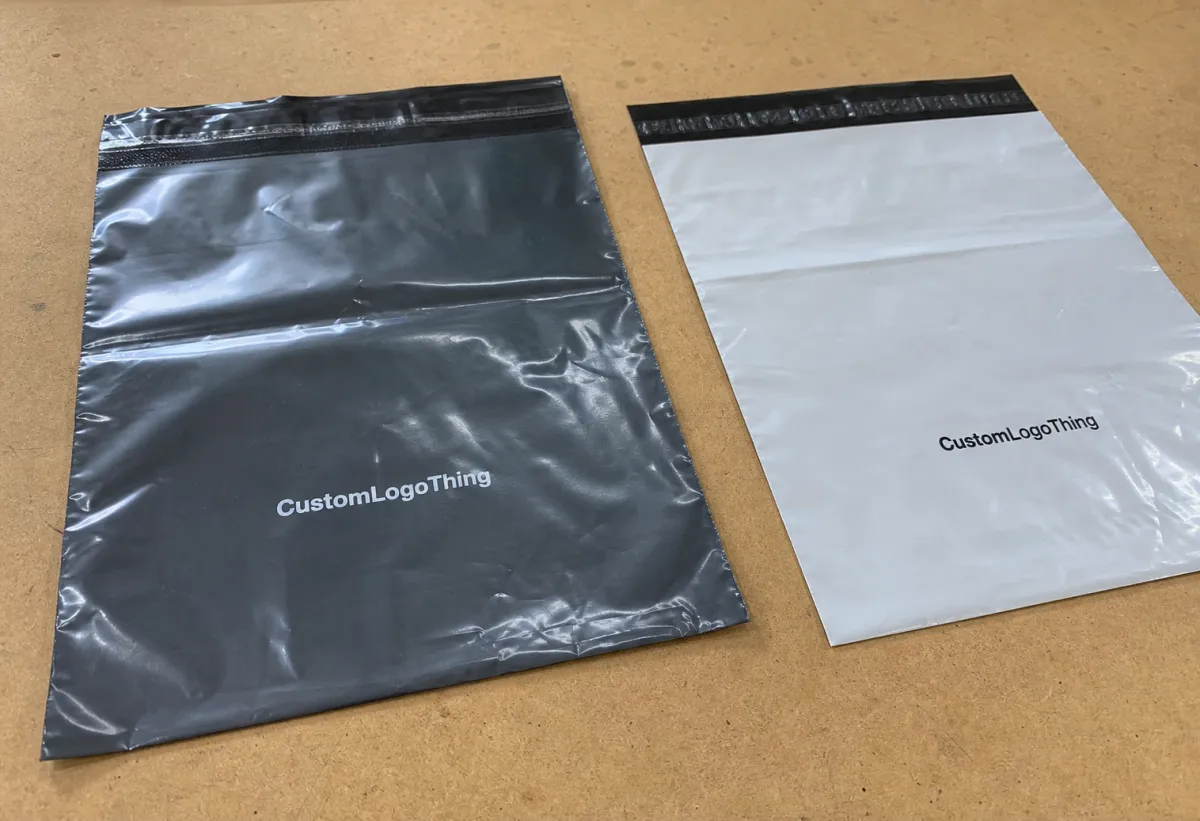
The first thing to clear up is the language. Buyers often hear mil and gauge used as if they mean the same thing, but mil is the more direct number for comparing film thickness. One mil equals one-thousandth of an inch. Gauge still appears in older spec sheets and sales conversations, but it is not always used consistently across suppliers, so ask for the nominal mil thickness whenever possible.
That number affects more than puncture resistance. Thicker film usually improves stiffness, opacity, sealing margin, and the “handfeel” a customer notices before they even open the bag. It can also hide minor abrasion better during transit. That matters for coffee shipments that travel with cardboard inserts, kraft mailers, or other mixed-pack materials that can rub against the surface on the way to delivery.
Thicker is not automatically better. If the coffee is already inside a snug inner pouch or a rigid carton, overspecifying the outer mailer can push cost up without adding meaningful protection. In practice, the right thickness is the one that survives your real route, not the one that sounds safest in a sales quote. That is why the better approach is to start with parcel weight, package shape, and shipping lane, then choose the film.
There is also a presentation effect. A thin, floppy bag can read as fragile or low-value, even if the artwork is good. A properly chosen film feels more deliberate. Still, if the outer package is trying to compensate for poor packout, the answer is not only a nicer print. It is usually a stronger film, a better seal spec, or a different shipping format.
For buyers comparing options, the most useful question is not “What is the thickest mailer available?” It is “What is the lightest spec that still protects the product after a full route test?” That framing saves money, and it also keeps you from buying material you do not need.
How film construction, seals, and print layers work together
A custom poly mailer is not just one sheet of plastic. Most are co-extruded polyethylene structures with an outer print layer, a body layer for strength, and an inner seal layer designed to close under heat and pressure. When those layers are balanced well, the bag prints cleanly, seals consistently, and keeps its shape. When they are not, you start seeing weak edges, print distortion, or failure along the seal line.
Seal width matters more than many buyers expect. A generous side or bottom seal can absorb normal handling abuse, but a narrow or uneven seal is a common weak point even when the film thickness looks acceptable. The same goes for conversion accuracy. If the cut length, fold position, or seal placement drifts, the mailer may look fine in a proof image but perform poorly once it is loaded and stacked.
Print quality depends on film surface and ink system as much as it depends on thickness. A smoother print layer usually improves line sharpness and solid coverage, while a matte finish can reduce glare and hide light scuffs. Heavy ink coverage changes the behavior of the film a little too, especially on lighter gauges, so a full-bleed dark design is not always going to feel the same as an unprinted sample.
Temperature and handling conditions shift the picture as well. Cold weather can stiffen polyethylene, reduce slip, and make seals less forgiving. If the route includes winter sortation, long transfers, or repeated compression, you want a film that holds its shape without turning brittle. For a more disciplined check, package testing methods from ISTA can help move the decision from guesswork toward repeatable transit validation.
The layered view matters for another reason: the outer package and the inner product should be treated as one system. If you already use a fitted pouch, a kraft insert, or a small corrugated carton inside the mailer, the required thickness changes. A spec that works for a loose pouch may be wasteful or underpowered once the packout changes.
One practical detail that gets missed: ask whether the quoted thickness is nominal or finished after conversion. Some suppliers talk about resin targets, others about final bag thickness, and those numbers do not always land the same way in production. If you are comparing quotes from multiple vendors, that distinction can explain a price difference that looks confusing at first glance.
Material thickness, pricing, and MOQ: where the real cost shifts happen
Film thickness affects price because thicker film uses more resin. The jump is not always dramatic by itself, but it compounds once quantity, print coverage, and custom options are added. On a 5,000-piece run, a one-step increase in thickness might add only a few cents per unit, yet dense multi-color printing, matte finishes, and opaque film can move the quote just as much.
MOQ changes the economics even more. Small orders spread the cost of plates, setup, inspection, spoilage, and freight across fewer pieces, so the per-unit price climbs fast. That is why a quote that looks reasonable at 20,000 units can feel much heavier at 1,000 or 2,500. If a roastery is testing a seasonal blend or a subscription launch, compare landed cost per shipped order instead of staring only at the unit price.
| Film thickness | Best fit | Typical feel | Cost impact | Main tradeoff |
|---|---|---|---|---|
| 2.5 mil | Light sample packs, short local routes | Flexible and lighter in hand | Lowest base material cost | Less margin for puncture or compression |
| 3.0 mil | Most everyday coffee shipments | Balanced and familiar | Often the best value starting point | May be too light for rougher lanes |
| 4.0 mil | Heavier bags, longer routes, premium presentation | Firmer and more substantial | Moderate increase in resin cost | Slightly higher unit price and waste if overbuilt |
| 5.0 mil | High-abuse shipping or heavier contents | Very sturdy and more rigid | Highest material cost of the group | May be more than you need for protected contents |
Several add-ons can shift the quote almost as much as thickness: opaque films, recycled content, stronger adhesives, special finishes, metallic inks, and artwork that covers most of the face. If your packaging line includes post-consumer waste content, or if you are balancing a flexible outer bag with FSC-certified paper inserts or labels, ask how those choices affect print consistency and run cost. I also like to compare the mailer against other Custom Packaging Products so the decision sits inside the full shipping system instead of one isolated bag.
There is a temptation to treat sustainability claims as a shortcut to better packaging. They are not. A thin, weak mailer that fails in transit creates waste fast. A slightly heavier bag that arrives intact often has the lower real-world footprint because it avoids replacement shipments and returns. That is the practical tradeoff buyers should be evaluating.
For planning purposes, most custom Printed Poly Mailers land somewhere between commodity pricing and specialty packaging pricing. The gap comes from customization, not just material. If a project needs exact sizing, tight color matching, and a low MOQ, the quote will usually reflect that complexity. It helps to treat the order as a production job, not a stock item with a logo added later.
Production steps and lead time for custom printed mailers
The production flow is usually straightforward, but every step has a place where delays creep in. It starts with artwork review and size confirmation. If the art needs resizing, trapping adjustments, color changes, or barcode cleanup, that happens before production is approved. Once the proof is signed off, the supplier moves into plate or cylinder setup, color matching, film production or print setup, converting, and final inspection before packing.
For most custom printed mailers, schedule depends on three things: how many colors are in the artwork, how many revisions happen before approval, and whether the film spec is standard or special. A simple one- or two-color run can often move in about 12-15 business days from proof approval. Heavier coverage, recycled content, or unusual sizing usually extends the timeline. Freight method matters too, especially if the finished cartons need to cross borders or move by ocean instead of air.
Sample approval is the cheapest time-saver in the process. A physical sample catches gloss differences, seal alignment problems, film stiffness, and color density issues that are hard to judge on a screen. If you approve the sample early, you reduce the chance of a reprint later, and reprints are where schedules get ugly fast.
If you are comparing formats, a dedicated Custom Poly Mailers project may move faster than a fully engineered carton or insert set because the structure is simpler. Even so, the cleaner the spec sheet, the cleaner the schedule. A one-line change in seal width can still create a week of churn if nobody checks the conversion assumptions before production starts.
Thickness helps, but it does not rescue a weak seal, a bad size, or a route that is hard on flexible packaging.
That is why good suppliers ask for the lane, the contents, and the target handfeel before they quote. They are trying to match the film to the process, not just the artwork. A bag that looks right on screen can still be a poor fit if the shipping path is rough or the insert stack changes the way the contents sit inside the mailer.
Quality control usually comes down to a small set of checks: seal integrity, print registration, color consistency, thickness consistency, bag dimensions, and visual defects such as pinholes or wrinkles. None of those checks are flashy, but they are the difference between a smooth rollout and a wave of avoidable complaints.
How to choose the right gauge for shipping, branding, and durability
Start with the shipment itself. Is the mailer carrying a flat coffee sample, a pouch, or a small retail box? Is the total parcel weight only a few ounces, or is it approaching a pound? A light, flat shipment that stays regional may only need a mid-range film, while a heavier order moving cross-country usually benefits from more wall strength and a wider seal margin.
Then look at route risk. Local delivery is one thing. Cross-country parcel handling is another. International carriers, warehouse cross-docking, and long staging times create more compression, more abrasion, and more chances for the bag to be pinched. If the shipment will sit in a tote or on a pallet before final delivery, do not choose thickness based on an office sample alone. Test it under real route conditions whenever you can, or use a package test sequence such as an ISTA distribution profile that reflects the handling your orders actually see.
Brand presentation matters, but it should not be treated as separate from function. Some roasters want a soft, easy-handling mailer that feels approachable. Others want a firmer package because it reads more premium the moment the customer picks it up. There is no universal winner. The right choice is the one that supports the brand while still protecting the product, the seal, and the printed face.
If you are unsure, build a simple test matrix:
- Sample two or three thicknesses.
- Pack real orders with your normal inserts and labels.
- Ship them through the same lane you plan to use.
- Inspect for punctures, seal failure, scuffing, and print wear after delivery.
That process sounds basic because it is basic, and basic is useful here. A coffee roaster Printed Poly Mailers material thickness guide only becomes valuable when it leads to an actual shipment test, not a theoretical preference. If one gauge protects better but feels too bulky, or another looks great but shows seam stress, the test will tell you quickly enough.
There is one more practical point: do not overread a sample sent flat in a carton. A flat sample does not always reveal how the film behaves once it is stuffed, sealed, and bent by transit. The same bag can feel very different after the contents create tension in the corners or stress the seal line. That is why fit should be judged with product inside, not in isolation.
Common sizing and spec mistakes that lead to damage or waste
The most common mistake is buying the thinnest spec just to save money. That move can work on paper, then fail the first time a bag gets pinched against a box edge or compressed in a parcel chute. Replacement shipments, customer complaints, and damaged trust usually cost more than the few cents saved on material.
The opposite mistake happens just as often: a buyer picks extra thickness because it sounds safer, even though the product is already boxed or overwrapped. That creates unnecessary resin use, a stiffer bag than the operation needs, and a higher quote without a real gain in performance. Good packaging is not “most material possible.” It is the smallest spec that still performs with margin.
Another easy miss is ignoring the seal width, bag dimensions, and artwork coverage together. A tight artwork layout can run into a seal zone or look awkward when the mailer is filled. If the bag is too small for the actual coffee pack, the film stretches more than intended and the seal area has to work harder. That is where weak spots usually show up.
Cold weather deserves its own warning. Polyethylene does not behave exactly the same in winter as it does in a warm packing room. In cooler conditions the film can feel stiffer, which makes poor seals more likely to show themselves. In warmer conditions the same film may stretch a little more before it settles. Either way, a sample sitting at room temperature is not the same thing as a package moving through a winter route.
Another common blind spot is assuming a decorative print will cover up a weak substrate. It will not. Dense ink can hide minor scuffs, but it does not improve film strength or seal quality. If the bag tears under load, pretty artwork does not matter. The structural spec has to be right first.
I also like to keep sustainability claims grounded in reality. If the outer package needs to be plastic for performance, that is fine. Just be honest about it and consider where recycled content, paper components, or fiber-based inserts can improve the broader package without forcing the shipper to do a job it cannot do.
What to collect before you request samples, quotes, or a pilot run
The cleanest way to buy custom mailers is to hand a supplier a one-page spec sheet instead of a loose email thread. Include the bag dimensions, estimated parcel weight, print colors, shipping lane, target thickness range, and any special requirements like recycled content, matte finish, or stronger adhesive. If the product will ride with a pouch or an inner carton, say so. That detail often changes the recommendation more than the artwork does.
Ask for two or three sample thicknesses and at least one production-equivalent proof. You want to feel the difference between gauges, but you also want to see a version that behaves the way the final order will behave. If a supplier offers only a single sample and a generic price, that is not much of a comparison.
When the quote arrives, compare landed cost, not only the line-item unit price. Add MOQ, freight, setup charges, and the cost of a reprint if the first run misses the mark. If you are shipping coffee in a competitive channel, one damaged wave of orders can erase the savings from choosing a lighter film. The better question is not “What is the cheapest mailer?” It is “What spec gives me the best cost per delivered order?”
Use this checklist to close the loop:
- Sample the film and seal.
- Pack real product.
- Ship through the intended route.
- Inspect the delivered mailers.
- Lock the spec only after you have transit data.
If you follow that process, a coffee roaster Printed Poly Mailers material thickness guide becomes a working tool instead of a one-time read. That is the point: sample, pack, ship, inspect, then commit to the spec that actually holds up for your orders, your brand, and your margin.
FAQ
What thickness is best for coffee roaster printed poly mailers?
Start with a thickness range that matches the parcel weight and the carrier lane, then sample real orders before you lock the spec. A lighter local shipment may be fine in the mid-range, while heavier contents or longer routes usually need a firmer film and stronger seal margin.
Is a thicker printed poly mailer always better for coffee brands?
No. Thicker film raises material cost and does not automatically improve performance if the contents are already well protected. The better choice balances puncture resistance, seal quality, print appearance, and the handling conditions the bag will actually face.
How does material thickness affect custom poly mailer pricing?
More thickness usually means more resin, which increases the base cost of the bag. Low MOQ orders feel that increase more sharply because setup, plates, and spoilage are spread across fewer units, so per-piece pricing climbs faster.
How long does production take for coffee roaster printed poly mailers?
Lead time usually includes artwork proofing, setup, production, converting, and freight. A simple run can often move in about 12-15 business days from proof approval, while more colors, more revisions, or special film requests can extend the schedule.
What should I test before placing a full order?
Test seal strength, puncture resistance, print clarity, and how the bag holds up in real carrier handling. Pack actual customer orders, ship them through the same lane you plan to use, and inspect the bags after delivery before you commit to the final spec.
What does the coffee roaster printed poly mailers material thickness guide help me decide first?
It helps you decide whether the job needs a lighter, balanced, or heavier film based on the shipment itself, not just the artwork. That single decision usually shapes cost, lead time, and transit performance more than any other spec on the sheet.


