Soap Printed Poly Mailers Material Thickness Guide: What Thickness Really Changes
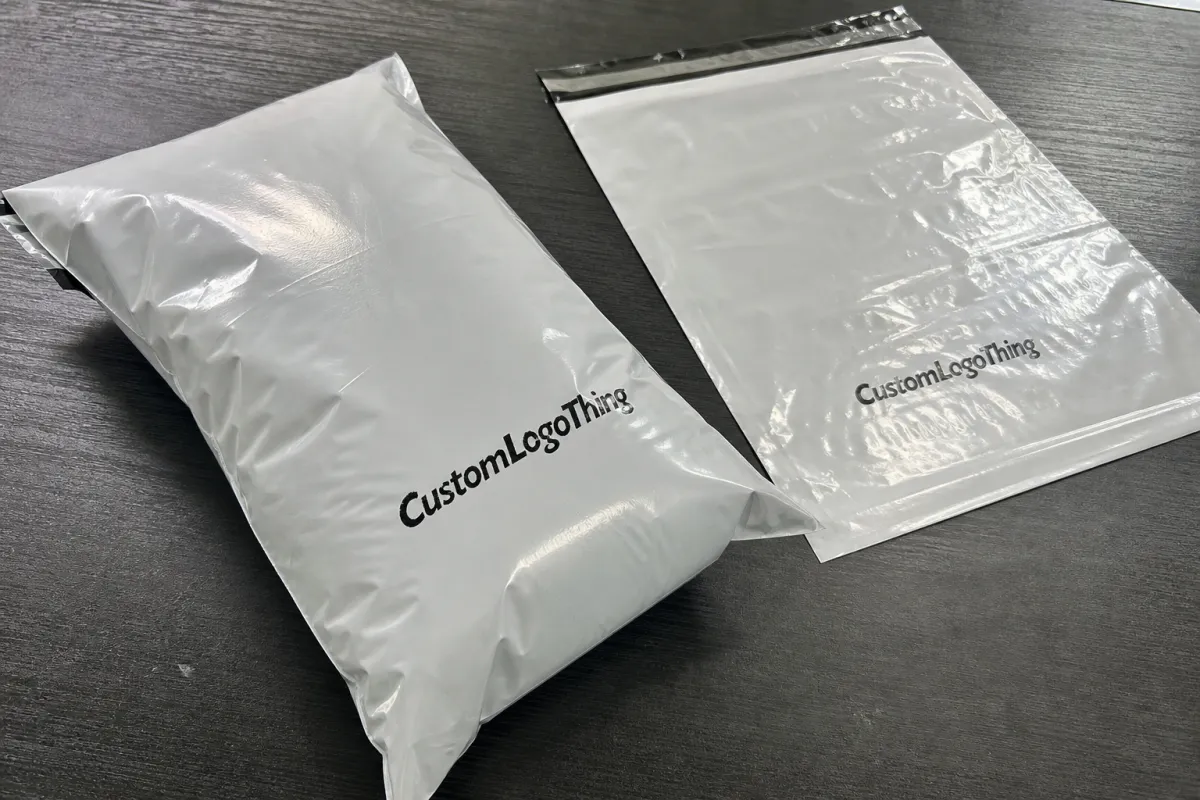
The soap Printed Poly Mailers material thickness guide usually gets treated like a pricing question. It is not. Thickness decides whether the bag protects the soap, holds its print, and survives the points where shipping tends to punish packaging: the seal line, the corners, the fold, and the one place the packer pressed a little too hard.
Soap Printed Poly Mailers are used for wrapped bars, boxed soaps, curated sets, and subscription orders. They do three jobs at once: carry the brand, shield the product from moisture and scuffing, and survive parcel handling without turning the unboxing into a repair job. Thickness affects puncture resistance, stretch, seal strength, print appearance, and the way the mailer feels before a customer even opens it.
The first mistake is copying another brand’s spec because the finished bag looked good in a photo. A wrapped bar with rounded edges is a very different load from a rigid carton with corners. A two-piece gift bundle with tissue paper sits somewhere between those two. The mailer should match the actual pack-out, not the mood board.
Too thin, and the film stretches at the seal or scuffs before it reaches the doorstep. Too thick, and you pay for protection you may not need, plus a stiffer bag that can slow down packing. There is also a feel factor. Heavier film often reads as more premium, but only if the dimensions and print are clean. A thick bag with sloppy sizing still looks cheap.
If the soap already lives inside a second container, the mailer does less structural work. If the mailer is the only shipper, it needs a stronger spec. That one distinction changes almost every recommendation in this guide.
How Film Mil, Gauge, and Structure Work
Mil means one-thousandth of an inch, so 2.5 mil equals 0.0025 inch. In packaging, that number is more useful than the word gauge, because gauge can shift meaning from supplier to supplier. Some sellers use it loosely. Some use it as a sales term. If the quote does not state the actual thickness clearly, ask again.
For comparison, 1 mil is about 25.4 microns. That conversion helps when suppliers list specs in different units. A buyer comparing an 80-micron film to a 3-mil film is not comparing like with like unless the numbers are translated correctly.
Soap poly mailers are usually made from a single-layer film or a co-extruded film. Single-layer film is simpler and can be cheaper, but co-extruded film usually gives a better mix of toughness, opacity, and print surface. It also tends to handle stress more predictably. That matters when a mailer is overfilled, because random failure in a shipping program gets expensive fast.
Thickness changes day-to-day handling in ways buyers notice immediately. Lighter film folds flatter and can speed packing. Heavier film resists punctures, hides wrinkles better, and feels more substantial in hand. The tradeoff is real: more material means more cost, and stiff film can be less forgiving when a packer is loading a bulky soap set at speed.
Structure matters as much as thickness. A 3 mil co-extruded mailer is not interchangeable with a 3 mil single-layer film. Resin blend, seal quality, and opacity all affect performance. ASTM references can help separate marketing from material behavior; tensile and elongation are often discussed with methods like ASTM D882, while impact behavior is usually tested through related film standards. If a supplier can explain those basics, they usually understand more than just the print side of the job.
For rough shipping networks, many brands think in terms of parcel abuse rather than a perfect shelf sample. ISTA testing logic is useful here: rubbing, compression, drops, and repeated handling are what expose weak film. A mailer does not need a full lab report to be useful, but it does need to be designed for the route it will actually take.
- 2 to 2.5 mil - best for lightweight wrapped bars, sample packs, and short shipping routes.
- 2.5 to 3 mil - a practical middle ground for most direct-to-consumer soap orders.
- 3 to 4 mil - better for boxed soaps, gift sets, and longer parcel routes.
- 4 to 5 mil - useful for rigid cartons, multi-item bundles, and higher-scuff programs.
“The mailer only looks cheap once it fails. Nobody applauds a bag for saving a few cents and arriving torn.”
Choose the Right Spec for Soap Weight, Shape, and Print Coverage
Soap weight is the first filter. Shape is the second. Print coverage is the one buyers ignore until they see whitening on the folds or scuffing across a dark background. A rounded wrapped bar with a simple label can often live in a lighter bag. A soap gift set packed with a rigid sleeve or box needs more material because the hard edges concentrate pressure in fewer points.
A good rule is to test the seal area before you think about aesthetics. If the soap presses hard against the seam, thickness needs to move up. If the product has squared corners, thickness needs to move up again. If the order contains more than one bar, inserts, or any hard accessory, the bag should be chosen with the worst point of stress in mind, not the best-case product photo.
| Soap pack type | Suggested thickness | Main benefit | Main watchout |
|---|---|---|---|
| Wrapped single bar | 2 to 2.5 mil | Light, low-cost, and easy to pack | Less margin for sharp edges or overfill |
| Single bar in a small box | 2.5 to 3 mil | Better puncture resistance and cleaner hand feel | Thin film can still scuff if print coverage is heavy |
| Gift set or two-piece bundle | 3 to 4 mil | More seal confidence and less stretch at corners | Stiffer pack-out and higher unit cost |
| Rigid carton or premium kit | 4 to 5 mil | Best protection for hard edges and longer routes | More material, more freight weight, less flexibility |
Print coverage changes the equation more than many teams expect. Full-bleed graphics, dense black fields, and heavy ink coverage show wear faster on flimsy film. Thin material can also reveal stretch marks and whitening near folds, especially if the bag gets squeezed in transit. If the design is mostly white with a simple logo, a lighter spec can work. If the mailer is meant to look like a retail item rather than a utility bag, heavier film usually holds the finish better.
Shipping route matters as well. Hot warehouses can soften film slightly. Long carrier chains add abrasion. Returns programs create repeated handling. A mailer that looks perfect on a sample table can behave very differently after two conveyors, a bin toss, and one overworked route scan. That is why real-world testing matters more than a clean mockup.
Material choice also connects to sustainability claims, but only if the language stays precise. Recycled content, post-consumer waste percentages, and lower-overpackaging choices are concrete. “Eco-friendly” by itself is not. Poly mailers are not the same thing as biodegradable packaging, and pretending otherwise creates trust problems. If the outer system includes paper parts, ask whether the paper is FSC certified. If the kit includes a kraft insert or paper sleeve, that is where the certification belongs.
Cost, Pricing, MOQ, and Unit Cost Tradeoffs
Quotes look inconsistent because the cost drivers are predictable, even if the final number is not. Thickness, dimensions, print colors, and MOQ do most of the work. Material choice is usually the first jump in price; print complexity is the second. Bigger bags also use more resin and can require more careful sealing, so size changes cost even when the artwork stays the same.
MOQ changes the math because setup costs have to be spread across the run. A 1,000-piece order almost always looks expensive per unit compared with 5,000 or 10,000 pieces, even when the film itself is similar. That is why small runs often feel disproportionately pricey. The machine setup, proofing, and handling do not shrink just because the order is smaller.
There is also a hidden cost to under-specifying the bag. Damage, replacements, customer complaints, and reprints can erase the savings from a thin film choice very quickly. A mailer that saves a few cents but causes a return loop is not actually the cheaper option. Packaging buyers see this after the first bad run, usually when the damage rate is high enough to show up in customer service tickets.
A realistic quote should separate setup from production. Ask for the cost of the plate or digital setup, unit price by quantity tier, and freight. If the supplier bundles everything into a single line, the comparison gets muddy. Clean breakdowns make it easier to compare one 2.5 mil option against another 3 mil option without being distracted by a freight estimate that belongs to a different carton count.
Typical patterns look like this:
| Option | Typical MOQ | Price behavior | Best for |
|---|---|---|---|
| 2-2.5 mil, one-color print | 1,000-3,000 pcs | Lower material cost, lower setup burden | Samples, local delivery, light bars |
| 2.5-3 mil, full-bleed print | 3,000-5,000 pcs | Moderate increase from ink and coverage | Main DTC soap orders |
| 3-4 mil, custom size, multi-color | 5,000-10,000 pcs | Higher setup but stronger protection and shelf feel | Gift sets and subscription programs |
| 4-5 mil, premium structure | 10,000+ pcs | Highest material spend, lowest failure risk | Rigid packs, long routes, higher-value orders |
Freight matters more than many buyers expect. A thicker mailer adds a little weight, but the bigger cost shift usually comes from the overall packaging stack. If the order also includes cartons, inserts, or polybagged accessories, the total shipment weight rises faster than the unit price suggests. For brands comparing formats under Custom Poly Mailers or broader packaging ranges under Custom Packaging Products, the best savings usually come from matching the spec to the product, not from pushing material as thin as possible.
Production Steps and Lead Time: From Artwork to Delivery
The production sequence is predictable: confirm the size, review the artwork, approve the proof, source the film, print, seal, inspect, and pack. The process only looks simple until a design revision lands after approval or the supplier discovers that the chosen gauge is not stocked and needs to be sourced.
Lead time depends on the type of change. Custom dimensions add time. Special inks add time. Heavier film can add sourcing time if it is not part of the supplier’s usual inventory. Revisions after proof approval always add time, and they usually add the kind of delay that shows up as “just one small edit” on the project timeline.
There are three clocks to watch. Proofing is one. Production is another. Freight is the third. A supplier may complete production in 10 to 15 business days after proof approval, but that does not mean the goods are in your warehouse. International transit can add another week or more, depending on route, customs, and carrier performance. If launch timing is fixed, confirm artwork, final dimensions, and sample requirements before the order moves.
File prep saves real time. Vector artwork is better than raster whenever the design allows it. Pantone or CMYK targets should be stated early. If the package is unusually shaped, share a packed sample or a clear photo with dimensions. Thin-film printing can shift slightly with coverage and finish, so color approval should happen on the actual substrate whenever possible. A logo that looks crisp on screen can soften once it hits real film.
Production constraints matter too. A glossy print on a light film can show roller marks, while a dark full-bleed design may expose tiny inconsistency in the film or seam. Those issues are not always defects; sometimes they are just the limits of the chosen spec. Good suppliers say that plainly. Weak ones promise perfection and blame the carrier later.
For recycled-content programs, ask for the exact claim and the percentage behind it. “Contains recycled material” is vague. “30% post-consumer recycled content” is actionable. If paper components are part of the same order stream, keep the paper claim separate from the film claim. Buyers are less forgiving of fuzzy sustainability language than they used to be, and they should be.
Common Mistakes That Cause Tears, Wrinkles, and Reprints
The biggest mistake is choosing thickness by competitor imitation. Two soap brands can sell similar products and still need very different packaging because one ships a soft wrapped bar and the other ships a squared box with hard corners. Same category. Different stress on the film. Copying the wrong spec is one of the fastest ways to create avoidable damage.
Oversizing is another common error. Too much empty space lets the product slide, crease the film, and push against the seal line. A bag that feels roomy on the packing table can become a problem in transit because movement creates the puncture points. A slightly tighter fit is often safer than a generous one, provided the seal is not under strain.
Thin film also makes print problems more visible. Heavy artwork can scuff faster. Stretching can create whitening at the folds. Low-opacity film can make colors look dull, especially on full-bleed designs or dark solids. If the design depends on deep blacks or clean saturated areas, approve the proof on the final thickness, not on a lighter sample that only looks good in ideal conditions.
Quality control failures are usually the most frustrating because they are easy to catch if the right checks are used. Weak seals, inconsistent thickness, print registration drift, and no real-world pinch test before launch all create avoidable rework. Ask for a few samples from the actual production line if possible. Inspect the seal visually and by hand. If the seal feels brittle or the corners pucker under light pressure, the problem is already there.
The blunt version: a cheap spec that fails costs more than a proper spec that arrives intact. That is true for soap mailers, boxes, inserts, and nearly every packaging format buyers try to squeeze one more cent out of.
Expert Tips: How to Request Samples and Lock the Right Spec
Compare at least two thickness samples side by side with the actual soap product inside. Not empty. Not staged for a photo. Packed and sealed. The film behaves differently once there is weight, friction, and a real seal line under stress. That is the comparison that matters.
A small test grid is enough to expose most bad choices. Pinch the seal area. Rub the printed side once or twice. Drop the packed mailer from waist height. Watch for stretch, whitening, scuffing, and corner stress. None of that requires a lab. It only requires a realistic sample and someone willing to be exacting.
Ask every supplier for the same quote structure so the numbers can be compared cleanly:
- Exact bag dimensions
- Target thickness in mil or microns
- Seal style and film structure
- Print coverage and color count
- MOQ and setup cost
- Lead time after proof approval
- Freight estimate and packaging method
That list is basic because basic prevents surprises. If one quote says 3 mil co-extruded film and another says “heavy duty mailer,” the vague one is not the better value. It is just less precise. Precision matters in packaging because a millimeter of slack or a fraction of a mil can change the way the bag behaves.
It also helps to keep the larger packaging system in view. Some soap sets deserve a poly mailer. Some need corrugated cardboard. Some need a kraft outer for presentation and shipping stability. The right answer depends on the product shape, the route, and the customer promise. There is no universal best spec, only a spec that is honest about the job it has to do.
For brands building a wider line, consistency across packaging formats matters. A mailer for direct ship can match the retail box visually without forcing one material to do everything. That is where custom packaging earns its keep: not in grand claims, but in making each part of the system do one job well.
So yes, the soap Printed Poly Mailers Material thickness guide starts with mil numbers. The real decision is broader. Product shape, handling risk, print coverage, cost, and failure tolerance all sit in the same equation. Ignore one of them and the “cheap” option usually stops being cheap after the first damaged order.
What thickness is best for soap printed poly mailers for a single bar?
Start around 2.5 to 3 mil for a light, wrapped single bar with smooth edges. Move up to 3 to 4 mil if the soap sits in a box, has sharper corners, or ships a longer distance. Test the filled bag for seal strain and puncture points before approving the spec.
Is 2 mil enough for custom soap poly mailers?
Only for very light packs with soft edges and short shipping routes. It can work for samples or local deliveries, but puncture and stretch risk rises quickly. If the bag replaces a carton or carries a gift set, a thicker film is usually the safer call.
How does print coverage affect soap mailer material thickness?
Heavy ink coverage makes thin film show scuffs, wrinkles, and stretch marks faster. A slightly thicker film usually holds print better and keeps the surface cleaner after handling. Dark, full-bleed designs deserve a tougher spec than a light one-color logo print.
What affects unit cost the most in soap printed poly mailers?
Thickness, bag dimensions, number of print colors, and MOQ drive most pricing differences. Setup costs matter more on small runs, so low quantities raise the per-piece price quickly. Freight, packaging, and rework can matter as much as the mailer itself on smaller orders.
How long does production usually take after artwork approval?
Simple jobs often move faster than full-coverage or multi-color custom prints. Expect time for proofing, print matching, sealing, QC, and packing before shipment. Freight is separate; production lead time and delivery time are not the same thing.
The cleanest result comes from treating the soap Printed Poly Mailers Material Thickness guide as a buying checklist: confirm the pack weight, match the shipping stress level, request samples, and approve the thickness only after the filled bag survives a basic drop and pinch test.


