At a conference desk, the bag is usually the first thing a guest touches and the last thing procurement checks before shipping. That sequence matters. A well-made carrier changes how a gift feels before the contents are even seen. A flimsy one does the opposite: it makes a thoughtful pack look improvised.
That is why choosing a corporate gifting Paper Takeaway Bags supplier is not a paper-buying exercise in disguise. It is a packaging decision with branding, logistics, and quality consequences. The bag has to hold weight, carry the artwork cleanly, and survive the handoff from packing table to taxi boot to office reception. If it fails any one of those jobs, the whole gift feels less finished.
The strongest buyers treat the bag as part of the gift architecture. It frames the item, protects it, and sets the expectation for what is inside. A notebook in a crisp paper bag reads as deliberate. The same notebook in a soft, over-glued carrier reads as budget-driven, even if the gift itself was not.
Why the bag changes the perception of the gift
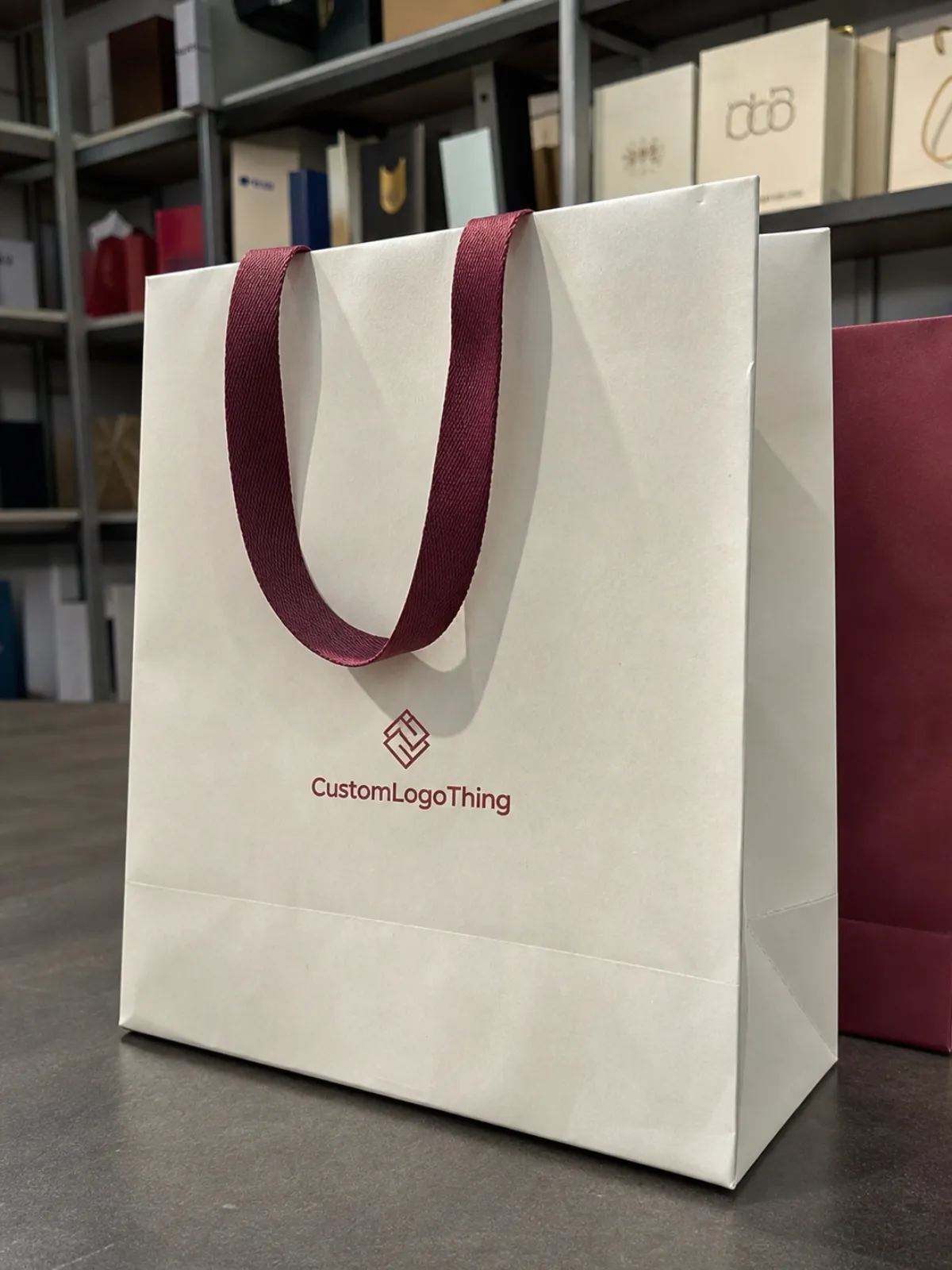
Packaging is not just a wrapper; it is a signal. The human eye makes rough quality judgments in seconds, and paper carriers are especially unforgiving because people can feel the difference immediately. Thick board, neat folds, and proper handle attachment communicate care. Thin stock, sloppy glue lines, and uneven printing communicate the opposite.
The comparison is easy to see at events. Put a bottle, a catalog, and a small gift box into a reinforced bag and the set looks intentional. Put the same items into a bag with a weak base and thin twisted handles, and the contents begin to look like they were assembled in a rush. The gift has not changed. The perception has.
That effect is not limited to premium programs. Even low-cost giveaways benefit from a better carrier because the bag often becomes the most visible part of the package. Guests reuse it for notes, documents, or personal items, which extends the brand impression beyond the moment of handoff. In that sense, the bag functions like moving signage.
There is also a practical side that procurement teams sometimes underestimate. If a bag is sized correctly, pack-out becomes faster. If it is too tight, staff spend time forcing items into place. If it is too loose, inserts slide around and the presentation suffers. On event day, that difference shows up in labor, not just appearance.
The best gift bag is the one event staff do not have to fix twice.
What a corporate gifting paper takeaway bags supplier should handle
A serious supplier should do more than print a logo and ship cartons. They should help define bag size, paper grade, handle style, print method, reinforcement, packing format, and delivery timing. If the supplier cannot translate the brief into a workable dieline, the order is already at risk. Most failures in branded bag projects are not dramatic; they are small mismatches that accumulate.
Start with structure. A useful supplier checks the internal dimensions against the actual gift set, not just against a generic size chart. Height, width, gusset depth, and base strength all matter. A bag that works for a folded T-shirt will not necessarily hold a rigid box, a bottle, and a tissue wrap without bulging at the sides. The bag should be chosen around the contents, not the logo.
Handle type is another practical decision with visual consequences. Twisted paper handles are economical and widely used for straightforward event handouts. Rope handles tend to look more polished and are better suited to client gifts or executive packs. Flat handles can be acceptable for simple runs, but they usually read as utilitarian rather than premium. The right choice depends on weight, appearance, and budget, not just preference.
Printing and finishing determine how much of the brand survives the jump from screen to substrate. Spot color printing works well for clean logos and limited palettes. Full-coverage printing creates a stronger visual block, though it raises ink use and setup complexity. Foil stamping adds brightness and is often used for high-value gifting, while embossing creates a tactile cue that only becomes obvious in the hand. Lamination changes both feel and durability; matte usually looks quieter and more premium, while gloss increases reflectivity and can make colors appear more saturated.
- Ask for dieline confirmation: exact dimensions, bleed allowance, handle placement, and fold lines should be visible before approval.
- Ask about reinforcement: pasted bases, bottom boards, and side gussets affect whether the bag stands up to real weight.
- Ask how the bags will be packed: carton counts, bundle direction, and label clarity affect event-day speed.
- Ask what the supplier needs from artwork: vector files, font outlines, and Pantone references reduce avoidable proofing delays.
Environmental claims deserve the same scrutiny as visual claims. FSC chain-of-custody paperwork, recycled content declarations, and paper origin details should be available if sustainability is part of the brief. The FSC framework is useful, but the buyer still needs to ask what exactly is certified: the fiber, the factory, or just the paper batch. Those are not interchangeable.
If the order will move across borders or be distributed to multiple offices, the packaging also needs a shipping logic. Bags should be stacked and cartoned in a way that prevents edge crush and handle deformation. For heavier packs, it helps to think like a freight team rather than a marketing team. Rough handling is where weak glue lines and poor base reinforcement show up first.
Materials, structure, and finish choices that matter
Material selection is where many quotes look similar on paper and very different in use. Kraft paper, coated art paper, and recycled stock each solve a different problem. Kraft gives a natural appearance and usually supports simpler branding. Coated paper carries sharper print detail and richer colors. Recycled paper can align with sustainability-led programs, but the surface may print a little differently and often needs slightly looser color expectations.
Paper weight is one of the clearest indicators of durability, though it is not the only one. A 150gsm bag can work for lightweight gifts if the handles and base are well constructed. For heavier packs, 210gsm to 250gsm is often a safer band, especially if the contents include bottles, hardback books, or multiple boxed items. Heavier paper is not automatically better; it just behaves differently under load and in folding.
Base construction deserves attention because the bottom takes the most stress. A pasted base with a board insert is often more stable than a simple folded bottom. Side gussets should be deep enough to hold the gift without forcing the bag into a wedge shape. That detail matters more than buyers expect. A 5 mm change in usable width can be the difference between a gift sitting flat and the bag puffing awkwardly at the seam.
Finish decisions should follow use case. Matte lamination feels restrained and masks minor handling marks better than gloss. Gloss can help colors pop but may also reveal fingerprints and scuffs. Soft-touch finishes feel premium but raise cost and can be less forgiving if the artwork has very fine type. Foil and embossing are best used sparingly; they are most effective when the rest of the design is disciplined.
Color behavior can shift across paper types. White ink on natural kraft is not the same as white ink on coated stock. Dark inks absorb differently on porous surfaces. Fine lines, gradient transitions, and small type are all at risk if the substrate is too textured or the resolution is too low. That is why a supplier who understands print behavior is more valuable than one who only takes orders.
| Material / style | Best use | Typical unit price | Common MOQ | Buyer watch-outs |
|---|---|---|---|---|
| Kraft paper bag | Staff gifts, simple event packs | $0.18-$0.38 | 1,000-3,000 pcs | Color shift on uncoated stock, handle strength |
| Coated paper bag with matte lamination | Client gifts, launches, premium handouts | $0.30-$0.70 | 1,000-5,000 pcs | Artwork clarity, scuff resistance, setup cost |
| Foil-stamped or embossed bag | Executive gifting, formal events | $0.55-$1.20 | 2,000-5,000 pcs | Tooling, proof time, finish alignment |
| Recycled paper bag with reinforcement | Sustainability-led campaigns | $0.25-$0.60 | 1,000-4,000 pcs | Surface consistency, certification clarity |
Those ranges are not a promise. They are a practical reference point. Freight, carton specification, special packing, and rush timing can move the number quickly. So can small design decisions that seem harmless during artwork review. A second print color, a heavier rope handle, or a custom insert can add more than expected once production begins.
Process and timeline: from brief to delivery
The cleanest projects begin with a complete brief. Quantity, dimensions, artwork files, delivery address, event date, and pack-out needs should be on the table from the start. A supplier can only give a meaningful quote if they know what is being packed and how the bags will be used. Vague requests usually create vague estimates, and vague estimates rarely survive production.
Proofing is where careful buyers save themselves later pain. A proper proof should confirm logo placement, bleed, finish, handle position, and size against the actual gift. If Pantone matching matters, say so early. If the artwork includes gradients or small copy, ask whether the selected stock can hold that detail cleanly. The file may look perfect on screen and still fail once it hits paper.
The production sequence is usually straightforward: print, dry, coat or laminate if required, die-cut, fold, glue, add handles, inspect, and pack. Delays tend to happen before the line starts, not after. Missing fonts, low-resolution logos, late artwork changes, or uncertain sizing can each add days to the schedule. If a sample is required, that adds another step, but it often prevents a more expensive mistake later.
Lead times vary by complexity. A simple kraft run may move faster than a foil-stamped or custom-shaped order. The difference is not only press time. Special finishes require more setup, more checking, and sometimes more waiting between stages. A factory can finish on time and still miss the event if shipping, customs, or local distribution are not built into the plan. That is why the calendar should be mapped backwards from the delivery date, not forwards from the approval date.
- Measure the gift set and define the bag around the tallest and widest item, not around the logo.
- Send artwork in editable vector format with Pantone references if exact color matters.
- Review the proof for size fit, handle placement, and finish before asking for production.
- Confirm carton labels, bundle counts, and pack-out format so event staff can move quickly on site.
- Build shipping buffer time into the plan, especially for international or multi-location deliveries.
For most branded orders, a realistic timeline is more useful than an optimistic one. Short runs with simple artwork can move relatively quickly. Higher-end specifications, unusual sizes, and busy seasonal periods often need more breathing room. A supplier who gives a cautious lead time is usually more trustworthy than one who promises speed without asking enough questions.
Cost, MOQ, and the tradeoffs behind the quote
Price is shaped by a small set of variables, and buyers can usually influence most of them. Bag size, paper weight, print coverage, number of colors, finish, handle style, and reinforcement all affect the final unit cost. Insert cards, ribbon ties, special coatings, and custom packaging add further steps. More steps mean more touchpoints, and more touchpoints mean more cost.
MOQ exists because setup costs do not disappear on small runs. Plates, dies, proofs, and machine calibration have to be paid for whether the order is 800 units or 8,000. On a smaller order, those fixed costs sit heavily inside the unit price. Once volume grows, the same costs spread across more bags and the price usually comes down in a way that is easier to defend.
That is why comparing only the headline quote is risky. A low figure may exclude freight, cartons, packing format, or repeat-proofing. Another quote may appear higher but include a more stable handle, better print consistency, and clearer packing instructions. In practice, the second option can be cheaper if it prevents wastage or rework.
Quality control is part of the pricing conversation whether suppliers spell it out or not. Good checks include handle pull testing, glue-line inspection, base flattening, color verification against the approved proof, and random sample checks during packing. For gift packs that carry weight, a simple load test is worth asking for. If the bag sags under modest pressure in a sample, it will not improve after it reaches the event floor.
Price also moves with risk. A one-off rush order with a fixed event date carries more pressure than a reorder with flexible timing. A bag that needs exact Pantone matching, premium finishes, and extra reinforcement is naturally more expensive than a simple uncoated carrier. That is not padding. It is the cost of reducing failure points.
If the budget is tight, the best place to simplify is usually the finish, not the structure. It is better to have a clean, strong bag with restrained branding than a decorative bag that collapses under weight. Buyers remember the bag they had to repair in the venue foyer far more vividly than the foil detail they admired on the sample table.
Ordering checklist for a clean first run
Start with the gift set itself. Measure the tallest item, the widest item, and the total weight. Note whether tissue, protective inserts, bottles, or hard boxes change the space required. A bag should fit the real contents, not a simplified version of them. This sounds basic, yet sizing mistakes remain one of the most common reasons for rework.
Prepare a short spec sheet before seeking quotations. Include dimensions, quantity range, finish preference, handle style, artwork files, delivery city, and the date the bags must be on site. The clearer the brief, the cleaner the quote. Suppliers tend to spend less time guessing and more time pricing the actual job.
Ask for a physical sample or a mockup if the order is your first run, the contents are heavy, or the print finish is unusual. Screen images hide useful information. A bag that looks elegant online may feel too thin in the hand, and a color that looks neutral on screen can read warmer on kraft paper. A sample makes those differences visible before the order is locked in.
Confirm whether the supplier retains artwork and dielines for repeat runs. Reorder consistency matters for annual conferences, employee recognition programs, and client gifting cycles. If the supplier can hold the approved spec and repeat it without rework, future runs become much simpler. If they cannot, the next order starts from scratch.
Check carton labelling and packing format before production begins. Event teams often need bags sorted by size, department, or destination. That detail is easy to ignore during design but expensive to fix in a warehouse. Clear labels and sensible pack counts save time when the goods arrive.
Practical rule: if the gift changes, re-check the bag. A slightly taller bottle, a thicker insert, or a new box style can make the previous size unusable.
Mistakes that cause reprints, delays, or wasted budget
The first mistake is buying on unit price alone. Thin paper, weak handles, and poor lamination can shave cents off the order, but they often create bigger losses later. Replacements, rush freight, and damaged presentation are far more expensive than a better-spec bag would have been. Cheap packaging is only cheap if it survives use.
The second mistake is sizing by sight. People are often bad at estimating internal volume. A rigid box occupies more space than it appears to. Tissue adds bulk. Ribbon loops interfere with the top closure. Once the actual item is packed, a bag that seemed generous can become tight and creased.
Artwork problems are just as costly. Low-resolution logos, tiny type, dense dark fills, or poor contrast may print badly on uncoated stock. White elements can disappear on kraft. Fine lines can break up. Gradients can band. None of that is mysterious, but it does require the file to be prepared with the substrate in mind. A supplier can warn about these issues; they cannot always fix them after approval.
Another mistake is assuming lead time begins at approval. It does not. It begins when the brief is complete, the artwork is usable, and the supplier knows the packaging format. Seasonal demand makes this more difficult. Year-end gifts, annual conferences, and product launches all compete for machine time. Add shipping and internal packing time early, or the schedule will compress at the worst moment.
Over-customizing the first run can also cause trouble. Multiple finishes, nested inserts, unusual folds, and special closures may look impressive on a spec sheet, but they slow proofing and increase the chance that something small will go wrong. A first order should usually prove the structure before decorating it heavily. That approach is slower in theory and faster in practice because it reduces correction work.
Finally, do not ignore consistency between batches. If the order will be repeated, ask how the supplier controls color, handle length, and base strength from run to run. Small drift is common in printing, but good suppliers keep it within a range that does not alarm the receiving team. Without that control, the second order may look like it came from a different source entirely.
FAQ
How do I choose a corporate gifting paper takeaway bags supplier for premium events?
Look for clear proofing support, sample options, and a supplier that can explain paper weight, handle strength, and finish without vague promises. Ask how they control color across reorders and whether they can confirm the bag size against the actual gift. A premium event bag should be checked for structure, not only for appearance.
What bag size works best for corporate gifting sets?
Measure the tallest and widest items first, then allow room for tissue, inserts, or any protective filler. A bag should let the contents sit flat without forcing the sides outward. If you use multiple gift formats, it is usually wiser to keep one main size and one backup size rather than stretching a single bag to cover every case.
What affects unit cost most when ordering branded paper takeaway bags?
Size, paper weight, print coverage, finish, and handle type usually drive the biggest differences. MOQ matters because setup costs are spread across fewer units on small orders. Freight, cartons, and special packing can add more than buyers expect, especially on urgent event projects.
How long does production usually take?
Simple runs can move faster than complex jobs with foil, embossing, or custom handles. Artwork readiness has a bigger effect than many buyers realize. Once files are approved, production can be straightforward, but shipping and internal distribution should still be given a buffer so the bags arrive early enough for quality checks and pack-out.
What should I ask before a repeat order?
Confirm that the approved dieline, color references, and artwork are still on file. Check whether MOQ, Pricing, and Lead Time remain the same. Ask about carton counts, packing format, and any changes in paper supply so the next batch matches the first one closely.
For buyers comparing suppliers, the useful questions are rarely the glamorous ones. They are the questions about load capacity, paper behavior, proof timing, and what happens if the gift set changes by a few millimeters. A strong Corporate Gifting Paper takeaway bags supplier answers those questions before they become problems, and that is usually the difference between a bag that carries a gift and a bag that quietly lifts the whole program.


