If you are pricing event kits, client gifts, or employee recognition packages, Corporate Gifting Paper merchandise Bags Unit Cost is usually the number that deserves the closest look. A bag seems simple until the quote starts accounting for paper weight, handle style, print coverage, packing method, and the work needed to get the finished goods out the door. The low line item on the first page rarely tells the whole story.
From a buyer’s point of view, the real question is not whether a quote is cheap. It is whether the bag will look right, hold its contents, survive transit, and arrive on schedule without an unpleasant surprise in the landed cost.
A restrained design on the right structure often looks more premium than a crowded print on the wrong bag. The best value usually comes from matching the spec to the gift, not from squeezing every possible dollar out of the first quote.
Why the unit cost falls as orders scale
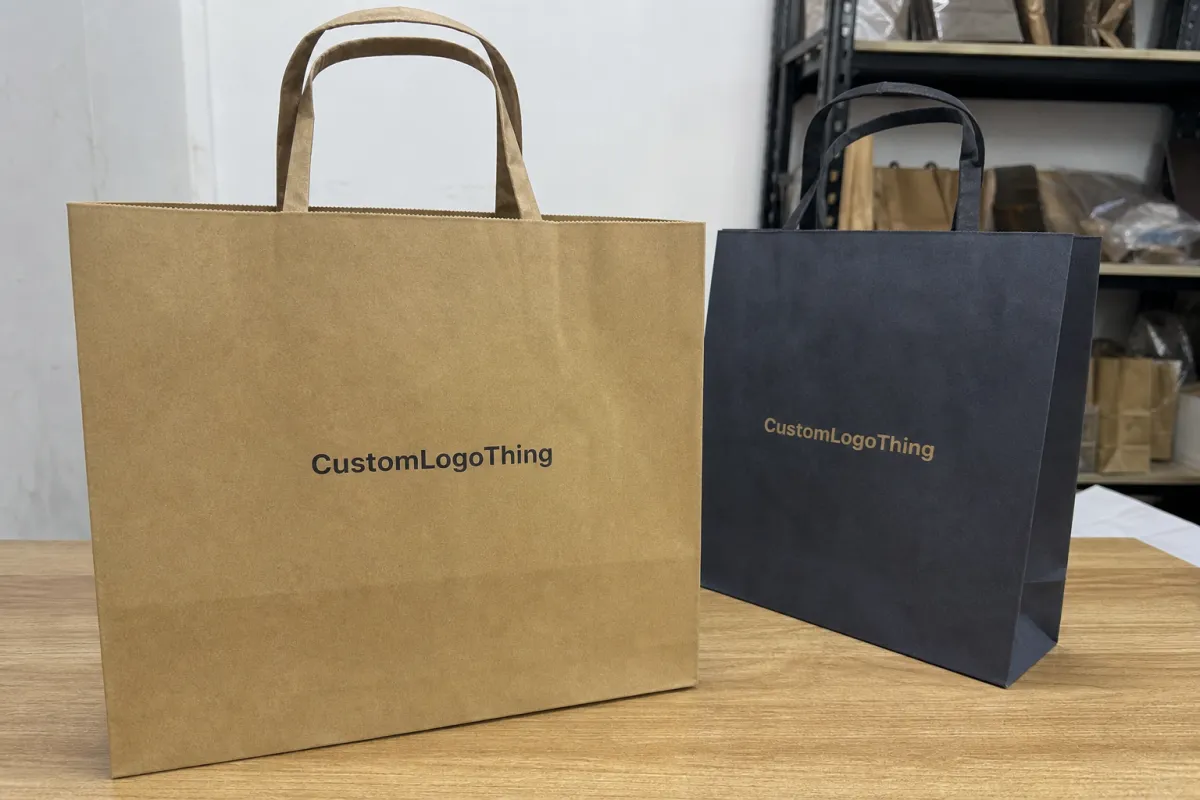
The cost curve in paper bag production is not mysterious. Setup, proofing, die handling, and packing labor are fixed or semi-fixed, so they weigh more heavily on a small run than on a large one. Order 300 bags and those costs sit on a tiny base. Order 3,000 and the same costs are spread much more efficiently, which is why corporate gifting paper merchandise Bags Unit Cost typically drops as the quantity rises.
That pattern shows up even when the bag design does not change. A rush order often looks expensive because the supplier is still paying for press setup, material staging, calibration, and carton preparation. The bag itself is only one part of the bill. Buyers are also paying for repeatable size control, clean print registration, handle attachment, and cartons that arrive ready for use.
Three variables usually move the number first:
- Paper weight - heavier board feels more substantial, but it raises material cost and can increase waste during converting.
- Print coverage - a one-color logo is simpler than full-bleed art, multi-panel printing, or a layout that needs tight alignment.
- Handle and finish choices - rope handles, soft-touch lamination, foil, embossing, and specialty coatings all add time and cost.
That is why two quotes can look similar at first glance and still produce very different bags. One may include reinforcement, cartons, and a proper spec check. The other may leave those items out and then add them later. The apparent savings can disappear fast once the missing details are restored.
What actually drives the quote
The cleanest way to read a packaging quote is to break it into working parts. On paper merchandise bags, the main cost elements usually include paper stock, printing, die cutting, handle attachment, packing, cartonization, freight, and a waste allowance for setup and press calibration. If a supplier is transparent, the quote should show where the money is going instead of hiding everything behind a single number.
Setup charges are common because the press or converting line must be prepared for your artwork, dimensions, and structure. Tooling fees may appear if a new die, a custom handle patch, or a special reinforcement pattern is required. Some suppliers bundle those costs into the first run. Others list them separately. Either approach can work if the scope is clear.
Artwork complexity also matters more than many buyers expect. A single logo on one side is usually easier than print on both panels, a wraparound pattern, or a foil accent with exact placement. More colors mean more alignment checks, more startup waste, and more time on press. That is where a lot of quote variation comes from.
| Spec tier | Typical quantity | Typical unit cost | Common build | Best fit |
|---|---|---|---|---|
| Value build | 1,000-5,000 | $0.32-$0.65 | Kraft paper, one-color print, twisted paper handles | Internal events, shipping inserts, simple giveaways |
| Mid-range branded | 1,000-3,000 | $0.58-$1.10 | Coated board, two-color print, rope handles, matte finish | Client gifts, conference kits, retail-style presentation |
| Premium presentation | 500-2,000 | $1.20-$2.75 | Heavier board, soft-touch lamination, foil or spot effect, ribbon handles | Executive gifting, luxury launches, seasonal campaigns |
A low quote is not automatically a bad quote, but it becomes questionable if it leaves out reinforcement, accurate sizing, or freight assumptions. A bag that looks fine empty may fail once it carries a boxed candle, a drink set, or a heavier catalog bundle. That is why careful purchasing teams ask for a line-by-line spec review before comparing vendors.
For useful decision-making, compare two versions side by side: a value build and an elevated build. That gives marketing, procurement, and operations a concrete spread between appearance and budget, and it helps settle the spec before production starts.
Paper stock, handles, and finishes
The paper itself sets the tone. Kraft gives a natural, sturdy look and usually handles simple logo printing well. Coated board supports brighter color and a smoother print surface, which helps a logo stand out without much visual noise. Specialty wrap papers can create a richer presentation, but they are usually better reserved for smaller premium runs because the material and converting steps are more involved.
Handle choice changes both the hand-feel and the price. Twisted paper handles are practical and cost-conscious. Flat paper handles sit neatly for retail-style presentation. Rope handles feel more upscale and carry well, while ribbon handles skew decorative and giftable. Die-cut openings can work for slimmer products or flatter inserts, but they are not usually the first choice for heavier corporate gift kits.
Finishes should be chosen for use, not just appearance. Matte lamination gives a restrained professional look. Gloss adds brightness and makes darker colors appear deeper. Soft-touch feels premium in the hand, though it can show scuffing if the bags are handled roughly during distribution. Foil, embossing, and spot effects should be used with discipline; a small logo accent often does more than a crowded surface treatment.
For sustainability-minded programs, ask whether the paper is FSC-certified and whether the supplier can document chain of custody. The Forest Stewardship Council explains the standard at fsc.org. If the bags will move through a tougher distribution chain, shipping performance matters too; ISTA has practical transit-testing guidance at ista.org.
The right combination depends on the use case. Conference kits usually benefit from a sturdy mid-range build, employee recognition drops often need a clean premium look, and retail gifting programs may justify a more polished finish if the bag is part of the customer experience rather than just packaging.
Size, gusset, and reinforcement
Before anyone asks about artwork, the first question should be fit. Measure the width, gusset, and height of the gift or merchandise box, then check the handle drop and the extra room needed for tissue, inserts, or a topper. A bag that is too tight crushes corners and looks cheap. A bag that is too large allows the contents to shift and makes the package feel unfinished.
Reinforcement matters more than many buyers expect. The top fold, handle patch, and bottom board carry the load, and those details can make the difference between a bag that feels dependable and one that sags halfway through an event. A slightly heavier paper grade helps, but reinforcement at stress points is often the better investment. That is a common lesson in converting: a structure built correctly outperforms a heavier sheet used poorly.
Carton counts also affect the final handling cost. Flat-packed bags are efficient for storage and shipping, but the pack-out should protect corners, prevent curl, and keep the printed surface from rubbing. Ask how many bags go into each master carton, what the carton dimensions are, and whether the cartons are pallet-friendly for receiving at multiple locations. Those details matter if the bags are going to offices, showrooms, or event venues.
Buyers should also check how the bag will be filled. A tall, narrow bottle gift needs different gusset planning than a boxed notebook set. A merch kit with tissue, a catalog, and a product sample needs enough width to close without distortion. That kind of planning protects corporate gifting paper merchandise bags unit cost, because it reduces rework, returns, and emergency replacement orders.
Practical fit check:
- Leave enough clearance for the product to slide in without forcing the side walls.
- Confirm the bottom board can support the full packed weight.
- Match the handle style to the intended carry weight, not just the design brief.
Production steps and lead time
A reliable production path is usually straightforward: brief intake, dieline confirmation, artwork proof, sample or pre-production check, bulk run, quality review, packing, and shipment. If a supplier cannot explain that sequence clearly, the order is likely to become more complicated later.
Proof approval is the biggest milestone. Once artwork is signed off, the supplier can lock color targets, confirm the paper, and schedule the press or converting line. Late logo changes, revised bleeds, or a moved QR code can add days because the file has to be rechecked and sometimes rerendered for print. Specialty finishes such as foil or lamination can also add curing or handling time.
For standard custom bags, lead time is often 12-15 business days from proof approval, though larger or more complex jobs can run longer. Premium builds, heavy coating, and multiple finish steps can stretch into the 15-25 business day range. Freight time sits on top of that, so the shipping destination matters as much as the production queue.
A few schedule risks deserve attention:
- Late art changes - even a small logo shift can trigger a new proof cycle.
- Paper substitutions - if a selected stock is unavailable, the quote can change and the timeline can move.
- Rush freight - faster shipping can rescue a deadline, but it usually raises total landed cost.
- Multiple drop points - shipping to several offices often requires extra carton labeling and coordination.
For recurring events, a simple reorder calendar helps. Build one run far enough ahead to avoid the rush, then keep the approved artwork, size, and finish on file so the next order starts from a known spec. That protects color consistency and reduces the chance that a last-minute change disturbs the whole program.
How to compare suppliers
The cheapest quote does not always belong to the best production partner. A dependable supplier gives repeatable dimensions, stable color output, and proofing that catches issues before the run begins. That matters because corporate gifting paper merchandise bags unit cost only has value if the bags arrive on spec and on time.
Ask how defects are handled, what happens if cartons are short, and how spec corrections are documented. Those are not glamorous questions, but they are the ones that protect event dates. If a supplier has a clear policy for remake thresholds, shortage claims, and approval sign-off, you will spend less time chasing answers after the order is placed.
Reorder continuity matters too. Many corporate programs have multiple offices, seasonal gift drops, or ongoing recognition campaigns, and the bag needs to look the same every time. If the supplier keeps final art, size records, and material notes organized, the second and third orders are easier to manage and usually less risky.
Physical samples are useful here. A rendering can make a matte finish seem smoother than it is and can hide the way ink behaves on a heavier stock. If the bag will carry fragile items, the sample should be loaded and carried, not just inspected empty on a desk. That quick check often reveals whether the handle feels right and whether the bottom board actually supports the planned weight.
Some buyers focus too narrowly on print quality and miss the broader production picture. A bag with decent ink but weak packing can arrive bent, rubbed, or out of square. A bag with excellent structure and average decoration can perform much better once it is stacked, transported, and handed out. In practice, the most reliable orders are the ones where build quality, shipping method, and visual requirements are aligned from the start.
Getting a sharper quote
Before requesting pricing, gather the details that drive the number: finished size, quantity, paper type, handle style, print colors, artwork files, and delivery timeline. If the bag will hold boxed gifts or heavier samples, include product dimensions and weight so the supplier can confirm fit instead of guessing.
Then compare at least two spec options. A value build often makes sense for internal events, while a more elevated presentation may be worth the extra spend for executive gifts, dealer programs, or premium brand moments. That comparison keeps the conversation grounded because everyone can see where the extra dollars are going.
If the contents are fragile, unusually heavy, or expensive to replace, order a sample or proof before bulk production. That single step can reveal a weak gusset, a handle that feels wrong in the hand, or a size that looks fine on paper but fails in real use. It is a small delay compared with reworking a full shipment.
Think in landed cost rather than just ex-works price. Freight, carton counts, and distribution requirements often change the real number more than buyers expect. That is why the most useful quote is the one that makes corporate gifting paper merchandise bags unit cost easy to compare against the exact spec, delivery point, and pack-out plan you actually need.
What affects corporate gifting paper merchandise bags unit cost the most?
Quantity is usually the biggest lever because setup and packing costs spread across more bags. Paper weight, handle style, print coverage, and specialty finishes also move the number quickly. Freight and carton configuration can matter even more if the order ships to multiple locations.
How do I lower the unit cost without making the bags look plain?
Keep the design focused with one or two ink colors instead of full coverage printing. Use a standard size and a common handle style before adding premium finishes. Choose a paper grade that feels sturdy in hand but does not exceed the load requirements.
What MOQ should I expect for custom paper merchandise bags?
MOQ depends on size, print method, finish, and whether the bag is a standard or custom structure. One-color or simpler builds can often be more flexible than multi-finish premium versions. Ask for the MOQ together with the exact spec so you can compare options fairly.
How long is the lead time after proof approval?
Lead time depends on paper availability, print complexity, finish selection, and the current production queue. Proof approval is the biggest milestone, so late artwork changes usually delay shipment. If the date matters, ask for a schedule that includes packing and freight time.
What details do I need to request an accurate quote?
Provide finished size, quantity, paper stock, handle style, print colors, and any coating or foil requirements. Include the artwork file and the delivery address so freight and timing are calculated correctly. If the bag will hold boxed gifts, share the product dimensions and weight to confirm the fit.

