For many procurement teams, corporate gifting Recycled Paper Bags Unit cost is the number that gets circled first, then compared to a rigid box, a mailer, or a fully assembled gift kit. That first number can be useful. It can also be misleading if it ignores assembly labor, storage space, and freight. A recycled paper bag is often the outer package, the carry method, and the brand surface all in one piece.
The sharper question is not what one bag costs in isolation, but what the finished gift costs once the bag is printed, packed, moved, and handed over. That shift matters. A bag that looks modest on a quote can still outperform a more expensive box if it eliminates a separate packaging layer and speeds up pack-out. In corporate programs, speed is money. So is avoiding unnecessary handling.
There is another reason buyers keep coming back to paper bags. People carry them. They sit in elevators, conference corridors, reception desks, and office lobbies. A rigid box usually disappears once opened. A well-made recycled paper bag keeps doing brand work after the gift leaves the table.
Why Recycled Bags Beat Rigid Boxes for Gift Programs
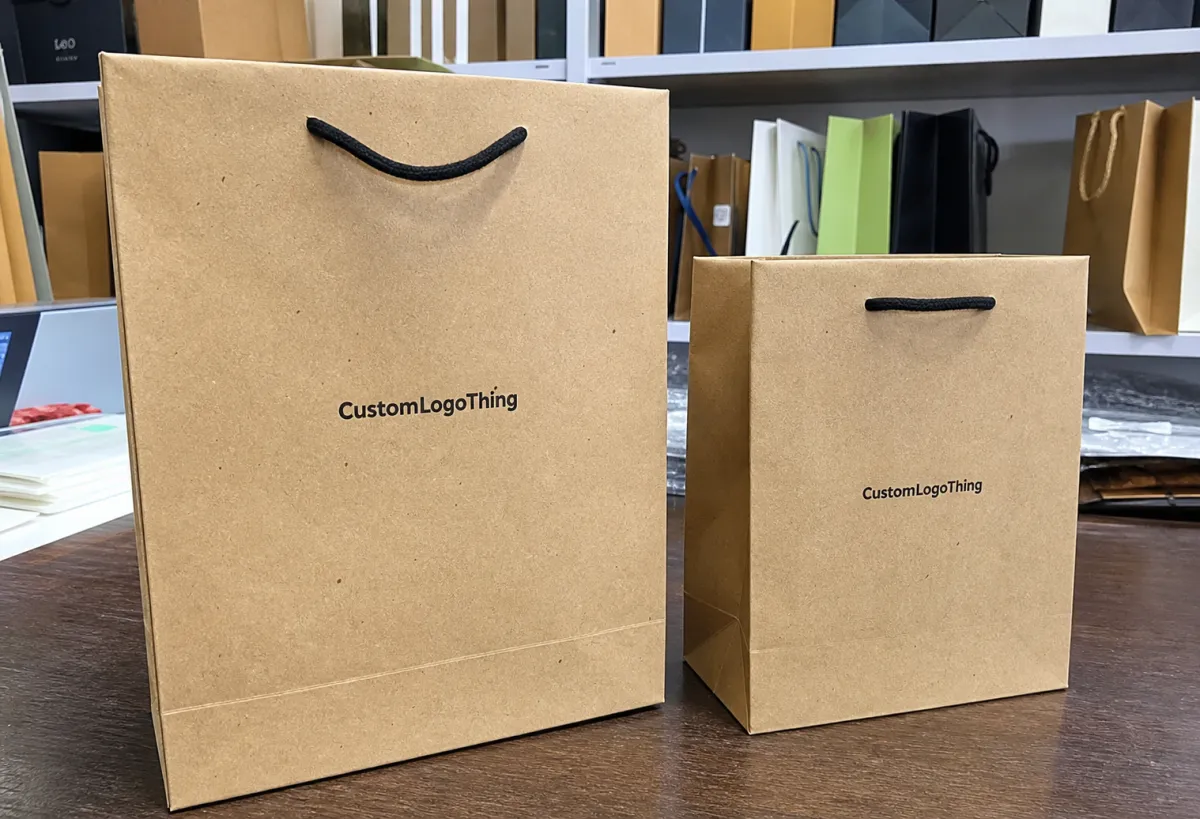
Rigid boxes photograph well. Recycled Paper Bags usually function better. That difference shows up in real operations, not in mockups. Bags stack flatter, take less warehouse space, and move through packing stations faster. If an event team has to prepare 300 or 3,000 gift sets, that simpler workflow can matter more than a premium-looking lid.
A box also asks for more material and more labor. Lid, base, insert, wrap, sticker, and sometimes tissue all add up. A recycled bag can remove several of those steps. That is why corporate gifting recycled paper Bags Unit Cost often looks lower in practice even before freight is added. One component replaces two or three others, which changes the arithmetic in ways a basic per-piece comparison misses.
There is a visual tradeoff, of course. A plain kraft bag with weak printing can feel too plain for a premium gift. The same bag, with a balanced logo, the right gusset, and a handle that does not feel flimsy, can look more deliberate than a box with a heavy sticker slapped on top. The difference is rarely about extravagance. It is about proportion and finish.
A packaging choice can look elegant in a render and still create friction on the floor. The wrong structure costs time, not just money.
For apparel, journals, boxed drinkware, and mixed kits, bags are often the practical answer. They hold irregular shapes better than a rigid carton, especially when the contents vary slightly from pack to pack. They also make last-minute assembly easier. If the gift set is changing right up to launch day, a bag gives the team more room to adapt.
That does not make bags the right answer for everything. Glass sets, dense tech kits, or fragile items that need crush protection may still need a box or a reinforced shipper. But for a large share of internal gifting, event handoffs, and retail-style corporate presents, recycled paper bags are the lower-friction option.
Bag Formats, Handles, and Branding That Change Perception
Not every bag communicates the same value. Flat-handle bags feel economical. Twisted-handle bags land in the middle. Rope handles and reinforced die-cuts move the look upward, but they also move the quote upward. That is usually the first place where budget and perception collide.
Flat handles are often the leanest choice on price. They work well for brochures, light apparel, and small gift sets. Twisted handles carry better and look cleaner, which is why they are so common in corporate gifting. Rope handles can add a more upscale feel, though they also increase material cost and may add setup complexity if the build is custom.
Bag shape matters just as much as handle choice. A narrow bag makes a box look crowded. A wider gusset gives the contents room to sit straight, which reduces the awkward, overstuffed look that undermines a polished handoff. If the item shifts around in the bag, the problem is usually sizing, not print.
Branding placement changes perception faster than many buyers expect. One-color front print is often enough. A wraparound print only makes sense if the bag is likely to be carried around a venue, where multiple viewing angles matter. Inside print can feel memorable, but it only earns its cost if the recipient is likely to open the bag in front of other people. That sort of detail sounds small. It is not.
Material tone sends a message before the logo does. Natural kraft reads grounded and practical. White recycled stock reads cleaner and more retail-like. Full-coverage color can look polished, but it pushes ink coverage, proofing time, and production risk higher. A lot of buyers could save money by choosing a restrained design on a stronger bag rather than trying to make the surface do too much work.
There is a simple way to judge whether a design is doing its job. Ask what the recipient touches first, sees first, and carries longest. If the handle feels weak, the whole bag feels weaker. If the print is crowded, the bag looks cheaper. If the proportions are wrong, even expensive paper cannot hide it.
Paper Weight, Finish, and Durability Specs to Lock Down
A clean quote starts with a precise spec sheet. Bag size, gusset width, paper weight, handle type, bottom support, and print colors all affect cost. Leave those out and the quote will be broad enough to look attractive and vague enough to be dangerous.
For lighter kits, recycled paper in the 150-200 gsm range may be enough if the contents are soft and low weight. For apparel, books, and moderate gift sets, many buyers move into 200-250 gsm. Dense items, bottles, and reusable event gifts usually need heavier stock or reinforced handles. The correct threshold depends on the real load, not the marketing mood board.
Finish changes both appearance and cost. Uncoated kraft keeps the recycled look obvious and usually stays friendlier on budget. Matte lamination can make the print look smoother, but it also changes the environmental story and can dull the raw paper feel that many sustainability-minded programs want. Soft-touch finishes read premium, yet they are hard to justify if recyclability is a core brief. Buyers rarely get every benefit at once.
Ink choice matters too. Simple one-color branding tends to keep setup charges down and reduces the chance of misregistration. Two-color work is still manageable. Heavy full-color coverage, especially on small bags with detailed logos, increases proofing time and makes the run less forgiving. Water-based or low-odor inks are often easier to align with a recycled-paper message than glossy, high-build effects that overpower the substrate.
Durability is not a branding theme. It is a testable requirement. Ask how the handles are attached, what seam reinforcement is used, and what load guidance the supplier is willing to state in writing. A bag that survives in a sample photo but tears during a busy event has failed, regardless of how good the print looks.
For buyers comparing standards, FSC remains a widely recognized paper sourcing benchmark, while ISTA-style thinking is useful for transit and handling expectations. A supplier who can speak clearly about recycled content, waste allowance, and acceptable tolerance is usually more reliable than one who only talks about the mockup.
Corporate Gifting Recycled Paper Bags Unit Cost: MOQ and Price Breaks
The main drivers behind corporate gifting recycled paper bags unit cost are easy to name and hard to ignore: paper weight, handle type, bag size, finish, print coverage, and any special packing or insert work. Each one pushes the number. Stack a few together and the quote starts to behave like a different product line.
MOQ is where many buyers get the first surprise. Small runs carry a higher per-piece cost because artwork prep, machine setup, proofing, and packing labor are spread across fewer units. That is not a supplier trick. It is arithmetic. A 500-piece order can require almost the same front-end preparation as a 5,000-piece order.
Broad pricing ranges help anchor expectations. The numbers below are not universal, but they reflect the way custom recycled paper bag pricing typically moves once quantity and structure change.
| Bag Type | Typical MOQ | Approx. Cost Per Piece | Best For |
|---|---|---|---|
| Flat handle, one-color print | 500-1,000 | $0.18-$0.32 | Light kits, brochures, apparel |
| Twisted handle, one- or two-color print | 1,000-3,000 | $0.28-$0.55 | General corporate gifting, mid-weight items |
| Reinforced handle, heavier stock, higher ink coverage | 2,000-5,000+ | $0.45-$0.90 | Bottles, tech sets, premium event gifts |
| Heavy stock with lamination or specialty finish | 2,000+ | $0.60-$1.10 | Upscale gifting, retail-style presentation |
Those ranges only tell part of the story. Freight, carton packing, and proof revisions can shift landed cost enough to change the decision. A quote that looks cheaper on paper may become the expensive option once it is boxed for export, labeled for distribution, and moved to the final destination. Buyers who compare only factory pricing are usually comparing half the expense.
Hidden costs deserve attention. Tight Pantone matching can add time if the brand color is sensitive. Carton packing requirements can increase labor. Some suppliers charge separate sample or proof fees, especially on small orders. If the project needs custom inserts or mixed-SKU packing, the quote should say so clearly. Silence is not savings.
A sensible comparison includes three numbers: low MOQ, standard volume, and the better-value bulk level. That shows whether the price curve is healthy or artificially flat at the first tier. It also prevents the common mistake of choosing the cheapest-looking quote and discovering that the freight and handling lines erased the discount.
In practical terms, the best way to evaluate the unit cost is to ask for the bag price, then the landed price, then the pack-out price if the bags are part of a gift set. If those three numbers are not all visible, the comparison is not finished.
Production Steps and Lead Time From Artwork to Delivery
The production path is straightforward, but delays usually appear at the seams. Briefing comes first, followed by dieline confirmation, artwork prep, proof approval, and sometimes sampling. Only then does production begin. After that come inspection, packing, and shipment. Miss one approval step and the schedule slips in a way that is hard to recover from later.
Most late orders do not fail because the factory moves slowly. They fail because the artwork was not final, the bag size changed after proofing, or the brand colors were sent as loose references rather than usable specifications. Machines cannot print a maybe. They print what has been signed off.
For standard custom orders, production often takes about 12-20 business days after proof approval. Special finishes, heavier volumes, or complicated packing can push that longer. Shipping adds another layer. A domestic move may only take a few days; an international shipment can add weeks, depending on method and destination. The lead time is not just the run time. It is run time plus transit plus buffer.
That buffer matters. If the bags are tied to a conference, store launch, holiday package, or recognition event, work backward from the handoff date and reserve time for inspection. A rushed approval can cost more than a slightly higher price. Reprints are more expensive than planning.
One useful rule: if the final gift contains multiple components, lock the outer bag spec before the rest of the kit starts drifting. A bag that fits the finished product is far easier to manage than one ordered from an early estimate that later turns out to be too small or too large. Packaging decisions should follow the product, not the other way around.
There is also a timing lesson hidden in reorders. If the supplier has the artwork, the color references, and the exact bag spec stored cleanly, repeat runs become much faster. If those records are scattered, the so-called reorder turns into a fresh project. Good documentation cuts calendar time as effectively as it cuts labor.
What a Reliable Supplier Controls on Color, QC, and Reorders
Color consistency matters more than a glossy sample. Brand green has to stay brand green. Logo placement has to land where the dieline says it will. Handle attachment has to hold across the full run, not just on the first carton. If any of those drift, the bag looks cheaper even when the paper stock is acceptable.
Quality control should cover print alignment, glue strength, seam integrity, bottom reinforcement, handle attachment, and carton packing. I also want to see a stated tolerance for size and color variation. On recycled kraft, slight shade drift is normal from lot to lot; pretending otherwise helps nobody. The better suppliers explain the limit instead of hiding behind vague language.
Reorders are where discipline pays off. If the board size, handle spec, artwork file, and print reference are stored correctly, a repeat order should be faster and cleaner than the first one. If they are not, the same project can spend time rechecking the same details a second time. Version control is not glamorous. It is what keeps an approved design from turning into a near miss.
For larger corporate programs, ask how the supplier handles waste allowance and substitution. Not every production line gives the same result on every day, and a supplier who is honest about acceptable variation is usually the one with a real process. A cheaper quote that cannot explain QC is not a bargain. It is a future problem with a lower entry price.
Sustainability claims also need to be testable. If the bags are supposed to support a recycled-content message, ask for the paper specification in writing. If FSC certification is part of the brief, request traceable documentation. Vague environmental language helps a brochure. It does not help a procurement file.
One more practical check: ask whether the supplier can hold an approved sample against the production run, not merely against the artwork file. Artwork files lie less than people do, but they still do not show paper shade, ink density, handle feel, or seam behavior. Physical comparison catches problems that a PDF never will.
What to Send for a Fast Quote and Clean Launch
Fast quoting starts with specific inputs. Send the exact bag size, quantity, paper weight, handle preference, print colors, and destination postcode. That is enough to get a serious starting price. Anything vaguer usually triggers a back-and-forth that costs days.
Include artwork in the right format, plus any brand rules that affect logo placement or color matching. A photo of the gift item helps too. A folded shirt, a boxed tumbler, and a hardcase tech accessory all need different gusset assumptions. The contents decide the structure faster than any description can.
Ask for landed cost rather than a factory-only number. Freight, packing, and known handling charges should be visible before the comparison begins. If one supplier seems cheaper but buries carton prep or export work, the quote is not actually lower. It is just less complete.
It helps to request three things up front:
- One mockup or sample image so the print placement is clear before approval.
- One price tier above and below the target quantity to reveal the real bulk curve.
- A confirmed production window so the handout date can be planned with margin.
That information usually removes enough uncertainty to approve the order without stretching the timeline. It also makes the buyer’s job simpler, because the spec, budget, and schedule stop fighting each other. The strongest packaging decisions are usually the ones that do their job quietly and stay out of the way.
So yes, use corporate gifting recycled paper bags unit cost as the starting point. Just do not stop there. Check the MOQ, confirm the structure, compare landed cost, and lock the lead time before sign-off. A recycled paper bag can save money, cut handling, and still look considered, but only if the spec is realistic and the production details are fully visible.
What affects corporate gifting recycled paper bags unit cost the most?
Paper weight, handle type, print colors, and finish usually move the price faster than the bag shape itself. MOQ matters too, because setup costs get spread across fewer units on smaller runs. Freight, packing format, and proofing can change the landed cost even when the base quote looks stable.
What MOQ should I expect for recycled paper bags in corporate gifting?
Many custom orders start around 500 to 1,000 pieces, though the best unit cost usually appears at higher volumes. Small runs are possible, but the per-bag price rises quickly because setup work does not shrink with the order. If several sizes are needed, ask whether the supplier can combine them into one production plan.
Which paper weight is best for corporate gift bags?
Lighter stock works for apparel, brochures, and small kits, while heavier stock is safer for bottles and dense items. If the bag will be carried in public or reused, a stronger paper weight and reinforced handle are usually worth the extra cost. Ask for load guidance before settling on finish and size.
How long does production usually take for custom recycled paper bags?
Artwork approval usually comes first, then production starts after the proof is signed off. Simple custom jobs can move quickly, but special finishes, larger volumes, and sampling revisions add time. Build in transit and inspection time so the bags arrive before the event rather than after it.
Can recycled paper bags still look premium for corporate gifts?
Yes, if the print, handle, and paper choice are matched to the gift value instead of treated as an afterthought. A clean one- or two-color design on good kraft stock often looks more refined than an overworked full-color bag. Premium does not need to mean complicated; it needs to look intentional.


