Corporate Gifting Recycled Poly Mailers Sample Guide
If you are comparing Recycled Poly Mailers for a corporate gifting program, the sample is the only way to see how the package will actually behave once it is filled, sealed, shipped, and opened. Spec sheets matter, but they do not show how the film stretches, how the seal holds, or how the print reads under real light.
Two mailers can share the same size and recycled content claim and still perform very differently. One may stay crisp and presentable after handling; the other may wrinkle, cloud, or close with a seal that feels unreliable. For gifting, that difference affects the brand impression as much as the shipping function.
The sample should answer the practical questions procurement, brand, and fulfillment all need to settle before production: does it fit, does it print cleanly, does it seal reliably, and does it still look intentional after handling?
Why the corporate gifting recycled poly mailers material sample guide matters
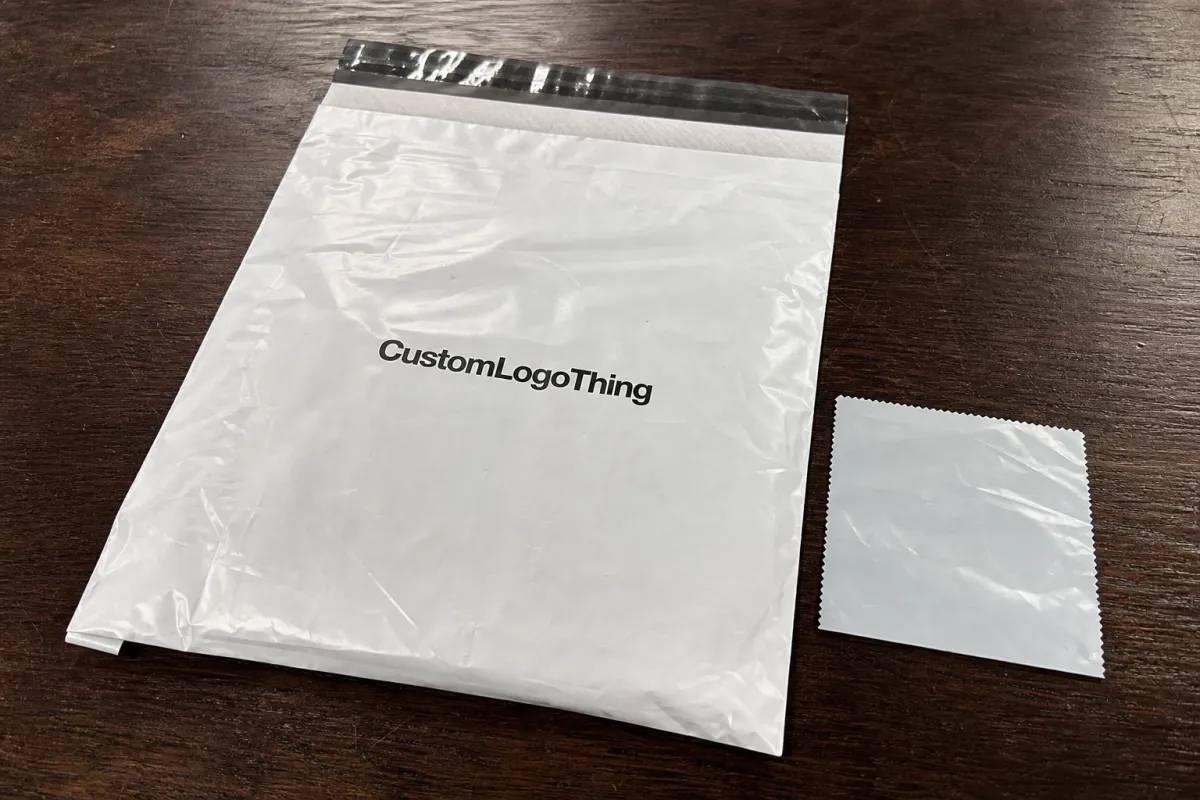
A Recycled Poly Mailer can look fine on a spec sheet and still disappoint in use. Recycled polyethylene varies in clarity, stiffness, opacity, and print response depending on the blend and the manufacturing process. That variation shows up quickly in gifting, where presentation is part of the product.
The biggest risk is approving a mailer based on a rendered mockup or a flat sample alone. A bag that looks sharp in artwork may become dull when stuffed with apparel, a welcome kit, or a small gift set. A closure that seems adequate in the hand may lift when the contents add tension at the flap.
Material samples also help separate sustainability claims from actual packaging performance. Recycled does not mean identical across suppliers. Some bags use post-consumer content, some use post-industrial content, and some rely on blends that may be consistent enough for production but still vary in appearance. Buyers should ask for the material spec and documentation, not just a marketing claim.
If the mailer is part of a larger pack, it should be reviewed with the rest of the system. A recycled outer mailer might sit beside Custom Packaging Products, kraft paper fillers, or a corrugated cardboard shipper. The full package needs to look coherent and survive handling together.
Ask how the recycled content claim is supported. Post-consumer and post-industrial content are not interchangeable, and a vague answer usually signals later problems with documentation or consistency. If the supplier cannot explain the basis of the claim, the risk is not only sustainability messaging but also reorder reliability.
How recycled poly mailers work in corporate gifting
Recycled Poly Mailers are lightweight shipping bags made from recycled polyethylene. In corporate gifting, they are commonly used for flat or semi-flat items such as apparel, brochures, media kits, documentation packets, and compact branded merchandise. They are efficient and usually less expensive than rigid boxes, but the tradeoffs are different.
Film gauge is one of the most important choices. Thickness affects puncture resistance, shape retention, and how the mailer behaves when it is packed. A 2.5 mil bag may work for lighter contents. A 3.0 to 4.0 mil build is often safer for heavier inserts, sharper edges, or programs that need a more premium hand feel. Too thin and the bag can look tired before it ships; too thick and the cost climbs quickly.
Closure performance matters just as much as thickness. A seal strip should close cleanly and stay down at the corners under normal packing pressure. Many sample reviews miss this because the bag is inspected flat, then fails once filled. The flap is one of the easiest places to uncover a weak spec.
Finish and opacity shape the presentation. Recycled film can be cloudier than virgin material, which affects how branding reads. A matte surface may hide handling marks better, while a glossier surface can improve print contrast but show scuffs faster. The right finish depends on whether the package is meant to feel understated, premium, or highly branded.
Environmental claims should stay precise. Recycled packaging is not the same as biodegradable packaging, and the two should not be confused unless the supplier has the right documentation. For broader recycling context, the EPA’s guidance at EPA recycling resources is a useful reference for keeping claims clear and traceable.
Key factors that affect print, durability, and sustainability
Three things usually decide whether a sample gets approved: the film, the print, and the closure.
Film thickness drives puncture resistance and shape retention. A bag that is too light may split at the seam or stretch around rigid inserts. A bag that is too heavy may be more expensive than the program can support. The goal is the thinnest build that still survives packing and transit.
Print quality is more sensitive on recycled film than many teams expect. Flexographic, digital, and gravure printing all behave differently, and recycled surfaces can have more texture and less consistent brightness. Solid color areas usually hold better than fine lines. Small type and thin rules should be checked carefully because they may blur or fill in.
Closure quality is often the weak link. If the adhesive strip does not grab correctly or the flap lifts at the corners, the package loses confidence quickly. In gifting, that is visible to the recipient before they notice anything else.
Sustainability review should be just as exact. Ask whether the recycled content is post-consumer, post-industrial, or a blend, and whether there is a supplier declaration or third-party support. Also ask whether the film is consistent from run to run. Buyers need traceability, not vague language.
For performance thinking, the ISTA standards community is a useful reference point for drop, vibration, and compression testing. A full lab program is not always necessary, but the sample should be judged as if it will encounter real handling, not just desk review.
One practical issue is handling marks. Recycled film can show scuffs or cloudiness faster than buyers expect. That is not always a defect; it is often a material characteristic. The question is whether the brand can accept it.
Sample checklist for recycled poly mailers
Review the sample with the actual contents inside it. A flat bag on a table tells you very little about the finished package.
A practical checklist usually includes these checks:
- Fit: The contents should slide in without forcing the film, and should not rattle once packed.
- Seal: The adhesive strip should close cleanly and stay down at the corners.
- Print clarity: The logo should remain readable at arm’s length and under close inspection.
- Opacity: The contents should not show through enough to weaken the presentation.
- Surface feel: The finish should match the tone of the brand, whether matte, semi-gloss, or soft-touch.
- Stress points: Seams, corners, and flap edges should resist tearing when handled roughly.
- Documentation: Record dimensions, gauge, recycled content claim, color references, and approved artwork version.
Inspect the sample under different lighting. Direct light reveals scuffs and inconsistencies. Normal office lighting shows how the bag will read in a receiving area or fulfillment environment. If the mailer will be paired with boxes, tissue, or inserts, place those items beside it and review the set together.
Label the approved sample carefully. Include the order reference, artwork file, and packing orientation. That simple step reduces reorder mistakes when multiple people are involved.
Cost and pricing factors for recycled poly mailer samples
Sample pricing depends on what kind of sample you are buying. A stock sample is a ready-made bag for fit and feel. A pre-production proof includes your artwork or structure. A pilot run behaves much closer to production and is the best way to see how the bag performs on the line.
| Sample type | Typical cost | Turnaround | Best use |
|---|---|---|---|
| Stock sample | $15-$35 | 3-7 business days | Basic fit and finish review |
| Printed pre-production sample | $40-$120 | 7-12 business days | Artwork, color, and seal review |
| Pilot run | $150-$350+ | 10-15 business days | Line testing before a larger order |
Production pricing is separate. For branded corporate gifting runs, unit pricing often falls around $0.18-$0.42 at 5,000 pieces, depending on size, gauge, recycled-content target, print coverage, and whether the bag needs custom tooling. Larger orders generally improve unit cost; smaller orders usually raise it.
Request quotes in three parts: sample cost, production unit cost, and freight. If those are blended together, it becomes harder to compare suppliers or understand landed cost. That matters even more if the mailer sits inside a broader packaging program that includes Custom Poly Mailers, inserts, or outer shipper materials.
MOQ also affects the final number. A lower minimum order may feel flexible but can carry a higher per-unit cost. A recycled film with a narrower supply base can price higher than a standard resin blend. Compare the landed cost, not just the headline unit price.
Process and turnaround from sample request to approval
The process should start with a clear request: size, intended contents, artwork files, recycled content target, and who needs to review the sample. Confirm whether the supplier is sending a stock sample, a printed proof, or a production-like sample. Those are not interchangeable, and the timeline changes with each one.
Simple stock samples often arrive in a few business days. Custom printed or custom-sized samples take longer because the supplier has to prepare artwork, source film, print, and trim. If the order depends on a specific recycled blend, lead time can stretch again because material availability may vary.
Shipping time matters too. A sample can leave quickly and still lose days in transit, especially if it has to pass through multiple reviewers. If procurement, brand, operations, and finance all need a look, plan for that sequence before you start.
When the sample arrives, review it immediately. Brand checks color and logo. Operations checks fit and handling. Procurement checks price and documentation. If the package includes boxes or inserts, review the full set together so the final presentation feels coherent.
Keep the sample, the quote, and the spec sheet in one file. That record helps prevent reorders from drifting later and gives the team a clean reference if the spec is questioned after approval.
Common mistakes when reviewing recycled poly mailers
The biggest mistake is approving a mailer while it is still flat. Once the gift goes in, the seal line takes pressure and the corners behave differently. A package that looks fine on paper may still fail in use.
Another common problem is trusting the rendering more than the sample. Screen color can flatter recycled film in ways the real bag cannot match. Deep colors may darken, white logos may lose contrast, and fine details may blur. That does not mean the product is broken; it means the real material needs to be seen before sign-off.
Claims create their own traps. “Recycled” is not a clean category. Ask for the percentage, the source stream, and the supporting documentation. Ask whether the material can be traced back to a repeatable spec. If the answer is vague, the risk is not just sustainability messaging but also quality control.
Operational friction gets overlooked too. How many bags fit in a carton? Do they dispense cleanly? Do they cling together? Can the fulfillment team move them without slowing down? Those questions seem small until they affect a shipping window.
Teams also focus on the logo and forget the workflow. The logo matters, but so does how the bag opens, folds, stacks, and seals. A mailer that slows packing is not a bargain even if the unit price looks good on a spreadsheet.
Expert tips and next steps for a confident order
Assign one person to collect final approval. Brand, operations, and purchasing can all weigh in, but someone still needs to close the loop and freeze the spec. Otherwise the order changes after the sample has already been accepted.
Lock the sample spec before production. That means dimensions, gauge, print method, recycled content target, closure type, and packaging configuration. Tie the production order to the approved sample, not to a memory of it.
Make one change at a time. If the bag is too large, fix the size first. If the print is weak, adjust the artwork or print method next. If the seal feels uncertain, test that separately. Changing several variables at once usually creates more opinions than answers.
For some programs, the right answer is not a mailer alone. It may be a kit that combines recycled poly with corrugated cardboard, kraft paper inserts, or FSC certified outer packaging. The best mix depends on the gift, shipping route, and presentation standard.
Keep the approved sample, the photos, the spec sheet, and the supplier quote together in one shared file. That record protects reorders and makes audits easier without slowing the next run.
What should a corporate gifting recycled poly mailers sample kit include?
A sample kit should include the exact size, print method, recycled content spec, and closure style the final order will use. It should also include enough units to test packing, sealing, shipping, and the recipient experience, not just a flat desk review. Ask for documentation that matches the sample so the claim and the build stay tied together.
How do I verify recycled content in a mailer sample?
Request the material specification sheet and any recycled content certification or supplier declaration tied to the sample. Check whether the claim refers to post-consumer or post-industrial recycled content, because those are not the same thing. Keep the written proof with the approved sample so the quote and production run stay consistent.
What drives the price of recycled poly mailer samples?
Size, gauge, print complexity, and custom tooling are the biggest cost drivers. MOQ can shift the unit price a lot, even if the sample itself is cheap. Shipping, proofing, and any specialty recycled-content documentation can add to the total.
How long does the sample and production process usually take?
Simple stock samples can arrive quickly, while custom printed or custom-sized samples need more preparation time. Add time for internal review, especially if brand, procurement, and fulfillment all need to sign off. Production timing usually depends on artwork approval, material availability, and the supplier's schedule.
What should I confirm before approving a final recycled mailer order?
Confirm fit, seal strength, print quality, opacity, and how the mailer behaves with the actual gift item inside. Verify that the approved sample specs match the final quote and the planned production run. Record the sign-off version so future reorders do not drift from the approved standard.
The guide is most useful when it keeps the decision grounded: the bag fits the gift, the print fits the brand, and the recycled claim matches the paperwork.


