A Small Retail Paper Bags moq guide starts with a simple truth: the first quote rarely turns on one number alone. Bag size, paper grade, handle style, print coverage, and the way the bag folds on the line all shape the minimum order and the unit cost. Buyers who sort those details early usually get cleaner pricing and fewer surprises, which matters more than shaving a few cents off the headline number.
The bag also has to do real work at the counter. A lightweight apparel bag, a heavier gift bag, and a display-friendly carry bag may look close from a few feet away, yet they often sit in different production tiers once gusset depth, top reinforcement, and print complexity are added. That gap is not cosmetic. It changes yield, assembly time, and the number of bags a line can make before a setup has to be reset.
The useful question is not, “What is the prettiest sample?” It is, “What spec can survive the store, the checkout rush, and the second reorder?” That is where MOQ becomes a planning tool rather than a purchasing hurdle.
Small retail paper bags MOQ guide: where the real cost starts
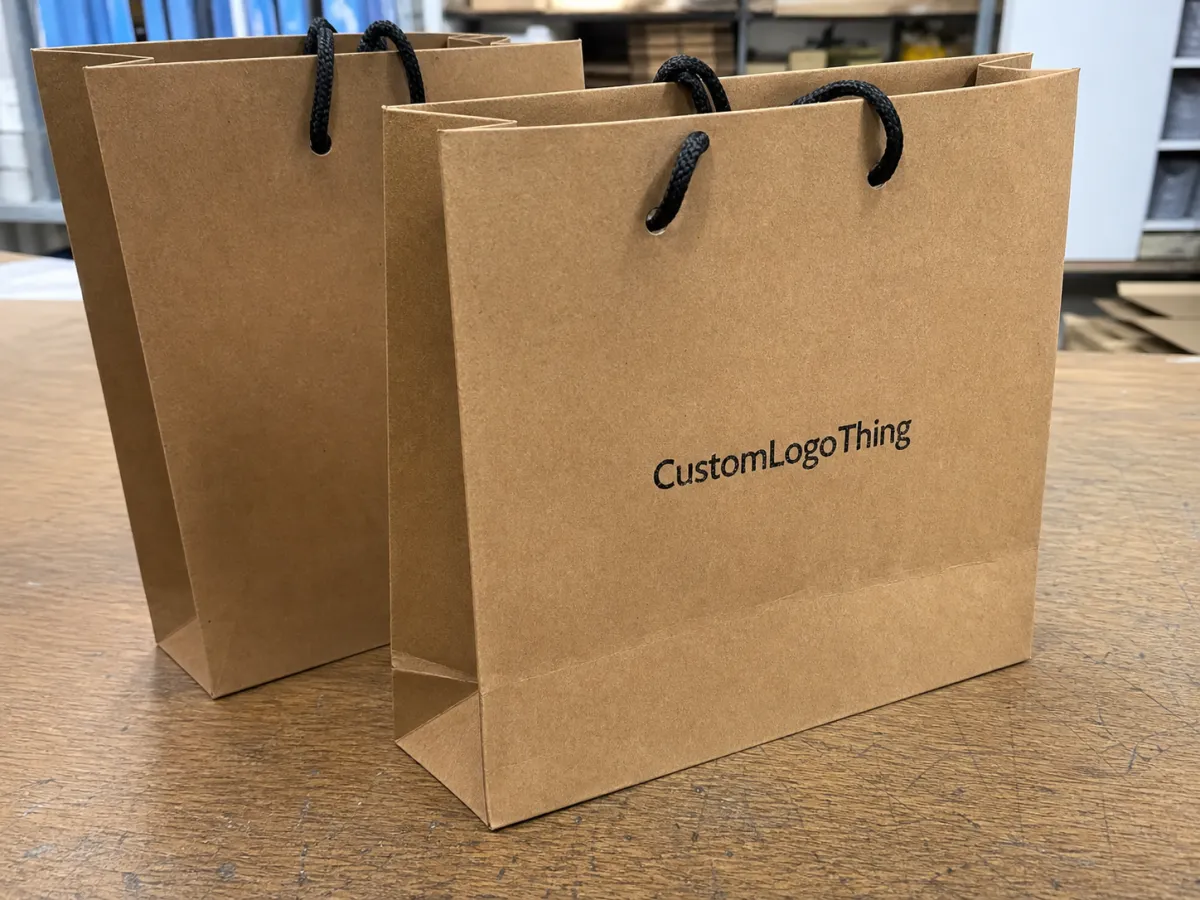
Most buyers begin with price, but structure usually comes first. A bag that measures 8 x 4 x 10 inches with twisted paper handles may sit in one production lane, while an almost identical 8 x 5 x 10-inch version needs a different carton layout, a different paper yield, and sometimes a different folding sequence. On paper, the bags look interchangeable. On the line, they are not. That is how two products that seem close can land in different MOQ breakpoints and different cost bands.
Three dimensions matter most: flat width, gusset, and height. Once those are fixed, the rest of the quote gets clearer. From there, match the bag to the item weight, the checkout flow, and the way the bag will be carried. A folded blouse in tissue behaves differently from a boxed candle or a jar. So does a bag used for a quick handoff versus a bag that sits on a shelf, gets refolded, and then goes home in a tote.
Material choice starts to matter fast. Light retail bags often use paper around 120-150 gsm, while more substantial boutique bags commonly move toward 170-230 gsm depending on construction and finish. Heavier stock improves stiffness and helps the bag stand better, but it also increases material use. That can push the quote up even before printing is considered. The cheapest-looking version on a spreadsheet can become the most expensive one in practice if it sags, tears, or slows checkout.
The lowest unit price only matters if the bag survives the job it was bought for.
Retail buyers also tend to underestimate how much small structural changes matter. A deeper gusset improves capacity but increases paper consumption. A reinforced top edge makes the bag feel more finished, yet it can add another manufacturing step. Even the fold on the bottom panel affects output speed. Those are small differences on the drawing and real costs on the floor.
For a practical quote, think in terms of use case rather than style labels. “Apparel carry-out,” “gift presentation,” and “heavy bottle pack” are better starting points than “nice brown bag.” The supplier can only price accurately if the load, the look, and the expected handling are all clear.
Pick the bag format that fits checkout, carry-out, and shelf display
Three formats show up most often in retail: flat-bottom paper bags, SOS-style paper bags, and die-cut or handled paper bags. Flat-bottom bags are common for simple carry-out because they stand well and pack efficiently. SOS bags open quickly and are a good fit for fast service or lighter goods. Die-cut and handled bags feel more premium, especially for boutiques, but they usually ask for firmer construction and more careful folding.
Product type should drive the decision. Apparel and light accessories often do fine in a lighter kraft build. Boxed products, candles, jars, and bundled orders need a stronger base and a more secure handle attachment. If the store hands out multiple items per sale, the bag should be sized for the real load, not the smallest item in the basket. A bag that is too tight slows staff down. A bag that is too large wastes paper and raises freight costs without adding useful capacity.
Proportion matters more than many buyers expect. A bag can be wide enough and still feel awkward if the height is too short for tissue, inserts, or a clean top fold. On the other side, a very tall bag may look elegant but add paper cost without improving function. In practice, the better retail bag feels easy to fill, easy to carry, and visually balanced once it is in the customer’s hand. That balance is part engineering, part merchandising.
There is also the storage question. Some bags need to stack flat behind the counter. Others hang from a fixture or live in a drawer under the wrap station. A premium boutique bag may need a more polished unwrapping feel, which can point toward heavier paper, tighter print control, and a handle style that does not wrinkle the top panel. If the bag has to be grabbed one-handed during a rush, the opening and fold pattern matter as much as the logo.
| Bag style | Typical MOQ | Typical cost per piece | Best use |
|---|---|---|---|
| Flat-bottom kraft bag | 1,000-3,000 pcs | $0.18-$0.32 | Light carry-out, apparel, simple retail packaging |
| SOS paper bag | 1,000-5,000 pcs | $0.16-$0.28 | Fast-service handoff, lighter items, efficient packing |
| Handled paper bag with one-color logo | 3,000-5,000 pcs | $0.24-$0.45 | Boutique retail, repeat brand exposure, moderate load |
| Premium printed bag with rope handle | 5,000-10,000 pcs | $0.42-$0.85 | Gift retail, premium presentation, heavier perceived value |
Those ranges are not promises. They are the kind of numbers buyers usually see once a real specification is on the table. Paper grade, artwork, handle attachment, and carton count can all move the price either direction.
Paper, handles, and print choices that affect durability
Kraft and white paper behave differently, and buyers feel that difference quickly. Kraft usually brings a natural look, decent tear resistance, and a practical price point. White paper, especially on a coated or bleached stock, gives a cleaner canvas for color work, but it can cost more and show scuffs sooner. The right choice depends less on trend and more on the store environment. A candle shop, a bakery, and a cosmetics counter do not punish packaging in the same way.
Paper weight, often discussed as GSM or basis weight, changes stiffness and carry strength. A light bag might use 120-150 gsm; a more substantial boutique build may move toward 170-230 gsm depending on structure and finish. Heavier paper helps the bag stand up and reduces the soft, baggy feel that makes even a good design look cheap. It also increases raw material use. There is a reason pricing steps upward faster than buyers expect once stock gets heavier.
Handle choice changes both durability and price. Twisted paper handles are often the most economical and are common for everyday retail. Flat paper handles can be neat and cost-conscious as well. Rope handles, reinforced die-cut handles, and cotton-style cords usually feel more premium and carry more comfortably under load. The best handle is not the lowest-cost option. It is the one that survives the actual items the store sells, plus the awkward angle when a customer lifts the bag by one hand and swings it against a coat or cart.
Print coverage matters more than many quote requests show. A one-color logo on kraft is relatively straightforward. Full-coverage art, dark solids, tight registration, or multiple spot colors usually require more setup and more careful inspection. Those jobs can add setup charges or tooling fees, especially if the size or handle position is custom. For many paper-bag lines, the print method is not the visible issue; the hidden cost is the press time and the number of passes needed to hold color consistently.
Finish is the last piece people sometimes treat as decoration only. Matte coating, aqueous coating, and lamination each change how the bag feels, how it resists rub marks, and how it holds up in humid stores or near chilled products. A finish should match the retail environment, not just the artwork file. Matte on a gift bag can feel expensive without being shiny. Aqueous coating is often a practical middle ground. Heavy lamination can protect the surface, but it may also add cost and reduce recyclability depending on the build.
If the bag must carry a certification claim, keep that spec clean from the start. FSC paper is common in retail programs that want a responsible sourcing story, but the paper grade and conversion method still need to fit the load. Certification helps with procurement rules and customer-facing claims. It does not fix weak construction.
One more practical point: paper is not perfectly uniform. Color can drift slightly from lot to lot, especially on natural kraft. That is normal. Buyers who need repeatability should lock the paper grade, the print method, and the approved reference sample before the first run starts.
Cost, pricing, and MOQ breakpoints that change your quote
MOQ is usually set by how efficiently the paper can be converted and printed. A standard size with a simple one-color logo may run at a lower minimum because the line setup is cleaner and the material yield is predictable. A custom size, multiple print colors, or a special handle can move the job into a less efficient configuration, which is where the quote climbs. In paper packaging, the setup is often the hidden price of admission.
The common mistake is comparing Unit Cost Without comparing the spec. One supplier may quote a lower price per bag, but that price might assume thinner paper, fewer print passes, or a different handle build. Another quote may look higher yet include better stiffness, a cleaner finish, and lower risk of damage in use. For buyers, the real comparison is total value, not the lowest figure on the page. A cheap bag that fails in-store is not cheap anymore once a second order is needed.
Here is a clean way to read a quote:
- Exact dimensions - flat width, gusset, and height.
- Paper grade - kraft or white, plus GSM or basis weight.
- Print layout - one side, two sides, or full wrap.
- Ink count - one-color, two-color, or more.
- Handle style - twisted paper, flat paper, rope, or die-cut.
- Sampling - digital proof, physical sample, or direct production.
- Packaging terms - carton count, palletizing, and freight assumptions.
Bulk pricing usually improves in steps rather than in a smooth curve. A jump from 1,000 to 3,000 pieces may reduce unit cost sharply because the setup gets spread across more bags. A jump from 5,000 to 10,000 pieces may still improve price, but storage, freight, and cash flow start to matter more than the extra savings. There is no prize for ordering more bags than the season can absorb.
Many retail teams miss the cost of labor. The sheet itself is only part of the equation. Handle insertion, folding, reinforcement, and carton packing all add minutes that become money at scale. That is why two bags with similar dimensions can land in very different pricing brackets once the factory has to count manual steps instead of running a simpler flow.
A quote should be compared against the same size, paper, artwork, handle, and freight assumption, or the “better price” is not really comparable.
For many store programs, the sweet spot sits where the first run covers launch demand plus a realistic buffer. That buffer might be 10% to 20% for a stable staple item, or larger if the bag will be used in a seasonal promotion. If the quote includes tooling fees or setup charges, ask whether those are one-time or repeated on reorder. That detail changes the true cost per piece more than the headline unit price does.
A useful rule of thumb: if the bag is likely to repeat exactly, spend more time on the first spec review. A careful first order often lowers the effective cost of the next three.
Process, timeline, and production steps from art to shipment
A good production flow is straightforward: quote review, artwork check, dieline confirmation, proof or sample approval, production, packing, and shipment. The timeline moves fastest when each step is clean and the buyer knows who is responsible for approval. Missing logo files, late color changes, or unclear die lines can add days quickly. Packaging teams often think they have one deadline. In practice, they have six.
Lead time depends on print method, bag complexity, and whether the order needs a physical sample. A simple one-color run with approved art may take about 12-15 business days after approval. More complex jobs, or runs that need a physical pre-production sample, can stretch closer to 15-25 business days. Freight time comes on top of that. If the bags support a store opening, holiday display, or seasonal launch, transit needs to be built into the schedule from the start.
The most important approval points are color, final dimensions, handle placement, and copy placement. If any of those move after approval, the production clock can reset. That is not a supplier being difficult; it is how converted packaging works. Once the line is set, changing the die, moving the handle, or altering the print area creates real work on the floor.
Testing also affects timing. Some teams approve from a digital proof alone. Others need a sample in hand, especially if the bag carries bottles, boxed merchandise, or a heavier load. The second route takes longer, but it usually prevents expensive corrections after the first full run. A day spent checking fit is cheaper than a pallet of bags that cannot support the merchandise.
For planning, work backward from the in-store date. If the bags are tied to a launch event or holiday window, do not start with the quote date and hope the rest falls into place. Good packaging programs work from the delivery deadline back through approval, production, and transit. That backward calendar is often the difference between a smooth launch and a rush fee.
Spec checks that keep color, size, and strength consistent
Spec discipline prevents expensive surprises. The first check is dimensional tolerance. A bag that is slightly short on height or tight on gusset can still pass a glance test, but it may fail once the product, tissue, or insert is actually inside. The second check is handle attachment, because a weak glue line or poor reinforcement is the fastest route to a customer complaint.
Paper grain direction matters more than many buyers realize. If the grain fights the fold direction, the bag can crease badly or lose stiffness after a few uses. Good conversion specs account for how the paper wants to fold, not just how the artwork is laid out. That is one reason a physical sample often feels better than a screen mockup. Screens show color. They do not show how the top edge rebounds after repeated handling.
Color control is another place where repeat orders can drift. If the same bag will be used across multiple stores, the team should confirm Pantone targets, acceptable tolerances, and whether the print is expected to land on kraft, coated white, or another substrate. Ink looks different on each one. A deep green on kraft can read softer than the same green on white, and that is normal rather than a defect. Buyers who expect perfect parity across very different papers usually end up disappointed.
Quality control should also cover practical details that are easy to miss on a proof. Check for glue squeeze-out, handle symmetry, rub resistance, and carton count. If bags are packed by weight instead of by piece count, short-shipment risk goes up. If the bottom fold is uneven, the stack may look fine but fail under load. None of those issues are glamorous. All of them matter at retail.
Define the use case in the spec sheet. Apparel, cosmetics, bakery, and packaged goods do not need the same build. If the seller knows the load, the carry time, and the retail environment, the construction can be matched properly instead of guessed. That usually separates a bag that feels solid from one that merely looks acceptable in the mockup.
If the order will be tested through shipping, ask whether the packout should be evaluated against transit abuse rather than visual approval alone. A store bag that leaves the warehouse in good shape still has to survive cartons, freight, and receiving. Shipment testing is especially useful for premium handles and heavier stock, where corner crush and carton compression can undo otherwise decent printing.
What to prepare before requesting samples or a firm quote
Before asking for samples or a firm quote, gather the basics: final flat dimensions, estimated opening order or monthly volume, logo files, print colors, handle preference, and the shipping location. That set of details usually gives the supplier enough information to estimate freight, production method, and likely MOQ without a long back-and-forth cycle.
Then decide whether the project needs a sample, a prototype, or direct production. A sample is useful when the bag is new, the item is heavy, or the finish matters to the brand presentation. A prototype helps when the structure is custom and the team wants to test fit before approving the run. Direct production makes sense when the spec is already proven and the buyer wants speed. Each route has a cost. Each route avoids a different kind of mistake.
Compare quotes with discipline. Keep paper grade, print coverage, bag structure, and freight terms aligned. If one price includes a heavier stock, a better handle, and a clean proof cycle, that quote may actually be stronger even if the unit price looks higher at first glance. That is one of the quieter savings in packaging procurement: avoiding a cheap spec that forces a second order too soon.
Pay attention to reorder consistency. If the first run is successful, the second one should not require a new round of guesswork. Keep the approved sample, record the final dimensions, and note any color tolerances or handle substitutions. Small paper bags are easy to buy badly and easy to repeat well, but only if the team saves the actual spec instead of relying on memory.
Done well, the Small Retail Paper Bags MOQ guide is not about chasing the lowest number. It is about choosing a bag spec that protects margin, looks right on the counter, and arrives in enough quantity to support the launch without overbuying.
What is a realistic MOQ for small retail paper bags?
MOQ usually depends on bag size, paper weight, handle type, and whether the print is simple or full coverage. Standard sizes with straightforward construction often start lower than custom sizes or premium finishes. A plain SOS or flat-bottom bag may sit around 1,000 to 3,000 pieces, while handled and more decorative versions often move higher. The best answer is the MOQ tied to your exact spec, not a category average.
Can I mix sizes in one small retail paper bags order?
Sometimes, but each size may still carry its own setup or minimum because the tooling and material yield are different. Mixing sizes works best when the paper grade, print style, and handle type stay consistent across the family. If you need multiple sizes, ask whether the supplier can combine them under one pricing program or whether each size needs to clear its own minimum.
How do handle choices change the price of small retail paper bags?
Twisted paper handles are often the most economical, while rope, reinforced, or die-cut styles can cost more. The handle choice affects both material cost and assembly time, especially when the bag is meant to carry heavier retail items. Match the handle to the actual load, because the cheapest handle can become the most expensive one if it fails in use or triggers a remake.
What details do you need for an accurate quote?
Provide flat width, gusset, height, paper weight, handle style, print colors, quantity, and shipping destination. Share your artwork file and note whether you need a sample, proof, or final production approval before the run starts. The more exact the spec, the faster the quote, and the less likely the pricing will shift later. Missing one of those details usually changes the answer more than buyers expect.
How long does production usually take after approval?
Timing depends on the print method, bag complexity, and whether the job needs a physical sample before full production. A simple run can move in about 12-15 business days after approval; a more involved order may take 15-25 business days. Add freight time on top of that, and build in extra margin if the bags are tied to a store opening or seasonal launch. Artwork revisions and color changes are the most common schedule delays.

