If you are buying a branded gift people will actually wear, a corporate gifting trucker Caps Material Sample guide matters more than any polished mockup deck. A cap can look tidy on a screen and still feel hollow in hand, sit strangely on the head, or cheapen the brand the moment someone touches the mesh. Procurement notices that. Marketing does too, usually after the first complaint.
Trucker caps are popular for a reason. They are practical, easy to size, and simple to decorate with embroidery, patches, or print. That same simplicity is what makes them risky. A small difference in front-panel structure, mesh density, or closure hardware can move the piece from “thoughtful gift” to “event giveaway” in one step. Samples are the only reliable way to see those differences before the order gets expensive.
For employee gifts, client kits, trade show handouts, and executive swag, the physical sample does more than confirm color. It reveals how the cap holds its shape, whether the mesh feels breathable or scratchy, whether the sweatband absorbs moisture, and whether the closure still feels secure after repeated adjustments. Those are the details people notice when the logo stops being the novelty.
Why Sample Caps Matter Before You Place a Bulk Order
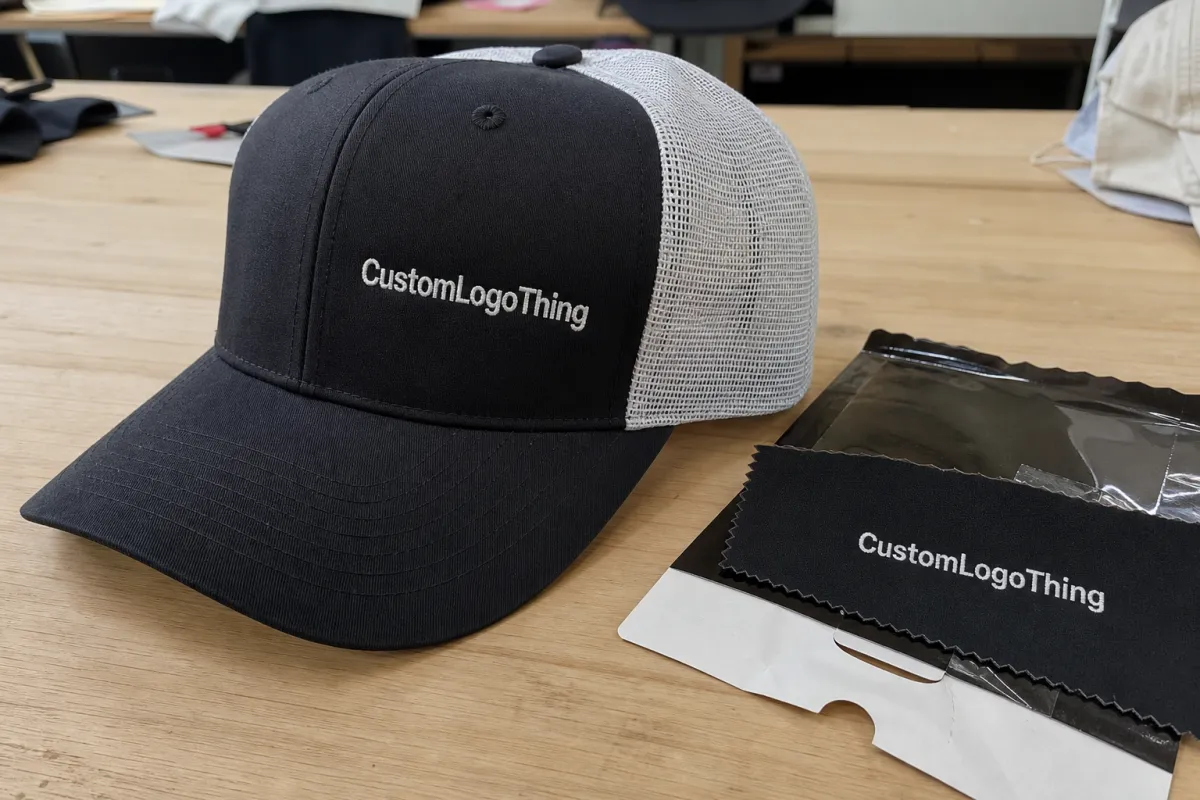
Product photos hide the dull details that decide whether a cap feels considered or disposable. A sample shows the front panel height, visor stiffness, seam alignment, mesh texture, and the way the cap sits when it is actually worn. None of that sounds dramatic. It is also what determines whether the gift is kept or left in a desk drawer.
The most common failure is not a visibly bad cap. It is a cap that looks slightly off. The brim may curve too sharply, the foam front may sit too tall, or the mesh may have a shiny synthetic finish that reads cheaper than expected. Individually, those issues sound minor. Together, they make the brand feel less precise.
Corporate gifting usually involves more than one decision-maker. Brand teams care about appearance, procurement watches cost, HR wants broad appeal, and leadership often wants something that reflects the company well. A physical sample gives every stakeholder the same object to evaluate. That matters because a PDF render can invite six different interpretations and no real agreement.
“If the sample feels cheap, the final order will not magically feel premium because the quantity is larger.”
That is the practical truth behind the corporate gifting trucker Caps Material Sample guide. Sampling is not a ceremonial step. It is the cheapest way to avoid rework, delays, and the awkward moment when a branded gift arrives looking less premium than the budget implied.
How Material Sampling Works for Trucker Caps
Good sampling starts with the material, not the logo. If you are still choosing between cotton twill, polyester blends, recycled mesh, or foam-front construction, ask for swatches first. Swatches are useful for color tone, hand feel, and surface texture, and they usually arrive faster and cheaper than a full sample cap. They do not tell the whole story, but they prevent obvious mismatches early.
Once the material direction feels right, move to a blank cap sample. That stage tells you how the crown is built, whether the front panel stands cleanly, how the visor curves, and whether the closure sits neatly at the back. If branding is a meaningful part of approval, order a decorated sample after that. Embroidery, print, or patch placement can change the balance of the cap more than buyers expect.
It helps to inspect each component separately. Do not stop at “the sample looks good.” Check the front panel fabric, mesh, underbill, sweatband, seams, binding tape, and closure hardware. A cap is usually a collection of tolerances. When one part is weak, the whole piece feels less finished.
- Swatch: confirms raw material feel, color, weave, and finish.
- Blank sample: confirms fit, structure, breathability, and build quality.
- Decorated sample: confirms logo placement, stitch clarity, and final presentation.
The best sample process is not about collecting every possible variation. It is about narrowing risk. One clear direction with three verified choices beats a pile of half-approved options that create confusion during production.
Cost, Pricing, and MOQ Traps That Change the Quote
Sample pricing is where many buyers discover that “simple cap” and “simple quote” are rarely the same thing. Some suppliers credit the sample cost against the bulk order, some offer partial credit, and some treat sampling as a separate expense. None of that is unusual. What matters is knowing the policy before you compare vendors on unit price alone.
Minimum order quantity changes with construction. A standard polyester mesh cap with a basic plastic snapback may carry a lower MOQ than a foam-front cap with custom labeling, specialty embroidery, or upgraded packaging. Add recycled materials, branded inner tape, or a unique closure, and the order can become less generic from a production standpoint. That often raises the setup burden and the minimum quantity.
Compare landed cost, not just the sticker price. Freight, sample shipping, decoration setup, packaging inserts, and revision fees can move the actual total enough to change the buying decision. A lower unit price may cost more overall if the sampling cycle drags or if every small change triggers a new charge.
| Option | What It Proves | Typical Cost Range | Typical Timing |
|---|---|---|---|
| Material swatch set | Fabric feel, color tone, basic texture | $10-$40 plus shipping | 3-7 business days |
| Blank cap sample | Fit, structure, breathability, closure quality | $20-$60 per style | 7-12 business days |
| Decorated sample | Logo placement, stitch clarity, final appearance | $35-$90 per style | 10-15 business days |
| Bulk production | Final order quality at scale | Often $2.50-$8.00 per unit, depending on spec | 12-25 business days after approval |
Packaging can quietly change the quote too. If the caps ship in corrugated cardboard cartons with kraft paper inserts, the carton spec, print method, and protective packing material all matter. Ask whether the paper components are FSC certified, whether the wrap is biodegradable packaging or simply generic poly, and whether the shipping carton is built for retail display or basic transit protection. Those details affect price and presentation at the same time.
Premium decoration methods can push MOQ higher faster than the cap body itself. Detailed embroidery, woven labels, and stitched patches require setup time and more careful alignment. That is why “same cap, different logo” is not a clean comparison. The decoration can change the real production load more than the base style does.
Lead Time and Production Steps: From Swatch to Final PO
The cleanest way to manage lead time is to map the process before anyone promises a ship date. A typical sequence runs like this: inquiry, material swatches, sample approval, artwork proof, revised proof if needed, production slot confirmation, bulk manufacturing, quality check, and shipping. Miss one approval step and the schedule starts to drift.
Blank samples usually move faster than decorated samples because there is less setup work. Once branding enters the process, the factory has to confirm stitch placement, thread color, print method, patch construction, and sometimes even the backing material. If the artwork keeps changing, the timeline stretches no matter how efficient the supplier is. That delay is not mysterious. It is mechanical.
For corporate gifting, a realistic planning window is often tighter than teams expect. If the specification is straightforward, sampling and approval may take two to three weeks, followed by another two to four weeks for production depending on quantity and decoration. Multiple revisions, specialty materials, or packaging changes can extend that. The schedule should reflect the real process, not the ideal one.
Approvals tend to stall in the same places:
- Color matching against the brand palette.
- Logo size and placement on the front panel.
- Closure selection, especially if comfort matters.
- Packaging choices for gifting or direct mail.
If the cap is part of a broader branded kit, review the packaging during the same approval cycle. A cap in a plain polybag feels different from one nested in a printed box with tissue and a simple insert card. The product may be identical. The perceived value is not.
For transport protection, many teams ask suppliers to pack units in corrugated cardboard master cartons and confirm that the shipper can handle ordinary transit stress. If the order is going into retailer-like distribution or direct-to-door fulfillment, ISTA test methods are a sensible reference point. They help buyers ask the right questions about drop resistance, carton durability, and package integrity rather than guessing after damage shows up.
Material and Fit Choices That Shape the Gift Experience
Cotton twill, polyester blends, recycled mesh, and foam-front construction each create a different impression. Cotton twill feels familiar and a little more polished. Polyester blends often hold color well and can handle moisture better. Recycled mesh supports a sustainability story without making the cap feel fragile. Foam fronts carry a classic promotional look, but if the foam is too soft or too shiny, the cap can drift toward trade-show giveaway territory.
Structure changes perception almost immediately. A structured front panel looks cleaner and usually works better for executive gifts or client kits. A softer build feels more relaxed and suits onboarding packs, summer campaigns, and event merch. Neither is universally better. The wrong structure for the audience is what creates the mismatch.
Fit is where buyer confidence often drops, because fit is personal and annoyingly variable. Check crown depth, closure range, and the way the sweatband sits against the forehead. A cap that looks right laid flat can feel shallow once worn. If possible, test it on a few different head shapes and hair types. That is not overcautious. It is what keeps the gift from becoming a polite mismatch.
Closure hardware deserves attention too. Plastic snapbacks are common and cost-efficient. Fabric strapbacks look cleaner on some styles. Metal closures can feel more premium, though they are not always the most comfortable for all-day wear. If the cap will be worn outdoors, breathability and weight may matter more than a slightly fancier fastener.
Brand positioning should guide the choice. A premium client gift should not feel like a leftover from an event table. If the logo is refined and the packaging is thoughtful, the cap should match that tone. When the pieces do not align, the whole package feels less intentional than the budget suggests.
If sustainability is part of the brief, make the request specific. Ask which parts are made from recycled materials, whether any paper components are FSC certified, and whether the secondary packaging uses kraft paper or another recyclable format. “Eco-friendly” is too vague to purchase against. Concrete specs are easier to compare and easier to defend internally.
Step-by-Step Sample Review Checklist for Buyers
Review the sample in daylight if possible. Artificial lighting can make almost any item look better than it is, which is not a useful bias for a buyer. Start with the basics: front panel symmetry, mesh consistency, seam quality, visor alignment, and whether the cap sits straight. Then handle it the way an actual wearer would.
Open and close the snap or strap several times. Adjust it, tighten it, loosen it, and check whether it still feels secure. If the closure feels gritty, loose, or fragile, that matters more than a polished product photo. The thing that fails in week one is the thing people remember.
A simple scorecard keeps the review practical instead of emotional. Use a 1-5 scale for comfort, appearance, durability, and perceived value. It sounds plain because it is. Teams make better decisions when they compare the same categories instead of arguing in vague adjectives.
- Comfort: sweatband softness, crown depth, breathability.
- Appearance: panel shape, logo placement, finish quality.
- Durability: stitching density, closure strength, brim firmness.
- Perceived value: how premium the cap feels in hand.
Get sign-off from the people who will actually use the result. Marketing usually spots brand inconsistencies first. Procurement spots hidden costs. End users spot fit issues, heat, scratchiness, or the plain fact that the cap feels more promotional than intended. That mix of feedback is useful because it prevents a one-person decision from setting the tone for a whole order.
Document the approved sample properly. Photograph the front, side, back, and inside label. Record the exact material, closure, decoration method, and packaging format. Then attach that reference to the PO. The approved sample should become the production benchmark, not a memory buried in a long email chain.
If the gift kit includes outer packaging or inserts, ask for a paper spec sheet as well. Confirm basis weight, print method, and whether any kraft paper component is FSC certified. That matters if the gift is being measured against a sustainability report or a branded onboarding standard.
Common Sampling Mistakes and the Fastest Next Steps
The first mistake is approving from photos alone. Mesh texture, stitch density, closure quality, and panel structure are exactly the things photos hide. A tight crop can make an average cap look acceptable. The sample tells the truth, which is inconvenient and useful.
The second mistake is sampling one configuration and assuming every version will feel the same. It will not. Change the color, switch from print to embroidery, use a different closure, or alter the packaging and the cap can feel noticeably different. Small changes stack up.
The third mistake is waiting too long to discuss packaging. If the order includes folded inserts, branded tissue, or biodegradable packaging, that should be decided before production starts. Otherwise the project drifts into last-minute compromise, and that usually means a weaker result than anyone originally wanted.
After sample approval, the fastest clean path is simple:
- Lock the approved sample and record the exact spec.
- Confirm artwork files, logo size, and placement.
- Verify MOQ, unit price, freight, and packaging costs.
- Approve the final proof and release the purchase order.
- Ask for the production timeline in writing, including the shipping window.
If you are ordering multiple kit types or mixing hat styles across departments, keep the notes precise. Ambiguous cap specs create expensive confusion. Clear notes do the opposite, and time is usually the thing corporate gifting runs short on first.
The value of a corporate gifting Trucker Caps Material Sample guide is simple: it keeps the project tied to the object in your hand instead of the promise in your inbox. One approved sample, reviewed carefully, can prevent a long chain of avoidable problems later.
How many trucker cap samples should I request for corporate gifting?
Start with one blank sample and one decorated sample so you can judge both the material and the branded finish. If the order will serve different teams, climates, or use cases, ask for an alternate mesh or closure option before you approve production.
What should I compare first in a trucker cap material sample?
Check the front panel structure, mesh feel, sweatband comfort, and closure quality before focusing on decoration. Then test how the cap sits on the head, because fit is what people remember after the logo stops being new.
Do I need a decorated sample for corporate gifting trucker caps?
Yes, if logo placement, stitch count, or print size affects brand perception or executive approval. A blank sample helps with material review, but a decorated sample shows whether the final gift will look polished in real use.
How do sample approvals affect lead time and production steps?
Every revision adds time, so slow approvals can push the order back even when the factory is ready. Once the sample is signed off, production moves faster because there is less back-and-forth on materials and decoration.
What hidden costs can change the final quote for trucker caps?
Common extras include sampling fees, freight, premium mesh, upgraded closures, and custom packaging. The lowest unit price is not always the cheapest order if the sample process exposes quality issues before bulk production.


