A beanie can look simple in a mockup and still miss the mark in hand. The knit may feel stiff, the cuff may not hold shape, or the label may sit too large for the front panel. That is why the corporate gifting Woven Label Beanies material sample guide matters: it shows how the product actually wears, looks, and packs before the order is locked.
For corporate gifting, small details decide whether people keep the item. Yarn weight, stitch density, cuff depth, label size, and seam finish all affect comfort and perceived quality. Those choices are hard to judge from a PDF proof. A sample makes the trade-offs visible.
The most useful brief is specific: who the beanie is for, when it will be used, what the budget is, and whether the goal is casual, premium, or utility-led. That clarity helps suppliers quote accurately and reduces revision cycles.
Why woven label beanies punch above their weight in gifting
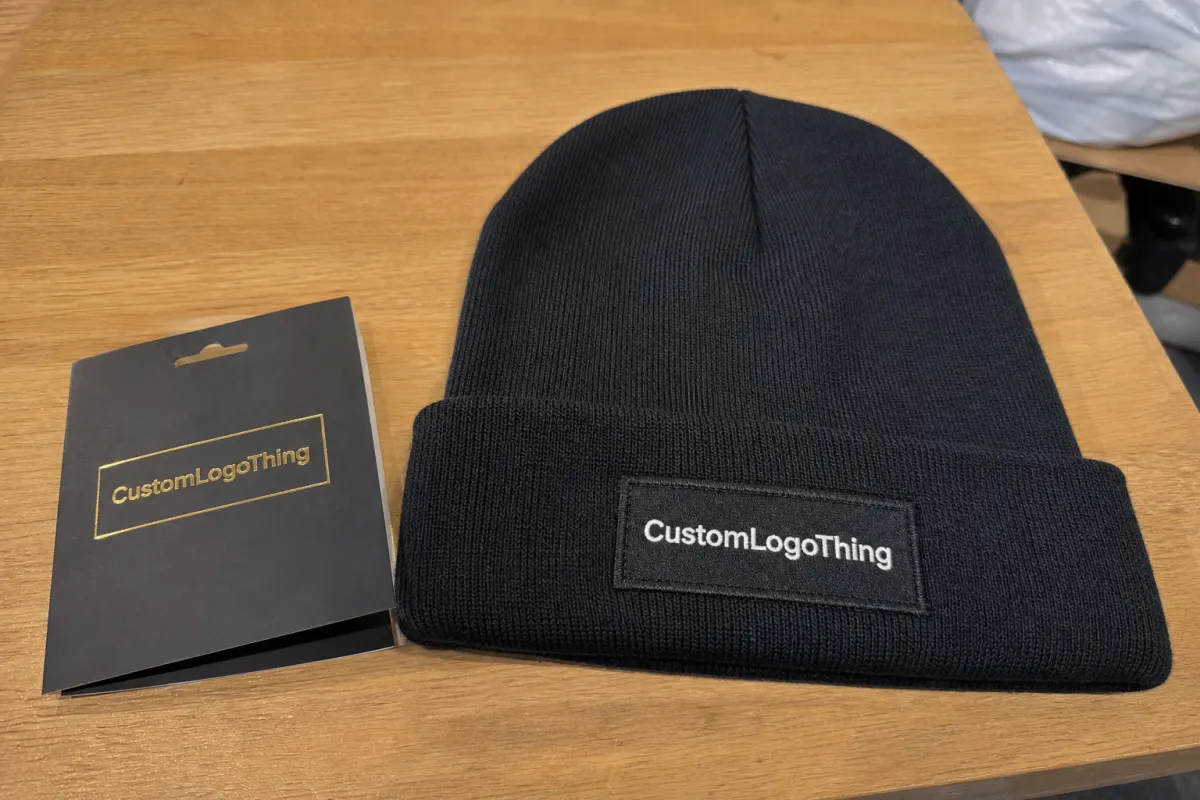
Beanies get repeated wear in the places where branded gifts are noticed most: commutes, travel, outdoor events, and cold offices. Unlike desk items, they move with the wearer, so the branding keeps showing up without feeling forced. That makes them effective for corporate gifting when the goal is useful, visible, and low-friction promotion.
Woven labels work well because they feel integrated into the garment. They do not crack like some prints or peel like a weak patch. On a small front panel, a clean woven label usually reads as more intentional than oversized decoration.
Durability matters as much as appearance. A good beanie should still look presentable after repeated wear, hand handling, and packing. The hand-feel, stretch recovery, and fold of the cuff all contribute to whether the item feels premium or disposable.
Packaging can raise perceived value, but only when the hat supports it. A well-sized kraft wrap or recycled carton can look thoughtful. Oversized packaging or flimsy inserts can make even a decent beanie feel cheap. If the brief includes sustainability claims, yarn content, carton spec, and insert material should match the story.
That is why buyers should judge the whole item, not just the logo. The sample is where the product either supports the message or undercuts it.
Process and lead time for sample approval
A good sample process starts before artwork is approved. The supplier should have the use case, quantity, budget, target season, label size, and delivery date. From there, the job usually moves through artwork review, yarn and color confirmation, sample construction, and one or more feedback rounds.
Lead time changes quickly when a revision affects structure. Moving a label by a few millimeters, deepening the cuff, or softening the knit can alter the final look and fit. Even a small change may add several business days before the sample is ready to approve.
It helps to define what kind of sample is being made. A stock beanie with a custom woven label is faster and cheaper, but it may not reflect the final hand-feel. A fully custom knit sample takes longer, yet it gives a more accurate read on shape, stretch, and finish.
Typical windows are about 5 to 12 business days for a stock base with label customization and 10 to 20 business days for a more custom knit sample. Production often adds another 15 to 30 business days depending on order size, season, and factory load. Freight should be treated separately.
- Ask for a dated sample schedule with revision checkpoints.
- Confirm whether label approval happens before knit sampling.
- Check whether sample fees are refundable or credited to production.
- Assign one internal owner to consolidate feedback.
If the beanies will be shipped individually or as part of a kit, ask about carton strength and parcel handling. Standards such as ISTA are worth discussing when orders move through multiple carriers or arrive in stages. A good product can still disappoint if the outer pack fails in transit.
corporate gifting woven label beanies material sample guide
This is the point where the order stops being a concept and becomes a product. A corporate gifting Woven Label Beanies Material Sample guide should focus on performance in the hand, on the head, and in packaging. Mockups flatten those details; the sample reveals them.
Acrylic is often the lowest-cost entry point and usually gives reliable color consistency. Lower-grade acrylic can pill or feel dry, so yarn quality matters. Polyester blends often hold shape well. Wool blends feel warmer and more substantial, but they may feel less soft against bare skin. Recycled yarns are increasingly common, though the final hand-feel depends on the input fiber and spinning process.
Knit density affects both appearance and durability. A tighter knit, often in the 7-gauge to 12-gauge range depending on style, usually gives the label a cleaner read and helps the beanie hold shape. Looser knits can feel softer, but they may twist or blur fine details. If the label uses small type or a thin logo, the sample should prove the knit can support it.
Stretch recovery is worth checking early. Pull the cuff, hold it for a few seconds, and see whether the fabric rebounds quickly. If the beanie looks tired after basic handling, it may not age well in distribution or repeated wear.
Color matching should be reviewed with the body yarn, label thread, and any contrast details together. A label that is slightly off-tone can make the whole piece look accidental. Pantone matching on knitwear is not always exact, so the practical goal is controlled consistency. Ask for yarn swatches or a lab-dip-style approval if color matters.
Finish details influence perception more than many briefs expect. Cuff depth, seam neatness, and label width all change how balanced the hat looks. A wider woven label can work on a deep cuff, but oversized branding on a shallow cuff feels crowded. The sample should show the final proportions, not just the artwork.
Packaging should match the material story. Minimal programs often work well with plain kraft wrap. Recycled board and paper inserts support sustainability-led briefs. If compostable or biodegradable packaging is used, it still needs to protect the beanie from moisture and compression.
If the beanie is part of a wider branded kit, the rest of the package matters too. A simple card and sturdy carton often improve perceived value more than a more expensive hat packed poorly. See the Custom Labels & Tags options if the gift set needs matching brand elements.
Cost, MOQ, and quote drivers
Beanie pricing moves for predictable reasons: yarn type, knit complexity, label construction, packaging, freight, and whether the base is stock or custom. A stock beanie with a woven label is usually the most affordable route. Fully custom knit styles cost more because they require more setup and carry more production risk.
MOQ is mostly about how setup costs are spread across the run. Small orders carry higher unit costs; larger orders reduce the per-piece price. Many corporate gifting programs land between 300 and 1,000 units, though smaller runs can work for executive gifts or internal milestones if the setup cost is acceptable.
Helpful quote requests are specific. Include quantity, material preference, label size and placement, packaging, shipping destination, and delivery date. A brief that says "premium beanie" is too vague. A brief that says "stock acrylic beanie, folded cuff, one woven label centered front, recycled mailer, delivery by mid-November" produces a better quote.
Sample fees deserve attention because they affect the real project cost. A physical sample might cost $35 to $120 depending on complexity, and custom knit or packaging can cost more. Some vendors credit the fee against the final order; others do not. That difference should be compared before approval.
| Option | Typical use | Rough unit budget | What changes the price most |
|---|---|---|---|
| Stock beanie + woven label | Fast corporate gifting, lower risk | $3.00-$5.50 | Label size, color count, packaging, quantity |
| Semi-custom knit | Branded internal programs, team gifts | $4.50-$8.00 | Knit density, yarn type, cuff structure, sampling rounds |
| Recycled yarn blend with premium pack | Sustainability-led gifting | $5.00-$9.50 | Recycled content, carton spec, insert style, freight |
Those bands are only a planning guide, but they make it easier to spot proposals that are too high or unrealistically low. A quote outside the range usually needs explanation. Freight can also become a major line item, especially with split shipments or expedited delivery. Carton size and packing density matter, so the shipping assumptions should be visible in the quote.
From brief to purchase order: production steps that prevent surprises
The cleanest orders start with a narrow set of decisions. Choose the material, the label style, and the delivery date first. Those choices shape the rest of the job and make it easier for procurement, marketing, and operations to stay aligned.
A production file should hold one version of truth: artwork proof, material reference, size spec, packaging note, delivery window, and shipping split if needed. When comments live across email, chat, and screenshots, version drift becomes the main risk. One person approves a label change, another assumes nothing changed, and the order moves forward with conflicting assumptions.
Quality control should be practical. Check label alignment, seam finish, yarn consistency, cuff shape, stretch recovery, and how the beanie folds into packaging. Compare the physical sample to the approval sheet and write differences in plain language: label 8 mm higher, cuff 5 mm deeper, body color slightly warmer, knit firmer than expected. Specific notes are easier to produce from.
Packaging needs the same discipline. Confirm carton dimensions, paper stock, fold style, and whether the pack keeps the hat from shifting. A small change in carton size can affect both unboxing and freight cost. That is easy to miss until the shipping invoice arrives.
For larger programs, plan for one revision cycle as standard rather than exceptional. That buffer protects the schedule if the first sample reveals a fit issue, a color mismatch, or a packaging problem. Tight timelines rarely improve quality; they usually make it harder to fix what the sample reveals.
Mistakes that derail sample approvals and deliveries
The biggest mistake is approving only the digital mockup. A screen proof can hide soft knit edges, awkward label scale, and a cuff that sits too loosely. By the time the physical sample arrives, the schedule is already tighter.
Vague feedback is another common problem. "Make it better" does not tell a factory what to change. Say whether the label needs to be smaller, the yarn softer, the cuff deeper, or the contrast lighter. Clear direction shortens the revision cycle and reduces the chance of a second sample that misses the point in a different way.
Timeline blindness creates rushed orders. A sample may be approved on paper but still leave too little time for production and freight, which is how rush fees and shipping upgrades appear late in the process. Counting backward from the event date and leaving room for one delay is the safer approach.
Over-customization can also work against the buyer. More colors, more finish options, more packaging components, and more internal opinions all add complexity. For smaller runs, a disciplined material choice and a clean woven label often beat a crowded spec sheet.
Sustainability-led programs also need documentation. If the yarn includes recycled content or the carton is FSC-certified, the supplier should be able to show it clearly. Without proof, the claim loses value internally and externally.
Next steps: lock the spec, sample, and ship plan
The simplest way forward is to freeze the spec before the budget starts drifting. Confirm the material, lock the label style, and set the delivery target. If the order is important to leadership, ask for a backup sample variation so the team has a fallback if feedback splits.
Use a short approval checklist and assign one owner to collect responses. Cover comfort, fit, label clarity, color accuracy, packaging, and ship readiness. Compare the sample against the quote and spec sheet side by side so any difference is decided before production starts.
The main takeaway from the corporate gifting Woven Label Beanies material sample guide is straightforward: the sample is the decision point. It is where material behavior, decoration, and logistics meet. Once the team can hold the beanie, inspect the label, and check the packaging, the real project becomes clear.
What should I check in a corporate gifting woven label beanies material sample?
Check softness, stretch recovery, seam finish, label placement, and how the cuff holds shape after handling. Compare the label contrast against the knit so the branding stays readable without overpowering the hat. Wear the sample for a few minutes; itchiness, heat, and fit are easier to judge that way than in a photo.
How many samples do I need before approving woven label beanies for gifting?
One physical sample is often enough for a simple stock-based order. Add a second variation if color matching, cuff depth, or label scale is still uncertain. For executive gifts or multi-stakeholder programs, a backup sample can prevent delays if the first round of feedback splits the room.
What drives the price of woven label beanies for corporate gifts?
Material type, knit density, label construction, packaging, quantity, and freight all affect the unit price. Smaller runs carry more setup cost per piece, while custom knit styles and premium packaging push the number up further. Rush timing can matter as much as the product, especially if production or shipping needs to be accelerated.
How long does the process and lead time usually take?
Stock-based samples may be ready in about 5 to 12 business days, while more custom knit samples often take 10 to 20 business days. Production commonly adds 15 to 30 business days after approval, depending on order size and factory load. Shipping sits outside that window and should be planned separately.
What is the biggest mistake buyers make with woven label beanie samples?
Approving the mockup and skipping the physical sample is the most common error. Vague feedback is another. Both create avoidable revisions. The safest approach is to test the sample in hand, write specific notes, and confirm the ship plan before production starts.


